

Table of Contents
- The Most Common Reasons Your Water Bill Is High
- How to Detect a Water Leak in Your House
- Seasonal Spikes and Changes in Household Water Consumption
- Smart Water Leak Detectors: Catch Problems Before They Spike Your Bill
- What to Do When You Receive a High Water Bill
- Water Conservation Tips That Lower Your Bill Long-Term
- When to Call a Licensed Plumber
- Conclusion
Last Updated: August 2, 2026
Receiving a water bill that’s double what you expected stops you cold. If you’re asking why is my water bill high, you’re not alone, the answer is almost always traceable to a specific, fixable problem. At First Choice Plus Plumbing & Air, we’ve helped hundreds of homeowners in St. Lucie and Martin Counties track down the exact source of excessive usage. Below, we’ll show you how to diagnose the problem, test your meter, appeal your bill if needed, and prevent it from happening again.
A hidden leak is a plumbing loss that occurs without visible dripping or pooling, often inside walls, underground, or within a toilet tank, making it undetectable without a deliberate meter test or leak detection process.
The Most Common Reasons Your Water Bill Is High
The answer to why is my water bill high comes down to three categories: toilet problems, dripping fixtures, and outdoor water systems.
Toilet Flapper Failures and Running Toilets
A running toilet is the most common cause of a high water bill and the easiest to overlook because the leak is silent. The toilet flapper is a rubber seal at the bottom of the tank. When it wears out, water trickles continuously from the tank into the bowl without triggering a flush cycle.
According to the U.S. Environmental Protection Agency’s WaterSense program, a running toilet can waste significant amounts of water daily, often undetected for months. The fix is usually a flapper replacement, which takes under 20 minutes and costs very little.
To confirm a running toilet, add a few drops of food coloring to the tank and wait 15 minutes without flushing. If color appears in the bowl, your flapper is leaking.
Ignoring a running toilet for even a single billing cycle can cause [your water](/understanding-your-water-bill-port-st-lucie/) consumption to spike enough to trigger a high-usage flag with your water utility, which may complicate a future leak adjustment request.
Dripping Faucets and Leaking Plumbing Fixtures
A dripping faucet feels minor, but one drip per second adds up to meaningful volume over 30 days. Check every faucet in the house, including bathroom sinks, the kitchen, utility sinks, and outdoor spigots. Pay attention to rarely used faucets, since worn washers often go unnoticed in guest bathrooms for months.
Water heater connections, supply lines under sinks, and joints behind washing machines are also common sources of slow leaks. A visual inspection under every sink cabinet takes less than five minutes per room and often reveals moisture staining or mineral deposits signaling a slow drip.
Irrigation System and Outdoor Spigot Problems
Outdoor water use is one of the most overlooked sources of high usage, especially in Florida’s warm climate where irrigation systems run year-round. A broken sprinkler head, cracked lateral line, or stuck zone valve can release significant water underground with no obvious surface sign.
Walk your irrigation zones manually and watch each head cycle through. Look for heads that spray sideways, zones that won’t shut off, or waterlogged ground between heads. An outdoor spigot with a worn washer is another common culprit.
How to Detect a Water Leak in Your House
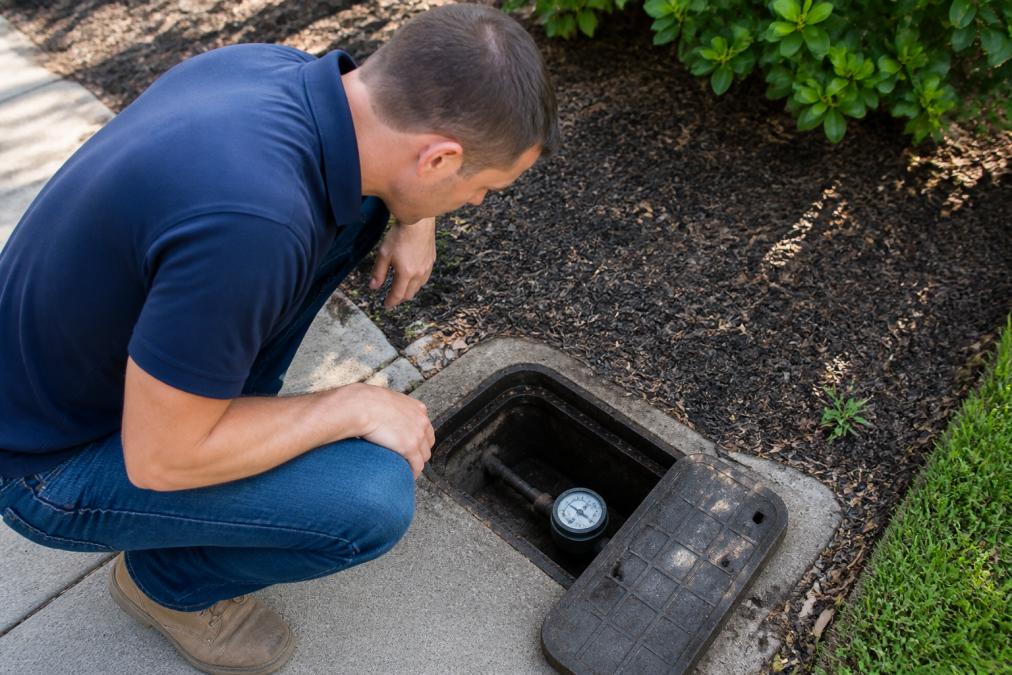
Detecting a water leak starts with your water meter, which acts as a real-time flow gauge for your entire plumbing system.
Step-by-Step Water Meter Test
This meter test takes about 30 minutes and requires no tools.
- Turn off all water inside and outside the home. Every faucet, appliance, and irrigation valve must be off.
- Locate your water meter. In most St. Lucie and Martin County homes, it’s near the curb in a small ground-level box.
- Record the meter reading. Write down the exact number shown on the dial or digital display.
- Wait 30 minutes without using any water. Do not flush toilets, run dishwashers, or use any fixture.
- Check the meter again. If the reading has changed, water is flowing somewhere it shouldn’t be.
- Check the leak indicator. Most modern meters have a small triangle or star-shaped dial that spins whenever water moves. If it’s spinning with everything off, you have an active leak.
A change in the meter reading confirms a leak exists. A stationary reading rules out a plumbing leak and points toward billing errors or seasonal usage changes.
Take a photo of your meter reading at the start and end of the test. This documentation is useful if you later request a leak adjustment from your water utility.
Checking for Hidden Leaks Behind Walls and Underground
Hidden leaks behind walls typically show up as soft drywall, bubbling paint, musty odors, or unexplained warm spots on floors above a slab. Press gently on drywall near supply lines, especially in bathrooms and kitchens.
Underground service line leaks between the meter and your home are harder to spot. Signs include consistently wet patches of grass in dry weather, sinkholes forming in the yard, or a meter that runs even when the main shutoff inside the house is closed. These require professional leak detection equipment to locate precisely.
Seasonal Spikes and Changes in Household Water Consumption
Seasonal patterns explain many cases of high usage that aren’t caused by a leak. Summer months in South Florida bring increased irrigation demand, pool refilling, and outdoor washing. Houseguests and new appliances also shift your average daily usage upward without anything being broken.
Compare your current bill against the same billing cycle from the prior year. Your water utility’s online portal typically shows 12-24 months of usage history. A spike that aligns with a known event is self-explanatory. A spike with no obvious explanation points toward a leak.
According to the American Water Works Association’s residential water use research, outdoor water use can account for a large portion of total household consumption during warmer months, making irrigation management one of the highest-impact conservation opportunities.
Smart Water Leak Detectors: Catch Problems Before They Spike Your Bill
Smart home monitoring solutions represent the most significant shift in residential leak detection. These devices either monitor flow at the main line or place sensors near individual fixtures, alerting you the moment unusual water flow is detected.
Whole-home flow monitors install on the main water line and track usage patterns in real time. They can detect a running toilet, slow drip, or burst pipe and send an alert to your phone within minutes. Some models can automatically shut off the water supply when an anomaly is detected.
Point-of-use sensors sit on the floor near water heaters, under sinks, and behind washing machines. They detect moisture contact and trigger an alarm before water damage spreads. These are particularly valuable in older homes where supply lines and appliance connections are past their expected service life.
Catching a running toilet in week one of a billing cycle costs you nothing compared to discovering it when the bill arrives four weeks later.
| Monitoring Type | Where It’s Placed | What It Detects | Best For |
|---|---|---|---|
| Whole-home flow monitor | Main water line | Unusual flow patterns, burst pipes, running toilets | Comprehensive coverage |
| Point-of-use sensor | Under sinks, near appliances | Moisture contact, slow drips | Targeted high-risk areas |
| Smart irrigation controller | Irrigation system | Overwatering, broken zones | Outdoor water management |
| Toilet leak sensor | Toilet tank or base | Flapper leaks, base seepage | Silent toilet leaks |
What to Do When You Receive a High Water Bill
Receiving a high bill doesn’t automatically mean you owe the full amount. Your first step is to confirm whether the spike reflects actual usage or a meter reading error. Pull your usage history from your utility’s online account portal and compare it against prior months and the same period last year.
If the spike is real and you’ve since fixed a confirmed leak, you have grounds to request a leak adjustment.
How to Request a Leak Adjustment or Appeal Your Bill
A leak adjustment is a formal process offered by most water utilities that reduces or credits a portion of a bill when excessive usage was caused by a verifiable plumbing leak. Gather the following before you call:
- Proof of the repair: a plumber’s invoice, receipt for parts, or dated photos
- Your meter test documentation showing the leak was active
- The billing statement showing the spike
- Dates the leak was likely present versus when it was repaired
Contact your water utility’s customer service department and ask specifically about their leak adjustment policy. Most utilities in Florida allow one adjustment per 12-month period.
Most water utilities process leak adjustment requests within one to two billing cycles. Submit your request as soon as the repair is complete, and follow up in writing if you don’t receive confirmation within 30 days.
Financial Assistance and Payment Plans from Your Water Utility
If the bill creates financial hardship, most utilities offer payment plans that spread the balance over several months. Contact the billing department before the due date, as utilities are generally more flexible when customers reach out proactively.
Florida residents may also qualify for assistance programs through local community action agencies. The Florida Department of Economic Opportunity’s community assistance resources can help connect residents with local programs that offset utility costs during financial hardship.
Water Conservation Tips That Lower Your Bill Long-Term
The most effective water conservation approach addresses both obvious and overlooked sources of waste. Fixing leaks is the foundation, but sustained reductions come from changing daily habits and upgrading inefficient fixtures.
Practical steps that make a measurable difference:
- Replace older toilets with WaterSense-certified models, which use significantly less water per flush than toilets installed before 1994
- Install aerators on all faucet fixtures to reduce flow without affecting pressure
- Set your irrigation controller to run in early morning, which reduces evaporation
- Run dishwashers and washing machines only with full loads
- Check your water pressure at an outdoor spigot. High pressure accelerates wear on valves and flappers, increasing leak frequency
A water audit, which involves logging the age and condition of every plumbing fixture, is the most structured way to identify your highest-impact upgrade opportunities. Many water utilities offer free residential water audits.
When to Call a Licensed Plumber
Some problems are straightforward DIY fixes. Others require professional expertise.
Call a licensed plumber when:
- Your meter test confirms a leak but you cannot locate the source
- You suspect an underground service line leak or water main issue
- Water damage is visible inside walls, ceilings, or under flooring
- Your water pressure has dropped noticeably without explanation
- A fixture repair doesn’t resolve the running water after a second attempt
- You’re dealing with an older home that may have galvanized or polybutylene pipes
A plumbing inspection by a licensed technician includes a systematic review of all accessible supply lines, drain connections, fixture valves, and the water heater, giving you a complete picture of your system’s condition.
First Choice Plus Plumbing & Air serves homeowners across St. Lucie and Martin Counties with professional leak detection, plumbing inspections, and fixture repairs. With a 4.8-star rating across 765 reviews, the team consistently delivers on what matters most: showing up when they say they will, diagnosing the problem accurately, and being straight about what actually needs fixing.
One customer put it directly: "Jessie was extremely knowledgeable and informative and was transparent. A genuine person and an asset to your team at First Choice Plus." For pricing details, visit the First Choice Plus Plumbing & Air website to see current service rates before you call.
Tracking down the source of a high water bill takes a methodical approach, and most homeowners can handle the initial diagnosis themselves. Hidden leaks, underground line failures, and aging plumbing systems require professional tools and experience. First Choice Plus Plumbing & Air offers 1-hour service windows, upfront pricing, and honest recommendations so you know exactly what you’re dealing with before any work begins. Call us today and get a clear answer on what’s driving your water bill high.
Frequently Asked Questions
What causes a sudden high water bill?
A sudden high water bill is most often caused by a hidden plumbing leak, a running toilet with a worn flapper, or a broken irrigation system line. Less commonly, a faulty water meter can record excessive usage that does not reflect actual consumption. Check your meter and shut off all fixtures to isolate the source. If the meter still moves with everything off, you likely have an active leak somewhere in your service line or plumbing system.
How much water does a running toilet waste?
A running toilet is one of the biggest sources of water waste in a home. Depending on the severity of the flapper leak or fill valve failure, a single running toilet can waste anywhere from 200 to over 1,000 gallons per day. Over a full billing cycle, that adds up fast on your utility bill. The fix is usually inexpensive: replacing a toilet flapper typically costs just a few dollars at any hardware store, though a plumber can confirm whether the issue is more involved.
How do I find a hidden water leak in my house?
Start with a meter test: turn off every water-using fixture and appliance, then watch your water meter for 15 to 30 minutes. If the dial or digital display moves, water is flowing somewhere it should not be. Check under sinks, around the base of toilets, near the water heater, and along exposed pipes for moisture or discoloration. For leaks inside walls or underground, a licensed plumber with leak detection equipment can locate the source without unnecessary damage to your property.
Can I get my water bill adjusted if the high usage was caused by a leak?
Many water utilities in the United States offer a leak adjustment or high-bill credit when documented plumbing repairs are made. Contact your local water utility directly, explain the situation, and ask about their leak adjustment policy. You will typically need to provide proof of repair, such as a plumber's invoice or receipt for parts. Adjustments are not guaranteed and vary by utility, but it is always worth requesting one, especially after a significant hidden leak is repaired.
What are common signs of an outdoor water leak?
Outdoor leaks from irrigation systems, outdoor spigots, or the service line between the water main and your home are easy to miss. Signs include unusually green or soggy patches of grass, sinkholes or soft ground near the water meter, reduced water pressure indoors, and the sound of running water when nothing is on. Check your irrigation system zone by zone at the start of each season, and inspect outdoor hose bibs for drips after winter to catch problems early in the billing cycle.
Do smart water leak detectors actually help reduce water bills?
Yes, smart water leak detectors can catch problems early enough to prevent the prolonged waste that drives up a high water bill. Whole-home flow monitors attach to your main water line and track average daily usage in real time, alerting you via smartphone when consumption spikes or flow continues overnight. Point-of-use sensors placed under sinks or near appliances detect moisture the moment a drip starts. Catching a leak within hours rather than weeks can save thousands of gallons and a significant amount on your utility bill.
This article was written using GrandRanker