
Imagine stepping into your shower in Port St. Lucie after a long day, only to be met with a weak, unsatisfying trickle instead of a refreshing spray. It’s a common frustration across the Treasure Coast, from Stuart to Fort Pierce, and it often leaves you wondering if you’re facing a massive repair bill or just a minor hiccup. Dealing with weak showers and appliances that take forever to fill is more than a nuisance; it’s a disruption to your home’s comfort. We understand that troubleshooting low water pressure in house can feel overwhelming, especially when you’re worried about hidden leaks or the effects of Florida’s hard water on your pipes.
You shouldn’t have to settle for poor performance from your plumbing system. This expert guide will walk you through the exact steps to identify, diagnose, and resolve low water pressure issues in your home. We’ll explore whether the problem is a local fixture issue, a municipal supply drop, or the result of mineral buildup that often plagues homes in St. Lucie West and Traditions. You’ll learn how to distinguish between simple DIY fixes and situations that require a professional touch to restore your home to the standard 40 to 80 PSI range.
Key Takeaways
- Learn to perform a simple “fixture test” to determine if your water pressure issue is isolated to one faucet or affecting your entire home.
- Master the first steps of troubleshooting low water pressure in house by ruling out municipal supply problems in your local neighborhood.
- Identify the physical warning signs of a failing Pressure Reducing Valve, such as pipe shuddering or sudden house-wide flow drops.
- Understand how Florida’s hard water and aging galvanized pipes can lead to internal mineral buildup and restricted water flow.
Step-by-Step Diagnostics: Is the Low Pressure Local or Widespread?
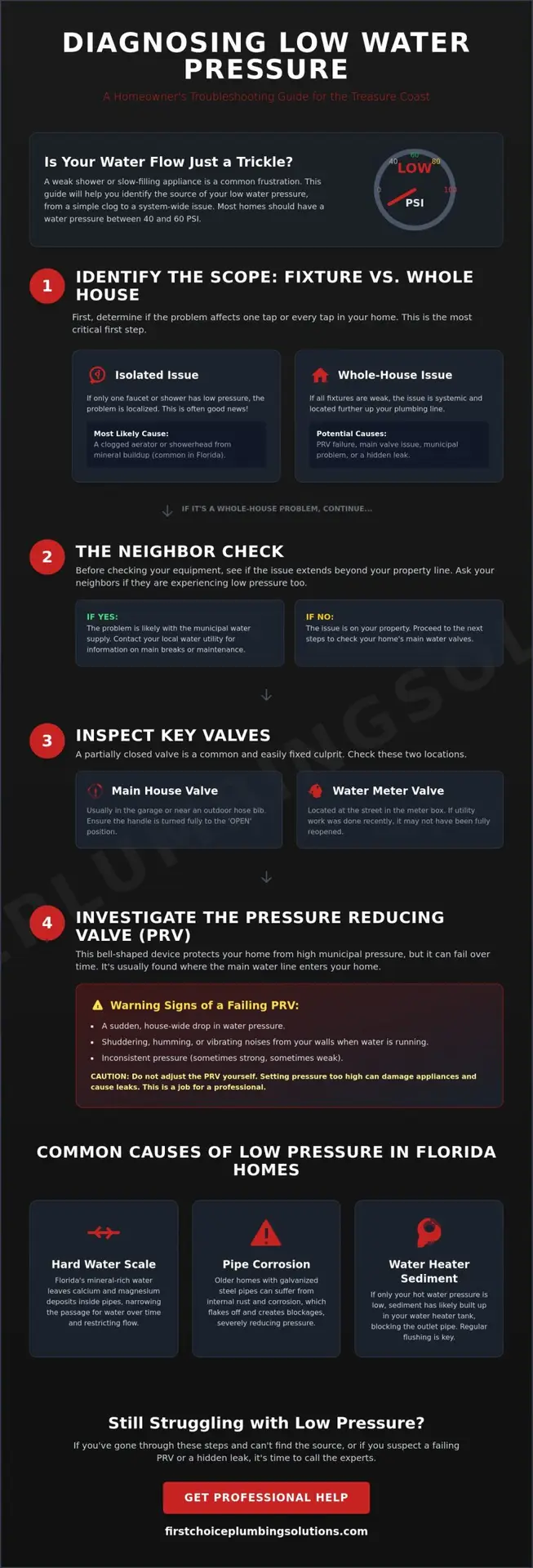
Effective troubleshooting low water pressure in house starts with a logical process of elimination. You must first determine if the drop in flow is confined to a single fixture or if it impacts every tap on your property. This simple distinction tells you whether you’re looking for a localized clog or a systemic failure. Walk through your home and turn on every faucet, one by one, including the kitchen sink, bathroom showers, and outdoor spigots. If the kitchen is fine but the master shower is a trickle, the problem is likely isolated. However, if every fixture in your Port St. Lucie or Stuart home is struggling, the issue is further upstream.
Isolated vs. Whole-House Issues
When you find that only the shower is weak, the culprit is usually a clogged aerator or showerhead. Florida’s mineral-rich water often leaves behind scale that chokes small openings. If every tap is slow, the problem is deeper in your plumbing system. A house-wide drop suggests a failure in a central component, such as a pressure regulator or a main shutoff valve that isn’t fully open. Troubleshooting low water pressure in house requires checking these central points before assuming you have a major pipe failure.
The Florida Neighbor Check
Step outside and talk to your neighbors. Local municipal work in Fort Pierce or Jensen Beach can cause temporary pressure drops across entire blocks. If your neighbors are experiencing the same issue, the fault likely lies with the municipal water distribution system. In these cases, you should contact your local water utility to report a potential main line break or ask about scheduled maintenance in your area.
If your neighbors have perfect pressure, it’s time to inspect the mechanical valves that control your home’s water supply. A partially closed valve is a frequent, yet easily fixed, cause of low pressure. Check these two critical points:
- The Main House Valve: This is often located in the garage or near the front hose bib. Ensure the handle is turned completely to the open position. Even a quarter-turn toward the “off” position can significantly restrict flow.
- The Water Meter Valve: This valve is located inside the meter box at the street. If you’ve had recent utility work or a meter replacement, the technician might not have fully reopened the valve.
Mechanical Culprits: Pressure Regulators and Clogged Valves
Most homeowners in Port St. Lucie don’t realize their plumbing system has a dedicated gatekeeper. This is the Water Pressure Reducing Valve (PRV). It’s a bell-shaped device usually located near your main shutoff. Its job is to step down the high pressure from the city’s main line to a safe level for your home. If you notice a sudden, house-wide drop in flow or hear a distinct shuddering sound in your walls, your PRV is likely failing. While troubleshooting low water pressure in house, it’s tempting to simply crank the adjustment screw on the PRV. We advise against this. Setting your pressure too high can blow out faucet seals and severely damage your water heater or dishwasher.
Testing Your Home’s PSI
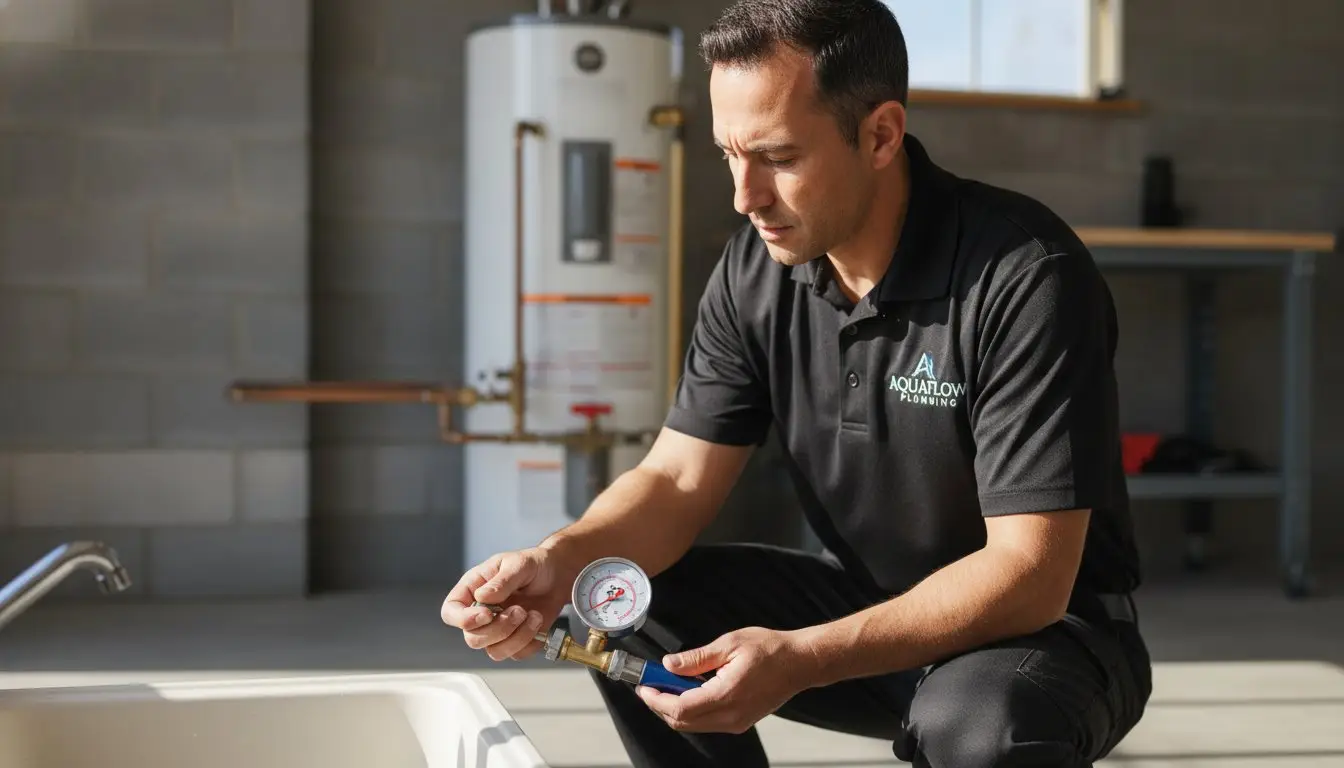
To get a clear picture of your situation, you should check your service water pressure using a simple pressure gauge. You can screw this onto any outdoor hose bib. In Florida, a standard safe range is typically 40 to 60 PSI. If your reading is consistently below 40 PSI, you’ve confirmed a systemic issue rather than a single fixture problem. This data is invaluable when deciding if you need a professional repair.
Valve Maintenance and Troubleshooting
Older homes in Stuart and Palm City often still rely on gate valves. These use a metal wedge that lowers into the pipe. Over time, the internal stem can snap. This leaves the valve stuck in a partially closed position even if the handle looks fully open. Modern ball valves are far more reliable because they use a simple rotating sphere. If you suspect a faulty valve is the culprit, our team provides professional plumbing repairs to upgrade your system to modern, dependable standards.
Don’t ignore your water heater during this process. Florida’s hard water causes calcium and magnesium to settle at the bottom of the tank. This sediment takes up space and can eventually block the hot water outlet. If your cold water pressure is fine but the hot water is weak, it’s a clear sign of scale buildup. Periodic flushing or professional water heater maintenance can prevent this mineral “choke point” from disrupting your morning shower.
Environmental Factors: Florida Hard Water, Corrosion, and Leaks
If your diagnostics haven’t uncovered a faulty valve or a clogged fixture, the issue likely lies within the pipes themselves. Florida’s unique environmental conditions present specific challenges for residential plumbing. With an average water hardness of 131.1 PPM across the state, homeowners often deal with “plumbing cholesterol.” This is a heavy buildup of calcium and magnesium that adheres to the inner walls of your pipes. Over years of service, this scale narrows the path for water flow. This makes troubleshooting low water pressure in house particularly difficult because the pipes look fine from the outside while they’re choking on the inside.
The Impact of Hard Water on Treasure Coast Plumbing
In areas like St. Lucie West and Traditions, mineral buildup is a primary cause of declining pressure. These deposits don’t just slow down your water; they also cause premature wear on your dishwasher and laundry machines. To stop this cycle, many families invest in water quality solutions that neutralize minerals before they reach your internal lines. This preventative step protects your home’s infrastructure and maintains consistent flow for years to come.
Detecting Hidden Leaks and Aging Infrastructure
Don’t overlook the possibility of a hidden leak. A significant break under your home’s foundation, known as a slab leak, can divert thousands of gallons of water, causing a noticeable drop in pressure at your faucets. You can perform a simple “Meter Test” to check for this. Turn off every tap in your house and look at your water meter. If the dial is still spinning, water is escaping somewhere you can’t see. For homes in older neighborhoods like Palm City or Stuart, this could be due to corroding galvanized or cast iron pipes that have reached the end of their lifespan.
When these older pipes rust from the inside out, they eventually require a whole house repipe to restore full functionality. If you’ve tried basic troubleshooting low water pressure in house and the flow remains weak, it’s a major red flag. Persistent low pressure combined with a spinning water meter or damp spots on your floor means troubleshooting has ended and professional intervention is necessary. Our team provides expert plumbing repairs to help you identify these hidden issues before they lead to structural damage.
Restore Your Home’s Water Flow Today
Low water pressure doesn’t have to be a permanent frustration in your Treasure Coast home. By following a logical path from your individual faucets to the main supply line, you can often pinpoint the source of the trouble. Whether it’s a simple fixture clog, a failing pressure regulator, or the long-term effects of Florida’s hard water, knowing where to look is the first step toward a solution. We’ve seen how mineral buildup and aging infrastructure can slowly choke your plumbing, but these issues are manageable with the right expertise.
If your efforts in troubleshooting low water pressure in house haven’t restored that satisfying spray, it might be time for a deeper look. Since 2007, our team at First Choice Plus Plumbing & Air has served neighbors across the Treasure Coast with 24/7 emergency plumbing services and licensed slab leak detection. We’re committed to transparent pricing and honest assessments to ensure your home remains a place of comfort. Still struggling with low pressure? Schedule a professional inspection with First Choice Plus Plumbing & Air today. You deserve a plumbing system that works reliably every time you turn on the tap.
Frequently Asked Questions
Is low water pressure a plumbing emergency?
Low water pressure is usually not an immediate plumbing emergency, but it can signal a serious underlying issue like a major pipe burst or a slab leak. If you notice a sudden, total loss of water or see water pooling near your foundation, you should treat it as an emergency. In most cases, troubleshooting low water pressure in house is a diagnostic process to prevent future damage rather than an immediate threat to your home’s safety.
Can a bad water heater cause low water pressure in the whole house?
A bad water heater typically only affects the pressure in your hot water lines. If your cold water flows perfectly but the hot water is a weak trickle, the heater is likely clogged with sediment or has a failing dip tube. However, if every tap in the house is slow, the problem is almost certainly located at the main supply line or the pressure regulator rather than the water heater itself.
How do I know if my water pressure regulator is bad?
You’ll know your water pressure regulator is failing if you experience a sudden, house-wide drop in flow or hear vibrating, “shuddering” noises in your pipes. Another warning sign is high-pressure spikes that cause your faucets to leak or toilets to run constantly. Since these valves are mechanical, they eventually wear out and lose their ability to maintain the standard 40 to 60 PSI range required for Treasure Coast homes.
Does hard water affect water pressure in Port St. Lucie?
Hard water significantly impacts water pressure in Port St. Lucie because of the high mineral content in the local supply. Over time, calcium and magnesium deposits create scale that narrows the internal diameter of your pipes, much like a clogged artery. This is a common hurdle when troubleshooting low water pressure in house, as the buildup is often hidden deep within your plumbing system and requires specialized cleaning or pipe replacement to resolve.

Article by
Written by First Choice Plus Plumbing & Air Team
This article was created by the team at First Choice Plumbing Solutions, a licensed and experienced plumbing and HVAC company serving Port St. Lucie, Land O’ Lakes, and surrounding areas.
Our team specializes in plumbing and air conditioning services, including drain cleaning, leak detection, water heater repair and installation, AC repair, maintenance, and system installations. Our content is based on real-world experience and the common issues we solve for homeowners and businesses every day.
We aim to provide accurate, helpful, and easy-to-understand information so you can make informed decisions about your plumbing and HVAC needs.
If you need reliable, professional service, First Choice Plumbing Solutions is here to help.
Disclaimer
Disclaimer: The information provided in this article is for general informational purposes only and does not constitute professional plumbing or HVAC advice. Every situation is different, and readers should consult a licensed professional for proper diagnosis and repair. First Choice Plus Plumbing & Air is not liable for any damages or losses resulting from the use of this information.