
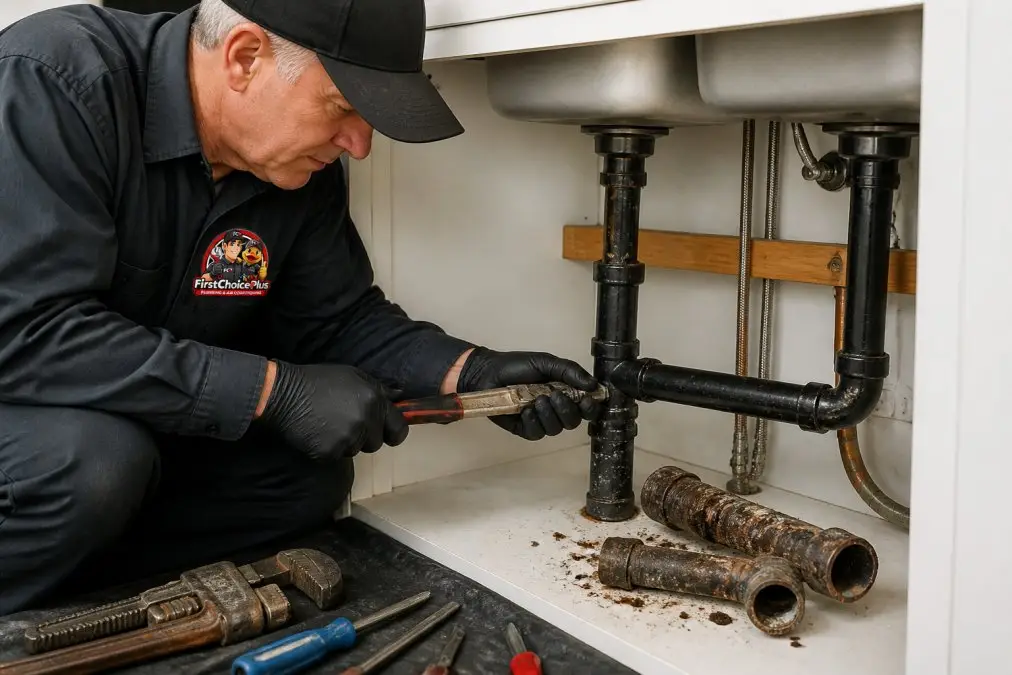
If you’re faced with frequent plumbing issues, it might be time to consider whether to repair or replace your old pipes. While repairs can be a quick fix, sometimes a full replacement can save you money and headaches in the long run. Assessing the age and condition of your plumbing can help you make the best decision for your home. Don’t hesitate to reach out to a professional for guidance on what option is right for you! Table of Contents
- When to Repair vs. Replace Your Plumbing System
- Understanding Repair vs Replace Plumbing
- Signs of Failing Plumbing Pipes
- Average Lifespan of Copper vs. PEX Pipes and Other Materials
- Repair vs. Replacement Cost Analysis
- Plumbing Inspection Checklist and Assessment
- The Risks of Ignoring Aging Plumbing
- How to Make Your Decision: Professional Evaluation
- Conclusion
Last Updated: August 12, 2026
Repair vs. Replace Old Plumbing: A Homeowner’s Guide
When pipes start failing, homeowners face a critical decision: repair the problem or replace the entire plumbing system? This question sits at the heart of many conversations we have at First Choice Plus Plumbing & Air, where we’ve served Port St. Lucie and the Treasure Coast since 2007. The answer depends on pipe age, material, extent of damage, and long-term cost implications. Understanding which path makes sense for your situation can save you thousands in emergency repairs and water damage down the road.
When faced with the choice of repair vs replace plumbing, it’s crucial to weigh the long-term implications of each option.
When to Repair vs. Replace Your Plumbing System
Repair when the problem is isolated and your pipes still have years of life ahead. Replace when failures are becoming frequent or your entire system has reached the end of its service life.
Understanding the repair vs replace plumbing decision-making process can save homeowners money in the long run.
Isolated leaks in otherwise sound pipes warrant a repair. A pinhole leak in a copper line, a cracked fitting, or a burst section of PEX can often be fixed without touching the rest of your system. Replacement becomes necessary when your pipes are corroded throughout, when you’re experiencing multiple leaks in different areas, or when your system has passed its expected lifespan. Galvanized steel pipes, common in homes built before the 1980s, typically fail between 40 and 50 years of age. Polybutylene pipes, installed in many homes during the 1970s and 1990s, often develop brittleness and leaks after 25 to 30 years. Copper and PEX pipes last longer, 50 years or more, but even these eventually need replacement if corrosion or damage becomes widespread.
In cases of widespread issues, the discussion of repair vs replace plumbing becomes essential.
When you notice multiple leaks within a short timeframe, don’t just patch each one. Schedule a professional plumbing inspection to assess your entire system’s condition. Treating symptoms individually often masks a larger problem that demands system-wide attention.
The decision also hinges on cost-effectiveness. If you’re spending money on repairs every few months, replacement becomes the smarter long-term investment. A whole-home repiping project requires upfront investment, but it eliminates the cycle of recurring failures and gives you peace of mind for decades.
Ultimately, the repair vs replace plumbing choice should be guided by the condition of your pipes.
Signs of Failing Plumbing Pipes
Recognizing the warning signs of aging or failing pipes helps you act before a small leak becomes major water damage.
Visible leaks and water stains
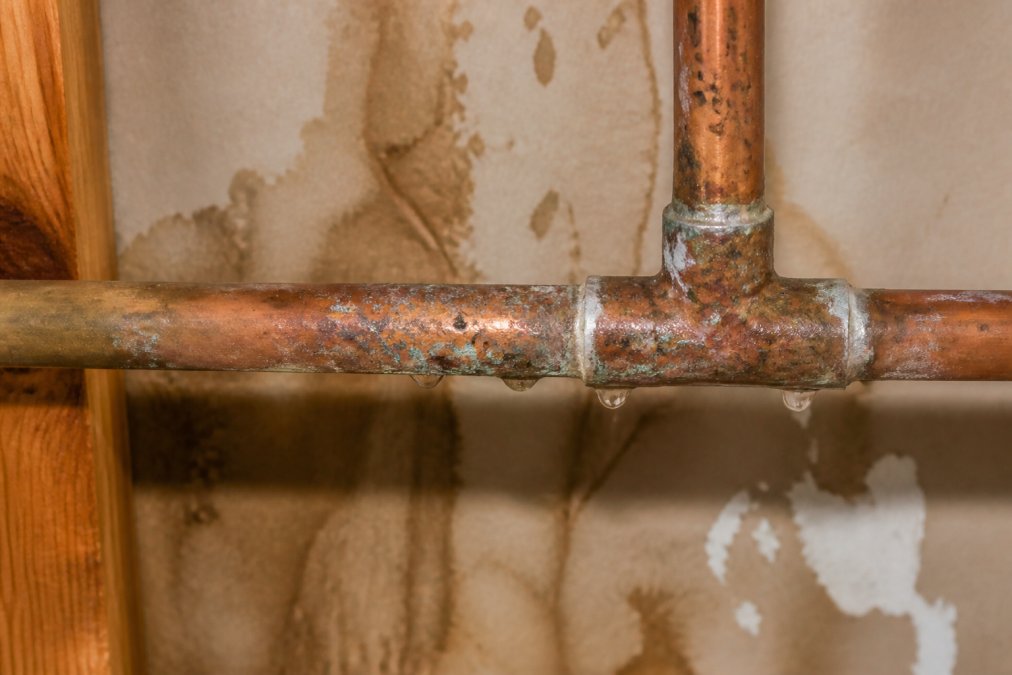
Water stains on ceilings, walls, or under sinks are the most obvious sign that your pipes are leaking. Stains often appear as discolored patches, brown, yellow, or greenish marks that indicate water has been seeping through for some time. Some leaks hide inside walls or under floors, revealing themselves only through higher-than-normal water bills or the sound of running water when no fixtures are in use. If your water meter shows usage but you can’t account for it, a hidden leak is likely and demands professional attention. Hidden leaks beneath your home’s foundation may require specialized Slab Leak Repair services to locate and address safely.
Discolored water and corrosion
When you turn on the tap and see rusty, brown, or cloudy water, corrosion inside your pipes is the culprit. Galvanized steel pipes corrode from the inside out, and that corrosion ends up in your water supply. Visible corrosion on exposed pipes, green or white crusty buildup on copper, rust on steel, means the pipe material is oxidizing and losing structural integrity. Scale buildup inside pipes narrows the interior diameter, reducing water pressure and forcing your system to work harder. If water quality issues persist even after Drain Cleaning or other interventions, your pipes themselves may be the source.
Low water pressure and pinhole leaks
A gradual decline in water pressure throughout your home often signals widespread corrosion or mineral scale inside your pipes. If pressure drops at multiple fixtures rather than just one, your plumbing infrastructure itself is failing. Pinhole leaks in copper pipes are a warning sign that others are likely forming elsewhere in your system.
Multiple warning signs appearing together, discolored water, low pressure, and visible leaks, almost always point to a system-wide problem that repair alone cannot solve.
Weighing the pros and cons of repair vs replace plumbing can lead to better outcomes.
Average Lifespan of Copper vs. PEX Pipes and Other Materials
The material your pipes are made of determines how long they’ll last and what problems they’re prone to developing.
Galvanized steel and polybutylene pipes
Galvanized steel pipes, standard in homes built before the 1980s, have an expected service life of 40 to 50 years. After that, corrosion accelerates and failures become common. Polybutylene pipes became popular in the 1970s and 1990s as a cheaper alternative to copper but have proven susceptible to brittleness and cracking, especially when exposed to chlorine in municipal water supplies. Most polybutylene systems fail between 25 and 30 years of age.
Both galvanized steel and polybutylene are now considered high-risk materials. Replacing these pipes improves your insurance standing and protects your home’s resale value.
Copper and PEX durability comparison
Copper pipes are among the most durable plumbing materials available, with a service life of 50 years or more under normal conditions. However, certain water chemistry conditions, particularly acidic water or water with high chlorine levels, can cause pinhole leaks in copper even when the pipes are relatively young. Our Water Quality Solutions can help address these underlying issues and extend the life of your pipes.
PEX (cross-linked polyethylene) is a newer material that has gained widespread adoption over the past 20 years. PEX pipes are flexible, easier to install than copper, and resistant to many types of corrosion. They’re expected to last 50 years or longer and don’t corrode the way copper or galvanized steel does. When choosing between repair and replacement, consider what your pipes are made of. Copper and PEX systems are worth repairing because they have many years of life remaining. Galvanized steel and polybutylene systems are often better candidates for replacement because the entire system is nearing the end of its lifespan.
Repair vs. Replacement Cost Analysis
The financial comparison between repairing and replacing plumbing is not always straightforward, but understanding the cost structure helps clarify your decision.
When a simple repair is sufficient
A localized leak in a copper or PEX line, such as a burst section, a failed fitting, or a pinhole leak, can often be repaired for a modest cost. Our regular-hours Plumbing Services include a $49 service-call fee, which is waived when you approve the repair work. Repair makes financial sense when the damage is isolated, your pipes are relatively young (under 30 years for copper or PEX), and you’re not experiencing frequent failures.
Repeatedly repairing the same pipe or area is a red flag. If a pipe fails twice in the same location within a few years, the underlying material is compromised. Continued repairs will eventually cost more than a full replacement would have.
Long-term savings with whole-home repiping
A whole-home repiping project is a significant upfront investment, but it offers substantial long-term benefits. When you replace your entire plumbing system with modern materials like copper or PEX through our Uponor Repiping Services, you’re eliminating the cycle of recurring failures. You gain reliable water pressure, improved water quality, and the peace of mind that comes with knowing your plumbing won’t fail unexpectedly for decades.
Evaluating when to choose repair vs replace plumbing is key to maintaining a safe home.
Whole-home repiping also protects your home’s resale value. Buyers are wary of older homes with aging plumbing. A newly repiped home with modern materials is far more attractive and commands better offers. The decision between repair and replacement ultimately comes down to the age of your system, the frequency of failures, and the cost of continued repairs versus the cost of replacement. If your pipes are over 40 years old and you’re experiencing multiple problems, replacement is usually the more economical choice over a 10 to 20-year horizon.
The repair vs replace plumbing decision will ultimately depend on individual circumstances.
| Scenario | Best Option | Why |
|---|---|---|
| Single leak, pipes under 30 years old | Repair | Problem is isolated; system has remaining life |
| Multiple leaks in different areas | Replace | System-wide failure is beginning |
| Galvanized steel or polybutylene, over 30 years old | Replace | Material has reached end of service life |
| Copper or PEX, pinhole leaks developing | Assess and plan replacement | Early signs of corrosion; replacement soon |
| Frequent repairs (3+ per year) | Replace | Cost of repairs exceeds replacement value |
Plumbing Inspection Checklist and Assessment
A thorough inspection reveals the true condition of your plumbing system and guides your repair-or-replace decision.
Start by identifying what material your pipes are made of. Copper pipes are reddish and often have solder joints. Galvanized steel pipes are gray or silver and have threaded connections. PEX pipes are flexible, usually blue or red, and use crimp or push-fit connections. Polybutylene pipes are gray or black and have a plastic appearance. Check for visible corrosion, leaks, or staining on exposed pipes in the basement, crawlspace, or under sinks. Look at water coming from your taps, is it clear or discolored? Run the cold water for 30 seconds; if it’s rusty or brown, corrosion is present. Test water pressure at different fixtures. Low pressure at a single fixture suggests a local blockage or valve issue. Low pressure throughout the home points to system-wide problems.
Review your water bills for the past year. A sudden increase in usage without a change in your habits indicates a hidden leak. Listen for the sound of running water when all fixtures are off. A persistent hissing or running sound suggests water is flowing through a leak somewhere in your system.
A professional can help clarify the repair vs replace plumbing dilemma for your specific case.
Document the age of your home and, if possible, when your plumbing was last replaced or upgraded. Homes built before 1980 with original plumbing are almost certainly candidates for replacement. A professional plumbing inspection uses video camera technology to see inside your pipes and identify corrosion, scale, or structural damage that isn’t visible from outside. We recommend professional evaluation when safety, sewage, or major water-damage risks are involved, as these require expert assessment to determine the safest course of action.
The Risks of Ignoring Aging Plumbing
Delaying repair or replacement decisions on failing plumbing creates escalating risks to your home and wallet.
Water damage and structural concerns
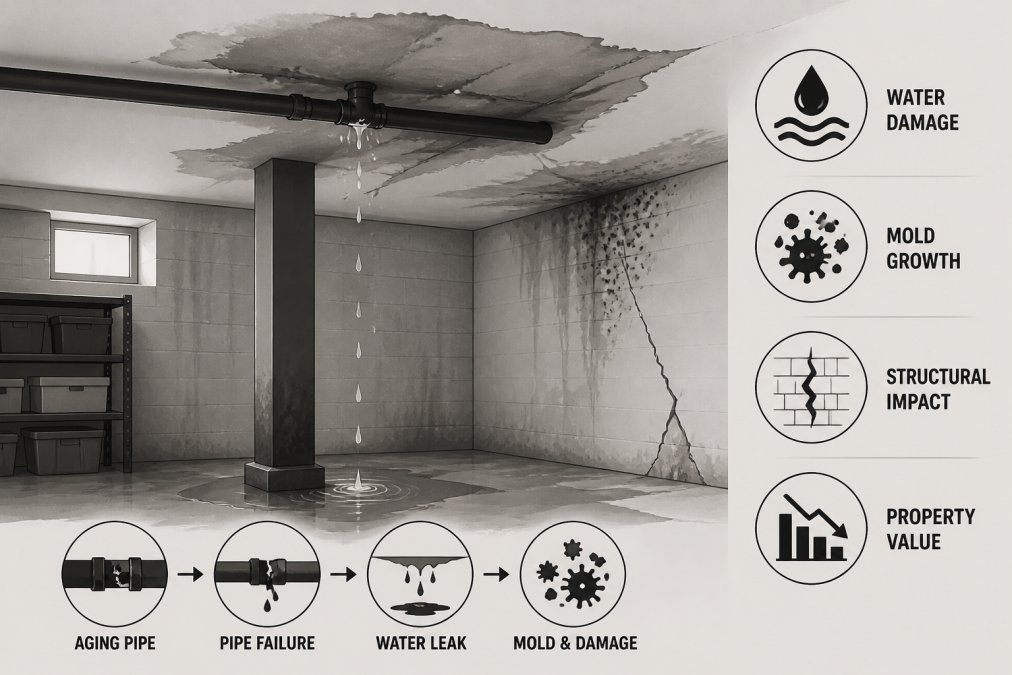
A slow leak hidden inside a wall can cause mold growth, wood rot, and structural damage long before you notice the problem. Burst pipes in freezing weather can flood your home within hours, causing damage to flooring, drywall, insulation, and belongings. The cost of water damage restoration, drying, dehumidification, mold treatment, and reconstruction often runs into tens of thousands of dollars. A proactive replacement of aging pipes eliminates this risk entirely.
Impact on water quality and home value
Corroded pipes degrade water quality. Rust, sediment, and scale from aging pipes end up in your drinking water and reduce the lifespan of appliances like water heaters, dishwashers, and washing machines. Home inspections reveal aging or failing plumbing, and buyers will factor that into their offers. A home with original galvanized steel or polybutylene plumbing will appraise lower and take longer to sell. Replacing your plumbing before selling improves your home’s market value and appeal.
Insurance companies are increasingly aware of the risks associated with older plumbing materials. Some insurers charge higher premiums or exclude water damage coverage for homes with galvanized steel or polybutylene pipes. Replacing aging plumbing can lower your insurance costs and ensure you have full coverage.
How to Make Your Decision: Professional Evaluation
The most reliable way to decide between repair and replacement is to have a professional plumber assess your system’s condition and provide honest recommendations.
Understanding the nuances of repair vs replace plumbing is essential for homeowners.
At First Choice Plus Plumbing & Air, we’ve helped countless homeowners navigate this decision by offering transparent, upfront guidance based on what we actually find. We explain the condition of your pipes, the risks you’re facing, and the costs of both repair and replacement options. We recommend professional evaluation when gas, electrical, sewage, refrigerant, or major water-damage risks are involved, as these require expert assessment to determine the safest path forward.
A professional inspection typically includes visual assessment of accessible pipes for corrosion, leaks, or damage; water quality testing to identify discoloration or contamination; water pressure testing at multiple fixtures; video camera inspection of drain lines to assess internal condition; age and material identification of your plumbing system; and honest assessment of remaining service life. Free estimates are available for qualifying new tank or tankless water heaters, whole-home repiping, and new AC systems. This gives you a clear picture of replacement costs before you commit to the project.
Once you have this information, the decision becomes clear. If your pipes are young and the problem is isolated, repair is the right choice. If your pipes are aging and failures are becoming frequent, replacement offers better long-term value and peace of mind.
The final decision on repair vs replace plumbing should be made with careful consideration.
Aging plumbing doesn’t have to become a crisis. Whether your pipes need a targeted repair or a full replacement, the key is making an informed decision based on the actual condition of your system. At First Choice Plus Plumbing & Air, we’ve served Port St. Lucie and the Treasure Coast since 2007, helping homeowners understand their options and choose the path that protects their homes and respects their budgets. Emergency and after-hours service may be available, subject to location, the type of problem, and technician availability. When you’re ready to assess your plumbing’s condition or discuss your repair and replacement options, contact us today to schedule a professional evaluation.
Deciding on repair vs replace plumbing is a significant choice that can impact your home.
Frequently Asked Questions
Reviewing the consequences of repair vs replace plumbing can guide your decision.
How can I tell if my pipes are failing or just need a minor repair?
Exploring the repair vs replace plumbing options will help you make informed decisions.
Failing pipes show persistent signs like recurring leaks, discolored water, low pressure, or visible corrosion. A single leak in an otherwise sound system may be repairable. If you notice multiple warning signs or your home is over 40 years old with galvanized steel or polybutylene pipes, a professional assessment is essential. First Choice Plus Plumbing & Air can evaluate your plumbing system and recommend repair or replacement based on the actual condition.
Weighing the repair vs replace plumbing choices can prevent future headaches.
What is the average life expectancy of house plumbing pipes?
Considering the long-term effects of repair vs replace plumbing is crucial for homeowners.
Copper pipes typically last 50+ years, while PEX pipes are rated for 50+ years as well. Galvanized steel pipes last 40-50 years but often fail earlier due to corrosion and scale buildup. Polybutylene pipes, installed in many homes from the 1970s to 1990s, have a shorter service life of 25-40 years and are prone to brittleness. Your pipe’s actual lifespan depends on water quality, pressure, and installation conditions.
The importance of understanding repair vs replace plumbing cannot be stressed enough.
Does homeowners insurance cover replacing old plumbing pipes?
Being proactive about the repair vs replace plumbing conversation can save you time and money.
Most homeowners insurance does not cover plumbing replacement due to age or wear. However, coverage may apply to sudden, accidental damage like a burst pipe. Check your policy for specifics. Some insurers offer discounts if you upgrade aging plumbing systems, and a whole-home repipe can improve your home’s resale value and reduce future claims. Contact your insurance agent for details on your coverage.
It’s wise to assess your options during the repair vs replace plumbing process.
Should old water pipes be replaced if they’re not actively leaking?
Understanding the factors involved in repair vs replace plumbing is essential for any homeowner.
Proactive replacement prevents costly emergencies, water damage, and system failures. Pipes nearing the end of their service life are at higher risk for corrosion, pinhole leaks, and scale buildup that affects water quality. If your home has galvanized steel or polybutylene pipes, replacement is often recommended even before failure. A licensed plumber can assess your plumbing infrastructure and help you decide whether immediate replacement or preventative maintenance is the better choice for your situation.
Making an informed choice about repair vs replace plumbing will lead to better outcomes.
This article was written using GrandRanker