Table of Contents
- Signs Your AC Needs Repair
- How to Troubleshoot AC Not Cooling
- AC Maintenance Tips Florida Homeowners Should Know
- AC Unit Lifespan Florida: What to Expect
- HVAC Installation and Replacement in Martin County
- Preventative Maintenance Plans Keep Your System Running
- Conclusion
Last Updated: August 5, 2026
AC Repair Martin County FL: DIY Troubleshooting & When to Call
Your air conditioning system keeps your home comfortable during Florida’s hot, humid summers. When it stops cooling properly, the discomfort sets in fast, and so does the urgency to fix it. At First Choice Plus Plumbing & Air, we’ve served Port St. Lucie and the Treasure Coast since 2007, helping homeowners and property managers understand when they can troubleshoot an AC problem themselves and when professional help is essential.
This guide walks you through the most common AC issues, shows you what you can check without tools, and explains when to call a licensed technician. Understanding these basics saves you time, money, and unnecessary stress.
Signs Your AC Needs Repair
Your air conditioning system sends signals before it fails completely. Recognizing these warning signs early can prevent a total breakdown and keep your cooling costs manageable.
Common Warning Signs Homeowners Miss
The most obvious sign is warm air blowing from your vents when you’ve set the thermostat to cool. But several subtler issues appear first, and homeowners often ignore them.
Weak airflow is one of the most common early warnings. If air comes through your vents but feels noticeably lighter than usual, your system is struggling. This often means a clogged filter, blocked ductwork, or a failing air handler fan.
Strange noises from your outdoor condenser unit deserve attention. A grinding, squealing, or rattling sound indicates a mechanical problem inside the compressor or fan motor. These issues get worse over time and typically require professional repair.
Moisture or ice on the indoor air handler or refrigerant lines suggests a refrigerant leak or airflow problem. Ice buildup is especially serious, it prevents heat transfer and can damage the compressor if ignored.
Higher than normal utility bills without a change in your usage patterns often point to AC inefficiency. Your system is running harder to cool the same space, which wastes energy and indicates wear.
Thermostat not responding to temperature adjustments is another red flag. If you set it to 72°F and the house stays at 78°F, the system may have lost refrigerant, or the compressor may be failing.
When to Schedule Service vs. When It’s an Emergency
Not every AC problem requires an emergency call. Understanding the difference helps you respond appropriately.
Schedule regular service if your system is cooling but not as well as it should, airflow is weak but present, or you notice a slight increase in noise. These issues can usually wait for a daytime appointment and often involve filter replacement, ductwork cleaning, or minor adjustments.
Call for emergency service if your system has stopped cooling entirely on a hot day, you smell burning or chemical odors from the vents, you see water pooling around the indoor unit, or refrigerant is visibly leaking. Emergency and after-hours service may be available, subject to location, the type of problem, and technician availability. A licensed technician can assess whether the issue requires immediate attention or can wait until regular business hours.
How to Troubleshoot AC Not Cooling
Before calling for service, run through this simple checklist. Many AC problems have quick fixes that don’t require a technician.
Step-by-Step DIY Checklist
Step 1: Check Your Thermostat
Verify the thermostat is set to "Cool" mode, not "Fan" or "Off." Set the temperature at least 5 degrees below the current room temperature. If you have a programmable thermostat, check that today’s schedule isn’t overriding your manual setting. Replace dead batteries if your thermostat is wireless. This single step resolves many "not cooling" calls.
Step 2: Inspect Your Air Filter
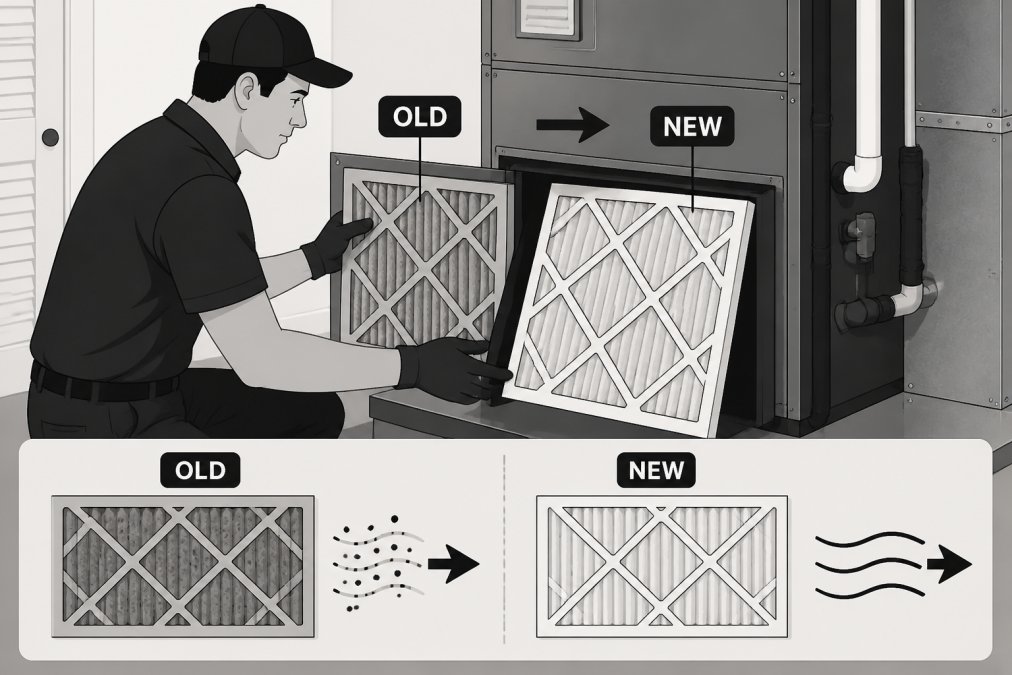
A clogged air filter is the number-one reason for weak cooling. Walk to your furnace or air handler, usually in an attic, basement, or utility closet, and locate the filter. If it’s visibly dirty or gray with dust, replace it. Standard filters cost under $20 and take two minutes to swap. Mark your calendar to check it monthly during cooling season.
Step 3: Clear the Outdoor Unit
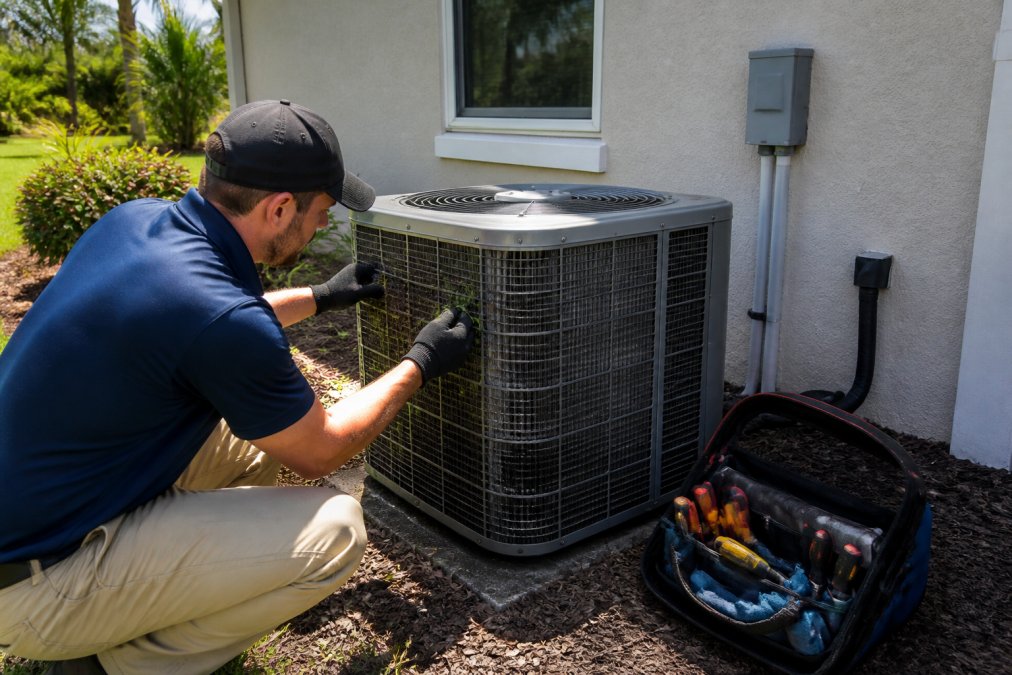
Walk outside and look at your condenser unit (the large metal box near your foundation). Check for leaves, branches, grass clippings, or debris blocking the fins. Gently clear away any visible obstruction with your hands. Do not use a pressure washer, high-pressure water can bend the delicate fins and damage the coil. If the unit is surrounded by vegetation, trim plants back at least two feet to improve airflow.
Step 4: Listen for the Compressor
Stand near the outdoor unit and listen. You should hear a low hum or slight vibration when the AC is running. If you hear nothing, the compressor may have shut down due to low refrigerant, a tripped breaker, or an electrical fault. Check your electrical panel for a tripped breaker labeled for your AC system and reset it if needed. If the breaker trips again immediately, stop and call a professional.
Step 5: Check for Visible Refrigerant Leaks
Look at the copper refrigerant lines running from your outdoor unit to your indoor unit. If you see oil stains, frost, or ice accumulation on the lines, refrigerant is leaking. This requires professional repair, you cannot recharge refrigerant yourself, and the leak must be sealed before recharging.
Step 6: Inspect the Indoor Unit
If your air handler is accessible, look for water pooling around it or ice on the evaporator coil (the cold component inside). Water or ice indicates a clogged drain line or low refrigerant. Do not attempt to clear the drain line yourself if you’re unsure of its location or condition.
What You Can Fix Yourself vs. When You Need a Professional
Homeowners can safely handle filter replacement, clearing debris from the outdoor unit, checking thermostat settings, and resetting breakers. These tasks take minutes and cost almost nothing.
Do not attempt to recharge refrigerant, repair electrical components, unclog drain lines inside the system, replace the compressor, or work with refrigerant lines. These tasks require EPA certification, specialized tools, and knowledge of pressure and electrical safety. Improper refrigerant handling can damage the environment, void your warranty, and create safety hazards.
If your DIY checklist doesn’t restore cooling, or if you find signs of refrigerant leaks, electrical problems, or water damage, call a licensed technician. Professional evaluation is especially important when refrigerant, electrical components, or structural water damage are involved.
AC Maintenance Tips Florida Homeowners Should Know
Florida’s heat and humidity are tough on air conditioning systems. A simple maintenance routine keeps your system running efficiently and extends its lifespan.
Seasonal Maintenance Schedule for Martin County Climate
Spring (March-May): Before cooling season gets into full swing, have your system inspected by a professional. They’ll check refrigerant levels, clean the evaporator coil, test electrical connections, and ensure the compressor is running smoothly. This is the ideal time to address any issues before summer demand peaks.
Summer (June-August): Check your air filter every month. In Florida’s dusty, humid climate, filters clog faster than in drier regions. Replace as needed. Keep the outdoor unit clear of debris, summer storms can scatter leaves and branches. If your system is running constantly and your bills spike, call for service. Overworking the system in peak heat often signals a problem.
Fall (September-November): As temperatures drop, your AC demand decreases. Use this window to schedule maintenance if you skipped spring service. Clean or replace the filter one more time before winter, and inspect ductwork for any damage summer storms may have caused.
Winter (December-February): Florida winters are mild, so most homeowners run their AC less. Use this time to plan for next summer, budget for any repairs identified in fall, and schedule spring maintenance early to avoid the rush.
Filter Replacement and Ductwork Care
Replace your air filter every 30 days during cooling season, or sooner if you have pets or allergies. A clean filter improves airflow, reduces strain on the compressor, and lowers energy costs. Keep spare filters on hand so you don’t skip this simple task.
Ductwork distributes cooled air throughout your home. If ducts are leaky, dusty, or disconnected, your system works harder to maintain comfort. Have your ductwork inspected during professional service. Visible gaps or disconnections can often be sealed with mastic sealant or metal tape, an inexpensive fix that improves efficiency.
AC Unit Lifespan Florida: What to Expect
Most air conditioning systems last 12 to 15 years with regular maintenance. Florida’s heat accelerates wear, so systems here may reach the end of their lifespan sooner than systems in cooler climates.
Several factors influence how long your AC will last. Maintenance is the biggest one, systems serviced regularly run cooler and last longer. Usage also matters; if you run your AC year-round in Florida’s climate, expect shorter lifespan than someone in a seasonal climate. Quality of installation and the initial equipment brand also play a role.
When Repair Costs Suggest Replacement Is Smarter
As your system ages, repairs become more frequent and expensive. A good rule of thumb: if repair costs exceed half the price of a new system, replacement usually makes financial sense.
If your system is over 12 years old and needs a major repair, such as compressor replacement or extensive refrigerant leak repair, ask your technician for a replacement estimate. Older systems are also less energy-efficient than modern units. Upgrading to a high-efficiency model can lower your cooling costs significantly over the system’s lifespan.
If your system is still under warranty and needs repair, fix it. Once the warranty expires and repairs start piling up, replacement becomes the smarter choice. Modern AC systems are quieter, more reliable, and use less energy than older models.
HVAC Installation and Replacement in Martin County
When your system reaches the end of its life or repairs are no longer cost-effective, a new installation restores comfort and reliability. First Choice Plus Plumbing & Air provides AC installation throughout Port St. Lucie and the Treasure Coast, helping you choose the right system for your home’s size, layout, and cooling needs.
A proper installation includes sizing the system correctly for your home, oversized units cool quickly but cycle on and off inefficiently, while undersized units run constantly and never reach your target temperature. Professional installation also ensures proper refrigerant charge, electrical connections, and ductwork integration.
Free estimates are available for new AC systems. Our team assesses your current setup, discusses efficiency options, and provides transparent pricing so you understand the investment before deciding.
Preventative Maintenance Plans Keep Your System Running
Regular maintenance prevents emergencies, extends system lifespan, and keeps your energy costs down. Many homeowners benefit from a maintenance plan that includes seasonal inspections, filter replacement, and priority service scheduling.
A maintenance plan typically covers spring and fall tune-ups, during which a technician inspects refrigerant levels, cleans coils, checks electrical components, and tests system performance. Between scheduled visits, you handle filter replacement and keep the outdoor unit clear of debris.
Plans often include priority scheduling for repairs, meaning if something breaks, you get faster service than customers without a plan. Some plans also offer discounts on parts and labor for repairs that fall outside routine maintenance.
Ask about our Plus Membership when you schedule service. Membership provides scheduled maintenance, priority support, and peace of mind that your system is being monitored by professionals.
Conclusion
Your air conditioning system is essential to comfort and home value in Florida. Understanding the basics of AC troubleshooting, maintenance, and when to call a professional helps you make smart decisions and avoid costly emergencies.
Start with the simple checks, thermostat settings, air filter condition, outdoor unit debris, and breaker status. If those don’t restore cooling, or if you find signs of refrigerant leaks or electrical problems, contact a licensed technician. Professional evaluation is important when refrigerant, electrical safety, or water damage risks are involved.
First Choice Plus Plumbing & Air has served Port St. Lucie and the Treasure Coast since 2007. We provide AC repair, maintenance, and installation with transparent pricing and honest recommendations. Whether you need emergency service, routine maintenance, or a system replacement, we’re here to help.
Ready to keep your AC running smoothly? Call us today to schedule service, request a free estimate for a new system, or discuss a maintenance plan that fits your home’s needs.
Frequently Asked Questions
What is the $5,000 rule for AC repair?
The $5,000 rule is a guideline some homeowners use when deciding between repair and replacement: if your AC repair cost approaches 50% of what a new system costs, replacement may be the better long-term investment. However, this depends on your unit's age, remaining lifespan, and energy efficiency. A professional evaluation helps you understand whether repair or replacement makes sense for your specific situation in Martin County.
How often should I have my AC serviced in Florida?
Florida's heat and humidity demand regular AC maintenance. Most HVAC professionals recommend servicing your system twice a year: once before cooling season (spring) and once before heating season (fall). Regular maintenance catches refrigerant leaks, compressor issues, and evaporator coil problems early, extending your unit's lifespan and keeping your home comfortable year-round.
What is the average lifespan of an AC unit in Florida?
In Florida's hot, humid climate, a well-maintained central air conditioning system typically lasts 12 to 15 years. Hard water, salt air in coastal areas, and constant cooling demands can shorten that lifespan. Regular filter replacement, coil cleaning, and professional maintenance help your system reach its full potential. If your unit is approaching 15 years and repair costs are climbing, replacement may be worth considering.
What should I do if my AC stops cooling suddenly?
Start with these checks: confirm the thermostat is set to cool mode and the temperature is set lower than the current room temperature, check that the circuit breaker hasn't tripped, and inspect the outdoor condenser unit for debris or ice buildup. If the system still isn't cooling, check your air filter and clean it if it's clogged. If these steps don't restore cooling, professional diagnosis is needed to identify refrigerant leaks, compressor failure, or other issues requiring expert repair.
This article was written using GrandRanker