Table of Contents
- Understanding Natural Gas Line Installation Requirements
- Gas Line Installation Permit Requirements and Codes
- Underground Gas Piping Depth Code and Installation Standards
- Gas Line Pressure Testing Requirements and Inspection
- Hiring a Licensed Gas Plumber: What You Need to Know
- Common Code Violations and Maintenance Best Practices
- Regional Variability in Gas Piping Standards
- Next Steps: Schedule Your Professional Gas Line Installation
Natural Gas Line Installation Requirements: A 2026 Guide
Understanding Natural Gas Line Installation Requirements
Natural gas line installation requires compliance with strict federal, state, and local codes to ensure safety for your home or business. Gas line installation requirements exist because improper installation can lead to leaks, explosions, and carbon monoxide exposure. These are risks no homeowner should accept.
Understanding the gas line installation requirements is crucial for ensuring safety and compliance in your project.
The complexity varies depending on whether you’re installing a new line, extending an existing system, or replacing damaged piping. Each scenario demands different materials, testing procedures, and inspection checkpoints.
Reviewing the gas line installation requirements can help you prepare for any necessary inspections and materials.
Gas line work involves safety hazards including potential gas leaks, explosions, and carbon monoxide poisoning. Professional evaluation is strongly recommended before any installation or modification. Improper installation can result in property damage, injury, or death.
Gas Line Installation Permit Requirements and Codes
Gas line installation requirements vary by region, so it’s essential to check local guidelines.
Federal and State Standards
Gas line installation is governed primarily by the International Fuel Gas Code (IFGC), which most states adopt with local amendments. The IFGC establishes standards for materials, sizing, pressure testing, and safety protocols.
Each state has its own gas line installation requirements, which must be adhered to during the process.
The National Fuel Gas Code (NFPA 54) is another critical reference document used by inspectors and professionals across the United States. It specifies pressure ratings, venting requirements, and appliance connections. Both codes require that gas piping systems operate safely at specified pressures, typically measured in pounds per square inch gauge (psig).
Key federal standards include ASTM International standards for pipe materials and fittings, DOT regulations for gas appliance connectors and safety shut-off valves, EPA requirements for appliance labeling and efficiency, NFPA 54 pressure and venting specifications, and IFGC requirements for material selection, pipe sizing, and installation depth.
Understanding these gas line installation requirements can save you time and money in the long run.
Florida’s adoption of these codes means your gas line installation in Port St. Lucie must meet all IFGC and NFPA 54 standards. However, local amendments may impose stricter requirements.
Adhering to gas line installation requirements ensures that your installation will be safe and effective.
State codes often mirror federal standards, but local jurisdictions frequently impose stricter rules. Before starting any project, contact your local building department to confirm which specific code amendments apply to your property.
Local Building Permits and Inspections
Gas line installation in Port St. Lucie and the Treasure Coast requires a building permit before work begins. Your local building department issues permits, schedules inspections, and verifies compliance with local codes.
Local building codes dictate specific gas line installation requirements that must be followed for compliance.
The permit process typically includes:
- Permit Application, Submit plans showing the proposed gas line route, materials, appliance connections, and pressure test procedures
- Plan Review, The building department examines your plans against local codes
- Approval and Issuance, Once approved, you receive a permit number and can begin work
- Rough-In Inspection, Performed before the line is concealed; inspector verifies materials, depth, support, and pressure test setup
- Pressure Test, A licensed professional performs a pressure test (typically at 60 psig with nitrogen, not natural gas)
- Final Inspection, After pressure test passes, inspector verifies appliance connections and safety features
- Certificate of Completion, Once passed, you receive documentation that the system is code-compliant
Working without a permit is illegal and voids your homeowner’s insurance coverage for gas-related incidents. First Choice Plus Plumbing & Air can guide you through the permitting process and handle the technical work if you choose professional installation.
Being knowledgeable about the gas line installation requirements can help avoid future issues.
Underground Gas Piping Depth Code and Installation Standards
Depth Requirements and Trench Protection
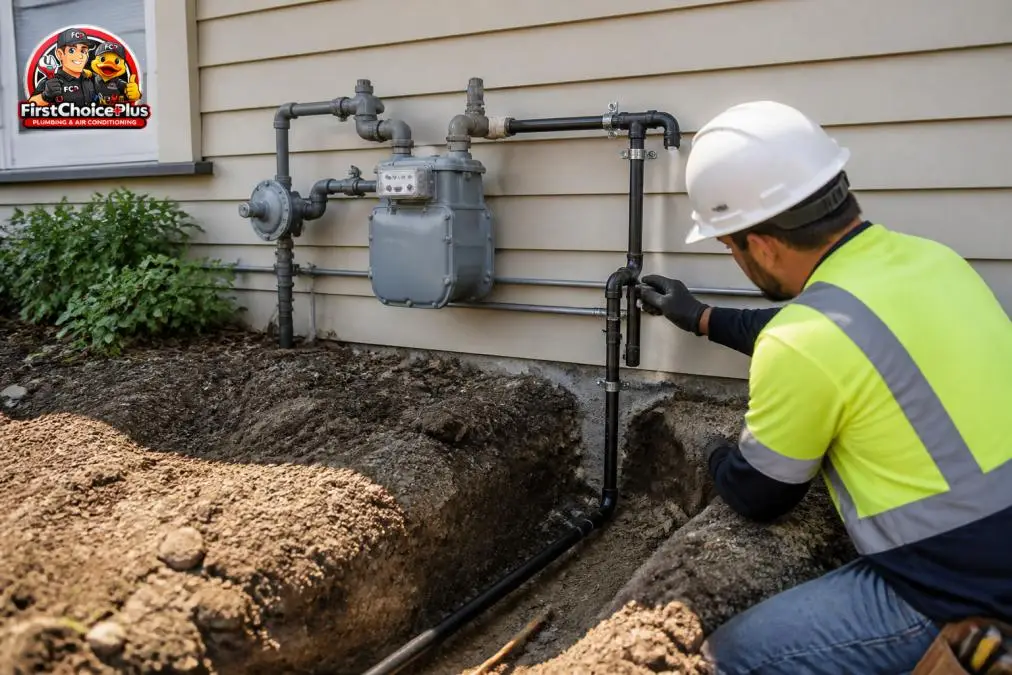
Underground gas piping depth code requirements protect pipes from physical damage, freezing, and corrosion. The IFGC specifies that buried gas piping must be installed at a minimum depth of 18 inches below the surface in most residential settings.
Always consider the gas line installation requirements of your local jurisdiction before starting work.
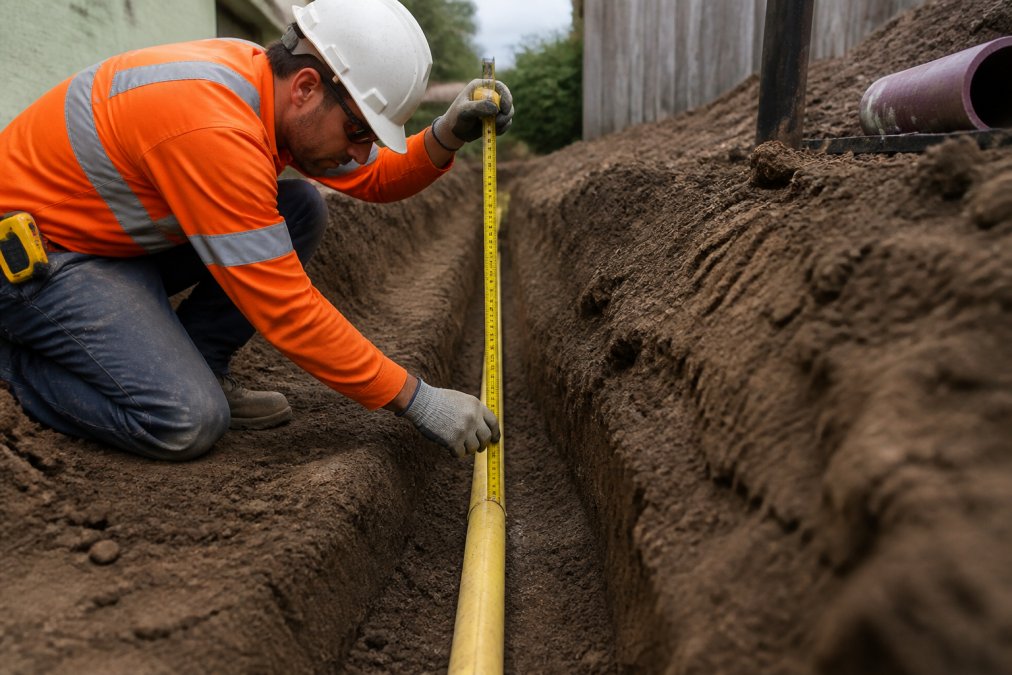
Installation best practices include digging a trench at least 18 inches deep (or per local code) with sloped sides to prevent collapse, laying the gas line on a bed of sand or fine soil free from rocks or sharp objects, installing protective conduit (typically PVC or steel) if the pipe passes under driveways or sidewalks, and using pipe hangers or straps every 4-6 feet to prevent sagging.
Corrosion protection is essential for underground piping. Black steel pipe, the most common material for gas lines, can corrode when exposed to soil moisture. Protection methods include wrapping the pipe with corrosion-resistant tape or applying a protective coating, using sacrificial anodes or impressed current systems for long runs, or choosing HDPE (high-density polyethylene) tubing for areas with highly corrosive soil.
Pipe Materials and Corrosion Protection
Gas line installation requirements specify approved materials based on the application. The most common materials are black steel pipe, CSST (corrugated stainless steel tubing), HDPE plastic tubing, and copper tubing. Each material serves different purposes and has unique properties.
Familiarity with gas line installation requirements can help streamline your project.
Cutting burrs, sharp edges created when cutting pipe, must be removed before installation. All connections use threaded fittings, flared connections, or crimped fittings (depending on material), and must be sealed with pipe thread sealant or PTFE tape to prevent leaks. A sediment trap (or drip leg) is required where gas enters appliances to collect moisture and debris, protecting the appliance’s internal components.
Gas Line Pressure Testing Requirements and Inspection
Pressure Test Procedures and Standards
Gas line pressure testing requirements mandate that every new or modified gas line be pressure-tested before use. The test verifies that the system holds pressure and contains no leaks. This is a critical safety step and a legal requirement for permit approval.
Pressure testing is part of the gas line installation requirements to ensure safety and reliability.
The standard pressure test procedure involves isolating the section being tested by closing all shut-off valves, connecting a nitrogen tank (never use air or natural gas) and pressurizing the line to 60 psig, maintaining pressure for a minimum of 10 minutes with no more than 0.5 psig drop, checking all connections with soapy water (bubbles indicate a leak), repairing any leaks and retesting, and documenting the test results with a licensed professional’s signature on the inspection certificate.
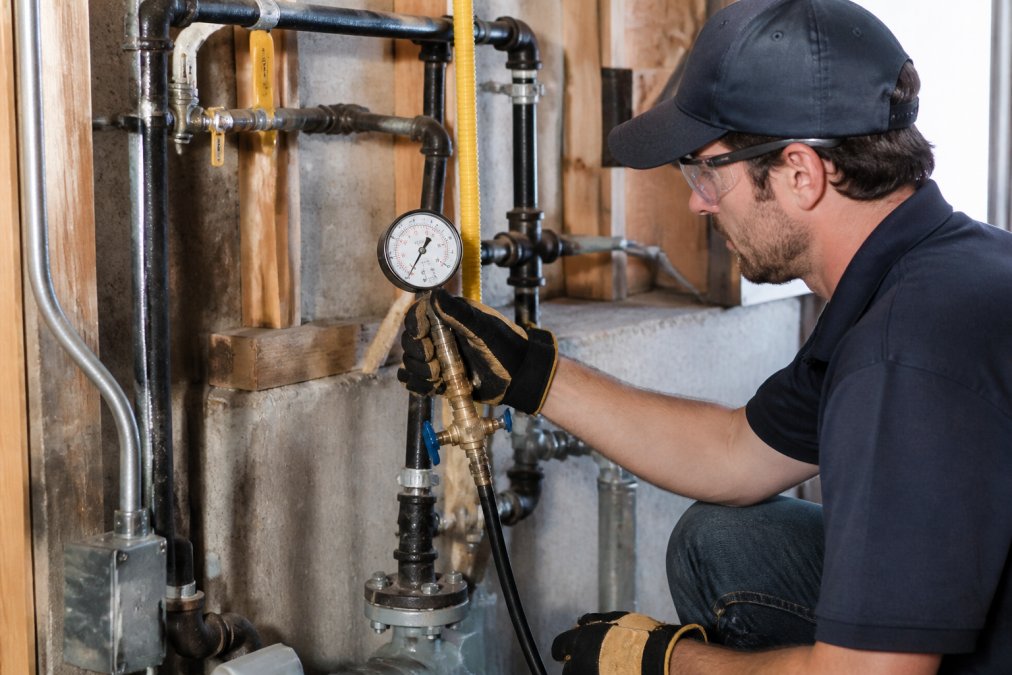
The manifold pressure (the pressure at the gas meter or appliance inlet) is typically 0.5 psig for residential natural gas and 11 psig for propane. Testing at 60 psig ensures the system can handle normal pressures plus a safety margin.
Leak Detection and Safety Verification
After pressure testing passes, a final leak detection step verifies the system is safe for occupancy. This involves applying soapy water to all connections (any bubbles indicate a leak), verifying you can smell the characteristic “rotten egg” odorant at the appliance connection point, lighting each appliance and verifying it ignites properly and burns with a blue flame (not yellow or orange, which indicates incomplete combustion), and confirming that appliance vents are properly connected and free from obstructions.
Every gas line installation requires a pressure test at 60 psig with nitrogen, a soapy water leak check, and verification that the odorant is present. These steps are non-negotiable safety requirements, not optional steps.
Hiring a Licensed Gas Plumber: What You Need to Know
Hiring a licensed professional ensures compliance with gas line installation requirements. A licensed gas plumber has the expertise to navigate local codes and regulations.
Licensing and Certification Requirements
Gas line installation requires a licensed plumber or gas fitter in all U.S. states. Florida requires plumbers to hold a state license issued by the Department of Business and Professional Regulation (DBPR). A licensed plumber in Florida has completed a 4-5 year apprenticeship under a licensed plumber, classroom hours covering codes and safety, a comprehensive exam covering the Florida Building Code and plumbing practices, and annual continuing education to maintain licensure.
When hiring a professional for gas line installation in Port St. Lucie or the Treasure Coast, verify the plumber’s license status through the DBPR website, ask for proof of general liability and workers’ compensation insurance, request contact information for recent customers, and confirm they’ve obtained permits and passed inspections in your local jurisdiction.
First Choice Plus Plumbing & Air has served Port St. Lucie and the Treasure Coast since 2007. Our team is fully licensed and experienced with the local permitting process. We handle the permit application, pressure testing, and final inspection so you don’t have to navigate the bureaucracy alone. If you need related work such as Plumbing Services, we’re equipped to help with that as well.
We understand the gas line installation requirements in Port St. Lucie and can guide you through them.
DIY vs. Professional Installation Liability
Installing a gas line yourself is illegal in most jurisdictions without a license. Most building departments will not issue a permit to a homeowner for gas work. If a gas leak causes injury or property damage, your homeowner’s insurance may deny the claim if the work was not done by a licensed professional. Mistakes in material selection, depth, pressure testing, or venting can result in failed inspections and costly rework. Improper installation can cause gas leaks, carbon monoxide exposure, or explosions.
Understanding the gas line installation requirements will protect you from future liabilities and ensure safe operation.
A professional installation ensures compliance with all codes, proper pressure testing, and documentation for your insurance and future home sale.
Common Code Violations and Maintenance Best Practices
Regular inspections are crucial to ensure adherence to gas line installation requirements.
Common mistakes in gas line installation include insufficient depth, missing corrosion protection, improper sleeving, undersized piping, and lack of bonding. These oversights can lead to severe safety hazards.
Common mistakes in gas line installation include insufficient depth (burying piping less than 18 inches allows damage from digging or freezing), missing corrosion protection (uncoated black steel pipe buried in moist soil corrodes and develops pinhole leaks), improper sleeving (piping under driveways or structures must be protected with a conduit), undersized piping (pipe diameter must be calculated based on total BTU demand of all connected appliances), missing sediment trap (a drip leg at each appliance connection prevents moisture from damaging the appliance), lack of bonding (CSST tubing must be bonded to ground to prevent damage from lightning strikes), pressure test failure (testing with air instead of nitrogen hides leaks), and missing shut-off valve (a manual shut-off valve must be accessible between the meter and the first appliance connection).
Professional installation catches these mistakes before they become safety hazards or require costly repairs.
Ongoing Maintenance and Leak Detection
Awareness of gas line installation requirements helps homeowners maintain their systems effectively. Regular maintenance prevents leaks and extends system life.
After installation, regular maintenance prevents leaks and extends system life. Homeowners should conduct yearly visual inspections for signs of corrosion (white or green discoloration on fittings), water pooling near buried lines, or damaged conduit. Periodically verify you can smell the odorant at appliance connections; inability to smell it may indicate a leak or odorant loss. Monitor burner color (should be blue, not yellow) and flame pattern; yellow flames indicate incomplete combustion or low pressure. Ensure appliance vents are clear of obstructions and properly connected.
If you suspect a gas leak, do not use electrical switches, create sparks, or attempt repairs. Leave the building immediately and call your gas utility’s emergency line or First Choice Plus Plumbing & Air for professional evaluation.
Gas leaks are life-threatening emergencies. If you smell natural gas, leave the building, call your utility company’s emergency number, and do not return until the leak is located and repaired by a licensed professional.
Understanding gas line installation requirements can save lives and prevent serious incidents.
Regional Variability in Gas Piping Standards
Gas line installation requirements are not uniform across the United States. While the IFGC and NFPA 54 provide the foundation, each state and locality adds amendments based on local conditions.
Gas line installation requirements should be a priority for any homeowner considering installation.
Coastal areas like Port St. Lucie face unique challenges including salt spray (which accelerates corrosion and may require additional coating or cathodic protection) and high water tables (which require strong corrosion protection and may restrict certain materials). Before beginning any gas line work in Port St. Lucie, Land O’ Lakes, or elsewhere on the Treasure Coast, contact your local building department to confirm which specific amendments apply. First Choice Plus Plumbing & Air is familiar with local requirements across our service areas and can advise you on regional variability.
Next Steps: Schedule Your Professional Gas Line Installation
Complying with gas line installation requirements protects your investment and ensures safety.
Gas line installation requirements protect your investment and ensure safety.
Gas line installation is one of the most safety-critical plumbing projects a homeowner can undertake. The codes exist because improper installation can cause injury, property damage, or death. Professional installation ensures compliance, safety, and peace of mind.
First Choice Plus Plumbing & Air has served Port St. Lucie and the Treasure Coast since 2007. We handle every step of the process, from permit application through final inspection, so you can focus on your project, not the bureaucracy. Our team is licensed, insured, and experienced with local codes and inspection requirements.
If you’re planning a gas line installation, extension, or replacement in Port St. Lucie, the Treasure Coast, or Land O’ Lakes, we’re here to help. Contact us today to discuss your project and schedule a professional evaluation. Emergency and after-hours service may be available, depending on location, the type of problem, and technician availability.
If you’re planning a gas line installation, extension, or replacement in Port St. Lucie, the Treasure Coast, or Land O’ Lakes, we’re here to help.
Contact us today to learn about the gas line installation requirements specific to your project.
Contact us today to learn about the gas line installation requirements specific to your project.
Frequently Asked Questions
Do I need a permit for natural gas line installation?
Yes. All natural gas line installations require a building permit and inspection before the system can be used. Permits ensure your installation meets the International Fuel Gas Code (IFGC) and local building codes. Working without a permit can result in fines, insurance denial, and failed home inspections. We handle the permit process as part of our professional gas line installation service.
Permits reflect the gas line installation requirements necessary for safe and legal work.
How deep does a natural gas line need to be buried?
Underground gas piping must typically be buried at least 18 inches below grade in areas subject to traffic and 12 inches in non-traffic areas, according to most local codes. The exact depth depends on your location and soil conditions. Proper depth protects the line from damage, freezing, and corrosion. Our licensed plumbers verify depth requirements specific to your property and local codes.
Local regulations can modify gas line installation requirements, so always check before proceeding.
What is involved in gas line pressure testing requirements?
Pressure testing verifies the system holds pressure without leaks. A licensed technician connects a pressure gauge to the line, pressurizes it to a specified psig (pounds per square inch gauge), and monitors for pressure drop over time. If pressure drops, a leak exists and must be located and repaired. All pressure tests must be documented and approved by the building inspector before the system is placed in service.
Pressure testing is part of the gas line installation requirements that ensure system integrity.
Can I install my own natural gas line?
No. Natural gas line installation must be performed by a licensed gas plumber in Florida. DIY installation violates code, voids insurance coverage, and creates serious safety hazards including gas leaks and fire risk. Improper installation can result in fines and failed inspections. Professional installation ensures compliance, safety, and peace of mind. First Choice Plus Plumbing & Air has served the Treasure Coast since 2007 with licensed, certified technicians.
Understanding gas line installation requirements can prevent costly mistakes and ensure compliance.
Understanding the gas line installation requirements is essential for any homeowner planning modifications.
Ready to move forward with your gas line installation? Call First Choice Plus Plumbing & Air today to schedule a consultation with a licensed professional. We’ll walk you through the requirements, handle the permitting process, and ensure your system is safe and code-compliant from start to finish.
We guide you through the gas line installation requirements from start to finish, ensuring a smooth process.
This article was written using GrandRanker. For assistance with your gas line installation requirements, we offer comprehensive services tailored to your needs.
For assistance with your gas line installation requirements, we offer comprehensive services tailored to your needs.