Does your home in Traditions feel like two different climates, where the downstairs is freezing while the upstairs bedrooms trap the afternoon heat? It’s a common struggle for many of our neighbors who deal with uneven temperatures and skyrocketing FPL bills during the peak of a Florida summer. Installing a professional zoning system for HVAC Port St. Lucie residents is often the most effective way to regain control over your home’s comfort and air quality. We understand how frustrating it is to pay for cooling you aren’t actually feeling, especially when humidity starts to creep into those warmer rooms.
In this 2026 comfort guide, you’ll discover how HVAC zoning eliminates stubborn hot spots and can reduce your household energy consumption by up to 30 percent. We’ll walk you through the practical benefits of smart thermostats, explain how these systems manage Florida’s intense humidity, and provide clear insights into the latest efficiency standards. From St. Lucie West to the shores of Jensen Beach, we’re here to help you create a more efficient, balanced, and cost-effective home environment.
Key Takeaways
- Discover how to fix the “Florida Heat Rise” that leaves your upstairs rooms stifling while the downstairs remains uncomfortably chilly.
- See how a professional zoning system for HVAC Port St. Lucie properties uses a central control panel to manage motorized dampers inside your ductwork.
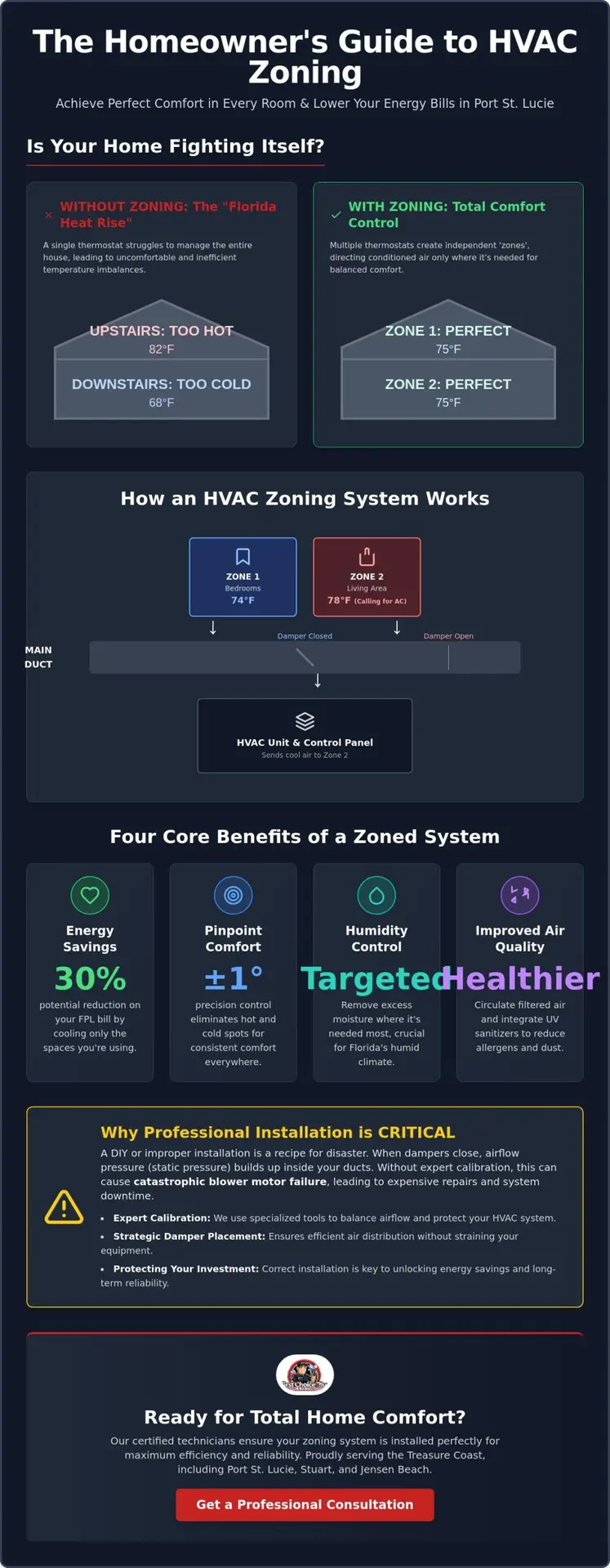
- Learn how to lower your monthly energy consumption by up to 30 percent by cooling only the specific rooms you’re currently using.
- Find out why expert calibration is critical for balancing airflow and preventing costly blower motor failures caused by improper static pressure.
Why Port St. Lucie Homes Struggle with Uneven Cooling
Many homeowners in neighborhoods like Traditions or St. Lucie West face the same daily frustration. One room feels like an oven while another is shivering cold. A professional zoning system for HVAC Port St. Lucie residents solves this by using a series of motorized dampers and multiple thermostats to divide your home into independent climate zones. Instead of one thermostat trying to guess the temperature for the entire house, you gain individual control over specific areas.
The “Florida Heat Rise” effect is particularly brutal here. Heat naturally migrates upward; this often leaves second stories in the Treasure Coast 5 to 10 degrees warmer than the ground floor. Standard systems struggle to push enough air upstairs without freezing out the downstairs living areas. Additionally, many local architectural designs feature large west-facing windows. These rooms experience significant solar gain in the afternoon, absorbing heat that a centrally located thermostat simply cannot detect. To understand more about how HVAC systems work, it helps to realize that traditional units are designed to deliver air everywhere at once, regardless of where the heat is actually concentrated.
The Impact of High Humidity on Traditional Systems
Humidity management is a major factor in Florida comfort. Single-zone systems often overcool the main living area just to dehumidify a damp guest wing or master suite. This inefficient cycle places massive strain on your compressor during the peak heat of July and August. A zoning system for HVAC Port St. Lucie homes allows for precise humidity control in specific wings. You can target moisture removal in the areas that need it most without wasting energy on rooms that are already comfortable. This targeted approach reduces wear and tear on your equipment and keeps your FPL bills manageable.
How an HVAC Zoning System for Port St. Lucie Works
Think of the control panel as the brain of your home’s comfort. It sits near your indoor unit and communicates constantly with every thermostat in the house. When a specific room gets too warm, the panel triggers motorized dampers inside your ductwork. These dampers act like traffic cops. They open to let cool air into the hot zone and close off areas that are already chilled. This targeted approach is much more efficient than cooling an entire house just to fix one stuffy guest room in Fort Pierce.
Success depends on smart sensor placement. We often place thermostats in high-heat areas like master suites or sunrooms to ensure they get the attention they deserve. Modern setups integrate perfectly with Wi-Fi thermostats, allowing you to track usage and follow U.S. Department of Energy energy-saving tips right from your phone. By only cooling active rooms, you’ll see a noticeable drop in your FPL bill without sacrificing comfort. If you’re curious about how your current setup might handle these upgrades, we can help you evaluate your AC installation options to find the best fit.
Zoning vs. Ductless Mini-Splits: Which is Best?
Ductless mini-splits are great for new additions, but a zoning system for HVAC Port St. Lucie homes is usually the superior choice for existing structures. Zoning keeps your home’s aesthetics clean because all the hardware is hidden inside the ducts. There are no bulky wall units in every room. If your current AC unit is relatively new and your ductwork is in good shape, retrofitting is often the most cost-effective path. It uses your existing infrastructure to provide the same level of precision control as a multi-split system.
Enhancing Air Quality Within Your Zones
One major advantage of zoning that often gets overlooked is indoor air quality. By pairing your zones with UV air sanitizers, you can treat air in specific high-traffic areas of your home. Independent fan controls also help. They allow you to circulate air in one part of the house without blowing dust or allergens into bedrooms. This creates a healthier environment for families in Jensen Beach or Stuart who struggle with seasonal allergies.
Installation and Maintenance in the Treasure Coast
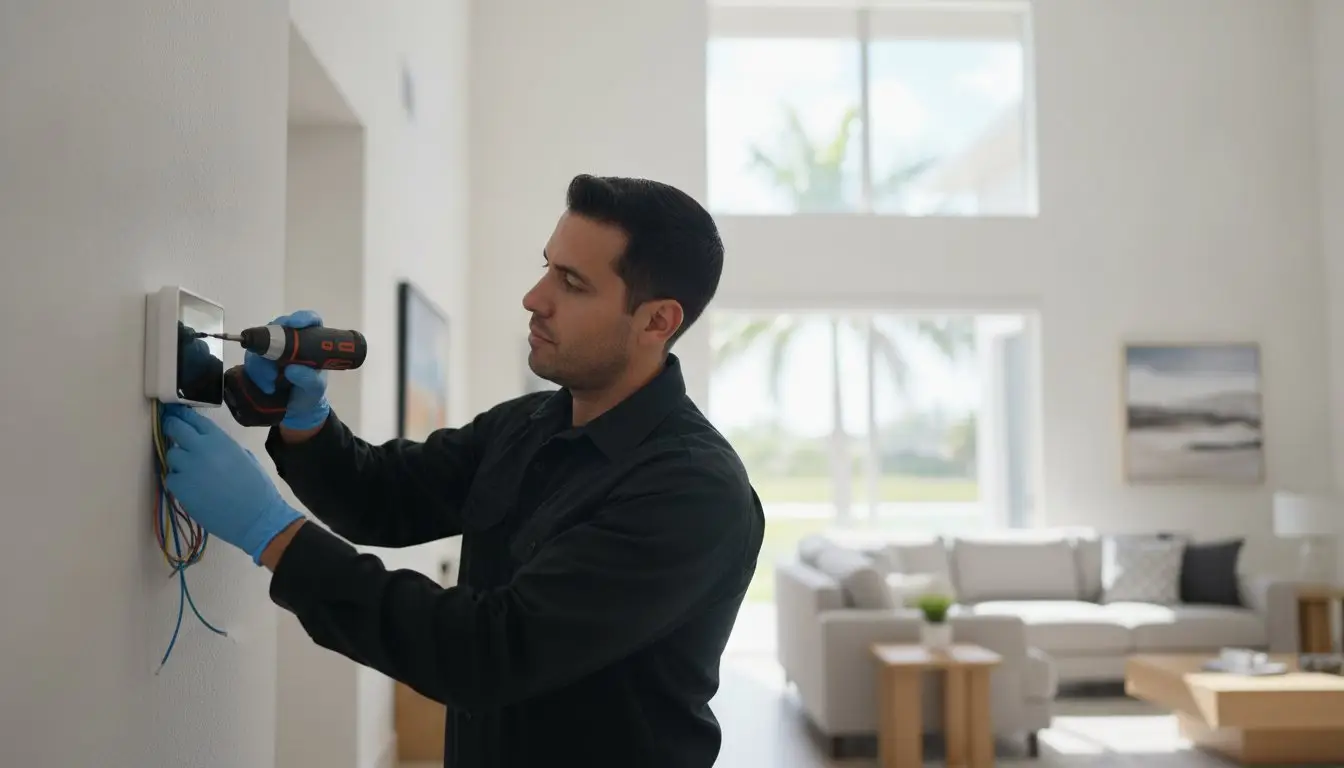
Installing a zoning system for HVAC Port St. Lucie homes doesn’t require a total house renovation. Most homeowners in Palm City or Stuart are relieved to learn that we can retrofit existing ductwork. We carefully cut into the main duct trunks to install motorized dampers. This process is clean and efficient. It allows us to upgrade your comfort without the mess of major construction. Once the dampers are in place, we wire them back to the central control panel to give you instant command over your climate.
Professional calibration is the most vital step in this process. When dampers close to redirect air, it creates static pressure within the system. If this pressure isn’t balanced correctly, it can lead to catastrophic failure of your blower motor. We use specialized tools to ensure your AC unit breathes easily even when multiple zones are closed. This precision protects your investment and ensures long term reliability. A poorly calibrated system will short cycle, which wastes energy and wears out the compressor prematurely.
Our local environment presents unique challenges. The salt air and high humidity in Port St. Lucie can eventually affect the electronic components and motorized hinges of your dampers. Regular maintenance is key. You should call a professional if you hear clicking sounds in the attic or notice that a specific room isn’t reaching its set temperature. These are often signs that a damper is stuck or a sensor needs replacement. Staying ahead of these small issues prevents larger, more expensive repairs down the road.
Choosing a Local Expert for Your Comfort
Working with a team that understands Treasure Coast building codes and local home styles is essential for a successful installation. We have deep experience in neighborhoods from St. Lucie West to Fort Pierce. Our team provides 24/7 emergency AC repair for zoned systems to keep you cool around the clock. If you’re ready to upgrade but want to manage the upfront cost, we invite you to explore our financing options for whole-home comfort solutions.
Ready for a Cooler, More Efficient Home?
Achieving perfect comfort in a multi-story Florida home doesn’t have to be a constant battle with your thermostat. By installing a professional zoning system for HVAC Port St. Lucie residents can finally eliminate stubborn hot spots and see a real difference in their monthly FPL bills. You’ve learned how motorized dampers and smart sensors work together to direct cooling exactly where it’s needed; this targeted approach protects your equipment from unnecessary strain and keeps humidity under control.
At First Choice Plus Plumbing & Air, we bring over 15 years of Treasure Coast expertise to every installation and repair. As a locally owned and operated business led by Manuel J. Duran Jr., we pride ourselves on honest, transparent service that our neighbors in St. Lucie West and Traditions can trust. Whether you are looking for a system upgrade or need our 24/7 emergency AC service, we have the tools and experience to keep your family comfortable. Schedule your HVAC zoning consultation in Port St. Lucie today! We look forward to helping you master your home’s climate.
Frequently Asked Questions
Can I add a zoning system to my existing HVAC unit in Port St. Lucie?
Yes, we can retrofit most existing systems with a professional zoning system for HVAC Port St. Lucie. If your current AC unit is healthy and your ductwork is accessible, we simply install motorized dampers and a central control panel. This is a popular choice for homeowners in St. Lucie West who want better comfort without replacing their entire system. We’ll inspect your blower motor first to ensure it can handle the redirected airflow.
How much can I actually save on my FPL bill with a zoning system?
You can reduce your cooling costs by up to 30 percent annually according to industry energy savings data. Since air conditioning accounts for the largest portion of your FPL bill, targeting only the rooms you use makes a massive difference. By not wasting energy on empty guest rooms or formal dining areas during the day, your system runs less frequently and more efficiently throughout the peak summer months.
Is a zoning system better than just closing vents in unused rooms?
A professional zoning system is significantly better and safer for your equipment than closing vents manually. Closing manual vents creates dangerous backpressure that can lead to a frozen evaporator coil or a blown motor. A professional zoning system for HVAC Port St. Lucie uses a dedicated control board to manage pressure levels. It ensures your system stays within safe limits while delivering air exactly where you want it.
What happens if one zone thermostat fails?
Your entire system won’t go down if one thermostat has an issue. The control panel treats each zone as an independent unit. If the master bedroom sensor fails, your living room and kitchen zones will continue to function perfectly. This localized control is a major advantage; it ensures you always have at least one comfortable area in the house while we arrive to perform a quick sensor replacement.

Article by
Written by First Choice Plus Plumbing & Air Team
This article was created by the team at First Choice Plumbing Solutions, a licensed and experienced plumbing and HVAC company serving Port St. Lucie, Land O’ Lakes, and surrounding areas.
Our team specializes in plumbing and air conditioning services, including drain cleaning, leak detection, water heater repair and installation, AC repair, maintenance, and system installations. Our content is based on real-world experience and the common issues we solve for homeowners and businesses every day.
We aim to provide accurate, helpful, and easy-to-understand information so you can make informed decisions about your plumbing and HVAC needs.
If you need reliable, professional service, First Choice Plumbing Solutions is here to help.
Disclaimer
Disclaimer: The information provided in this article is for general informational purposes only and does not constitute professional plumbing or HVAC advice. Every situation is different, and readers should consult a licensed professional for proper diagnosis and repair. First Choice Plus Plumbing & Air is not liable for any damages or losses resulting from the use of this information.