
In Florida, your insurance carrier might be the biggest reason you need to repipe your home; however, they are almost certainly the last people who will pay for the project itself. It is a frustrating reality for many neighbors in Port St. Lucie and Fort Pierce who find themselves asking, will homeowners insurance cover repiping when their pipes start to fail. Most homeowners naturally assume that if a pipe bursts, the insurance company handles the whole bill. While they usually cover the water damage to your drywall or flooring, they rarely pay to replace the actual plumbing system that caused the mess.
We understand how stressful the Florida insurance market feels right now. Between rising premiums in Stuart and the constant fear of a non-renewal notice, you just want to keep your home safe and insurable. This guide will help you understand the complex relationship between your policy and your plumbing so you can determine if your project is covered or an out of pocket expense. We will break down the specific “sudden and accidental” clauses insurers use, look at the 2026 outlook for Treasure Coast homeowners, and explain how a proactive repipe can actually prevent your carrier from dropping your coverage entirely.
Key Takeaways
- Understand the “Maintenance Rule” and why Florida carriers view aging plumbing similarly to an old roof that requires proactive homeowner care.
- Learn the critical distinction between “sudden and accidental” water discharge and gradual wear to determine if your leak damage is covered.
- Discover why the answer to will homeowners insurance cover repiping is often “no,” yet carriers may still pay for the costly labor of accessing a slab leak.
- Identify which specific pipe materials are leading to policy non-renewals across the Treasure Coast and how a repipe secures your coverage.
- Explore how upgrading to modern PEX or copper systems can potentially lower your premiums and improve your home’s standing with local insurers.
The Short Answer: Does Insurance Pay for Whole-House Repiping?
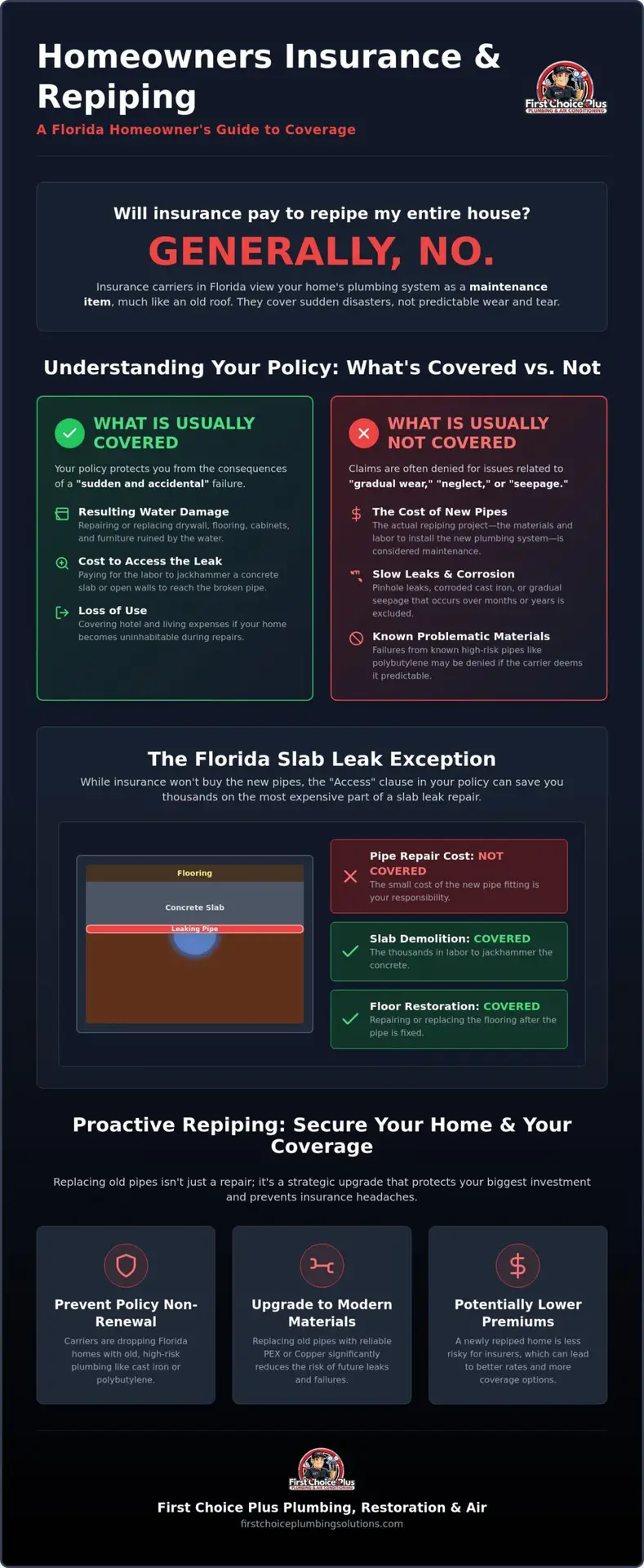
The direct answer for most Florida homeowners is “no.” Insurance companies generally view your plumbing system as a maintenance item, much like your roof or your water heater. When you ask, will homeowners insurance cover repiping, you have to look at how carriers define a “peril.” A standard policy is designed to protect you from sudden, unpredictable disasters, not the inevitable aging of metal or plastic. Understanding What Homeowners Insurance Covers helps clarify that while they might fix the mess, they won’t pay to upgrade the source of the problem. Resulting damage is defined as the coverage for what the water ruins, not the pipe that leaked.
Carriers typically distinguish between the pipe itself and the collateral damage. If you have older materials like cast iron or polybutylene, insurers often see these as ticking time bombs. In many cases, having these materials in a home in Stuart or Fort Pierce can even lead to a claim denial if the carrier determines the failure was due to predictable corrosion rather than a freak accident. They expect you to replace these systems before they fail, just as you would replace worn tires on a car.
Sudden Pipe Bursts vs. Slow Corrosion
Timing is everything when filing a claim. A catastrophic burst that floods your kitchen in minutes is usually considered a “sudden and accidental” event. On the other hand, a pinhole leak that has been dripping behind your wall for six months is classified as “seepage” or “gradual wear and tear.” To prove your case, hiring a professional leak detection expert is vital. These specialists document the exact cause of the loss, providing the technical evidence needed to show the damage wasn’t caused by years of homeowner neglect.
Exclusions You Need to Know
- Seepage Clauses: Most policies in Port St. Lucie contain specific language that excludes “constant or repeated” moisture.
- Wear and Tear: This remains the most common reason for claim denial across the Treasure Coast.
- Neglect: If an adjuster finds mold or rotted wood, they may argue the leak was ongoing and should have been caught sooner.
Insurance is there for the “what ifs,” not the “when it wears out.” If you’re wondering will homeowners insurance cover repiping after a series of small leaks, the answer is almost always a firm no, as these are seen as signs of a system that has simply reached the end of its lifespan.
What Insurance *Will* Cover During a Plumbing Failure
While the answer to will homeowners insurance cover repiping is usually no for the hardware itself, your policy provides significant protection for the aftermath of a leak. Most standard Florida policies include coverage for “resulting damage.” This means if a pipe bursts, the insurance company is responsible for replacing your ruined carpeting, soggy drywall, and water-damaged furniture. They focus on sudden and accidental damage, which is why a rapid response is so important for homeowners in Stuart and Jensen Beach.
One of the most valuable parts of a policy is the “Access” clause. If a leak occurs under your foundation, the cost to reach that pipe is often much higher than the pipe repair itself. Insurance will frequently pay the labor costs to break through the concrete slab and restore the flooring afterward. They still won’t pay the small cost of the actual copper or PEX fitting, but they handle the heavy lifting. If your home becomes uninhabitable during this chaotic process, “Loss of Use” coverage can help pay for a hotel stay while we work to restore your service.
The Slab Leak Exception
Florida homes are almost exclusively built on concrete slabs. When a pipe fails underground, the excavation is a massive undertaking. Your insurer might deny the pipe replacement but approve the thousands of dollars required for jackhammering and debris removal. Because these costs are so high, many neighbors find that investing in a whole house repipe is actually more cost-effective than paying multiple deductibles for recurring slab failures. It’s a strategic move when you realize that while will homeowners insurance cover repiping the whole system is unlikely, they might pay for the most expensive labor parts of a single repair.
Documenting Your Claim Correcty
Evidence is your best friend during an insurance adjustment. Never let a plumber throw away the failed section of pipe before the adjuster sees it; that piece of metal or plastic is proof of the “sudden” nature of the break. Always hire a licensed plumbing services company to provide a professional report. A detailed invoice from a master plumber carries more weight with an adjuster than a homeowner’s DIY photos. If you’re dealing with a current leak, getting a professional assessment from our team at First Choice Plus Plumbing & Air can help you navigate these complex documentation requirements.
The Florida Factor: Why Repiping is an Insurance Necessity in 2026
Florida homeowners face a unique challenge in 2026. The insurance market is tighter than ever, and carriers are sending non-renewal notices to neighbors in Port St. Lucie simply because their homes have aging cast iron or polybutylene pipes. While you might still wonder will homeowners insurance cover repiping, the more urgent question is often whether they will even continue to cover your home at all. Proactive replacement is becoming the only way to stay insurable in the Treasure Coast area.
A “4-Point Inspection” is now the standard for any home over 20 years old in Stuart or Jensen Beach. If your plumbing system shows signs of corrosion or uses banned materials, you won’t just face higher premiums; you might be unable to sell your property. Conversely, upgrading to modern PEX or copper systems can trigger significant premium discounts. Carriers reward the reduced risk of a future claim, making the investment pay for itself over time through lower monthly insurance costs and guaranteed coverage.
Cast Iron Challenges in the Treasure Coast
Cast iron pipes in Fort Pierce and Palm City homes built before 1975 are reaching their breaking point. These pipes rust from the inside out, often staying hidden until a major backup occurs. We sometimes find that routine hydro jetting can actually reveal the need for a repipe during a sewer camera inspection. Seeing the internal state of your lines allows you to act before a catastrophic failure forces your hand and leaves you with a massive out-of-pocket bill.
Financing Your Repipe Without Insurance
We know a whole-house project is a significant investment, especially when the answer to will homeowners insurance cover repiping is usually negative. Many families choose financing options to spread the cost into manageable monthly payments. When you compare a small monthly payment to the risk of a high deductible or losing your insurance coverage entirely, the math favors being proactive. Don’t wait for a flood to ruin your peace of mind; contact First Choice Plus for a repipe consultation today to keep your home protected and your policy active.
Securing Your Home’s Future and Insurability
Navigating the Florida insurance market requires a proactive approach to home maintenance. While the answer to will homeowners insurance cover repiping is often no for the pipes themselves, replacing an aging system is the best way to safeguard your property. By upgrading now, you avoid the high cost of multiple deductibles and ensure your home remains fully insurable during its next 4-point inspection. It’s a strategic investment that protects your equity and your peace of mind.
Locally owned and managed by Manuel J. Duran Jr., First Choice Plus Plumbing & Air specializes in expert slab leak detection and comprehensive repiping solutions. We understand the unique plumbing challenges found in the Treasure Coast and provide a 24/7 emergency response for your most urgent needs. Don’t wait for a leak to dictate your schedule or your budget. Schedule a Whole-House Repipe Assessment in Port St. Lucie Today. Taking charge of your plumbing today ensures a safer, more reliable home for your family tomorrow.
Frequently Asked Questions
Does insurance cover the cost of the new pipes during a repipe?
No, standard homeowners insurance policies do not pay for the actual plumbing materials or the labor to install a new system. Carriers view your pipes as a maintenance item, similar to your roof or air conditioner. While they may pay to repair the damage caused by a burst pipe, the cost of the pipe itself and the upgrade to a new system is an out of pocket expense for the homeowner.
Will my insurance drop me if I have old cast iron pipes?
Yes, it is increasingly common for Florida carriers to issue non-renewal notices for homes with aging cast iron plumbing. Many insurers in Port St. Lucie and Fort Pierce now require a passing 4-point inspection before they will renew a policy. If your cast iron is older than 40 years or shows signs of failure, you might be forced to repipe to keep your home protected and insurable.
How do I know if my plumbing leak is ‘sudden and accidental’?
A leak is considered “sudden and accidental” if it happens without warning and causes immediate damage. For example, a supply line that snaps and floods your kitchen in minutes usually qualifies. On the other hand, a slow drip that has been leaking behind a wall for months is classified as “seepage” or “wear and tear.” Adjusters look for rot and mold as evidence that a leak was not sudden.
Can I get a discount on my Florida homeowners insurance after repiping?
Many Florida insurance companies offer premium discounts to homeowners who replace their old plumbing with modern materials like PEX or copper. When you complete a whole-house project, you significantly lower the risk of a catastrophic water damage claim. We recommend providing your carrier with a copy of your repipe invoice and a fresh 4-point inspection to see how much you can save on your annual premiums.
Is polybutylene piping covered by insurance in Port St. Lucie?
Polybutylene is almost never covered for replacement, and it is a major red flag for insurance companies in St. Lucie West and Traditions. Most carriers consider this grey plastic piping to be a defective material. If your home still has polybutylene, your insurer may exclude any water damage claims related to it or require you to replace the entire system before they will renew your coverage.
Does insurance pay for drywall repair after a repipe?
Insurance only pays for drywall repair if it is part of a covered claim for a sudden pipe failure. If you are asking will homeowners insurance cover repiping for a preventative project, the answer for drywall is usually no. When you choose to repipe your home to avoid future leaks, the cost of patching and painting the walls is typically part of your total project investment rather than an insurance-covered expense.

Article by
Written by First Choice Plus Plumbing & Air Team
This article was created by the team at First Choice Plumbing Solutions, a licensed and experienced plumbing and HVAC company serving Port St. Lucie, Land O’ Lakes, and surrounding areas.
Our team specializes in plumbing and air conditioning services, including drain cleaning, leak detection, water heater repair and installation, AC repair, maintenance, and system installations. Our content is based on real-world experience and the common issues we solve for homeowners and businesses every day.
We aim to provide accurate, helpful, and easy-to-understand information so you can make informed decisions about your plumbing and HVAC needs.
If you need reliable, professional service, First Choice Plumbing Solutions is here to help.
Disclaimer
Disclaimer: The information provided in this article is for general informational purposes only and does not constitute professional plumbing or HVAC advice. Every situation is different, and readers should consult a licensed professional for proper diagnosis and repair. First Choice Plus Plumbing & Air is not liable for any damages or losses resulting from the use of this information.