
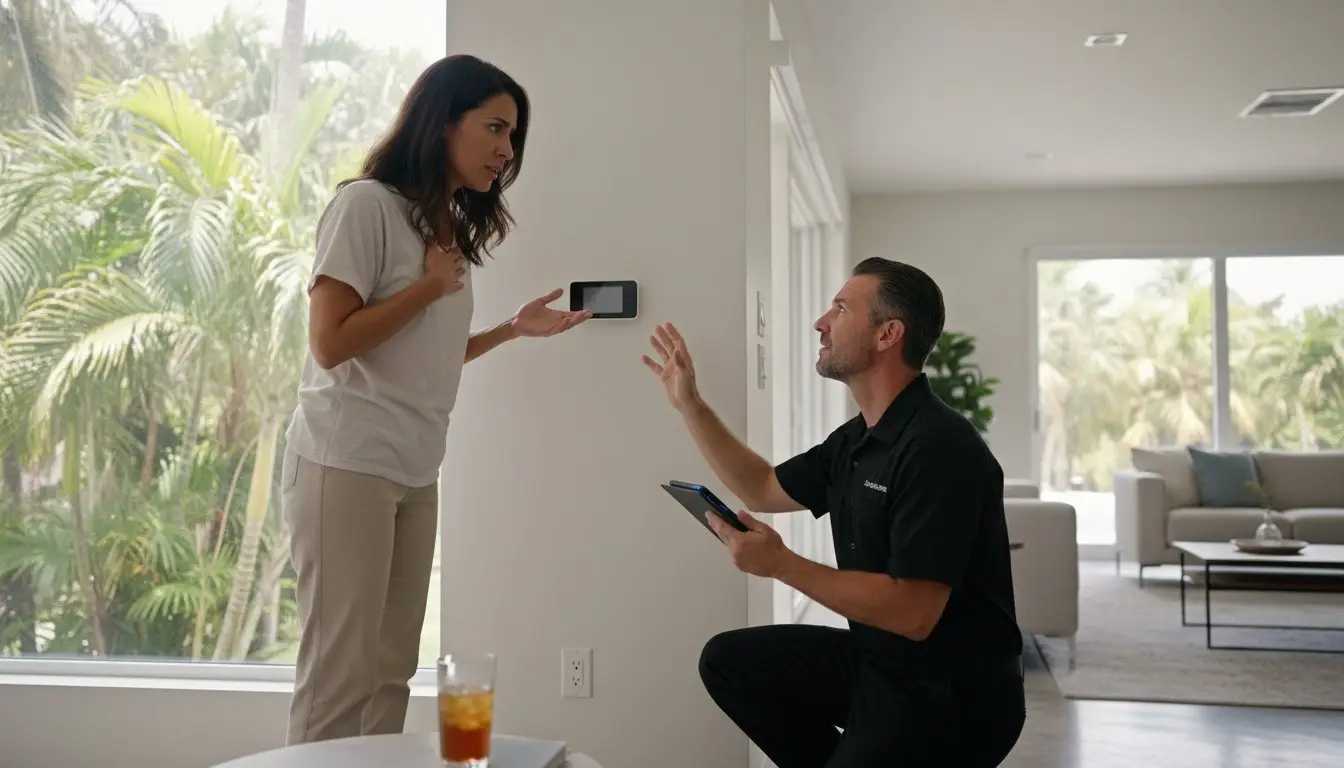
You step inside after a long day in the Florida sun, expecting a blast of crisp air, but instead, you’re met with a wall of stagnant humidity. It’s a stressful moment that many of our neighbors in Port St. Lucie and the Treasure Coast know all too well. You can hear the unit humming outside, yet the temperature on the thermostat refuses to budge. You’re likely asking, why is my AC running but not cooling my home when I need it most? This situation is more than just an inconvenience; it often leads to high energy bills as your system works overtime to fight the heat.
We know the anxiety that comes with a malfunctioning unit, especially the fear that you might need a total system replacement. The good news is that an air conditioner that runs without cooling is often struggling with airflow or humidity management rather than a catastrophic mechanical failure. This guide explains the most common reasons your system is failing to drop the temperature. You’ll learn which issues are simple DIY fixes you can handle today and exactly when it’s time to call a professional to restore your home’s comfort and protect your equipment.
Key Takeaways
- Learn how to perform immediate checks on your thermostat and circuit breaker to see if a simple setting change can restore your comfort.
- Identify common mechanical issues like frozen evaporator coils to understand why is my AC running but not cooling during a heatwave.
- Discover how Florida’s unique environment, including rapid plant growth and salt air corrosion, impacts your outdoor condenser unit’s performance.
- Determine when to turn your system off to avoid permanent damage and learn what a professional technician looks for during a diagnostic call.
Quick Checks: Is It a Simple Fix or a System Failure?
Before you start worrying about the cost of a new unit, take a breath and check the basics. It is incredibly frustrating to realize your home is heating up, and you’re likely asking, why is my AC running but not cooling like it should? In many cases, the system isn’t actually broken; it is simply struggling with a setting or a minor blockage. Start at your electrical panel and your thermostat before moving on to more complex troubleshooting.
Setting the AC fan to ‘Auto’ ensures the blower only operates while the system is actively chilling air, whereas the ‘On’ setting keeps the fan running constantly, even when the cooling components are idle.
The Role of the Thermostat in Cooling
If your fan is set to ‘On,’ the blower motor will push air through your vents 24/7. When the outdoor condenser isn’t in an active cooling cycle, the air coming out of the registers will be room temperature. This often makes homeowners think the system is failing when it’s actually just circulating unconditioned air. Check your thermostat for a low battery warning or a blank screen. A weak battery can prevent the thermostat from signaling the outdoor unit to start, leaving you with a fan that blows but never cools. We often find that a simple set of fresh AA batteries solves the problem in homes throughout Port St. Lucie and Fort Pierce.
Why Airflow is the Lifeblood of Your AC
A clogged air filter is the most common reason for a sudden loss of cooling. When dust and pet dander block the filter, your air handler can’t pull enough air across the coils to complete the vapor-compression cycle effectively. This restriction causes the system to run longer and work harder, which spikes your energy bills. For most Florida residences, we recommend using filters with a MERV 8 to MERV 11 rating. These provide a great balance of indoor air quality without suffocating your equipment. If your filter is caked in grey dust, replace it immediately and see if the temperature begins to drop.
Finally, check your circuit breaker. Your air conditioner uses two separate breakers: one for the indoor unit and one for the outdoor unit. If the outdoor breaker trips, the indoor fan will continue to run, but no cold air will be produced. If you reset the breaker and it trips again immediately, do not try a third time. This indicates an electrical fault that requires emergency AC repair to prevent a total compressor burnout.
Mechanical Issues: Why Your AC Blows Warm Air
If your filters are clean and your settings are correct, you’ve moved into the territory of mechanical troubleshooting. The evaporator coil is a series of copper tubes in your indoor air handler that absorbs heat from your home’s air. When this component fails to absorb heat properly, your vents will blow lukewarm air, leading you to wonder why is my AC running but not cooling during the peak of a Florida afternoon. This process is central to How Air Conditioners Work, and when it breaks down, your comfort disappears quickly.
What Causes Frozen Evaporator Coils?
A frozen coil sounds like it would make your house colder, but it actually acts as an insulating block of ice that prevents heat transfer. This happens when the refrigerant inside the coil stays too cold, usually because there isn’t enough warm air blowing over it or because the refrigerant level is low. If you see ice on the copper lines leading into your air handler, you must act fast. First, turn the cooling off at the thermostat to prevent further damage. Next, set the fan to ‘On’ to pull room-temperature air over the coils to melt the ice safely. Never attempt to scrape the ice off, as you can easily puncture the delicate aluminum fins.
Signs of a Refrigerant Leak
Many homeowners believe refrigerant is a fuel that gets used up over time. This is a myth. Your AC is a closed system; if you’re low on refrigerant, you have a leak. Topping off a leaking system is a temporary fix that wastes money and can lead to compressor failure. You might hear a distinct hissing or bubbling sound near the indoor or outdoor unit if the leak is significant. If you suspect your system is losing pressure, contacting a leak detection expert is the only way to ensure the hole is properly sealed before recharging the system.
Finally, consider the compressor. It is the heart of your system. If you hear the outdoor fan spinning but don’t hear the deep, rhythmic hum of the compressor, the unit can’t pump refrigerant. This often requires a professional AC repair and troubleshooting session to determine if a simple capacitor has failed or if the compressor itself has seized.
The Florida Factor: Humidity and Outdoor Unit Obstructions
Living on the Treasure Coast means your air conditioner faces challenges that systems in other states never encounter. If you are wondering why is my AC running but not cooling, the answer often lies outside your home. Florida’s year-round growing season and coastal climate create a perfect storm for outdoor unit failure. Rapidly growing vines, tall grass, and even stray grass clippings from your weekly lawn care can quickly choke the delicate fins of your condenser unit. When air cannot flow freely through these fins, the system cannot release the heat it pulled from your living room, causing it to run endlessly without results.
Cleaning Your Outdoor Condenser Unit
Maintaining the area around your unit is a vital DIY task. Clear away any shrubs or debris within two feet of the condenser to ensure proper airflow. If the fins look dusty or caked with dirt, you can gently rinse them with a standard garden hose. Move the stream of water from top to bottom at a slight downward angle. Never use a pressure washer for this task. The high-pressure stream will flatten the soft aluminum fins, permanently damaging the unit and restricting airflow even further.
For our neighbors in coastal areas like Jensen Beach and Stuart, salt air corrosion is a silent system killer. Salt deposits build up on the aluminum components, leading to pitting and eventual failure of the coil. This degradation reduces the unit’s efficiency long before the equipment reaches its expected lifespan. Additionally, extreme humidity plays a massive role. In Port St. Lucie, where humidity frequently hits 95%, your system must first remove water from the air and dehumidify it to improve comfort before it can effectively lower the temperature. If the air is too wet, the AC may never reach your set point during a summer peak.
High Humidity and System Capacity
When humidity is high, your air conditioner spends a significant portion of its energy on latent cooling, which is the process of removing moisture. This is why an undersized unit often fails to keep up during July and August. It simply doesn’t have the capacity to handle both the heat and the water vapor at the same time. To help your system manage this load and keep the internal components clean, consider the installation of UV air sanitizers. These systems prevent biological growth on the evaporator coil, ensuring it stays efficient enough to handle Florida’s intense moisture levels.
If your unit is struggling to keep up with the summer heat despite a clean condenser, it might be time for a professional evaluation. Contact our team for emergency AC repair to restore your home’s comfort today.
Professional AC Repair: Protecting Your Treasure Coast Home
When the temperature in your home continues to climb despite the unit being on, the most critical step you can take is to turn the system off at the thermostat immediately. Continuing to run an air conditioner that isn’t cooling puts immense strain on the compressor. This component is the most expensive part of your system. Ignoring the signs of failure can turn a minor electrical fix into a multi-thousand dollar replacement. While you wait for emergency AC repair, keep the system powered down. You can also close your blinds and use ceiling fans to maintain what little comfort remains, but don’t force the HVAC unit to keep running.
During a professional diagnostic in Port St. Lucie, a technician does more than just look at the thermostat. We inspect the start capacitors, test the refrigerant pressure, and check for electrical continuity. This thorough approach identifies the root cause of why is my AC running but not cooling, ensuring the fix is permanent rather than a temporary patch. Most homeowners find that 80% of these emergency calls could have been prevented with a consistent preventative maintenance plan.
Why DIY Repairs Can Be Dangerous
Modern HVAC systems are complex and carry significant risks for the untrained homeowner. High-voltage capacitors can hold a lethal electrical charge even after the power is disconnected. Additionally, handling pressurized refrigerant requires specialized equipment and licensing to prevent environmental damage and personal injury. Attempting a DIY fix often voids your manufacturer’s warranty, leaving you responsible for the full cost of future repairs. Trusting a licensed professional ensures the job is done safely and keeps your long-term protections intact.
Maintaining Your System for the Florida Heat
The intense heat in Fort Pierce and Palm City demands a system that operates at peak efficiency. We recommend a bi-annual tune-up to catch small issues like worn contactors or slight refrigerant leaks before they leave you stranded in the heat. For a deeper look at keeping your system running smoothly, consult our ac repair port st lucie guide. Regular care is the most effective way to ensure your home remains a sanctuary from the Florida humidity year-round.
Restore Your Home’s Comfort Today
Don’t let a failing air conditioner ruin your week or compromise your home’s safety. We’ve explored how simple thermostat settings, clogged filters, and Florida’s intense humidity answer the question, why is my AC running but not cooling. Whether it’s a frozen coil or salt air corrosion on your outdoor unit, identifying the problem early prevents a costly system burnout. Taking action now protects your compressor and keeps your monthly energy bills from skyrocketing.
As a family-owned and locally operated business since 2007, First Choice Plus Plumbing & Air is committed to keeping our neighbors cool. We provide 24/7 emergency service in Port St. Lucie with transparent, honest pricing and no hidden fees. Our team handles everything from minor troubleshooting to complex repairs with the calm competence you deserve. Schedule your Emergency AC Repair with First Choice Plus today! and get back to enjoying a crisp, cool indoor environment. You don’t have to face the Florida heat alone; we’re here to help you stay comfortable all year long.
Common Questions About AC Performance in Florida
Should I turn off my AC if it’s running but not cooling?
Yes, you should turn your AC off at the thermostat immediately. Running a system that isn’t cooling puts massive stress on the compressor, which is the most expensive component in your unit. Powering it down prevents further mechanical damage or a total electrical burnout while you wait for a technician to arrive and diagnose the issue.
How long does it take for an AC to start cooling once I change the filter?
You should notice a temperature drop within 30 to 60 minutes after replacing a clogged filter. If a dirty filter caused the evaporator coils to freeze, you must also run the fan on the ‘On’ setting for several hours to melt the ice. Once airflow is restored and the ice is gone, the system will begin cooling effectively again.
Why is my AC blowing air but the house is still hot?
This often happens when the indoor blower fan is working but the outdoor unit has lost power or mechanical function. Common causes include a tripped outdoor circuit breaker, a failed capacitor, or a refrigerant leak. If you find yourself asking why is my AC running but not cooling, check your thermostat settings first to ensure the fan isn’t set to ‘On’ instead of ‘Auto’.
Is it normal for my AC to run constantly during a Florida summer?
It is normal for an AC to run almost constantly during a 95 degree Florida afternoon. Most systems are designed to maintain a 20 degree difference between the outdoor air and your indoor temperature. However, if the unit runs 24/7 without ever reaching your thermostat’s set point, you likely have an efficiency issue, ductwork leak, or a mechanical fault that needs professional attention.
Can a dirty outdoor unit cause my AC to stop cooling?
Yes, a dirty outdoor condenser is a primary reason why is my AC running but not cooling. Grass clippings, dirt, and salt air deposits act as an insulating blanket on the cooling fins. This prevents the system from releasing heat to the outside, which eventually forces the unit to work harder and stop blowing cold air entirely. Gently rinsing the unit with a garden hose can often restore proper heat exchange.
Article by
Written by First Choice Plus Plumbing & Air Team
This article was created by the team at First Choice Plumbing Solutions, a licensed and experienced plumbing and HVAC company serving Port St. Lucie, Land O’ Lakes, and surrounding areas.
Our team specializes in plumbing and air conditioning services, including drain cleaning, leak detection, water heater repair and installation, AC repair, maintenance, and system installations. Our content is based on real-world experience and the common issues we solve for homeowners and businesses every day.
We aim to provide accurate, helpful, and easy-to-understand information so you can make informed decisions about your plumbing and HVAC needs.
If you need reliable, professional service, First Choice Plumbing Solutions is here to help.
Disclaimer
Disclaimer: The information provided in this article is for general informational purposes only and does not constitute professional plumbing or HVAC advice. Every situation is different, and readers should consult a licensed professional for proper diagnosis and repair. First Choice Plus Plumbing & Air is not liable for any damages or losses resulting from the use of this information.