You set your thermostat to a cool 72 degrees, yet you still feel like you’re wearing a damp towel while sitting in your own living room. It’s a frustrating reality for many homeowners from Port St. Lucie to Jensen Beach; your air is cold, but you’re still sticky and uncomfortable. You’re likely wondering why does my house feel so humid with AC on when the system seems to be running constantly. It is a common struggle in our corner of Florida, where the outdoor humidity often wins the battle against systems that aren’t optimized for our unique climate.
We understand the physical discomfort of sticky skin and the nagging fear of mold hidden in your ductwork. This 2026 guide will help you pinpoint why your air conditioner is failing to remove moisture and provide the practical steps needed to restore a crisp, dry environment. We’ll explore how the latest SEER2 efficiency standards and the total phase-out of R-410A refrigerant impact your cooling setup. You’ll learn how to stabilize your indoor humidity between 45% and 55% and discover whether a quick thermostat adjustment or a professional repair is necessary to keep your Treasure Coast home comfortable.
Key Takeaways
- Understand that your air conditioner is designed to be a dehumidifier first, and short cycling prevents it from effectively pulling moisture out of the air.
- Identify how common thermostat mistakes, like using the “Fan ON” setting instead of “AUTO,” are often the reason why does my house feel so humid with AC on.
- Learn why dirty evaporator coils and clogged drain lines are primary culprits for high indoor humidity in Treasure Coast homes.
- Discover how regular preventative maintenance and UV Air Sanitizer installations can keep your environment crisp and prevent biological growth on wet components.
The Dual Role of Your AC: Why Cooling Isn’t Always Comfort
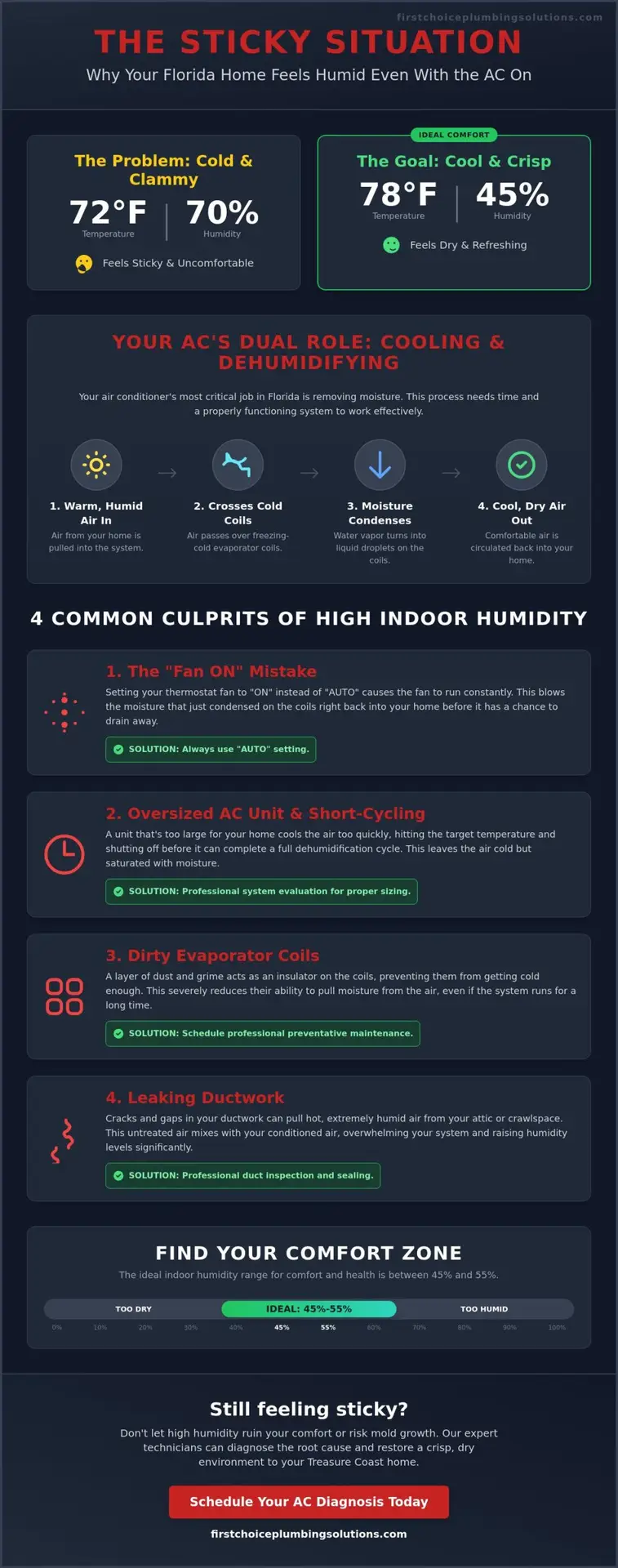
Most homeowners think of their air conditioner as a giant refrigerator for their house. While it does lower the temperature, its most critical job in Port St. Lucie is removing water. If you’ve wondered why does my house feel so humid with AC on, you’re likely experiencing a breakdown in this dual process. Cold air that remains saturated with water doesn’t allow your sweat to evaporate. This is why 72 degrees with 70% humidity feels significantly hotter and more “sticky” than 78 degrees with a crisp 45% humidity level. Your evaporator coil acts like a cold sponge; however, it needs specific conditions and enough time to wring that moisture out effectively.
How Your AC Removes Moisture
The process of How Air Conditioners Remove Humidity begins when warm, moist indoor air is pulled across the freezing cold evaporator coils. As the air cools, it loses its ability to hold water. This causes moisture to condense into droplets on the coil surface, similar to how a cold soda can “sweats” on a hot day. This liquid then drips into a primary pan and exits your home through a condensate drain line. Latent heat is the specific energy your system uses to change that water vapor into liquid, a process that must happen before you can truly feel comfortable.
The Florida Humidity Factor
Living on the Treasure Coast means dealing with some of the highest dew points in the country. In places like Stuart and Fort Pierce, the air is often so thick with moisture that your AC must run for long, steady cycles just to keep up. If the system shuts off too early, the air gets cold, but the humidity stays trapped inside. This creates a breeding ground for mold in hidden areas like behind your drywall or deep within your ductwork. Maintaining this balance is a constant battle for systems in St. Lucie West and Palm City, where the outdoor environment continuously pushes moisture back inside through every tiny gap in your home’s structure.
Common Reasons Your Home Feels Humid with the AC Running
Many homeowners assume that if the air is cold, the system is working. However, mechanical issues or even simple user errors are often the culprit when you find yourself asking why does my house feel so humid with AC on. Beyond the immediate discomfort, failing to control moisture can lead to the dangers of excessive indoor humidity, such as biological growth and structural damage to your property.
- Dirty Evaporator Coils: When dust and debris coat your coils, they act as an insulator. This prevents the refrigerant from effectively cooling the metal, which stops moisture from condensing and draining away.
- Leaking Ductwork: If your ducts have cracks or disconnected joints, they can pull in hot, humid air from your attic or crawlspace. This effectively pumps the Florida swamp directly into your living spaces, bypassing the cooling process entirely.
Thermostat Settings: ON vs. AUTO
This is perhaps the most common mistake we see. When you set your thermostat fan to “ON,” the blower runs continuously, even when the outdoor compressor isn’t actively cooling. This means the fan blows air over a soaking wet evaporator coil, picking up all the water that just condensed and pushing it right back into your home. Always keep your setting on “AUTO.” This ensures the fan only runs during the cooling cycle, giving the moisture time to drip into the drain pan and exit the house through the condensate line.
The Short-Cycling Dilemma
In many newer developments across Tradition and St. Lucie West, we often see oversized AC units. While a “bigger” unit sounds better, it actually cools the home too fast. It hits the target temperature and shuts off before it has completed a full dehumidification cycle. This “short-cycling” leaves the air cold but saturated. If your system is turning on and off every few minutes, you may need an emergency AC repair diagnostic to determine if your unit is properly sized or if a mechanical component is failing. A quick inspection can often reveal if a simple adjustment can fix your comfort levels.
Restoring Comfort: Solutions for Treasure Coast Homeowners
Solving the mystery of why does my house feel so humid with AC on often requires looking beyond the thermostat. In high-moisture areas like Palm City or Jensen Beach, your system needs to be a fine-tuned machine to combat the relentless Florida dew points. Professional preventative maintenance is the first line of defense. By keeping coils scrubbed clean and condensate lines clear, you ensure your system has the maximum surface area available to pull water from the air. If your system is aging, upgrading to a variable-speed air handler can be a game-changer. These units run for longer, lower-intensity cycles, which is far more effective at wringing out moisture than older, single-stage models that blast cold air and then shut off abruptly.
Advanced Indoor Air Quality Solutions
Modern technology offers powerful ways to maintain a dry home. A UV Air Sanitizer Installation is an excellent investment for Florida residents. These lights sit above your evaporator coil, killing the biological growth that thrives on wet metal surfaces. When coils stay clean, airflow remains high and moisture removal stays efficient. While high-efficiency filtration captures dust that would otherwise insulate your coils, some homes with extreme moisture issues may need to consider a dehumidifier. A whole-home dehumidifier works in tandem with your AC to maintain that ideal 45% to 55% humidity range even when the cooling system isn’t running.
Professional Maintenance and Tune-Ups
When DIY troubleshooting fails, it’s time for a professional diagnostic. A First Choice Plus technician will perform a “Manual J” load calculation to verify your system is sized correctly for your home’s footprint in Tradition or Fort Pierce. We check refrigerant levels with precision, as even a small leak can cripple the system’s ability to dehumidify.
Our Port St. Lucie headquarters serves as the primary hub for both expert air conditioning and plumbing services throughout the Treasure Coast. If you’re visiting our Land O’ Lakes location, please keep in mind that the branch focuses exclusively on professional plumbing solutions and does not handle AC work. For our local neighbors in Stuart and St. Lucie West, we recommend checking our current AC offers for seasonal tune-up specials that can help restore your home’s crisp, dry comfort before the summer peak hits.
Take Control of Your Indoor Comfort Today
Managing indoor humidity requires more than just lowering the thermostat. Simple fixes like switching your fan to “AUTO” or scheduling a professional coil cleaning can make a massive difference. Whether the culprit is an oversized unit or a hidden duct leak, identifying why does my house feel so humid with AC on is the first step toward a drier, healthier home. Our Port St. Lucie team specializes in pinpointing these issues and providing long-term solutions that fit our unique Treasure Coast climate.
Don’t let the Florida humidity win. Our team, locally owned and managed by Manuel J. Duran Jr., is ready to help you restore a crisp environment. From expert UV Air Sanitizer Installation to our 24/7 Emergency AC Repair in Port St. Lucie, we provide the steady hand you need. Stop living in a sticky home and schedule your AC comfort diagnostic with First Choice Plus today! You deserve to feel comfortable in your own space; let’s get your home back to that perfect, dry balance.
Frequently Asked Questions
What is the ideal indoor humidity level for a Florida home?
45% to 55% is the ideal indoor humidity range for Florida homes to maintain comfort and prevent mold growth. This specific range ensures that your sweat evaporates properly, which is what actually makes you feel cool. If your indoor levels climb above 60%, you will likely notice musty smells and a general “heavy” feeling in the air. Maintaining this balance protects your home and prevents biological growth behind your drywall.
Can a dirty air filter cause high humidity?
Yes, a clogged air filter is a very common reason why does my house feel so humid with AC on. When the filter is full of dust, it restricts the volume of air passing over the cold evaporator coils. This prevents the system from pulling enough moisture out of the air to keep you comfortable. Without proper airflow, the dehumidification process effectively stalls, leaving your home feeling sticky even when the unit runs constantly.
Why does my AC smell musty when it turns on?
That musty odor is often called “Dirty Sock Syndrome,” and it is caused by bacteria and mold growing on your evaporator coils. These coils stay damp during our long, humid Treasure Coast summers, creating a perfect breeding ground for microorganisms. These biological contaminants thrive in the dark, moist environment of your air handler. Installing a UV Air Sanitizer is a highly effective way to kill these germs and keep your indoor air smelling fresh.
How much does it cost to fix high indoor humidity?
The cost to resolve high indoor humidity varies significantly because the solution depends on the specific cause. A simple fix might only involve a quick thermostat adjustment. However, more complex issues often require professional services like cleaning the evaporator coils or repairing leaky ductwork. Since every home in Port St. Lucie is different, a professional diagnostic is the only way to get a clear price. Please note our Land O’ Lakes branch does not handle AC work.
Article by
Written by First Choice Plus Plumbing & Air Team
This article was created by the team at First Choice Plumbing Solutions, a licensed and experienced plumbing and HVAC company serving Port St. Lucie, Land O’ Lakes, and surrounding areas.
Our team specializes in plumbing and air conditioning services, including drain cleaning, leak detection, water heater repair and installation, AC repair, maintenance, and system installations. Our content is based on real-world experience and the common issues we solve for homeowners and businesses every day.
We aim to provide accurate, helpful, and easy-to-understand information so you can make informed decisions about your plumbing and HVAC needs.
If you need reliable, professional service, First Choice Plumbing Solutions is here to help.
Disclaimer
Disclaimer: The information provided in this article is for general informational purposes only and does not constitute professional plumbing or HVAC advice. Every situation is different, and readers should consult a licensed professional for proper diagnosis and repair. First Choice Plus Plumbing & Air is not liable for any damages or losses resulting from the use of this information.