
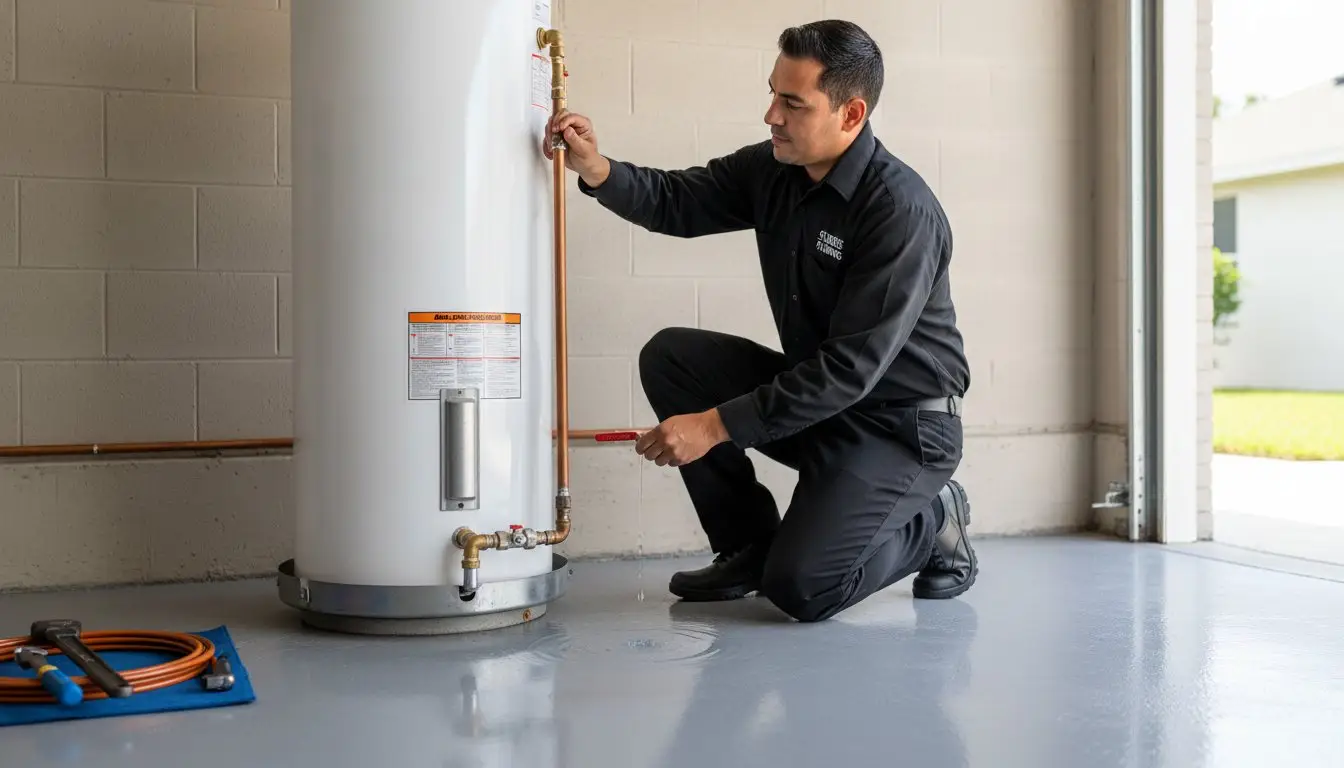
Imagine walking into your garage in Port St. Lucie and finding a growing puddle surrounding your tank. It is a sinking feeling that brings up immediate worries about water damage to your floors or the safety of your gas lines. You aren’t alone in this anxiety. Most homeowners feel overwhelmed in the moment, but knowing exactly what to do when your water heater is leaking can be the difference between a simple cleanup and a massive restoration project.
We understand the stress that comes with a plumbing emergency on the Treasure Coast. This guide provides the immediate safety steps you need to stop the flow and protect your property. You’ll learn how to identify the source of the leak and determine if your unit just needs a simple repair or if it is time for a more efficient replacement. From shutting off the power to evaluating the tank’s health, we will help you restore your hot water safely and quickly.
Key Takeaways
- Prioritize your safety by disconnecting the electrical power or gas supply before inspecting the unit to prevent accidents or shorts.
- Learn exactly what to do when your water heater is leaking by closing the cold water shut-off valve immediately to stop the flow of water into your home.
- Identify the source of the leak by checking common failure points like the cold water inlet, hot water outlet, or the temperature and pressure relief valve.
- Use the “50% Rule” and the 10-year age mark to decide if a professional repair or a high-efficiency replacement is the better long-term investment.
- Gain peace of mind by understanding which leaks are simple DIY fixes and which require the steady hand of a local Treasure Coast plumbing expert.
Emergency Protocol: Immediate Steps to Contain a Leaking Water Heater
Finding a puddle under your tank can be stressful, but your immediate priority is containment. Knowing exactly what to do when your water heater is leaking starts with a few critical safety measures to protect your home from flooding and electrical hazards. You don’t need to be a master plumber to take these first steps; you just need to act quickly and follow a logical order of operations.
How to Safely Disconnect Power and Gas
Electricity and water are a dangerous combination. Before you touch any pipes or valves, you must cut the energy supply to the unit. For electric water heaters, go to your home’s main breaker panel and flip the switch labeled “Water Heater” to the off position. This prevents the heating elements from burning out once the tank is empty. If you have a gas unit, turn the thermostat dial on the front of the heater to the “Off” or “Pilot” position. If you smell rotten eggs, evacuate your home immediately and call for emergency assistance.
Shutting Off the Water Supply and Draining the Tank
Once the power is cut, you must stop the water from feeding the leak. Locate the cold water inlet pipe, which typically features a blue handle or a round gate valve. Turn it clockwise until it stops. This prevents more water from entering the hot water storage tank and worsening the leak. If the tank is still actively leaking from the bottom, you may need to drain it to relieve internal pressure. Attach a standard garden hose to the drain valve at the base of the unit and run the other end to a floor drain or outside. Open the valve to empty the tank safely.
Don’t forget the cleanup. Florida’s high humidity means mold can take hold in hours, especially in enclosed spaces like garages or utility closets in St. Lucie West or Traditions. Use a wet-dry vac or heavy towels to clear the water from your floors and drywall. If the situation feels unmanageable, seeking emergency plumbing repairs can prevent long-term structural damage to your property.
Diagnosing the Leak: Identifying the Source and Severity
Once the immediate danger is handled, you need to find the source. This is a vital part of knowing what to do when your water heater is leaking. Identifying the exact location of the water determines whether you’re facing a minor repair or a full system failure. Use a flashlight and a dry rag to wipe down components and see where moisture reappears first.
Start your inspection at the top of the unit. Check the cold water inlet and hot water outlet connections. Sometimes, the vibration of the unit or thermal expansion loosens these fittings over time. If you see moisture here, a simple tightening of the dielectric unions or a new gasket might solve the problem. Also, look at the Temperature and Pressure (T&P) relief valve. This valve is a critical component for water heater safety because it prevents the tank from exploding if internal pressure gets too high. If it drips constantly, the valve has likely failed or your home’s water pressure is dangerously high.
Common Repairable Leaks vs. Tank Failures
A leak from a pipe fitting or a faulty drain valve at the bottom is usually repairable. These components are external to the main storage tank. However, if you see water seeping from the bottom of the metal jacket or pooling under the tank with no obvious source above, the internal tank has likely corroded. This is a “deadly” leak that cannot be patched. If you aren’t sure where the water is coming from, professional leak detection and repair can save you from a major flood.
The Impact of Sediment in Treasure Coast Water
Homeowners in Port St. Lucie and Fort Pierce often deal with mineral-heavy water. Over time, these minerals settle at the bottom of the tank, creating a layer of sediment. This sediment causes “pitting,” where small holes are eaten into the steel tank from the inside out. If you hear a popping or rumbling sound when the heater is running, that is the sound of steam bubbles trapped under sediment. Combined with a leak, this is a clear sign that the tank is failing and a replacement is necessary. Regular water heater maintenance can help flush this sediment before it causes permanent damage.

Repair vs. Replacement: Making the Best Decision for Your Home
Once you’ve identified the source of the puddle, you face a tough choice: do you fix the old unit or invest in a new one? Deciding what to do when your water heater is leaking often comes down to the “10-Year Rule.” In Stuart and Palm City, our local water chemistry is particularly tough on steel tanks. If your unit is over a decade old, the internal lining is likely reaching the end of its life, and a repair may only buy you a few months of time.
We also recommend applying the “50% Rule” to your decision. If a professional repair estimate costs half as much as a new system, replacement is usually the smarter long-term investment. Modern units, especially tankless water heater installations, are designed to handle Florida’s heat and mineral content much better than older models. For those in the South Florida area, Miami 305 Plumbing provides specialized installation services for these high-efficiency systems, which provide endless hot water and eliminate the risk of a massive tank burst in your garage or utility closet.
When to Call a Professional Plumber
Some issues are simply beyond a DIY fix. If you see heavy rust around the base of the tank or water spraying from a corroded seam, you need expert help immediately. When you schedule an inspection in Tradition or St. Lucie West, a technician will check your thermal expansion tank and water pressure levels to ensure the new unit doesn’t fail prematurely. Taking the time to research choosing the best plumber in Port St. Lucie ensures you get honest advice rather than a high-pressure sales pitch.
Preventing the Next Leak: Maintenance Tips
You can significantly extend the life of your unit with two simple habits. First, check your sacrificial anode rod every two years. This rod attracts corrosive elements in the water so they eat the rod instead of your tank. Second, perform an annual flush to remove sediment. This is the single most effective way for homeowners in Jensen Beach to prevent the “pitting” that leads to leaks. Consistent care keeps your system running efficiently and helps you avoid the stress of wondering what to do when your water heater is leaking in the future.
Secure Your Home and Restore Your Hot Water
Dealing with a sudden leak is a major disruption, but you’ve already taken the most important steps toward a resolution. By prioritizing safety and shutting down the energy and water supplies, you’ve protected your property from the worst-case scenarios. Whether you’re dealing with a simple loose connection or a tank that has finally succumbed to Florida’s harsh water, you now have the tools to decide what to do when your water heater is leaking with confidence.
If the repair feels too complex or your tank has reached that critical ten-year mark, don’t face the mess alone. We’ve been serving neighbors in Port St. Lucie and Stuart since 2007 with honest, transparent pricing and expert craftsmanship. Our team is ready with 24/7 emergency service to help you choose the right replacement or perform a lasting repair. Get 24/7 Expert Help for Your Leaking Water Heater and get back to your routine without the stress. You’ve got this, and we’re here to help if the job gets too big.
Frequently Asked Questions
Is a leaking water heater an emergency that requires immediate attention?
Yes, a leaking water heater is a legitimate plumbing emergency that requires your immediate attention. These units hold between 40 and 80 gallons of water under constant pressure, meaning a small drip can escalate into a full tank burst without warning. Ignoring the signs can lead to significant structural damage and mold growth in your home. Acting quickly helps you avoid expensive repairs to your flooring and drywall on the Treasure Coast.
Can I still use my water or take a shower if the water heater is leaking?
You should avoid using hot water or taking a shower until the unit is properly inspected. Part of knowing what to do when your water heater is leaking involves shutting off both the water supply and the power source for safety. Running water through a compromised system can increase internal pressure or lead to dangerous electrical shorts. It is much safer to keep the system dormant until a professional confirms it’s stable and leak-free.
How much water can a leaking water heater actually release if left alone?
A leaking water heater can release hundreds of gallons of water in a single day if the supply line remains open. While the tank itself may only hold 50 gallons, it is constantly replenished by your home’s main water line. This means the flow won’t stop until you manually close the cold water shut-off valve. In a finished area of a home in St. Lucie West or Traditions, this volume of water can cause thousands in damages within a few hours.
Will my homeowner’s insurance cover the damage from a leaking water heater?
Homeowner’s insurance typically covers the resulting water damage to your home, such as ruined floors or drywall, but it rarely covers the cost of the water heater itself. If the leak was sudden and accidental, your policy may pay for the restoration. However, if the adjuster determines the leak happened because the unit was old or poorly maintained, they might deny the claim. It’s best to check your specific policy for seepage or maintenance exclusions.

Article by
Written by First Choice Plus Plumbing & Air Team
This article was created by the team at First Choice Plumbing Solutions, a licensed and experienced plumbing and HVAC company serving Port St. Lucie, Land O’ Lakes, and surrounding areas.
Our team specializes in plumbing and air conditioning services, including drain cleaning, leak detection, water heater repair and installation, AC repair, maintenance, and system installations. Our content is based on real-world experience and the common issues we solve for homeowners and businesses every day.
We aim to provide accurate, helpful, and easy-to-understand information so you can make informed decisions about your plumbing and HVAC needs.
If you need reliable, professional service, First Choice Plumbing Solutions is here to help.
Disclaimer
Disclaimer: The information provided in this article is for general informational purposes only and does not constitute professional plumbing or HVAC advice. Every situation is different, and readers should consult a licensed professional for proper diagnosis and repair. First Choice Plus Plumbing & Air is not liable for any damages or losses resulting from the use of this information.