
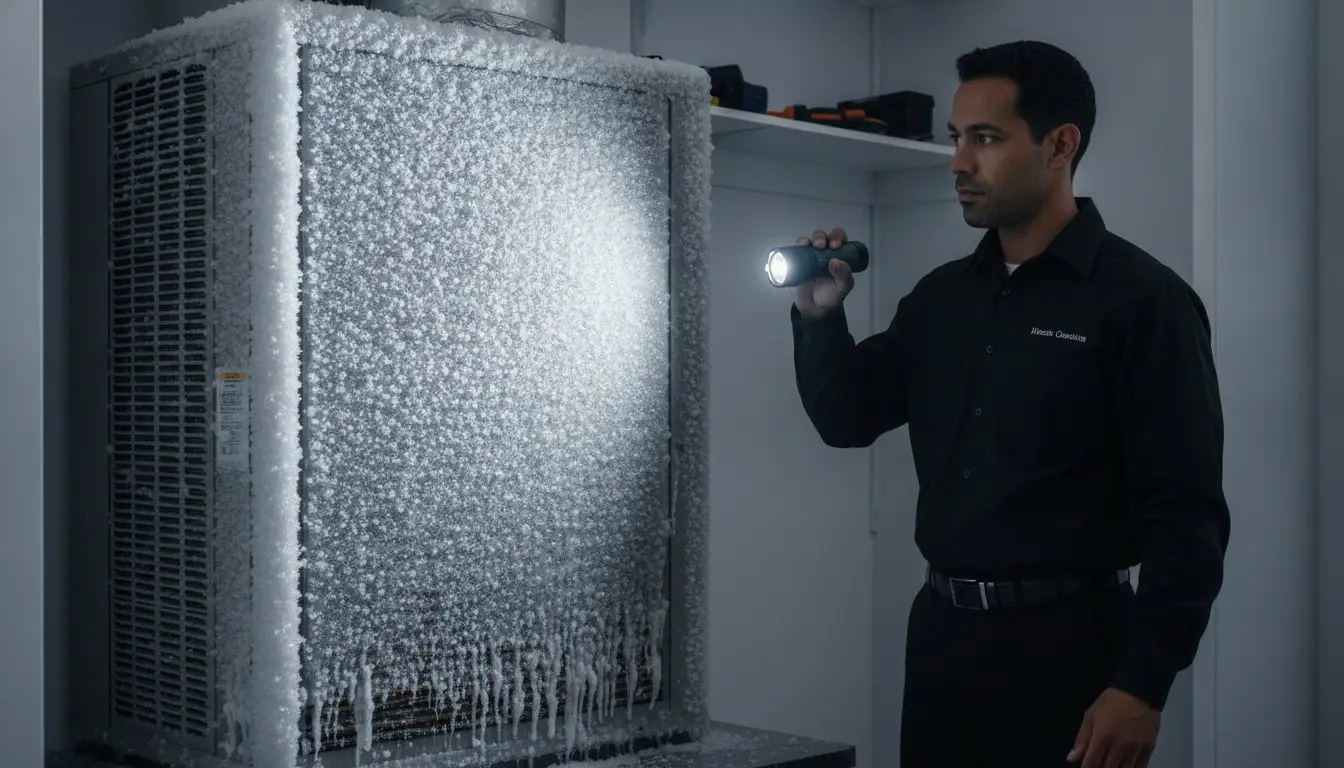
Imagine walking into your home on a humid July afternoon in Port St. Lucie only to find the thermostat climbing while your air handler is covered in a thick layer of ice. It feels completely backwards to see a block of frost when the heat index is hitting triple digits outside. If you’re panicking about potential compressor damage, you aren’t alone. Knowing exactly what to do if your AC unit is frozen solid on a hot day can be the difference between a quick fix and an expensive system replacement.
We understand how stressful a cooling emergency feels when the Florida humidity becomes intolerable. It’s a chaotic situation that requires a steady hand to resolve. This guide will show you the immediate steps to safely thaw your system and help you determine if you just need a new air filter or a professional repair. We’ll walk through the shutdown process and the common causes of ice buildup so you can get your home back to a comfortable temperature today and keep it that way tomorrow.
Key Takeaways
- Shut down the system at the thermostat immediately to prevent compressor strain and switch the fan to the “ON” position to begin thawing.
- Learn the essential steps for what to do if your AC unit is frozen solid on a hot day to safely restore cooling without causing further damage.
- Check for airflow restrictions like dirty filters or blocked registers that often cause ice to form even in 90-degree heat.
- Identify the warning signs of a refrigerant leak or mechanical failure that require a professional repair to prevent a total system meltdown.
- Understand why your unit might be short-cycling and how to address underlying issues before they lead to expensive permanent damage.
Immediate Steps: How to Safely Thaw Your Frozen AC Unit
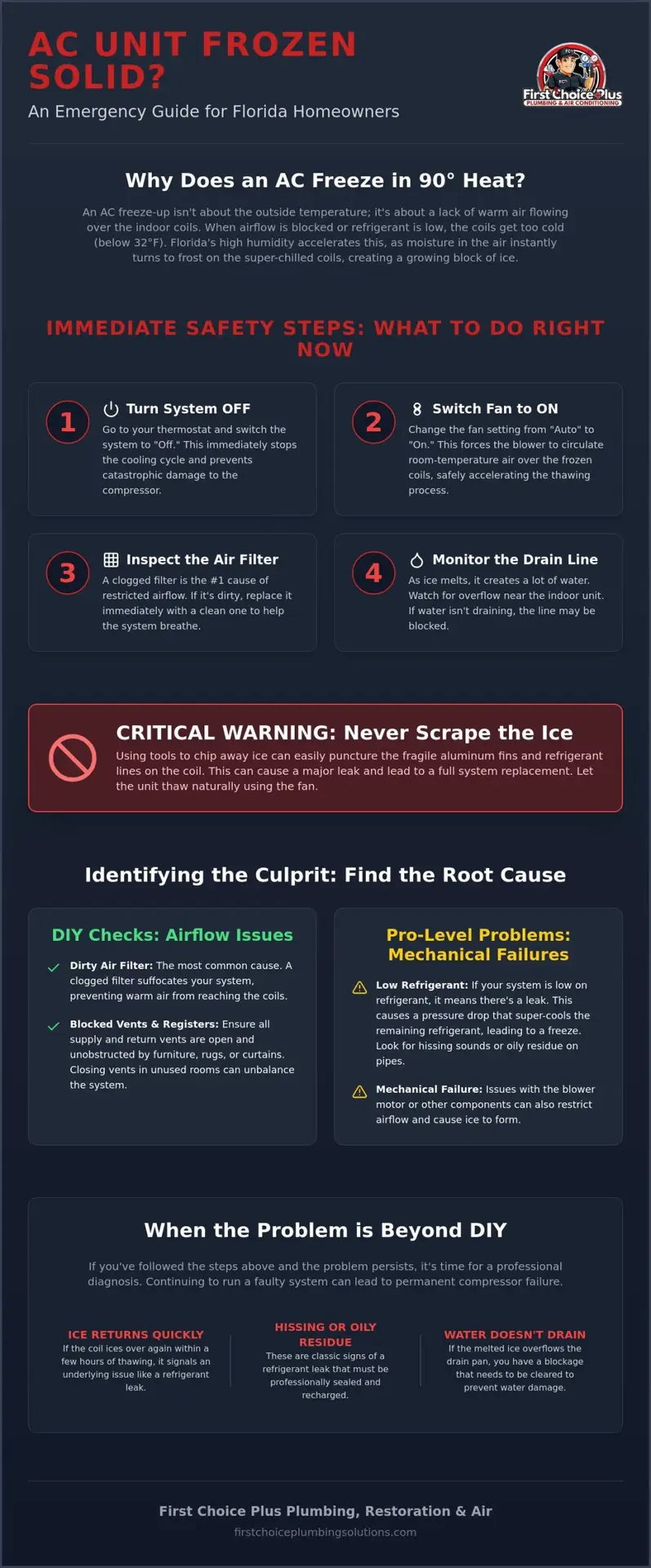
Finding a block of ice on your air handler is frustrating, especially when the Treasure Coast humidity is at its peak. Your first priority is to stop the cooling process to prevent permanent damage to your compressor. Knowing exactly what to do if your AC unit is frozen solid on a hot day can save you thousands in replacement costs. Follow these four steps immediately to begin the thawing process safely.
- Turn the system OFF: Switch your thermostat to the “Off” position. This stops the refrigerant flow and prevents the compressor from working against a frozen coil, which can lead to a total mechanical failure.
- Switch the fan to ON: Change your fan setting from “Auto” to “On.” This forces the blower motor to circulate warm indoor air over the ice. This is the most effective way to melt the frost without damaging sensitive components.
- Inspect the air filter: Remove your filter and hold it up to a light. If it’s gray, dusty, or completely opaque, it’s restricted. Replace it with a fresh one immediately to restore the airflow your system needs to breathe.
- Monitor the drain line: As the ice melts, it turns into a significant volume of water. Ensure your condensate drain line is clear so the water exits your home safely rather than backing up into your drain pan.
Why You Must Never Scrape the Ice
It is tempting to grab a screwdriver or a putty knife to chip away at the frost, but you must resist this urge. The evaporator coils are made of thin aluminum fins that are incredibly fragile. One slip can puncture a refrigerant line or flatten the fins, ruining the coil entirely. If you feel the need to speed things up, you can use a hair dryer on its lowest heat setting; however, relying on natural air circulation from the blower fan is the safest way to protect your equipment.
Managing the Melting Water
A frozen unit can hold several gallons of water in the form of ice. Once it starts to thaw, your primary drain pan might struggle to keep up with the sudden influx. Check the area around your indoor unit frequently for any signs of overflow. If the pan fills up too quickly, use a wet/dry vac to suction out the excess water. This prevents moisture from damaging your drywall or flooring. If the water isn’t draining at all, you likely have a secondary blockage that requires emergency AC repair to clear the line and prevent a flood.
Identifying the Culprit: Why Your AC Froze in the Florida Heat
It seems impossible for ice to survive in 90-degree weather, but the physics of cooling make it a common reality in the Treasure Coast. When you are figuring out what to do if your AC unit is frozen solid on a hot day, you must look beyond the ice to find the root cause. Most freeze-ups stem from a lack of heat exchange, meaning the cold refrigerant in your coils isn’t absorbing enough warmth from your home to stay above freezing.
Florida’s extreme humidity acts as an accelerant for this problem. Your air conditioner’s secondary job is dehumidification. As the system pulls moisture from the air, that water collects on the evaporator coils. If the coil temperature drops below 32 degrees due to an underlying mechanical issue, that water instantly turns to frost. This creates a “snowball effect” where the ice layer further insulates the coil, making it even colder and thicker until the entire unit is encased in a solid block.
The Airflow Audit: DIY Checks
Airflow is the lifeblood of your HVAC system. Walk through your home and ensure every supply and return vent is wide open and unobstructed. It is a common mistake for homeowners in Port St. Lucie to close vents in unused guest rooms to save energy. In reality, this increases pressure and reduces airflow, which can trigger a system-wide freeze. Check that curtains, rugs, or furniture aren’t blocking the return grilles, as your system needs to breathe to stay functional.
The Refrigerant Reality
A common myth is that air conditioners consume refrigerant over time. This is false. Your AC is a closed-loop system. If the refrigerant level is low, you have a leak. When the pressure drops in the lines, the remaining refrigerant expands more rapidly and becomes much colder than intended. If you notice oily residue around the copper lines or hear a faint hissing sound near the outdoor unit, you likely have a leak that requires a professional AC repair and troubleshooting session to seal the system and recharge it properly.
Restoring Your Comfort: When to Call a Treasure Coast AC Expert
If you have followed the thawing steps and replaced your filter, but the ice returns within hours, the problem is likely internal. Knowing what to do if your AC unit is frozen solid on a hot day often involves recognizing when a situation exceeds a DIY fix. A system that repeatedly freezes is usually suffering from a refrigerant leak or a failing blower motor. Continuing to run a struggling unit can lead to “short-cycling,” where the system turns on and off rapidly. This puts immense strain on the compressor and can lead to a total mechanical failure that is far more expensive than a standard repair.
Professional emergency AC repair is the only way to accurately diagnose these deep-seated issues. Technicians use specialized digital pressure gauges to see exactly how the refrigerant is behaving inside your lines. They can pinpoint the “why” behind the ice, whether it is a pinhole leak in the evaporator coil or a faulty expansion valve. Catching these problems early through preventative maintenance tune-ups is the best way to ensure you never face a “frozen solid” emergency during a record-breaking heatwave.
What a Professional Inspection Includes
Our comprehensive inspection goes beyond a surface-level check. We perform a deep cleaning of the evaporator and condenser coils to ensure maximum heat transfer. We also verify refrigerant pressures and check the electrical draw of your blower motor. As local hvac port st lucie experts, we understand how the salt air and high humidity of the Treasure Coast impact your system’s lifespan. We optimize every component to handle the specific demands of the Florida climate.
Protecting Your Investment
Repairing a leak is always a better long-term investment than simply “topping off” the refrigerant. With the 2026 EPA regulations phasing out older coolants, the cost of refrigerant is rising. Fixing the root cause now saves you money on utility bills and prevents premature system replacement. First Choice Plus Plumbing & Air remains a steady hand for local families, providing reliable support 24/7 for residents in Stuart, Port St. Lucie, and Fort Pierce. We prioritize honesty and transparency, ensuring your home stays cool and your system stays protected.
Protect Your System and Restore Your Cool
Walking into a sweltering home to find an ice-covered air handler is a true Florida emergency. You now have the immediate steps for what to do if your AC unit is frozen solid on a hot day, from managing the thaw to checking your airflow. Addressing the root cause now, whether it’s a simple filter clog or a complex refrigerant leak, is the only way to prevent your system from freezing again tomorrow. Protecting your compressor today saves you from the high cost of a total system replacement later.
First Choice Plus Plumbing & Air has been a trusted neighbor in the local community since 2007. Our licensed and insured experts understand the unique strain the humidity puts on your equipment and provide a steady hand during maintenance crises. We offer 24/7 emergency service to ensure your family stays safe and comfortable, even during the hottest months. Schedule Your Emergency AC Repair in Port St. Lucie Now to restore your home’s comfort with a team that values transparency and quality workmanship. We look forward to getting your system back in peak condition.
Frequently Asked Questions
How long does it take for an AC unit to thaw out?
It typically takes anywhere from 1 to 24 hours for a system to fully thaw, depending on the thickness of the ice buildup. You can speed up this process by switching your thermostat fan setting to “On” while keeping the cooling mode “Off.” This forces warm indoor air across the frozen coils to melt the frost safely. Never use high-heat tools like blowtorches or physical scraping, as these can permanently damage the fragile aluminum fins or puncture refrigerant lines.
Can a dirty air filter really cause my AC to freeze?
Yes, a clogged air filter is the most frequent reason for a system freeze-up in Florida. When air can’t pass through the filter, the evaporator coil doesn’t receive enough warmth to keep the refrigerant above freezing temperatures. This is often the first thing we check when homeowners ask what to do if your AC unit is frozen solid on a hot day. Replacing your filter every 30 to 60 days is essential in the Treasure Coast humidity to maintain proper airflow and prevent ice formation.
Should I turn my AC off if I see ice on the copper pipes?
You should turn your system off at the thermostat the moment you notice ice on the copper lines or the air handler. Running a frozen system puts extreme pressure on the compressor, which is the most expensive component in your HVAC system. Switching it off stops the freezing cycle and allows the thawing process to begin immediately. This simple action can prevent a minor airflow restriction from escalating into a total mechanical failure that requires a full system replacement.
What happens if I run my AC while it is frozen?
Running a frozen unit can cause “slugging,” which occurs when liquid refrigerant reaches the compressor instead of gas. Since compressors are only designed to compress gas, liquid refrigerant can cause immediate and permanent internal damage. Additionally, the ice acts as an insulator, which means your home won’t get any cooler despite the system running constantly. You’ll see a significant spike in your electric bill without any improvement in your indoor comfort until the unit is thawed and repaired.

Article by
Written by First Choice Plus Plumbing & Air Team
This article was created by the team at First Choice Plumbing Solutions, a licensed and experienced plumbing and HVAC company serving Port St. Lucie, Land O’ Lakes, and surrounding areas.
Our team specializes in plumbing and air conditioning services, including drain cleaning, leak detection, water heater repair and installation, AC repair, maintenance, and system installations. Our content is based on real-world experience and the common issues we solve for homeowners and businesses every day.
We aim to provide accurate, helpful, and easy-to-understand information so you can make informed decisions about your plumbing and HVAC needs.
If you need reliable, professional service, First Choice Plumbing Solutions is here to help.
Disclaimer
Disclaimer: The information provided in this article is for general informational purposes only and does not constitute professional plumbing or HVAC advice. Every situation is different, and readers should consult a licensed professional for proper diagnosis and repair. First Choice Plus Plumbing & Air is not liable for any damages or losses resulting from the use of this information.