
What if that faint, rotten-egg odor drifting from your utility closet isn’t just a “normal” appliance scent, but a warning sign that your home is at risk? It’s a terrifying thought that leaves many homeowners frozen between the fear of a potential explosion and the worry of calling for an expensive, unnecessary repair. Knowing exactly what to do if you smell gas from your water heater is the difference between a controlled situation and a dangerous emergency. Whether you’re in Port St. Lucie or Stuart, your family’s safety depends on taking the right steps the second you detect that distinctive sulfur smell.
We understand how stressful these moments feel, and you aren’t alone in wondering if you should evacuate or wait it out. This article provides the critical safety steps you need to take immediately to protect your household. You’ll also learn how to distinguish a minor startup scent from a life-threatening leak. We will walk you through an actionable emergency checklist, show you how to safely shut down your system, and give you clear criteria for when it’s time to call in a professional for a gas line inspection.
Key Takeaways
- Learn the prioritized evacuation steps to keep your family safe and why you should never touch light switches or electronics if you suspect a leak.
- Understand exactly what to do if you smell gas from water heater, including the critical “no-spark” rules to follow before you leave the house.
- Discover how to distinguish between a harmless, brief startup scent and a persistent gas odor that indicates a serious mechanical failure.
- Find out why specialized electronic leak detection is necessary to locate microscopic cracks in gas lines that aren’t visible to the naked eye.
- Get clear criteria on when a sulfur smell requires an emergency call to a licensed professional in Port St. Lucie or Stuart for immediate repair.
Immediate Safety Checklist: What to Do the Moment You Smell Gas
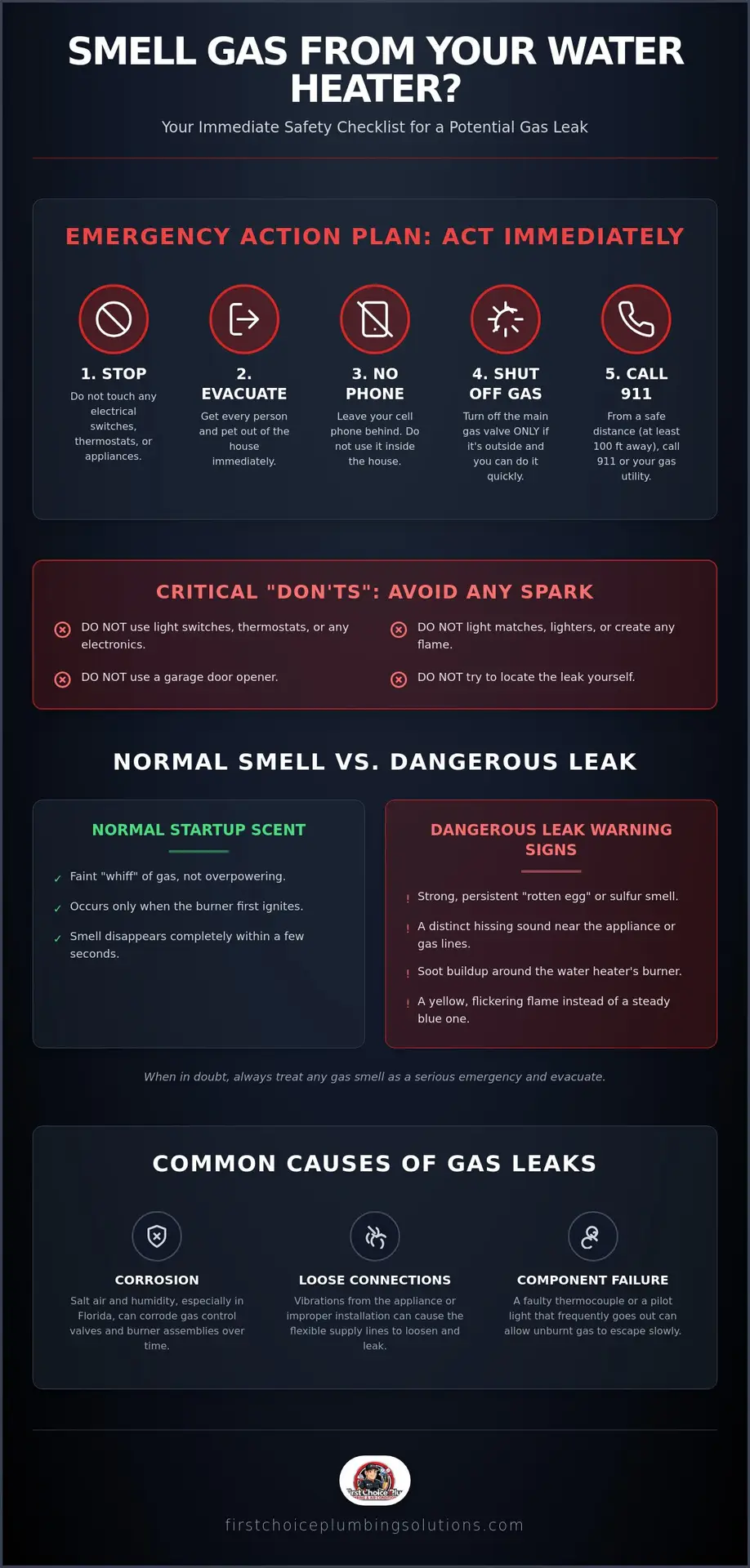
Detecting a sulfur or rotten egg scent near your appliance is a serious warning sign that requires an instant response. You need to know exactly what to do if you smell gas from water heater units to protect your family from potential fire or explosion. Don’t stop to investigate the source or finish a chore. Follow these steps immediately:
- Stop what you’re doing. Don’t touch any electrical switches, including light switches, thermostats, or appliances.
- Evacuate the house. Get every person and pet out of the structure right now. Don’t waste time opening windows or grabbing valuables.
- Leave the phone behind. Don’t use your cell phone or landline until you are at least 100 feet away from the home.
- Shut off the gas supply. If your main gas valve is located outside and you can reach it quickly, turn it off. If the valve is inside the house or in a crawlspace, leave it alone and get out.
- Call for help. Once you’re at a safe distance, call 911 or your local gas utility provider.
Why You Should Never “Wait and See” with Gas Odors
Natural gas and propane are incredibly volatile, especially when trapped in the enclosed utility closets common in Port St. Lucie and Fort Pierce homes. To help you stay safe, utility companies add a chemical called mercaptan to these otherwise odorless gases. This additive creates the pungent “rotten egg” smell. Understanding what is a gas leak and how it behaves in high-humidity Florida environments is crucial. It’s always better to face the minor inconvenience of a false alarm than the catastrophe of an ignored leak.
Critical “Don’ts” During a Suspected Gas Leak
Avoiding a spark is your primary goal during an evacuation. Don’t use your garage door opener, as the motor can create a tiny electrical arc that ignites the gas. You should also avoid lighting matches, smoking, or using a flashlight. Never attempt to find the leak yourself by sniffing around the pipes or using a flame to check for drafts. Trust your nose and get to safety first. Our team at First Choice Plus Plumbing & Air can handle the technical investigation once the area is secured.
Identifying the Source: Is the Odor Normal or a Dangerous Leak?
Once you’ve secured your family’s safety, you may wonder if the scent you detected was truly an emergency. Knowing what to do if you smell gas from water heater units starts with recognizing the difference between a normal operational scent and a structural failure. A faint “startup whiff” can occur when the burner first ignites. This tiny amount of gas escapes before the pilot light or electronic ignition catches, but it should vanish within seconds. If the smell is strong enough to fill the room or lingers long after the heater has started its cycle, you’re likely dealing with a leak.
Don’t rely on your nose alone to diagnose the problem. Look for visual cues like soot buildup around the burner access or a yellow, flickering flame instead of a crisp, steady blue one. Listen for a distinct hissing sound near the gas line connections or the control valve. Smells originating from the control box often point to internal valve issues, while odors near the floor-level intake usually suggest a leak in the flexible supply line or the hard pipe connection.
Normal Combustion vs. Gas Line Failures
In high-humidity areas like Port St. Lucie and Fort Pierce, the heavy, moisture-laden air can trap minor odors in small utility closets or garages. This environmental factor sometimes makes a normal startup smell seem more intense than it actually is. Despite this, you should always follow American Gas Association safety guidelines and treat any persistent odor as a legitimate threat. It’s also worth noting that modern tankless water heaters utilize different ignition patterns and fan-assisted venting, which typically minimizes these scents compared to traditional tank models.
Common Causes of Gas Leaks in Water Heaters
Florida’s environment is notoriously tough on gas appliances. Salt air in coastal areas like Jensen Beach or Stuart can accelerate corrosion in the burner assembly or the gas control valves. Loose supply line connections are another frequent culprit, often caused by vibrations or improper initial installation. If your pilot light frequently goes out or the thermocouple fails, gas may bleed out slowly without igniting. Regular maintenance helps catch these issues before they turn into midnight emergencies. If you’re concerned about the integrity of your system, our team is ready to help with expert plumbing repairs that prioritize your home’s safety.
Professional Resolution and Preventing Future Gas Leaks
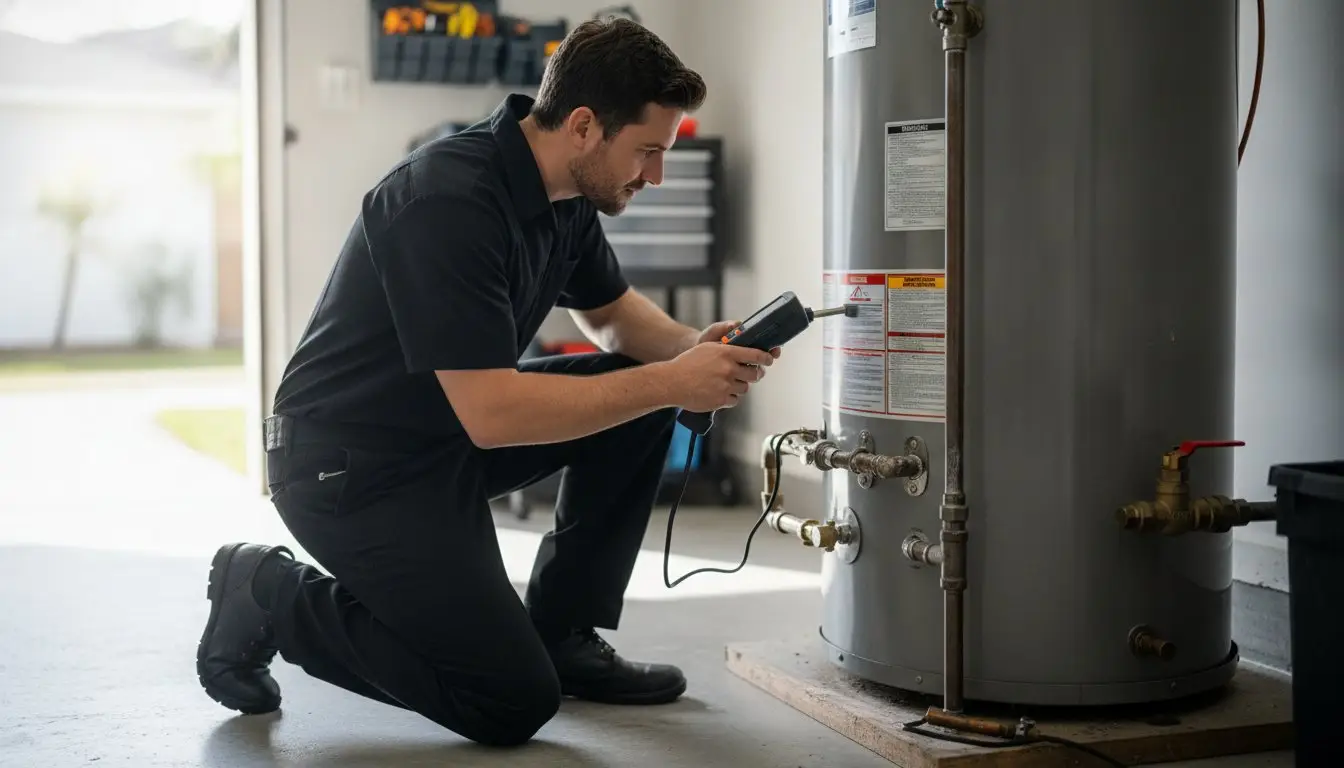
Resolving a gas leak is never a DIY project. It requires a licensed plumber with specialized certifications and tools to ensure the system is pressure-tested and safe for operation. While homeowners might use soapy water to spot large bubbles, professionals utilize electronic leak detectors, often called “sniffers,” to locate microscopic cracks in gas lines or control valves. These tools can detect gas concentrations far below what the human nose can perceive, providing a level of security that manual inspection simply can’t match. If your water heater is over 10 years old and has begun developing leaks, it may be time to consider a replacement. In some cases, if the gas lines themselves are aging, repiping a house can be the most effective way to eliminate recurring safety risks.
Who to Call: Gas Company vs. Emergency Plumber
Knowing what to do if you smell gas from water heater units also involves knowing who to call first. Your local gas utility company should be contacted immediately to shut off the main supply if you cannot do so yourself. However, the utility company’s responsibility usually ends at the meter. To actually repair the appliance, replace the gas valve, or fix the line leading to your heater, you need an expert. First Choice Plus Plumbing & Air provides 24/7 emergency plumbing repairs throughout Port St. Lucie, Fort Pierce, and Stuart, ensuring a master craftsman is always available to secure your home.
Preventative Maintenance for Treasure Coast Homeowners
The best way to handle an emergency is to prevent it entirely. Following NFPA gas leak safety standards, we recommend several proactive steps for Florida homeowners:
- Schedule annual inspections. A yearly tune-up allows a technician to check the integrity of gas connections and ensure proper venting, which is critical in tightly sealed Florida homes.
- Install specialized detectors. Place a combined carbon monoxide and combustible gas detector near the water heater closet.
- Clear the area. Keep the space around your water heater free of flammable materials, debris, and cleaning chemicals that can cause corrosion.
Regular maintenance is particularly important in coastal areas like Jensen Beach and St. Lucie West, where salt air can degrade metal components over time. Taking these small steps now ensures your water heater remains a convenience rather than a hazard.
Securing Your Home Against Gas Emergencies
Detecting a gas odor is always a stressful experience, but having a clear plan reduces the danger. Your priority should always be immediate evacuation and avoiding any potential sparks from phones or light switches. While a brief scent at startup might be normal for some units, a persistent smell is a clear signal that your system needs professional attention. By staying proactive with annual inspections and keeping your utility area clear, you can catch small leaks before they turn into hazardous situations.
Knowing what to do if you smell gas from water heater units is the first step in being a responsible homeowner. If you’re currently facing an odor you can’t explain, don’t take chances with your family’s safety. First Choice Plus Plumbing & Air has been proudly serving Port St. Lucie and the Treasure Coast since 2007. Our licensed and insured professionals provide the calm competence you need during a crisis. We offer a 24/7 emergency response to ensure your home is secured as quickly as possible.
Smell gas? Don’t wait. Contact First Choice Plus Plumbing, Restoration & Air for 24/7 Emergency Service. We are here to restore your peace of mind and keep your home running safely.
Frequently Asked Questions
Is it normal to smell a little gas when my water heater turns on?
Yes, a faint and momentary scent during the ignition process is often normal for gas appliances. This happens because a tiny amount of fuel escapes the burner before the pilot light or electronic igniter fully catches. However, this odor should vanish almost instantly. If you find yourself wondering what to do if you smell gas from water heater units for more than a few seconds, you should treat it as a potential leak and evacuate the area immediately.
What does a water heater gas leak sound like?
A gas leak usually produces a distinct hissing, whistling, or rushing air sound near the gas supply line or the control valve. This noise is caused by pressurized gas forcing its way through a microscopic crack or a loose fitting. In some cases, you might hear this sound even if the “rotten egg” odor isn’t strong yet. If you hear any unusual noises coming from your gas connections, don’t investigate. Get to a safe distance and call a professional.
Can I fix a gas leak on my water heater myself?
No, you should never attempt to repair a gas leak or a faulty gas valve on your own. Handling gas lines requires specialized technical training, professional-grade leak detection “sniffers,” and specific licensing to ensure the repair meets safety codes. DIY attempts are extremely dangerous and can lead to fires or explosions. Homeowners in Port St. Lucie and Stuart should always rely on a licensed expert to handle these high-stakes repairs.
How much does it cost to have a plumber check for a gas leak in Port St. Lucie?
The cost for a professional gas leak inspection varies based on the complexity of your plumbing system and the time required to perform a comprehensive pressure test. Most reputable companies charge a standard service fee to arrive and diagnose the issue using electronic equipment. While we don’t provide flat-rate pricing here, we prioritize transparency and will provide a clear estimate before any repair work begins. This ensures you aren’t surprised by hidden costs during an already stressful emergency.

Article by
Written by First Choice Plus Plumbing & Air Team
This article was created by the team at First Choice Plumbing Solutions, a licensed and experienced plumbing and HVAC company serving Port St. Lucie, Land O’ Lakes, and surrounding areas.
Our team specializes in plumbing and air conditioning services, including drain cleaning, leak detection, water heater repair and installation, AC repair, maintenance, and system installations. Our content is based on real-world experience and the common issues we solve for homeowners and businesses every day.
We aim to provide accurate, helpful, and easy-to-understand information so you can make informed decisions about your plumbing and HVAC needs.
If you need reliable, professional service, First Choice Plumbing Solutions is here to help.
Disclaimer
Disclaimer: The information provided in this article is for general informational purposes only and does not constitute professional plumbing or HVAC advice. Every situation is different, and readers should consult a licensed professional for proper diagnosis and repair. First Choice Plus Plumbing & Air is not liable for any damages or losses resulting from the use of this information.