
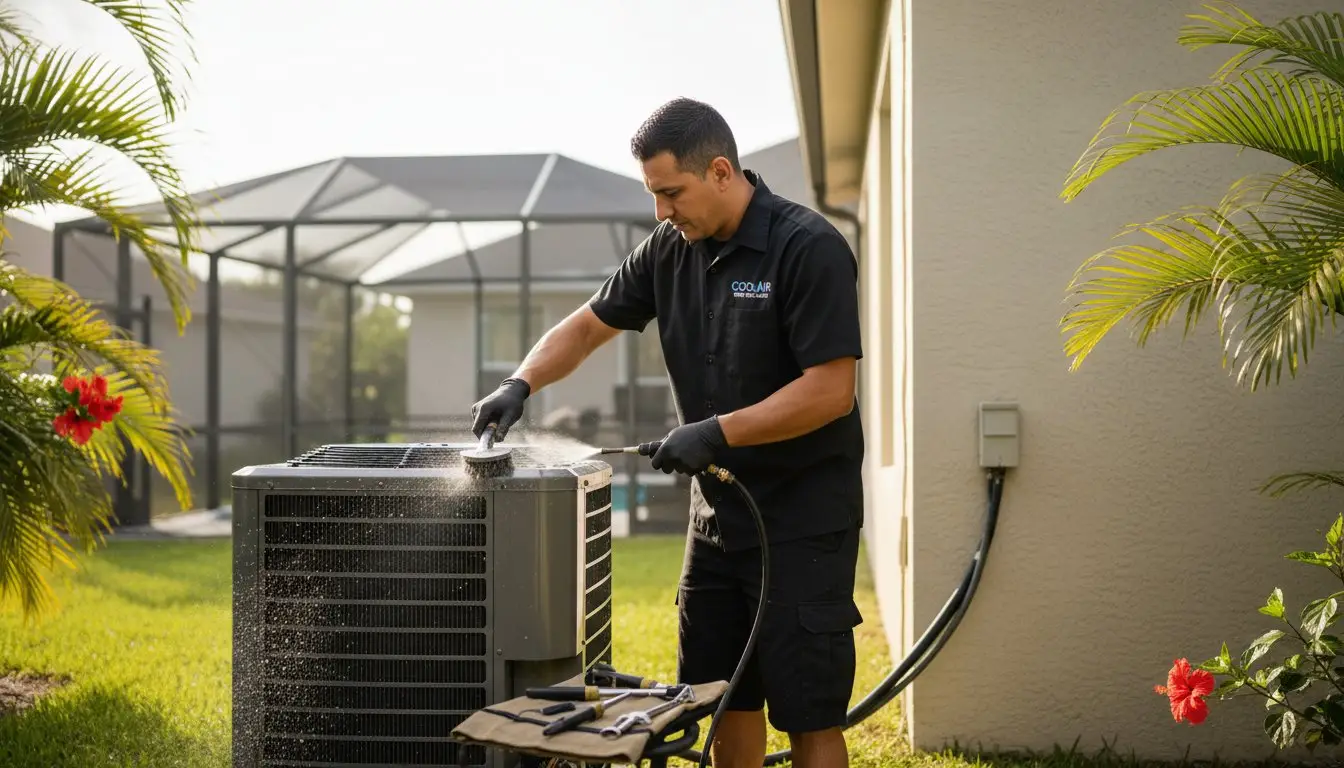
What if that $29 “special” isn’t actually a maintenance visit, but just a foot in the door for a $2,000 repair you don’t even need? It’s a common worry for homeowners in Port St. Lucie and Fort Pierce, especially when the humidity is high and your FPL bill is already soaring. You deserve to know exactly what you’re paying for when a technician arrives at your door. Understanding what is included in an HVAC tune-up checklist is the best way to ensure your system survives the brutal Florida summer without a surprise breakdown at 2 PM in July.
We agree that home maintenance should be transparent and stress-free. That’s why we’ve put together this 2026 guide to help you verify that every critical component, from the evaporator coils to the latest GFCI protection requirements, is handled correctly. You’ll discover the specific steps professional technicians take to combat salt air corrosion and prevent mold growth in your ductwork. We will walk you through the essential technical checks, explain the latest Florida Building Code updates regarding mandatory duct leakage testing, and give you the peace of mind that your AC is running at peak efficiency.
Key Takeaways
- Learn exactly what is included in an HVAC tune-up checklist to ensure your technician performs a deep cleaning and calibration rather than a quick visual inspection.
- Understand how the “Florida Tax” of 90% humidity and corrosive salt air accelerates wear on systems in Port St. Lucie and Fort Pierce.
- Explore the essential 20-point breakdown that covers critical components like condenser coils, fan motors, and electrical contactors.
- Discover why March and April are the ideal “Pre-Summer Sprint” months to schedule maintenance before the Treasure Coast heat peaks in July.
- Identify the specific licensing and insurance standards you should look for when hiring a local contractor in areas like Jensen Beach or St. Lucie West.
The Anatomy of a Florida HVAC Tune-Up: Why It Matters in 2026
A professional tune-up is far more than a quick glance at your thermostat. It is a comprehensive multi-point inspection, deep cleaning, and technical calibration of your Heating, ventilation, and air conditioning (HVAC) system. In Port St. Lucie and Fort Pierce, we deal with the “Florida Tax.” This refers to the 90% humidity and corrosive salt air that relentlessly attacks your outdoor unit. Without regular intervention, these coastal conditions accelerate wear, leading to a 5% loss in efficiency every single year you skip service.
The financial impact is immediate. Research shows that a well-maintained system can reduce monthly energy use by 15% to 20%. Beyond the savings, a thorough checklist focuses on safety. Technicians tighten loose electrical connections that could cause a fire and clear condensate drain lines to prevent the high-humidity mold growth that threatens your indoor air quality. Knowing exactly what is included in an HVAC tune-up checklist helps you verify that your technician is actually protecting your home rather than just checking a box.
Maintenance vs. Repair: Understanding the Difference
Maintenance is proactive. It involves cleaning coils and lubricating motors to prevent a failure before it happens. Repair is reactive. It’s what you face when the system stops cooling entirely. Most manufacturers actually require documented annual maintenance to keep your equipment warranty valid. If your unit is already struggling to stay on or making loud noises, you likely need AC Repair in Port St. Lucie rather than a standard tune-up. Preventative care ensures you don’t end up in that emergency situation during a heatwave.
DIY Filter Swaps vs. Professional Calibration
Homeowners play a critical role by changing air filters every 30 to 90 days. This simple task keeps airflow moving, but it’s only one small piece of the puzzle. A professional tune-up involves technical tasks that require specialized tools. Technicians use manifold gauges to check refrigerant levels and multimeters to test capacitor strength. We also deep-clean the evaporator coils, which is a delicate process that prevents airflow restrictions. These technical steps are what truly extend the lifespan of your system in the harsh Treasure Coast climate.
The Essential 20-Point HVAC Tune-Up Checklist
To truly understand what is included in an HVAC tune-up checklist, it helps to view your system in three distinct zones: the outdoor condenser, the indoor air handler, and the digital controls. A thorough technician doesn’t just look for broken parts. They look for efficiency drains. In the outdoor unit, we focus on cleaning the condenser coil to remove salt spray and checking the fan motor. We also inspect the contactor for “pitting,” which occurs when electrical arcing creates tiny craters on the metal surface. If left unaddressed, pitting can cause the unit to stick “on” or fail to start entirely.
Inside the home, flushing the condensate drain line is the most critical step for Treasure Coast homeowners. Our high humidity leads to rapid algae buildup that can clog lines and cause water damage in your ceiling or closet. We also inspect the evaporator coil for biological growth and measure the “Delta T.” This is the temperature split between the air entering and leaving the unit. A healthy system should show a difference of 16 to 22 degrees. This calibration ensures your system isn’t running longer than necessary to keep you cool.
Electrical and Mechanical Precision
We use multimeters to measure voltage and amperage on motors to detect early signs of failure. Florida’s intense heat causes constant thermal expansion and contraction, which naturally loosens electrical wires over time. Tightening these connections prevents shorts and potential fire hazards. We also lubricate all moving parts to reduce friction. This simple step lowers the energy draw of the motor, helping you avoid those sky-high summer utility bills. This level of detail is a core part of the ACCA Residential Quality Maintenance Checklist, which sets the gold standard for professional service.
Refrigerant and Airflow Optimization
Checking refrigerant levels is essential, but it’s important to remember that “topping off” is not a normal part of maintenance. Since AC systems are closed loops, low refrigerant always indicates a leak that requires a repair. We also inspect attic-mounted ductwork for crushed sections or leaks that kill efficiency. Finally, we check the blower wheel for debris. Even a small amount of dust can unbalance the motor and reduce airflow by up to 15%. If you haven’t had your system checked this year, a professional AC inspection and maintenance visit can identify these hidden efficiency killers before they lead to a breakdown.
Timing and Professional Standards on the Treasure Coast
While national guides often suggest a fall tune-up, Florida homeowners should prioritize the “Pre-Summer Sprint” in March and April. Scheduling your service before the humidity peaks ensures your system is ready for the relentless 24/7 workload of a Treasure Coast July. When you evaluate a local contractor in Tradition or Jensen Beach, verify their license through the Florida DBPR. A professional provider must carry at least $100,000 in public liability insurance and $25,000 in property damage insurance. Avoid “blow-and-go” specials that promise a full service for $29. If a technician is in and out in 15 minutes, they haven’t actually performed what is included in an HVAC tune-up checklist. A legitimate, thorough calibration typically takes 60 to 90 minutes to complete.
Warning Signs You Need an Immediate Tune-Up
Don’t wait for a total breakdown if you notice “musty” smells, often referred to as dirty sock syndrome. This odor usually signals biological growth on the evaporator coils that needs professional cleaning. Ice buildup on the exterior copper lines or a sudden 20% spike in your monthly utility bill are also major mechanical red flags. If you see these signs, you likely need Emergency AC repair rather than a standard maintenance visit. Catching these issues early can prevent a costly compressor failure during the hottest week of the year.
The First Choice Plus Standard of Care
Our commitment to residents in Port St. Lucie, Fort Pierce, and Stuart is built on a “helpful first” philosophy. We believe in transparency, which is why we show you exactly what we find during our inspection. It is important to distinguish our service areas: while our Land O’ Lakes location provides expert plumbing, only our Port St. Lucie team handles the full what is included in an HVAC tune-up checklist for air conditioning systems. Maintaining a regular service plan provides you with priority status during 24/7 emergency windows, giving you peace of mind that your home will stay cool and mold-free all year long.
Protect Your Home and Budget with Proactive Care
Ensuring your air conditioning system is ready for a 24/7 workload starts with knowing exactly what is included in an HVAC tune-up checklist. By verifying that your technician deep-cleans the evaporator coils, flushes the condensate lines, and calibrates the electrical components, you prevent the efficiency loss and mold growth that often plague Florida homes. Remember that a thorough 60 to 90 minute visit in the spring is much more affordable than an emergency compressor replacement in the middle of a July heatwave.
Our team has been serving the Treasure Coast since 2007, providing the technical expertise needed to combat salt air corrosion and high humidity. We offer transparent, honest pricing with no hidden fees, ensuring you get the maintenance you need without the “up-sell” stress. If you live in Port St. Lucie, Fort Pierce, or Stuart, our experts are ready to help. We even provide 24/7 emergency AC service in Port St. Lucie for those moments when the heat simply won’t wait. Schedule your Treasure Coast HVAC tune-up with First Choice Plus today! and enjoy the peace of mind that comes with a perfectly tuned system.
Common Questions About HVAC Maintenance
How long does a professional HVAC tune-up usually take?
A thorough professional HVAC tune-up typically takes between 60 and 90 minutes to complete. This timeframe allows a technician to work through every technical step, including deep-cleaning the coils and testing all electrical safety controls. If a company promises to finish the job in 15 or 20 minutes, they’re likely skipping critical steps like flushing the drain lines or measuring motor amperage.
Is an HVAC tune-up really worth the money in Florida?
A tune-up is highly valuable in Florida because it helps prevent the 5% efficiency loss that occurs every year a system goes unmaintained. Since our units run almost 24/7 to combat the heat, keeping the components calibrated can reduce your monthly energy bills by 15% to 20%. It’s much more cost-effective to pay for a scheduled visit than to face an emergency repair bill in the middle of a July heatwave.
How often should I have my AC tuned up in Port St. Lucie?
You should schedule a tune-up at least once a year, ideally in the spring before the extreme summer heat arrives. Many homeowners in Port St. Lucie and Jensen Beach prefer bi-annual visits to ensure their system survives the heavy workload and remains mold-free. Regular maintenance is also a standard requirement for keeping most manufacturer warranties valid, so skipping a year could cost you if a major part fails.
Will a tune-up help with the humidity levels in my home?
Yes, a professional tune-up improves humidity control by ensuring your evaporator coil and blower motor are operating at the correct specifications. When a technician follows what is included in an HVAC tune-up checklist, they verify the system is removing moisture effectively rather than “short-cycling.” Proper airflow and clean coils allow the system to pull more water from the air, preventing that “clammy” feeling and protecting your home from mold.
What happens if the technician finds a leak during the tune-up?
If we find a refrigerant leak, we will document the location and explain your repair options with a transparent, honest quote. Since AC systems are closed loops, low refrigerant is a mechanical red flag that indicates a leak rather than normal consumption. We never recommend just “topping off” a system, as the leaking refrigerant can damage the environment and will eventually cause the compressor to fail if the underlying hole isn’t sealed.

Article by
Written by First Choice Plus Plumbing & Air Team
This article was created by the team at First Choice Plumbing Solutions, a licensed and experienced plumbing and HVAC company serving Port St. Lucie, Land O’ Lakes, and surrounding areas.
Our team specializes in plumbing and air conditioning services, including drain cleaning, leak detection, water heater repair and installation, AC repair, maintenance, and system installations. Our content is based on real-world experience and the common issues we solve for homeowners and businesses every day.
We aim to provide accurate, helpful, and easy-to-understand information so you can make informed decisions about your plumbing and HVAC needs.
If you need reliable, professional service, First Choice Plumbing Solutions is here to help.
Disclaimer
Disclaimer: The information provided in this article is for general informational purposes only and does not constitute professional plumbing or HVAC advice. Every situation is different, and readers should consult a licensed professional for proper diagnosis and repair. First Choice Plus Plumbing & Air is not liable for any damages or losses resulting from the use of this information.