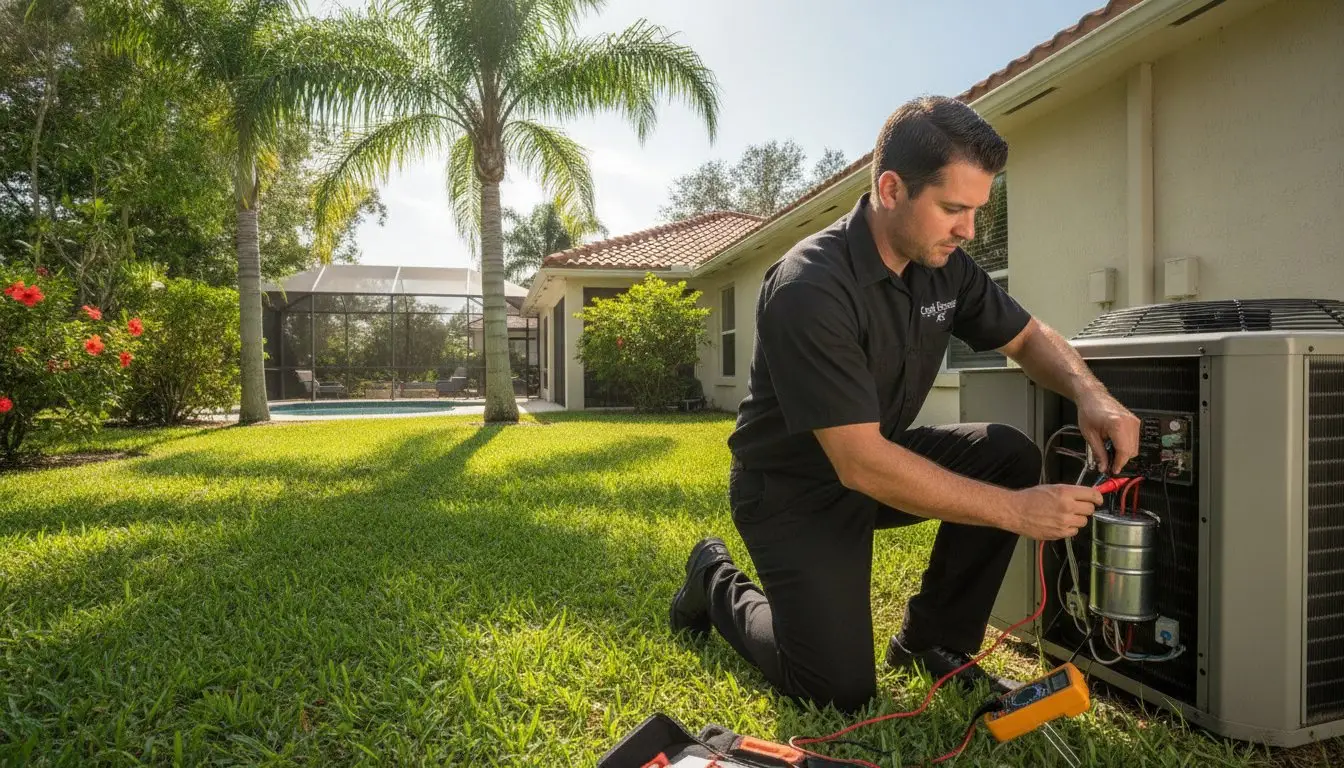
Imagine it is mid-afternoon in St. Lucie West, the humidity is stifling, and you suddenly realize your vents are blowing warm air. You step outside and hear a faint, struggling hum coming from your outdoor unit, but the fan blades are completely still. This is the classic signature of a failed start component, and understanding what happens if AC capacitor blows can be the difference between a simple afternoon fix and a total system meltdown. It is a small part that acts like a fuse for your expensive compressor, and in the Florida heat, a failure here demands immediate attention.
We know how stressful it is to lose your indoor comfort when the Treasure Coast temperature climbs past 90 degrees. You are likely worried about the cost of a major replacement or whether your family will have to endure a sweltering night. This guide will help you identify the clear warning signs of a blown capacitor, explain the risks to your HVAC system, and show you how to restore cooling to your home. We will walk you through a quick diagnosis and help you decide when to call a professional technician from Stuart to Fort Pierce for a reliable, honest repair.
Key Takeaways
- Understand how the capacitor acts as a temporary battery to provide the high-voltage jolt required to start your AC motors.
- Identify the specific warning signs, such as a struggling hum or lagging start, to diagnose exactly what happens if AC capacitor blows in your system.
- Learn why the intense Florida thermal stress and local lightning storms in areas like Stuart and Fort Pierce are leading causes of capacitor failure.
- Discover how a simple, proactive repair can prevent permanent damage to your expensive compressor and save you from a full system replacement.
- Gain clear guidance on when to safely troubleshoot and when to call a trusted Treasure Coast technician to restore your indoor comfort.
What Is an AC Capacitor and What Happens When It Fails?
Think of your AC capacitor as a small but mighty temporary battery. It stores electrical energy and releases it in a powerful burst to jumpstart your air conditioner’s motors. In Port St. Lucie, these components are the number one cause of electrical service calls during our sweltering summer months. When you ask what happens if AC capacitor blows, the answer is simple: your system loses its “muscle.” Without that stored energy, the heavy motors for your fan and compressor simply cannot overcome their own resting weight to start spinning.
The Immediate Impact on Your Home’s Cooling
When a capacitor fails, your indoor thermostat still thinks everything is fine. You might hear the indoor air handler blowing, but you will quickly notice the air coming from your vents is lukewarm. Outside, the condenser unit will sit silent or emit a rhythmic clicking sound. This is known as a “Hard Start” phenomenon, where the unit attempts to kick on every few minutes but lacks the electrical torque to actually engage the motor. If you ignore this, the constant electrical “stuttering” can eventually burn out your entire compressor, which leads to a far more expensive emergency AC repair.
Start vs. Run Capacitors: Why Both Matter
Most modern units use a dual-run capacitor, but the physics involve two distinct roles. A Motor capacitor used for starting provides the massive initial jolt needed to get the system moving. If this fails, the unit won’t even begin a cooling cycle. Conversely, a run capacitor provides a consistent, steady flow of energy to keep the motor efficient while it’s operating. If your run capacitor is weak, the motor will struggle, run much hotter than intended, and eventually shut down prematurely to protect itself from melting. This is exactly what happens if AC capacitor blows or begins to drift out of its required electrical range, leaving you without relief in the Florida heat.
5 Critical Signs Your AC Capacitor Has Blown
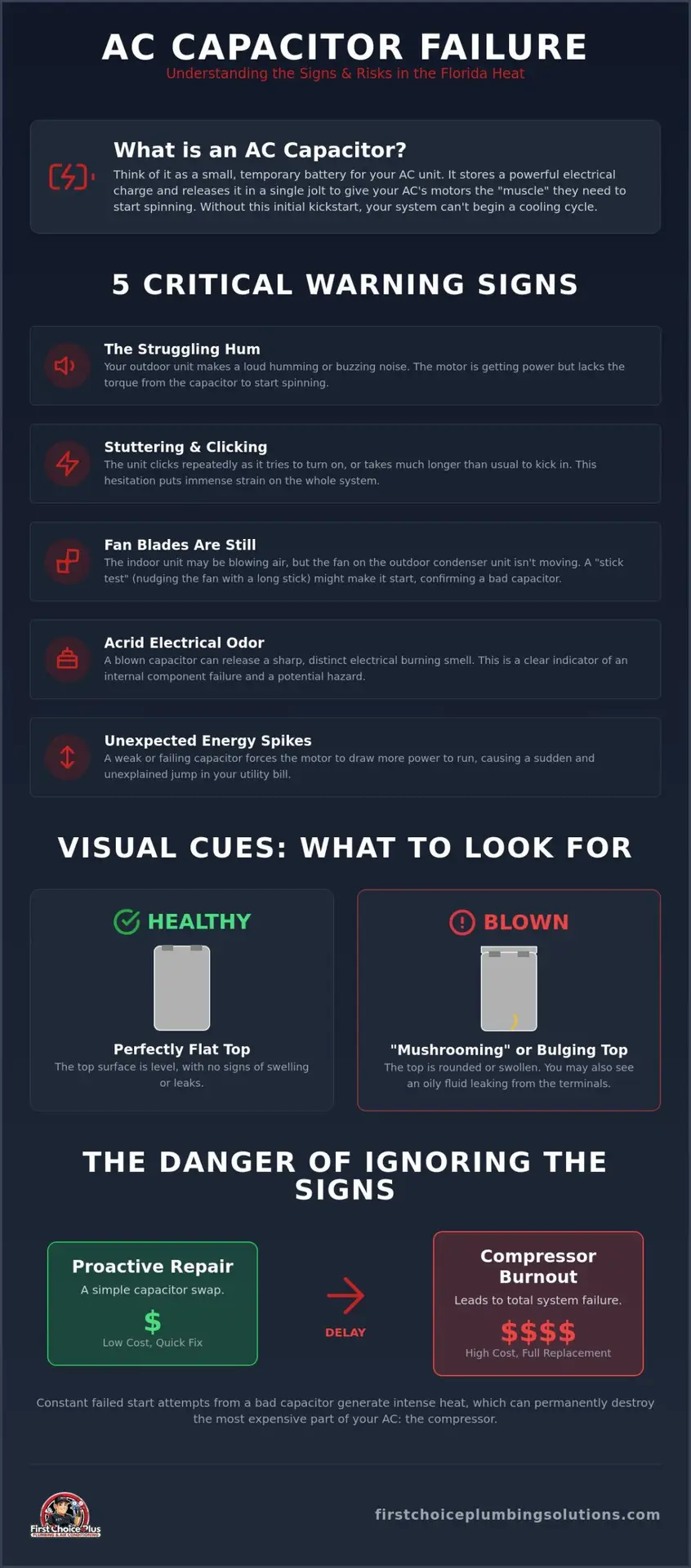
Detecting a failing capacitor before it completely quits can save you from a sleepless, sweltering night. Most homeowners in the Treasure Coast area notice the symptoms during the hottest part of the afternoon when the system is under maximum stress. If you are wondering what happens if AC capacitor blows, look for these five specific warning signs:
- The Struggling Hum: You hear a loud humming sound from the outdoor unit. This happens because the motor is receiving electricity but lacks the initial torque to start spinning.
- The “Stick Test” Failure: If your fan isn’t spinning, you can sometimes nudge it with a long stick. If it starts spinning after the nudge, your capacitor is definitely the culprit. Never use your hands for this test.
- Acrid Ozone Smells: A blown capacitor often releases a distinct, sharp electrical burning odor. This acrid scent is a clear indicator of internal component failure.
- Stuttering Starts: Your AC unit may click repeatedly or take several seconds to actually kick on. This “hesitation” puts immense strain on your electrical panel.
- Unexpected Energy Spikes: A weak capacitor forces your motors to draw significantly more amperage to stay running. If your utility bill jumps suddenly without a change in weather, your capacitor might be “bleeding” energy.
The Danger of Ignoring These Symptoms
Ignoring these warning signs is a gamble with your wallet. When a capacitor fails, the unit often tries to start repeatedly, which leads to “compressor slugging” or total motor burnout. Every failed start attempt generates intense heat that degrades the internal windings of your compressor. This turns a simple component swap into a mandatory AC installation or system replacement. Catching the problem early with an emergency AC repair is the smartest way to protect your long-term investment.
Visual Cues: What a “Blown” Part Actually Looks Like
If you are comfortable looking inside the service panel, a failed capacitor is usually easy to spot. A healthy capacitor has a perfectly flat top. A blown one will often show “mushrooming” or a bulging, rounded top, similar to a soda can that has been frozen. You might also see an oily discharge or “oozing” fluid around the terminals. This fluid is a sign that the internal chemicals have overheated and breached the outer casing. If you see these physical deformities, the part is hazardous and needs immediate professional replacement to keep your home safe.
If your unit is humming but refusing to cool, our team in Stuart or Fort Pierce can quickly test your electrical components to ensure your system stays reliable all summer long.
Why Florida Heat Causes Capacitors to Blow
Florida is notoriously hard on HVAC systems. While a capacitor in a cooler climate might last ten years, Treasure Coast units often see failures in just three to five years. This shortened lifespan is primarily due to extreme thermal stress. Our air conditioners run longer and harder than almost anywhere else in the country, causing the internal oil and chemicals within the capacitor to expand and degrade. When you consider what happens if AC capacitor blows, you have to realize it’s often the result of this relentless heat cycle finally pushing the component past its limit.
Beyond the heat, our local weather plays a major role. Fort Pierce and Stuart are frequent targets for intense electrical storms. A single power surge or a nearby lightning strike can send a spike of voltage through your outdoor unit, instantly frying the capacitor’s internal foil. This is why we see a massive spike in service calls immediately following our afternoon thunderstorms.
Professional Replacement vs. DIY Risks
It’s tempting to try a DIY fix, but capacitors are dangerous. These components can hold a lethal electrical charge even after you have turned off the power to the unit. Our professional technicians use specialized meters to check “microfarads,” ensuring the replacement part matches your motor’s exact specifications. It’s also important to note that while our Land O’ Lakes location focuses exclusively on professional plumbing, our Port St. Lucie team is fully equipped to handle these high-voltage AC emergencies safely.
Preventing Future Blowouts on the Treasure Coast
The best way to avoid a surprise breakdown is through a preventative maintenance tune-up. During a standard inspection, we test the electrical “health” of your capacitor. If we see the microfarad levels starting to drift, we can replace the part before it leaves you stranded in a 90-degree house. Installing a dedicated HVAC surge protector is another smart move to shield your system from Florida’s unpredictable power grid and ensure your family stays comfortable year-round.
Take Proactive Steps to Protect Your Home’s Comfort
A blown capacitor doesn’t have to mean the end of your air conditioning system. By recognizing the early signs like humming sounds or lagging starts, you can address the issue before it spirals into an expensive compressor failure. Remember that the relentless Florida heat and frequent lightning storms in towns like Jensen Beach and Palm City make these components work overtime. Understanding what happens if AC capacitor blows allows you to act quickly, ensuring your family stays cool even during the most humid months.
Since 2007, Manuel J. Duran Jr. and his team of expert HVAC technicians have provided reliable, honest service to the Treasure Coast community. We are locally owned and offer 24/7 emergency service to handle those sudden breakdowns that always seem to happen at the worst times. Don’t let a small part cause a major headache for your household. Schedule Your Emergency AC Repair in Port St. Lucie Now and let our experienced hands restore your peace of mind. We are here to help you get back to enjoying your home in total comfort.
Frequently Asked Questions
Can I run my AC with a blown capacitor?
No, you should turn your system off immediately to prevent permanent damage. Attempting to run an air conditioner with a failed capacitor puts extreme strain on the compressor and fan motors. This leads to overheating and can eventually cause a total motor burnout. It’s always more cost-effective to replace a single electrical component than to pay for a full system replacement because you ignored the early warning signs.
How much does it usually cost to replace an AC capacitor in Florida?
The total investment for a professional capacitor replacement depends on the specific part your system requires and the labor involved in the repair. While the component itself is one of the more affordable parts of an HVAC system, the primary cost covers the technician’s expertise in safely handling high-voltage electricity. Hiring a local professional ensures the new part is correctly rated and installed, which protects your system’s long-term health and efficiency.
Why does my AC make a loud clicking or humming noise but won’t start?
This noise is the sound of an electric motor that is receiving power but lacks the necessary torque to begin spinning. When diagnosing what happens if AC capacitor blows, this humming is a telltale sign that the “start” energy is missing. The motor is essentially trying to do its job but is physically unable to move, which creates a rhythmic vibration or clicking sound that signals an immediate need for service.
How long does an AC capacitor typically last in Port St. Lucie?
Most AC capacitors in the Treasure Coast region typically last between three and five years due to our extreme operating conditions. While manufacturers often provide longer ratings, the combination of high outdoor temperatures and 24/7 cooling cycles in Florida causes the internal chemicals to break down much faster. Homeowners in areas like Traditions or Jensen Beach should have their capacitors tested annually during a routine maintenance visit to avoid unexpected failures.
Article by
Written by First Choice Plus Plumbing & Air Team
This article was created by the team at First Choice Plumbing Solutions, a licensed and experienced plumbing and HVAC company serving Port St. Lucie, Land O’ Lakes, and surrounding areas.
Our team specializes in plumbing and air conditioning services, including drain cleaning, leak detection, water heater repair and installation, AC repair, maintenance, and system installations. Our content is based on real-world experience and the common issues we solve for homeowners and businesses every day.
We aim to provide accurate, helpful, and easy-to-understand information so you can make informed decisions about your plumbing and HVAC needs.
If you need reliable, professional service, First Choice Plumbing Solutions is here to help.
Disclaimer
Disclaimer: The information provided in this article is for general informational purposes only and does not constitute professional plumbing or HVAC advice. Every situation is different, and readers should consult a licensed professional for proper diagnosis and repair. First Choice Plus Plumbing & Air is not liable for any damages or losses resulting from the use of this information.