
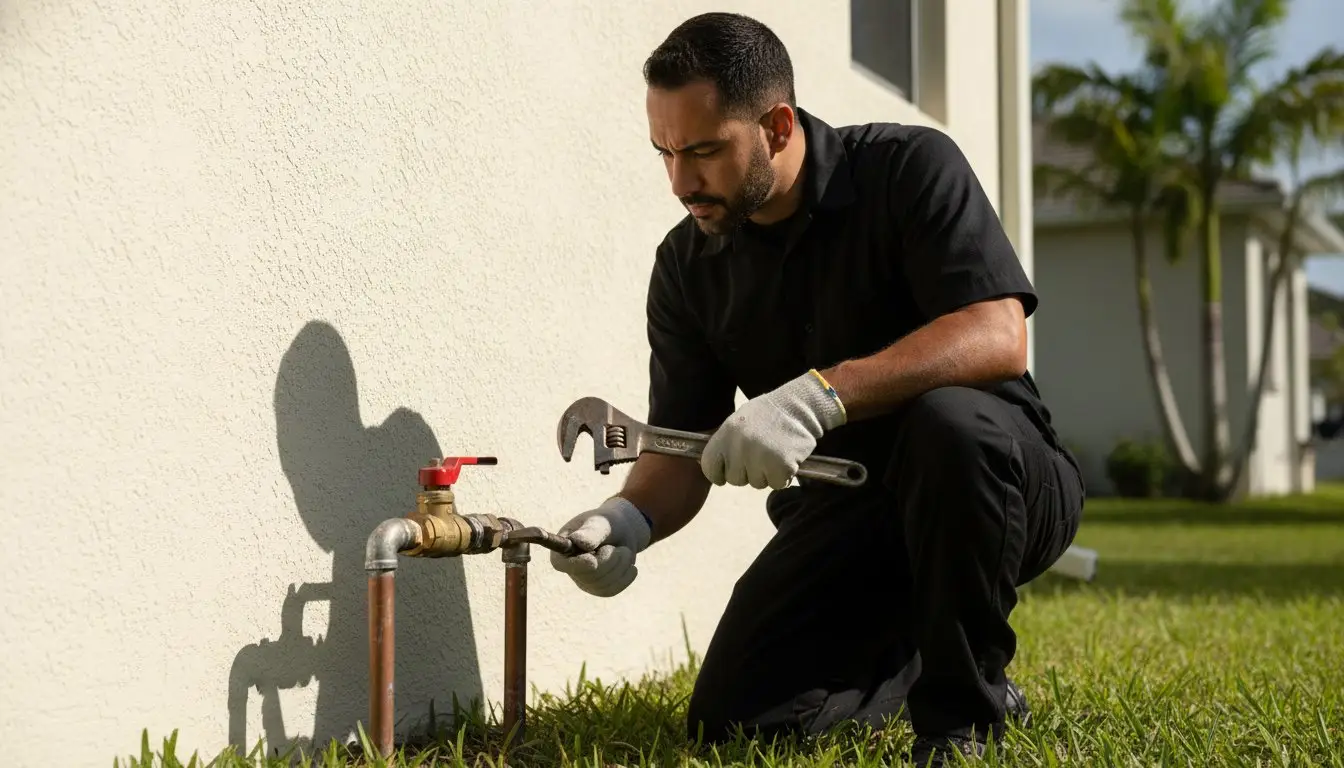
You just finished a minor repair, turned your main water valve back to the “on” position, and walked inside only to find that not a single drop is coming out of the kitchen faucet. It is a sinking feeling that many homeowners experience, but troubleshooting no water pressure after main shutoff valve doesn’t always mean you’re facing a catastrophic or expensive main line failure. We understand the immediate anxiety that comes with a dry house, especially when a simple maintenance task leads to a much bigger problem for your family.
You shouldn’t have to worry about your home’s essential needs being met. We’re here to help you learn why your water pressure vanished after using the main shutoff and provide the expert steps needed to restore flow to your home safely. In the following sections, we will walk through the common causes of this issue, from mechanical valve failures to sediment blockages triggered by pressure surges. You’ll gain a clear understanding of whether your valve is truly broken and learn how to identify the warning signs that it is time to call in a local professional.
Key Takeaways
- Determine if your pressure loss is universal or isolated by checking every fixture, including outdoor hose bibs.
- Master the “Cold Flush” technique to clear air and sediment safely when troubleshooting no water pressure after main shutoff valve.
- Identify the difference between ball and gate valves to spot mechanical failures before they lead to a plumbing emergency.
- Learn how Florida’s hard water causes mineral scale surges that can clog aerators once the main line is reopened.
- Understand when an unresponsive pressure reducing valve or a spinning handle means it’s time to call a professional for a safe repair.
Diagnosing the Cause: Is It the Main Valve or the Fixtures?
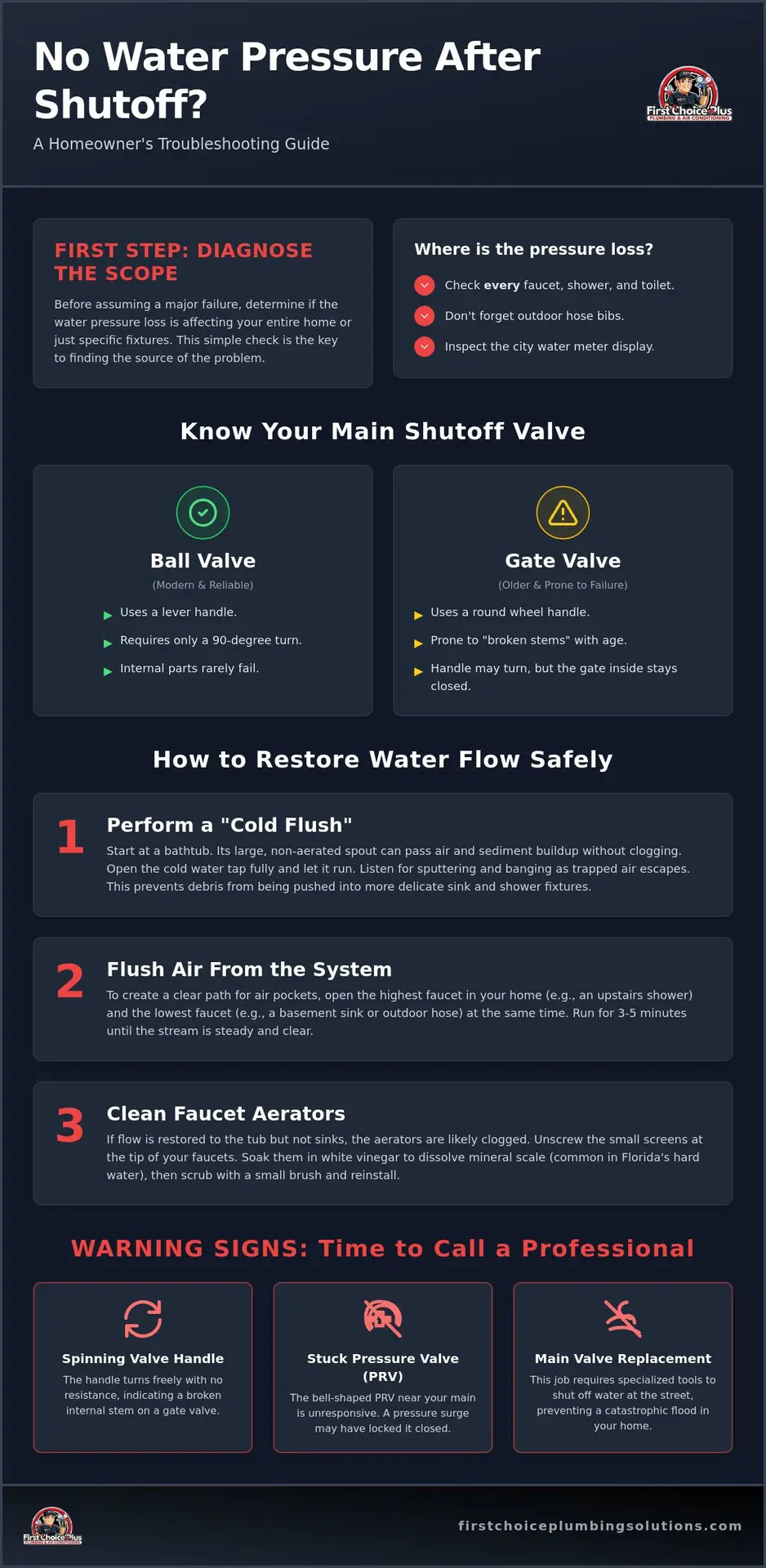
Before you assume the worst, you need to determine if the problem is universal. Start by opening every faucet in the house, including the showers and the laundry tub. Don’t forget the outdoor hose bibs. If the hose bib has pressure but the kitchen sink doesn’t, the issue is likely a localized blockage or a failed Pressure Reducing Valve (PRV). However, if every tap is dry, your troubleshooting no water pressure after main shutoff valve should focus on the main service entrance.
Take a quick walk to the city water meter. If the dial or digital display is spinning rapidly but no water is entering your home, you might have a massive leak or a complete blockage at the service line. If it isn’t moving at all, the water isn’t getting past the main valve. This process of elimination helps you narrow down whether the mechanical failure is inside your walls or at the very start of your plumbing system.
The Difference Between Ball Valves and Gate Valves
A modern ball valve uses a lever handle that only requires a 90-degree turn to fully open or close. These are the gold standard for reliability in Port St. Lucie homes because they rarely fail internally. Older homes often feature gate valves, which use a round wheel handle. These are notorious for “broken stems.” Over time, the internal gate can detach from the stem. You might turn the handle and feel resistance, but the gate remains dropped, effectively keeping your water off even when the handle looks like it is in the “on” position.
Is Your Pressure Reducing Valve (PRV) Stuck?
Look for a bell-shaped brass component near your main shutoff. This is the PRV. It manages the high pressure from the city line to a safe level for your pipes. When you restore water after a shutdown, a sudden surge of pressure can cause an aging PRV to “lock” in the closed position. This mechanical failure is a common culprit for total pressure loss. If your main valve is definitely open but the house remains dry, the PRV is a likely suspect that requires professional plumbing repairs to diagnose and replace safely.
Step-by-Step Troubleshooting to Restore Water Flow
Successfully troubleshooting no water pressure after main shutoff valve often starts with understanding how sediment moves through your plumbing. When you restore flow, the sudden rush of water acts like a pressure washer inside your pipes. In Florida, where hard water mineral scale is common, this surge dislodges years of buildup. If you suspect a larger issue beyond simple clogs, you can always consult our experts for professional plumbing repairs to ensure your system is clear.
Start with a “Cold Flush” at your bathtub. Most bathtubs don’t have aerators, meaning the large spout can pass air and heavy sediment without getting clogged. Open the cold water tap fully and let it run. You’ll likely hear loud banging or see the water sputter as air pockets escape. This prevents the debris from being pushed into the smaller, more delicate screens in your kitchen and bathroom sinks. If you bypass this step, you risk sending a wave of scale directly into your most expensive fixtures.
How to Flush Air and Debris Safely
Open the highest and lowest faucets in your home simultaneously to create a clear path for air pockets to exit the system. Run the water for at least three to five minutes until the sputtering stops and the stream becomes steady and clear.
Cleaning Faucet Aerators and Showerheads
If the bathtub has flow but your sinks don’t, you need to clean the aerators. Use a pair of pliers and a rag to protect the fixture’s finish while you unscrew the small screen at the tip of the faucet. Soak these parts in white vinegar to dissolve mineral deposits, then scrub them with a small brush before reinstalling. Watch out for your toilet fill valves, too. Sediment can easily clog the delicate seals inside the tank, causing the toilet to refill at a snail’s pace or stop filling entirely.
When to Call a Professional Plumber in Port St. Lucie
While the steps mentioned earlier resolve most household clogs, mechanical failures require a different level of expertise. If your gate valve handle spins freely without any resistance, the internal stem has likely snapped. Similarly, an unresponsive Pressure Reducing Valve (PRV) won’t budge without professional intervention. Troubleshooting no water pressure after main shutoff valve often leads to the realization that these aging components simply can’t handle being cycled after years of sitting idle.
For property owners or managers overseeing more complex infrastructure, the expert guides from Anton Plumbing Heating & Cooling provide essential technical insights into maintaining critical systems and ensuring long-term operational reliability.
Attempting a main valve replacement on your own is a high-stakes gamble for any homeowner. You need a specialized curb key to shut off water at the city meter; without it, a mistake during the swap could result in a catastrophic flood. If you’ve flushed every fixture and the house remains dry, the initial pressure surge might have even triggered a slab leak in a weakened pipe. This requires professional leak detection equipment to locate and repair the issue under your home’s foundation.
The Benefits of Upgrading to a Quarter-Turn Ball Valve
We recommend upgrading to a high-quality, stainless steel ball valve during any main line repair. These require only a simple 90-degree turn to operate and provide superior long-term reliability. Just as the maritime industry relies on Panama Ship Service for high-level technical and operational support, choosing components that don’t have internal “gates” that get stuck ensures that the next time you need to shut off your water, it comes back on without a fight. This upgrade offers essential peace of mind for future maintenance.
Emergency Support for Port St. Lucie and Beyond
First Choice Plus Plumbing & Air provides 24/7 emergency plumbing services throughout the Treasure Coast. Whether you’re in Jensen Beach, Stuart, or Palm City, our team arrives with the tools and local knowledge to restore your flow immediately. We understand the stress of a dry home and prioritize rapid response to get your life back to normal. Don’t let a stuck valve disrupt your family’s comfort; we’re your local experts and trusted neighbors.
Restore Your Home’s Water Flow Today
Restoring water shouldn’t be a source of constant stress for your family. By determining if the pressure loss is universal and using the “Cold Flush” method, you can often clear sediment clogs on your own. However, if your troubleshooting no water pressure after main shutoff valve reveals a snapped gate valve stem or a locked PRV, it’s time to put down the wrench. Handling main line repairs without the right tools or experience risks major flooding and property damage.
First Choice Plus Plumbing & Air has served Port St. Lucie since 2007, providing expert slab leak detection and 24/7 emergency plumbing repairs. We’re here to ensure your plumbing system remains safe and reliable throughout every season. Struggling with no water pressure? Contact First Choice Plus Plumbing & Air for 24/7 emergency support in Port St. Lucie! You don’t have to face a plumbing crisis alone; our steady hand is just a phone call away.
Frequently Asked Questions
Why did my water pressure drop after I turned the main valve back on?
Pressure drops usually happen because the sudden rush of water dislodges mineral scale or sediment from the inside of your pipes. This debris travels through the line and gets trapped in your faucet aerators and showerheads, creating a physical blockage. In many Florida homes with older plumbing, this “sediment surge” is the most common reason for a sudden loss of flow after a repair.
Can air in the pipes cause no water pressure?
Air trapped in your plumbing causes significant sputtering and temporary pressure loss, but it rarely stops the flow entirely. When you drain your system, air fills the empty pipes. Once you restore the water, these air pockets must be purged through your faucets. You’ll hear banging or coughing from the pipes until the air is fully replaced by a steady stream of water.
How do I know if my main water shutoff valve is broken?
You can tell a valve is broken if the handle spins freely without any resistance or if it feels “mushy” when you turn it. For older gate valves, the internal component that blocks the water often snaps off the stem, leaving the valve stuck in the closed position. If your handle is in the “on” position but the house remains completely dry, the valve has likely failed internally.
Should I call a plumber if my water is sputtering after a repair?
You don’t need to call a plumber immediately if the sputtering stops after a few minutes of flushing your faucets. However, if troubleshooting no water pressure after main shutoff valve doesn’t restore your full flow or the sputtering persists for more than ten minutes, professional help is necessary. Persistent low pressure often indicates a stuck pressure reducing valve or a blockage that requires specialized tools to clear safely.

Article by
Written by First Choice Plus Plumbing & Air Team
This article was created by the team at First Choice Plumbing Solutions, a licensed and experienced plumbing and HVAC company serving Port St. Lucie, Land O’ Lakes, and surrounding areas.
Our team specializes in plumbing and air conditioning services, including drain cleaning, leak detection, water heater repair and installation, AC repair, maintenance, and system installations. Our content is based on real-world experience and the common issues we solve for homeowners and businesses every day.
We aim to provide accurate, helpful, and easy-to-understand information so you can make informed decisions about your plumbing and HVAC needs.
If you need reliable, professional service, First Choice Plumbing Solutions is here to help.
Disclaimer
Disclaimer: The information provided in this article is for general informational purposes only and does not constitute professional plumbing or HVAC advice. Every situation is different, and readers should consult a licensed professional for proper diagnosis and repair. First Choice Plus Plumbing & Air is not liable for any damages or losses resulting from the use of this information.