
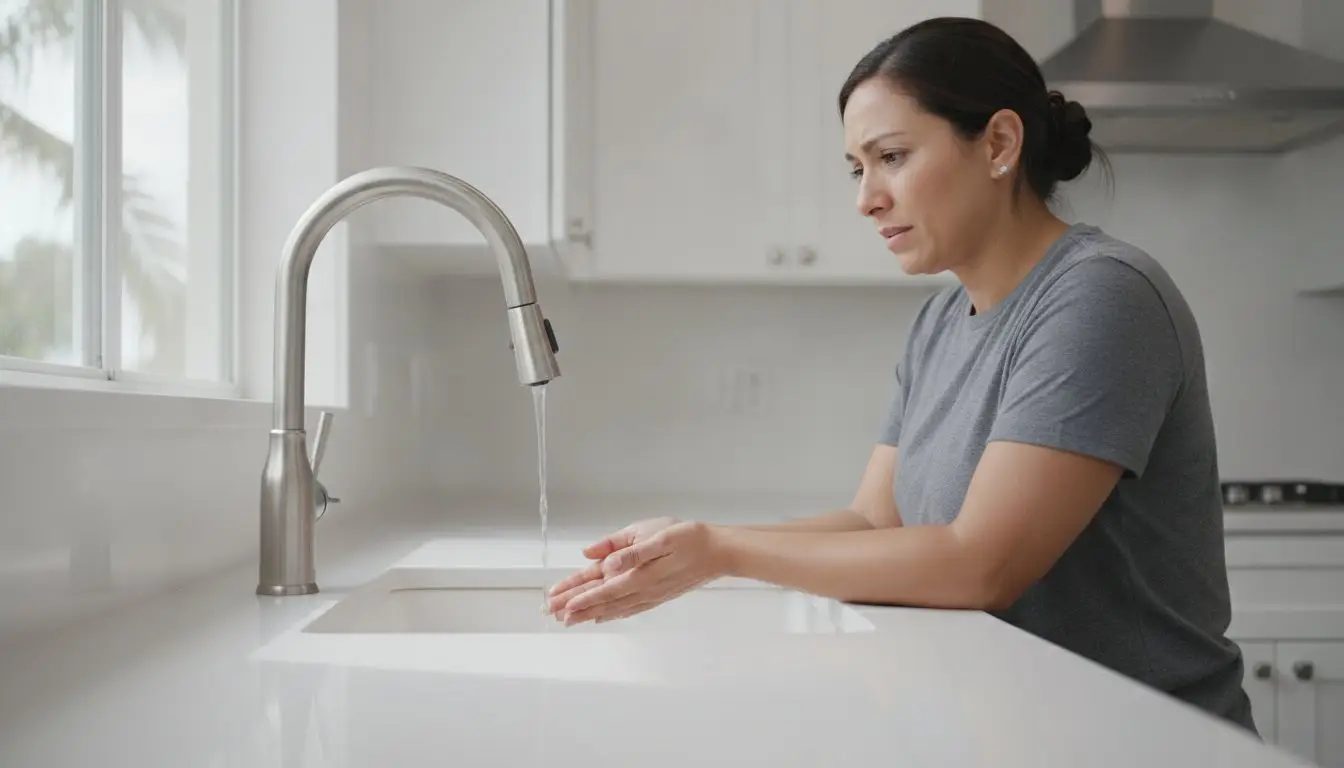
You finally finished that plumbing repair you’ve been planning for weeks, but when you turn on the kitchen faucet, the water barely trickles out. It is an incredibly frustrating moment for any Port St. Lucie homeowner, especially when you were expecting a smooth resolution. You probably feel a mix of annoyance and worry that the work was done incorrectly or that you are facing another expensive bill. Before you panic, remember that troubleshooting low water pressure after plumbing work often reveals a simple fix rather than a major error. We understand that anxiety; your home should be a place of comfort, not a source of constant stress.
The good news is that a sudden drop in flow doesn’t always mean the previous repair failed. In many cases, the issue is caused by trapped air or sediment that was disturbed during the service. This guide explains exactly why these pressure drops happen and shows you how to identify the culprit. We will walk you through a step-by-step process to restore your home’s full flow and help you decide if you can handle the fix yourself or if it is time to call in a local expert to ensure your system remains safe and efficient.
Key Takeaways
- Identify why trapped air and sediment disturbance are the most common culprits for pressure drops following a repair.
- Follow a logical process for troubleshooting low water pressure after plumbing work by isolating specific fixtures to determine the scope of the problem.
- Learn how to properly clean faucet aerators to clear out Florida’s notorious mineral scale that often breaks loose during pipe maintenance.
- Recognize the red flags of a hidden leak, like damp spots or the sound of running water, which require immediate professional attention.
- Gain the confidence to restore your home’s water flow or know exactly when a persistent issue needs a master plumber’s steady hand.
Common Reasons for Low Water Pressure After Plumbing Repairs
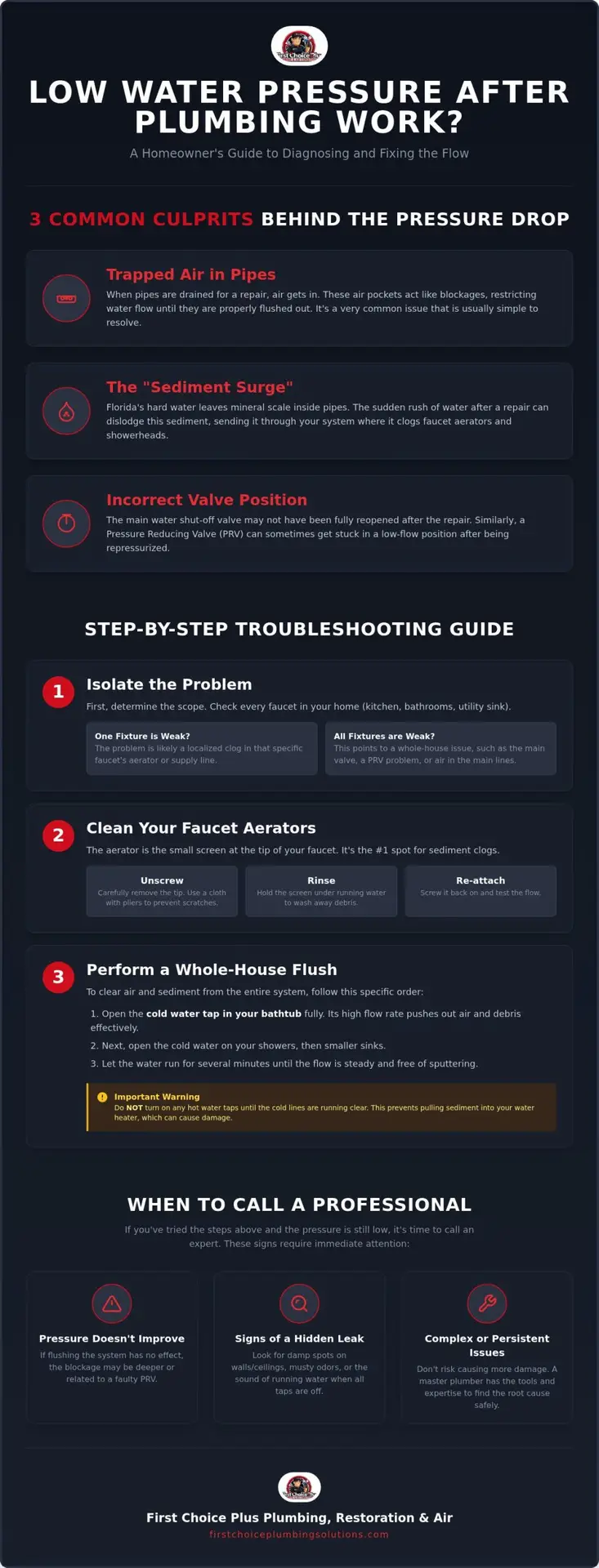
When you open up modern plumbing systems for a repair, you change the pressure and environment inside the pipes. This disruption is the primary reason for troubleshooting low water pressure after plumbing work. Air often enters the lines while they are drained, creating pockets that act like physical blockages. When the water is restored, these air bubbles can get stuck in elbows or narrow fittings, restricting the flow until they are properly flushed out. It’s a common occurrence that usually resolves with a thorough system flush.
The “Sediment Surge” in Florida Homes
Port St. Lucie is known for hard water, which leaves behind mineral scale and calcium deposits over time. These minerals settle on the inner walls of your pipes. When a plumber shuts off the water and then surges it back on, the sudden change in velocity can knock those deposits loose. This “sediment surge” travels through the lines and gets trapped in faucet aerators or showerheads. If your home has older galvanized or copper pipes, this might be a sign that you need a whole house repipe to permanently clear out years of buildup and protect your new fixtures.
Valve Positioning and PRV Shifts
Sometimes the culprit is a simple mechanical oversight. Plumbers often close the main water shut-off valve near the meter or where the line enters the house. If this valve isn’t turned back to the fully open position, your entire home will suffer from weak pressure. Additionally, many homes in the Treasure Coast use a Pressure Reducing Valve (PRV) to manage municipal water spikes. These valves can occasionally “stick” in a low-flow position after the system has been fully drained and repressurized. A quick check of the valve handle can often solve the mystery immediately.
Finally, don’t overlook the impact of new technology. If you just had a new faucet or showerhead installed, it likely features a modern low-flow aerator designed to meet strict water conservation standards. While these are great for your utility bill, the sensation of the flow might feel significantly weaker than your previous, non-compliant fixture. Checking the aerator for debris is always the first step in troubleshooting low water pressure after plumbing work to ensure a simple clog isn’t the problem.
A Step-by-Step Troubleshooting Guide to Restoring Water Pressure
Restoring your home’s flow requires a methodical approach. Start by isolating the problem. Walk through your home and turn on every faucet one by one. If only one fixture is weak, the issue is likely a localized clog. If every tap in the house is struggling, you are likely dealing with a main line issue or a valve restriction. This initial diagnostic step is the foundation of troubleshooting low water pressure after plumbing work.
How to Properly Flush Your Aerators
An aerator acts as the “final filter” that frequently clogs after repairs because it catches every bit of dislodged sediment. To clean it, simply unscrew the small perforated tip at the end of the faucet spout. You might need a pair of pliers; if so, use a cloth to protect the metal finish. Rinse the mesh screen under a different tap to remove any grit. If the screen looks clear but the pressure is still low, the blockage is deeper in the supply line.
The Systematic Whole-House Flush
To clear air and debris from your entire system, you must follow a specific order of operations. Open the cold water tap in your bathtub first. Bathtubs have the highest flow rate and can move large air pockets and heavy sediment quickly. Next, move to your showers and then smaller sinks. This process ensures that any “sediment surge” exits through the largest openings first.
Warning: Do not turn on any hot water taps until the cold lines run clear. Using hot water too early can pull sediment directly into your water heater, potentially damaging the tank or heating elements. Maintaining steady pressure is vital, as the dangers of low water pressure include more than just inconvenience; they can lead to backflow issues or system contamination. If these steps don’t work, inspect your Pressure Reducing Valve (PRV). This bell-shaped device is usually located near your main shut-off. If it was bumped or became stuck during the repair, it might be throttling your flow. If you’ve tried these steps and still have a trickle, our team can provide a professional plumbing inspection to find the exact cause.
When to Call a Professional Plumber in Port St. Lucie
If you’ve cleaned every aerator and performed a thorough cold water flush but the flow still feels like a trickle, the issue requires a deeper look. Persistent whole-house pressure loss often points to a mechanical failure in the Pressure Reducing Valve (PRV). In Port St. Lucie, municipal pressure can fluctuate, and a failing PRV might lock in a closed position to protect your pipes, effectively throttling your entire supply. This valve requires professional adjustment or replacement to ensure your home meets local building codes and stays safe from high-pressure damage.
Another specific red flag occurs when the pressure drop only affects the hot water side. If your cold water is strong but the shower is weak, there may be a blockage in the intake nipples of the water heater or a partially closed supply valve on the tank itself. Since water heaters involve high temperatures and pressure, it’s best to have a master plumber verify the connections were restored correctly after any recent repair. Troubleshooting low water pressure after plumbing work is about isolating these variables until the culprit is found.
Emergency Signs You Shouldn’t Ignore
Listen closely to your walls. If you hear “water hammer” or loud knocking sounds when you turn off a tap, it means air is still trapped or a pipe was left unsecured during the previous work. More concerning are damp spots on the floor or the sound of running water when all taps are closed. These are classic symptoms of a slab leak, which is common in Florida’s sandy soil. In these cases, you should contact a leak detection expert immediately to prevent structural damage to your foundation.
First Choice Plus Plumbing & Air: Your Neighborly Experts in PSL
When troubleshooting low water pressure after plumbing work feels overwhelming, remember that you don’t have to face it alone. First Choice Plus Plumbing & Air provides 24/7 emergency support for residents in Stuart, Jensen Beach, and Port St. Lucie. We bring a steady hand and technical authority to every service call, treating your home with the same respect we would show a neighbor. Our team prioritizes transparency and honesty, ensuring you understand exactly why your pressure dropped and how we will fix it for good.
Enjoy Consistent Water Pressure and Peace of Mind
Troubleshooting low water pressure after plumbing work doesn’t have to be a stressful ordeal when you have a clear plan of action. Most flow issues stem from simple sediment clogs or air pockets that you can clear with a methodical flush. By cleaning your aerators and isolating the problem to specific fixtures, you can often restore your home’s comfort in just a few minutes without any additional expense.
If the trickling persists or you suspect a deeper mechanical failure like a faulty PRV, don’t wait for the problem to worsen. Since 2007, our team has provided reliable, 24/7 emergency plumbing repairs and expert slab leak detection to families throughout the Treasure Coast. We believe in honest communication and master craftsmanship, ensuring your plumbing system remains a dependable part of your home for years to come.
Still struggling with low pressure? Contact First Choice Plus Plumbing & Air for 24/7 expert troubleshooting in Port St. Lucie! We are ready to help you get your water flowing perfectly again so you can get back to your normal routine with total confidence.
Frequently Asked Questions
Is it normal for water to sputter after plumbing work?
Yes, sputtering is a completely normal occurrence after any plumbing repair that requires draining the system. When a plumber opens your pipes, air fills the empty space; when the water is turned back on, that air is forced out through your faucets, causing the water to “cough” or spray unevenly. Simply running your taps for a few minutes usually clears the line and restores a steady stream.
Can air in the pipes cause low water pressure?
Air pockets can definitely lead to a noticeable drop in flow, making troubleshooting low water pressure after plumbing work a common task for homeowners. These pockets often get trapped in high points or narrow bends of your plumbing, creating a “vapor lock” effect that restricts water movement. A systematic flush of the entire house, starting with the highest-flow fixtures like bathtubs, is the best way to push these stubborn air pockets out of the system.
How do I know if my Pressure Reducing Valve (PRV) is bad?
You can usually tell a PRV is failing if you notice a sudden, house-wide drop in pressure that doesn’t improve after flushing the lines. Other warning signs include vibrating or banging noises in your walls, known as water hammer, or pressure that fluctuates wildly throughout the day. In Port St. Lucie, these bell-shaped valves are essential for protecting your home from high municipal water spikes; a failure should be addressed quickly to prevent pipe damage.
Why is my hot water pressure low but cold water is fine?
If only your hot water is weak, the issue is likely isolated to your water heater or the specific supply lines connected to it. Sediment often settles at the bottom of the tank and can be stirred up during repairs, eventually clogging the hot water outlet or the “heat trap” nipples. Check that the shut-off valve on the cold water intake pipe is turned to the fully open position, as even a partially closed valve will significantly restrict the flow of hot water to your showers and sinks.

Article by
Written by First Choice Plus Plumbing & Air Team
This article was created by the team at First Choice Plumbing Solutions, a licensed and experienced plumbing and HVAC company serving Port St. Lucie, Land O’ Lakes, and surrounding areas.
Our team specializes in plumbing and air conditioning services, including drain cleaning, leak detection, water heater repair and installation, AC repair, maintenance, and system installations. Our content is based on real-world experience and the common issues we solve for homeowners and businesses every day.
We aim to provide accurate, helpful, and easy-to-understand information so you can make informed decisions about your plumbing and HVAC needs.
If you need reliable, professional service, First Choice Plumbing Solutions is here to help.
Disclaimer
Disclaimer: The information provided in this article is for general informational purposes only and does not constitute professional plumbing or HVAC advice. Every situation is different, and readers should consult a licensed professional for proper diagnosis and repair. First Choice Plus Plumbing & Air is not liable for any damages or losses resulting from the use of this information.