Did you know that sewer gas is the leading cause of workplace gas inhalation deaths in the U.S., with 46 fatalities recorded between 2011 and 2017? While your home should be a sanctuary, that persistent rotten egg scent in your Port St. Lucie bathroom is more than just an embarrassment. It’s a critical warning sign regarding the dangers of sewer gas smell in bathroom areas, ranging from simple nausea to serious respiratory distress.
It is completely normal to feel a sense of dread when a foul odor won’t go away, especially when you’re worried about toxic exposure or a massive repair bill. We believe every homeowner deserves to know exactly what they’re breathing. This guide will clarify the hidden health risks of gases like hydrogen sulfide and teach you how to identify the specific plumbing failures causing the problem in your Treasure Coast home. We’ll cover everything from simple dried P-traps to the latest 2026 Florida Building Code standards, ensuring you know when the air is safe and when it’s time to call for a professional sewer camera inspection.
Key Takeaways
- Understand the complex mixture of methane and hydrogen sulfide that makes up sewer gas and why your nose might stop detecting it even when levels are dangerous.
- Learn how to identify common plumbing failures like dried-out P-traps or blocked roof vents that allow toxic vapors to enter your living space.
- Discover the specific health risks and dangers of sewer gas smell in bathroom areas, including how it affects your respiratory and neurological systems.
- Follow a step-by-step safety protocol to neutralize hazards immediately by improving ventilation and performing a quick DIY check of your fixtures.
- Recognize when a persistent odor requires professional diagnostic tools like sewer camera inspections to locate hidden leaks behind walls or under slabs.
Understanding Sewer Gas: More Than Just a Foul Bathroom Odor
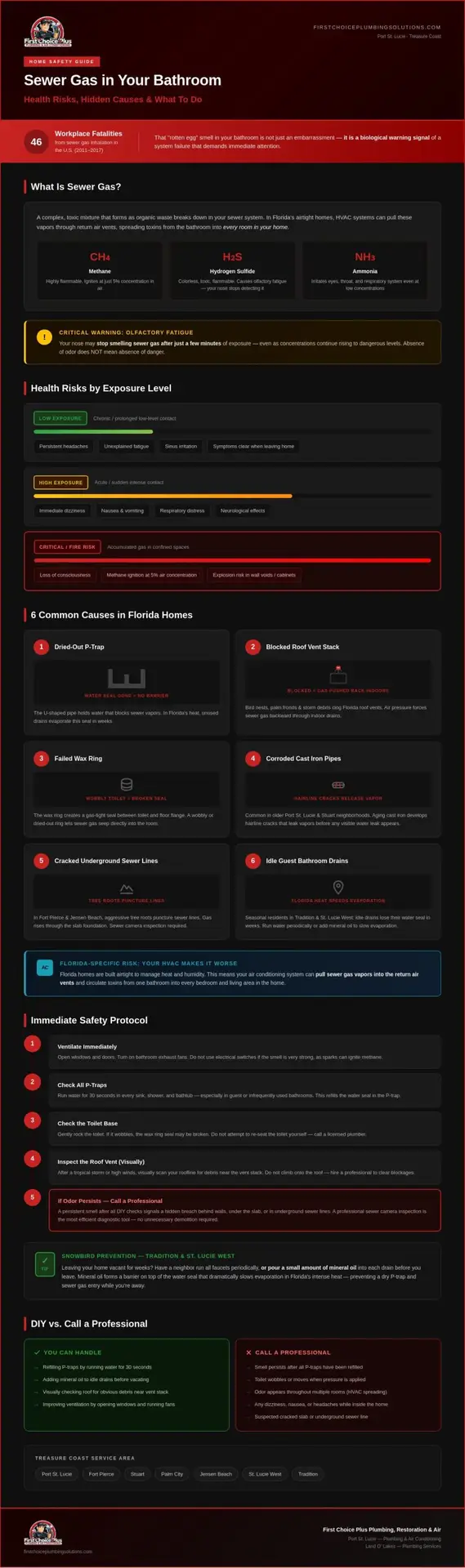
Most homeowners in Port St. Lucie view a foul stench in the bathroom as a simple hygiene issue. In reality, that “rotten egg” scent is a biological warning sign designed to alert you to a system failure. What is sewer gas exactly? It’s a complex mixture of methane, ammonia, and hydrogen sulfide that forms as organic waste breaks down. While a minor drain clog might cause a localized scent, a persistent odor often indicates a larger breach in your plumbing vents or sewer lines.
In Florida, our homes are built to be incredibly airtight to keep out the humidity and heat. This construction is great for your energy bill, but it creates a trap for indoor air pollutants. If sewer gas enters your living space, your air conditioning system can inadvertently pull these vapors into the return air vents. Instead of the smell staying in the bathroom, the HVAC system circulates those toxins through every bedroom and living area, magnifying the dangers of sewer gas smell in bathroom environments.
The Health Risks of Hydrogen Sulfide and Methane
Chronic exposure to low levels of sewer gas often manifests as “mystery” ailments. You might notice frequent headaches, unexplained fatigue, or persistent sinus irritation that clears up when you leave the house. High-level exposure is far more urgent, leading to immediate dizziness, nausea, and even a loss of consciousness. Hydrogen sulfide is a colorless, flammable gas that is toxic even in small concentrations. Because of a phenomenon called olfactory fatigue, your nose may stop smelling the gas after a few minutes, even though the concentration is still rising to dangerous levels.
Why Sewer Gas is a Fire and Explosion Hazard
The dangers of sewer gas smell in bathroom spaces extend beyond your lungs. Methane is a primary component of these vapors and is highly flammable. It can ignite at concentrations as low as 5% in the air. In a residential setting, methane often accumulates in confined spaces like bathroom cabinets, wall voids, or under-sink areas. If a spark occurs near a pocket of trapped gas, the results can be devastating. This is why we recommend treating any significant sewer odor as a priority plumbing repair rather than a minor inconvenience.
Common Causes of Sewer Gas Leaks in Florida Homes
Your plumbing system relies on a simple “U” shaped pipe called a P-trap. This trap holds a small amount of water that acts as a physical barrier against municipal sewer vapors. When this seal is broken, the dangers of sewer gas smell in bathroom areas quickly move from a nuisance to a health hazard. Without that water barrier, there is nothing to stop toxic fumes from drifting directly into your home.
Roof vent stacks are another common culprit. In Florida, these pipes often become clogged with bird nests, palm fronds, or debris from tropical storms. A blocked vent prevents the system from “breathing” properly. This creates air pressure that forces sewer gas backward through your indoor drains instead of out through the roof. It’s a mechanical failure that requires a clear path for air to flow.
Don’t overlook the base of your toilet. A wax ring provides a gas-tight seal between the fixture and the floor flange. If the toilet wobbles or the ring has dried out, sewer gas can seep directly into the room. In older Port St. Lucie and Stuart neighborhoods, we also frequently encounter corroded cast iron pipes. These aging lines can develop hairline cracks that release vapors long before a physical water leak is visible. If you notice a persistent scent, a sewer camera inspection is often the most efficient way to find the source.
The Problem with Evaporated P-Traps in Guest Bathrooms
Our intense Florida heat can actually speed up water evaporation in drains that aren’t used daily. This is a frequent issue for seasonal residents in communities like Tradition and St. Lucie West. If a guest shower or half-bath sits idle for weeks, the water seal vanishes. We recommend that “snowbirds” have a neighbor run the water periodically or pour a small amount of mineral oil into the drain to slow evaporation while the home is vacant.
Cracked Sewer Lines and Foundation Leaks
Sometimes the source isn’t a simple fixture issue but a structural failure beneath your home. Slab leaks or cracked underground pipes can allow gas to rise through the foundation. In areas like Fort Pierce and Jensen Beach, aggressive tree roots are a primary cause of sewer line punctures. If you suspect a hidden breach, you should understand why you need a leak detection expert to pinpoint the damage without tearing up your flooring.
Steps to Neutralize Sewer Gas Hazards and Protect Your Family
If you detect a foul odor, prioritize safety. Open every window and run your exhaust fans to clear the air immediately. Because methane is flammable, extinguish any open flames, including candles or incense, until you identify the source. These immediate actions mitigate the physical dangers of sewer gas smell in bathroom spaces while you investigate the cause.
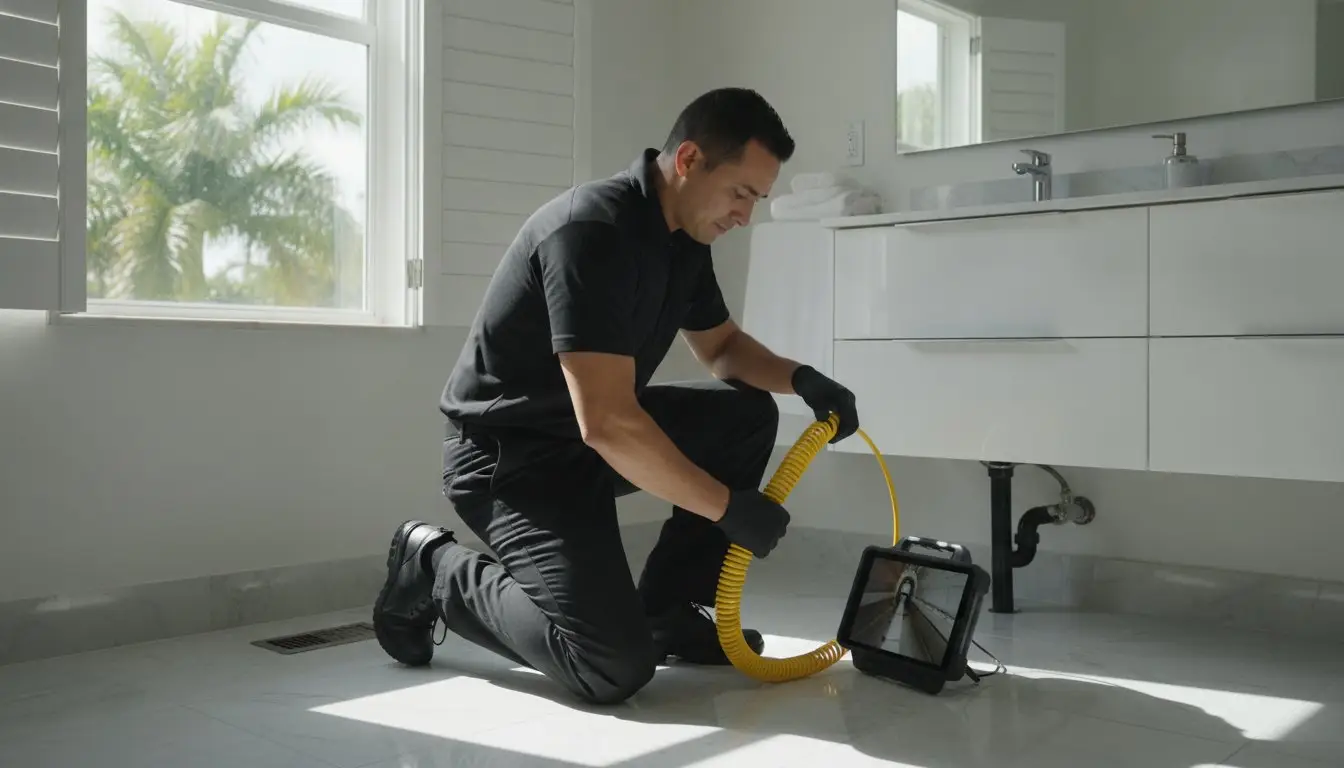
Start your DIY check by running water in every sink, tub, and floor drain in the house for at least 60 seconds. This refills any dry P-traps that may have evaporated in the Florida heat. Next, check the base of your toilets for any rocking or visible moisture, which often indicates a failed wax ring. While these steps solve simple issues, persistent smells often hide behind drywall or under your concrete slab. We use high-definition sewer camera inspections to find these hidden pipe failures without destructive digging, allowing us to see exactly where the seal has failed.
When to Call an Emergency Plumber
Certain “red flags” mean you should stop troubleshooting and call for professional help. If you experience dizziness, nausea, or a persistent headache while inside your home, or if the smell remains after refilling all traps, you likely have a significant system breach. We provide emergency plumbing repairs throughout Port St. Lucie, Stuart, and the rest of Martin County. If you’re in Land O’ Lakes, we offer full plumbing support, but please remember that AC-related air quality solutions are exclusive to our main Port St. Lucie location.
Professional Solutions: Hydro Jetting and Sewer Line Repair
For permanent resolution, we look beyond the surface. Hydro jetting uses high-pressure water to scrub the interior of your pipes, removing the thick sludge and organic blockages that cause gas buildup. If the camera reveals structural damage like cracks or root intrusion, sewer line repair and replacement may be necessary to seal the system properly. Scheduling a preventative inspection once a year is the best way to catch these issues before they become an expensive midnight emergency.
Secure Your Home and Family’s Health
A persistent rotten egg scent is your home’s way of asking for help. As we’ve discussed, addressing the dangers of sewer gas smell in bathroom areas is about more than comfort. It is about protecting your household from the risks of gas accumulation and ensuring your indoor air quality remains high. Whether the fix involves refilling a dry P-trap or repairing a cracked underground line, identifying the source is the only way to ensure your living space is truly safe.
You don’t have to guess about the integrity of your plumbing system. We combine A+ rated local reliability with expert diagnostic tools to give you clear, honest answers. Our team provides 24/7 emergency service in Port St. Lucie and across the Treasure Coast to resolve these issues before they escalate into structural damage. Don’t ignore the warning signs; schedule a professional sewer camera inspection with First Choice Plus Plumbing & Air today. We are here to restore your peace of mind and keep your home a healthy, comfortable place for your family.
Common Questions About Sewer Gas Hazards
Is it safe to sleep in a house that smells like sewage?
It is not recommended to sleep in a home with a strong or persistent sewage odor because prolonged exposure increases the risk of toxic inhalation. While a faint scent from a dry P-trap might seem minor, you shouldn’t risk your health while you are unconscious and unable to monitor symptoms like dizziness or nausea. If the smell is overwhelming or causes physical distress, evacuate the area and seek professional help to identify the breach immediately.
Can sewer gas smell come and go?
Sewer gas odors frequently fluctuate based on changes in atmospheric pressure, wind direction, and your home’s water usage. You might notice the scent more on a windy day when air is pushed down the roof vents or after a heavy Florida rainstorm. Because the smell is inconsistent, many homeowners ignore the dangers of sewer gas smell in bathroom areas, but an intermittent odor still indicates a mechanical failure that requires a professional diagnostic check.
How long does it take for sewer gas to make you sick?
The timeline for feeling ill depends entirely on the concentration of gases like hydrogen sulfide in your air. Low-level chronic exposure might cause headaches and sinus irritation over several hours or days. However, high concentrations can cause dizziness or nausea within minutes. Because your sense of smell can become deadened by these gases, you shouldn’t wait for physical symptoms to appear before addressing the source of the odor in your plumbing system.
Will pouring bleach down the drain kill the sewer gas smell?
Pouring bleach down the drain won’t stop a sewer gas leak because it doesn’t address the underlying mechanical failure. While bleach might temporarily mask a small odor caused by bacteria in a dirty sink, it can’t fix a dried-out P-trap, a broken wax ring, or a cracked vent pipe. In fact, mixing bleach with other household cleaners can create even more dangerous fumes, so it is best to stick to running water or calling an expert.

Article by
Written by First Choice Plus Plumbing & Air Team
This article was created by the team at First Choice Plumbing Solutions, a licensed and experienced plumbing and HVAC company serving Port St. Lucie, Land O’ Lakes, and surrounding areas.
Our team specializes in plumbing and air conditioning services, including drain cleaning, leak detection, water heater repair and installation, AC repair, maintenance, and system installations. Our content is based on real-world experience and the common issues we solve for homeowners and businesses every day.
We aim to provide accurate, helpful, and easy-to-understand information so you can make informed decisions about your plumbing and HVAC needs.
If you need reliable, professional service, First Choice Plumbing Solutions is here to help.
Disclaimer
Disclaimer: The information provided in this article is for general informational purposes only and does not constitute professional plumbing or HVAC advice. Every situation is different, and readers should consult a licensed professional for proper diagnosis and repair. First Choice Plus Plumbing & Air is not liable for any damages or losses resulting from the use of this information.