
Table of Contents
- 8 Warning Signs Your AC Needs Repair
- Signs of Low Refrigerant in AC
- AC Troubleshooting Tips Before Calling a Professional
- How Often Should AC Be Serviced
- Repair vs. Replace: Making the Right Decision
- What to Do When Your AC Needs Repair
- Conclusion
Last Updated: August 14, 2026
Signs Your AC Needs Repair: A 2026 Guide
Your air conditioning system is one of the most important investments in your home, especially in the warm climate of Port St. Lucie and the Treasure Coast. The difference between catching an issue early and waiting too long can mean the difference between a simple repair and a costly replacement. At First Choice Plus Plumbing & Air, we’ve helped homeowners recognize the warning signs their AC needs repair before a minor problem becomes a major breakdown.
This guide walks you through the eight most common warning signs your AC needs repair, explains what causes them, and tells you when to call a professional. We’ll also cover refrigerant leaks, troubleshooting steps you can take before scheduling a service call, and how to decide whether repair or replacement makes sense for your situation.
8 Warning Signs Your AC Needs Repair
Your air conditioning system communicates when something’s wrong, if you know what to listen and look for. Here are the eight most reliable indicators that your AC needs repair.
Warm Air Blowing From Vents
If your air conditioning system is running but warm or room-temperature air is coming out of your vents instead of cold air, something inside the system has failed. Warm air typically points to low refrigerant, a failed compressor, or a stuck expansion valve preventing proper cooling.
Start by checking your thermostat. Make sure it’s set to cooling mode and the temperature setting is lower than the current room temperature. If the thermostat is correct but you’re still getting warm air, your system needs professional evaluation. A technician can measure refrigerant pressure and identify exactly where the breakdown is occurring.
Weak or Inconsistent Airflow
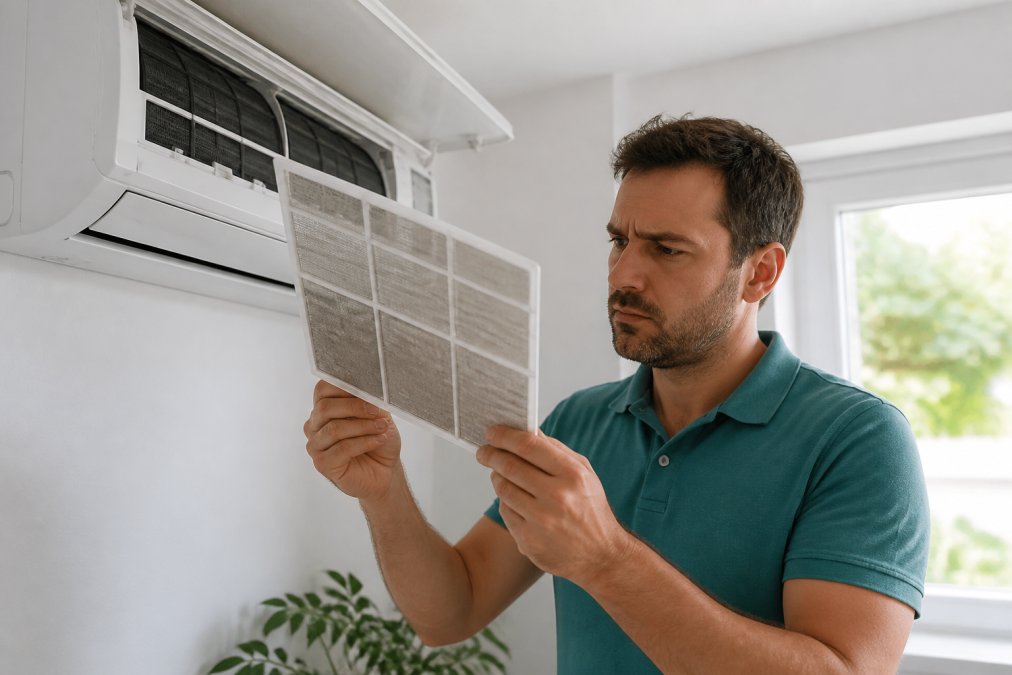
When your AC runs but barely any air comes out of your vents, or the airflow is uneven across different rooms, you’re experiencing restricted airflow. Weak airflow usually stems from a clogged air filter, blocked ductwork, or a failing blower motor.
A dirty air filter is the easiest problem to fix yourself. If you’ve replaced the filter and airflow hasn’t improved, the issue is deeper. Blocked ductwork can result from debris, dust buildup, or pest nests inside the ducts. A failing blower motor means the fan isn’t working at full capacity. Both require professional attention.
Unusual or Strange Noises
Your AC should run relatively quietly. If you hear banging, squealing, grinding, or rattling sounds coming from your indoor unit or outdoor condenser unit, something is mechanically wrong. Banging often signals a loose component or struggling compressor. Squealing typically means a fan belt is worn or a bearing is failing. Grinding suggests metal parts are rubbing together, which can cause serious damage if ignored.
Don’t ignore these sounds. The longer you wait, the more expensive the repair becomes. Call for professional evaluation as soon as you notice any unusual sounds.
Frequent Cycling or Short Cycling
Your AC should cycle on and off periodically to maintain your set temperature. If your system is turning on and off much more frequently than normal, sometimes every few minutes, it’s short cycling. Short cycling can result from a refrigerant leak, a faulty thermostat, an oversized system, or a blocked condenser unit.
When the system cycles too frequently, it works harder, wears out faster, and uses more energy than it should. Check whether your outdoor condenser unit is blocked by debris, leaves, or dirt. Clear away any obstructions. If the problem persists, contact a technician.
High Humidity Levels Indoors
Your AC doesn’t just cool your home, it also removes humidity. If your indoor air feels sticky or muggy even though your thermostat says the temperature is right, your system isn’t dehumidifying properly. When humidity control fails, it’s often because the evaporator coils aren’t cold enough to condense moisture from the air, usually indicating low refrigerant.
High humidity can make your home uncomfortable and create conditions where mold and mildew thrive. If you notice persistent humidity problems, have your system inspected. A technician can check refrigerant levels, inspect the drainage system, and ensure your AC is sized appropriately for your space.
Water Leaks or Moisture Buildup
Your AC system produces condensation as it removes humidity from the air. This water normally drains through a condensate drain line to the outside. If you see water pooling around your indoor unit, water stains on ceilings or walls, or moisture accumulating inside your home, something is blocking or damaging the drainage system.
A clogged drain line is the most common cause. Algae, mold, or debris can block the line, causing water to back up. A cracked or disconnected drain line also prevents proper drainage. Water leaks can damage your home’s structure, insulation, and electrical systems. We recommend professional evaluation to prevent water damage to your home’s interior. If water damage has occurred, our Plumbing Services team can also assess any related water damage to your home’s systems.
Foul or Musty Odors
If your AC is producing a musty, moldy, or stale smell when it runs, mold or mildew is growing inside your system, typically in the evaporator coils or drainage system. Musty odors indicate moisture is accumulating somewhere in your system, which happens when the drainage system isn’t working properly or when the coils aren’t drying out between cycles.
Mold spores circulating through your home can trigger allergies and respiratory issues. Have a technician inspect your system, clean the coils, and clear the drainage line. They’ll also check whether the airflow is adequate to dry out the system between cycles.
Unexplained Spikes in Energy Bills
If your electric bill has jumped significantly without a change in your usage patterns or rate, your AC system may be working harder than it should. When your system has a refrigerant leak, a failing compressor, a clogged filter, or short-cycling problems, it consumes more energy to produce the same cooling effect.
Compare your current bills to the same months last year. If you see a significant increase, have your system inspected. A technician can identify energy-wasting problems and fix them. Often, the cost of the repair is recovered through lower energy bills within a few months.
Signs of Low Refrigerant in AC
Refrigerant is the substance that actually cools your home. Your system should maintain the same refrigerant charge for its entire lifespan. If refrigerant levels drop, there’s a leak somewhere in the system that needs to be found and repaired.
The symptoms of low refrigerant include warm air from vents, reduced cooling capacity, ice forming on the outdoor condenser unit, hissing or bubbling sounds from the refrigerant lines, and higher-than-normal energy bills. Some of these symptoms overlap with other AC problems, which is why professional diagnosis is important.
Refrigerant leaks can occur at connection points, in the compressor, or in the copper tubing that carries refrigerant throughout the system. A technician uses specialized equipment to locate the leak, repair it, and recharge the system with the correct amount of refrigerant. This requires professional evaluation to ensure safety and proper handling of refrigerant.
AC Troubleshooting Tips Before Calling a Professional
Before you schedule a service call, try these troubleshooting steps. Many AC problems can be resolved quickly without professional help.
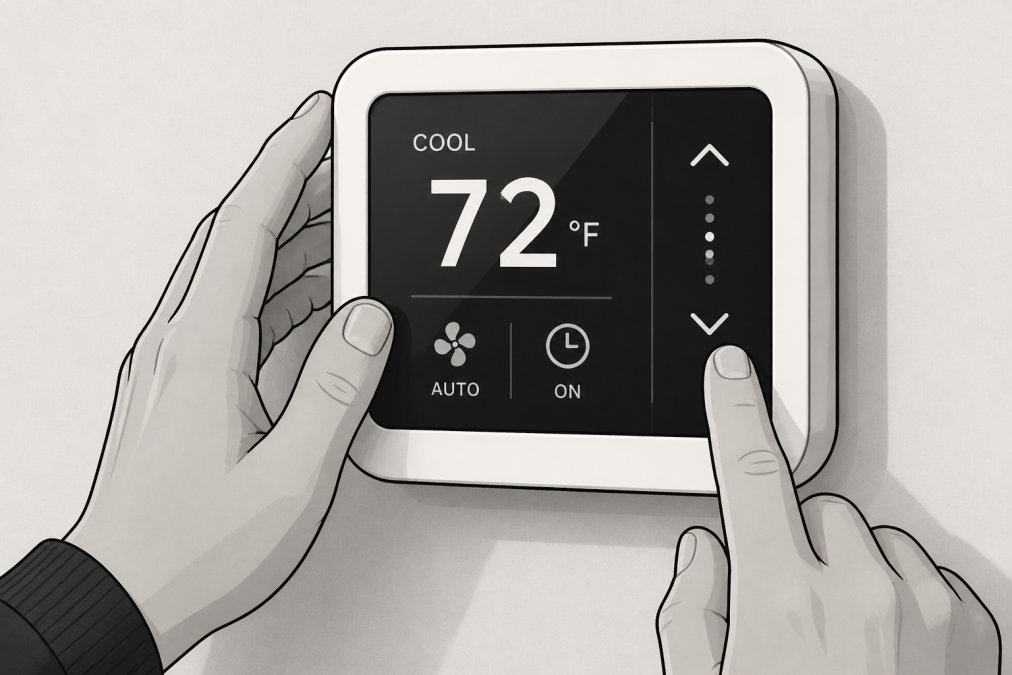
Check your thermostat. Verify it’s set to cooling mode and the temperature setting is lower than the current room temperature. If your thermostat has a battery backup, replace the batteries. A faulty thermostat can cause your system to behave erratically without any actual problem in the AC unit itself.
Replace your air filter. A clogged air filter restricts airflow and forces your system to work harder. Filters typically need replacement every 30 to 90 days, depending on usage and whether you have pets.
Clear the outdoor unit. Check your outdoor condenser unit for leaves, dirt, grass clippings, or other debris. Clear away anything blocking airflow around the unit. Make sure vegetation is trimmed back at least two feet from all sides.
Check for ice on the outdoor unit. If you see ice forming on the outdoor condenser in warm weather, your system has a problem, likely low refrigerant or restricted airflow. Turn the system off and let the ice melt. This usually indicates a refrigerant leak requiring professional repair.
Verify your circuit breaker. Check the electrical panel to ensure the breaker for your AC system hasn’t tripped. If it has, reset it. If it trips again immediately, there’s an electrical problem that needs professional attention.
Listen for unusual sounds. Run your system and listen carefully for banging, squealing, grinding, or rattling. Note when the sounds occur and describe them to your technician.
Check your condensate drain. Locate the small plastic line that drains condensation from your indoor unit, usually running outside or to a floor drain. If water is backing up around the drain, the line is clogged. You may be able to clear it by flushing it gently with a garden hose, but if that doesn’t work, professional Drain Cleaning may be needed.
If none of these steps resolve the problem, your system needs professional evaluation.
How Often Should AC Be Serviced
Regular maintenance is the best way to prevent AC problems before they start. Your air conditioning system should be serviced professionally at least once per year, ideally before the cooling season begins.
Annual preventative maintenance includes cleaning the evaporator and condenser coils, checking refrigerant levels, inspecting electrical connections, testing the thermostat, lubricating moving parts, and checking overall system performance. A technician can identify small problems and fix them before they become expensive repairs.
If your system is older than 10 years, has a history of problems, or operates year-round, consider scheduling maintenance twice per year. Preventative maintenance costs far less than emergency repairs and extends your system’s lifespan while keeping it running at peak efficiency.
Repair vs. Replace: Making the Right Decision
When your AC needs repair, you face a critical decision: fix it or replace it? The answer depends on several factors, including the system’s age, the cost of the repair, and your long-term plans.
Age of the system. Most air conditioning systems last 12 to 15 years with proper maintenance. If your system is approaching 15 years old and needs a significant repair, replacement may make more financial sense.
Cost of the repair. Get a quote for the repair from a qualified technician. If the repair costs more than half the price of a new system, replacement is often the better choice. Newer systems are more efficient and may qualify for tax credits or rebates.
Frequency of repairs. If your system has needed multiple repairs in the past few years, it’s showing signs of declining reliability. Rather than continuing to invest in repairs, replacement offers peace of mind and improved performance.
Energy efficiency. Older systems are significantly less efficient than modern units. A new, high-efficiency model could reduce your cooling costs substantially, depending on the system and your usage.
Your plans. If you’re planning to sell your home soon, a new AC system can be an attractive feature for buyers. If you plan to stay for many more years, the long-term savings from a high-efficiency replacement system may justify the upfront cost.
We recommend professional evaluation to understand your options. A technician can assess your system’s condition, estimate remaining lifespan, and provide honest guidance on whether repair or replacement makes sense for your situation.
What to Do When Your AC Needs Repair
When you’ve identified that your AC needs repair, follow these steps to get professional help quickly and ensure you receive honest, transparent service.
Document the problem. Write down when the issue started, what symptoms you’re noticing, and any unusual sounds or smells. Note the outdoor temperature when the problem occurs. This information helps your technician diagnose the issue more quickly.
Schedule a service call. Contact a qualified HVAC technician in Port St. Lucie or the Treasure Coast. First Choice Plus Plumbing & Air has served the area since 2007 and can diagnose your system and provide honest repair recommendations. Emergency AC Repair and after-hours service may be available, subject to location, the type of problem, and technician availability.
Get a detailed estimate. Before authorizing any repair, ask for a written estimate that includes the problem diagnosis, the proposed repair, parts and labor costs, and warranty information. Don’t authorize work until you understand exactly what’s being done and why.
Ask about warranties. Find out what warranty covers the repair work and how long it lasts. Reputable technicians stand behind their work.
Discuss maintenance. Once your system is repaired, ask your technician about preventative maintenance. Regular service prevents future breakdowns and keeps your system running efficiently.
Recognizing the signs your AC needs repair early can save you thousands in emergency repairs and help you avoid uncomfortable downtime during hot weather. From warm air and weak airflow to unusual noises and high humidity, your system communicates when something’s wrong.
If you’ve noticed any of these warning signs in your Port St. Lucie or Treasure Coast home, don’t wait. Contact First Choice Plus Plumbing & Air to schedule a professional inspection. Our team can diagnose the problem, explain your repair and replacement options, and get your system running smoothly again. Call us today to discuss your AC service needs.
Frequently Asked Questions
1. How do I know if my AC needs repair?
Common warning signs include warm air from vents, weak airflow, unusual noises like banging or squealing, frequent cycling, high indoor humidity, water leaks around the unit, musty odors, and unexplained spikes in energy bills. If you notice any of these, your air conditioning system likely needs professional evaluation. We recommend scheduling a service call to prevent further damage to your cooling capacity and avoid costly emergency repairs.
2. What are the most common causes of AC failure?
Refrigerant leaks, dirty air filters, faulty thermostats, worn compressor components, and clogged drainage lines are among the most frequent culprits. Many failures stem from neglected preventative maintenance. Regular tune-ups help catch problems early before they become expensive. If you suspect a refrigerant leak or electrical issue, professional inspection is essential for your safety and system performance.
3. Should I repair or replace my air conditioner?
Consider the age of your unit, repair costs, and energy efficiency. AC systems typically last 10-15 years. If your system is older, frequently breaking down, or costing more to repair than replacement would cost, replacement may be the better choice. We provide free estimates on new AC systems to help you make an informed decision based on your specific situation and budget.
4. Can a dirty air filter cause AC failure?
Yes. A clogged air filter restricts airflow, forcing your system to work harder and reducing cooling capacity. This can lead to short cycling, higher energy bills, and eventually compressor failure. Checking and replacing your air filter every 1-3 months is a simple preventative maintenance step that protects your entire air conditioning system and improves indoor air quality.
This article was written using GrandRanker