
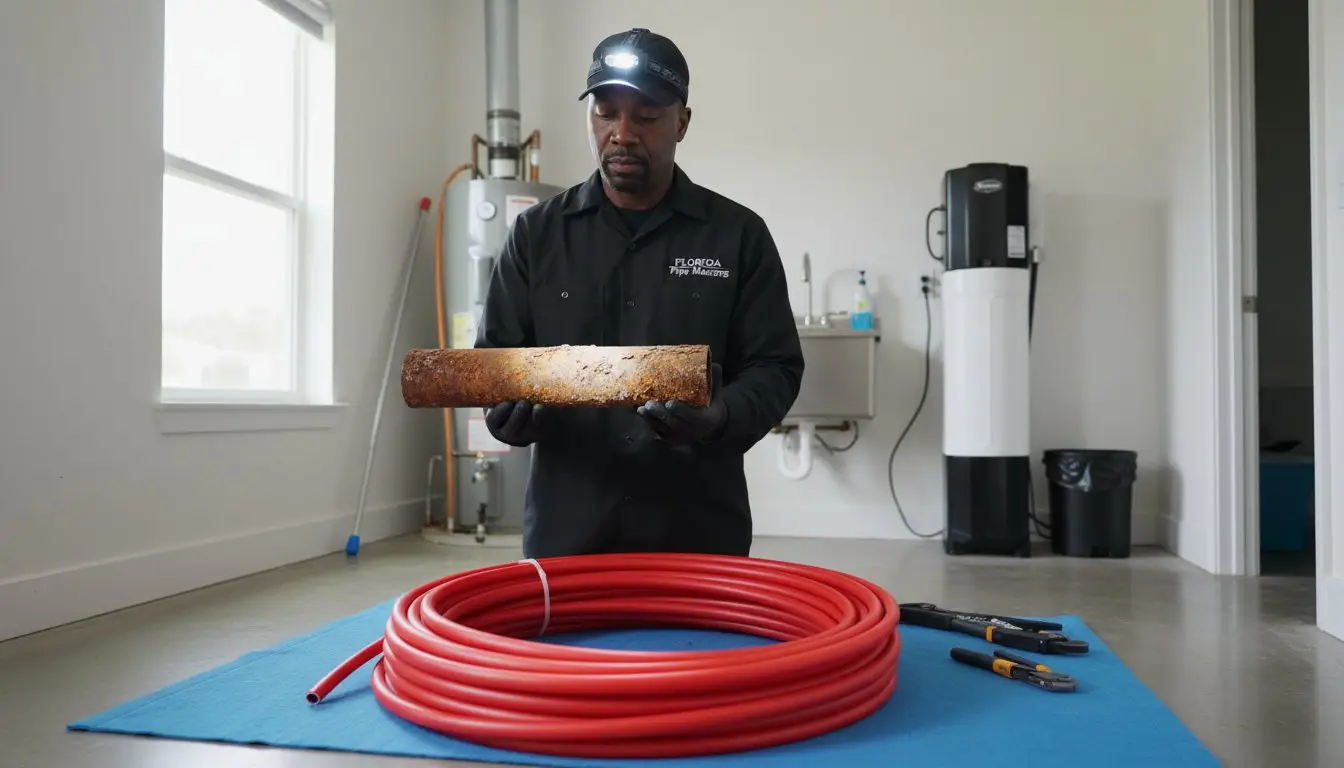
What if the very pipes meant to protect your home are quietly corroding from the inside out, turning your clean water into a hidden hazard? Most homeowners in Port St. Lucie and Fort Pierce trust their plumbing until a puddle appears, but the signs of failing galvanized pipes often start much earlier. You likely already suspect something is wrong if you’re seeing rust stains on your laundry or feeling a sudden drop in water pressure during your morning shower. It’s a frustrating, stressful situation that can make any neighbor feel uneasy about the long-term safety of their property.
We believe in providing clear, honest information to help you protect your investment with calm competence. This article promises to give you a reliable diagnostic checklist so you can spot trouble before a pipe bursts behind your walls. We’ll cover everything from potential health risks to the 2026 standards for modern materials like PEX, helping you decide if it’s finally time for a targeted repair or a complete home repipe.
Key Takeaways
- Learn to spot the five critical signs of failing galvanized pipes, including persistent low water pressure and discolored water, to prevent sudden pipe bursts.
- Discover how the hard water unique to the Treasure Coast accelerates internal scaling, which chokes your home’s water flow and damages fixtures.
- Understand the serious health risks associated with lead particles that often become trapped within the corrosion of aging galvanized systems.
- Compare the long-term benefits of modern PEX-A materials against the recurring costs and risks of temporary “spot repairs” on brittle plumbing.
- Gain the expert insight needed to decide if your home in Port St. Lucie or the surrounding area requires a professional whole-house repipe.
The 2026 Checklist: 5 Critical Signs of Failing Galvanized Pipes
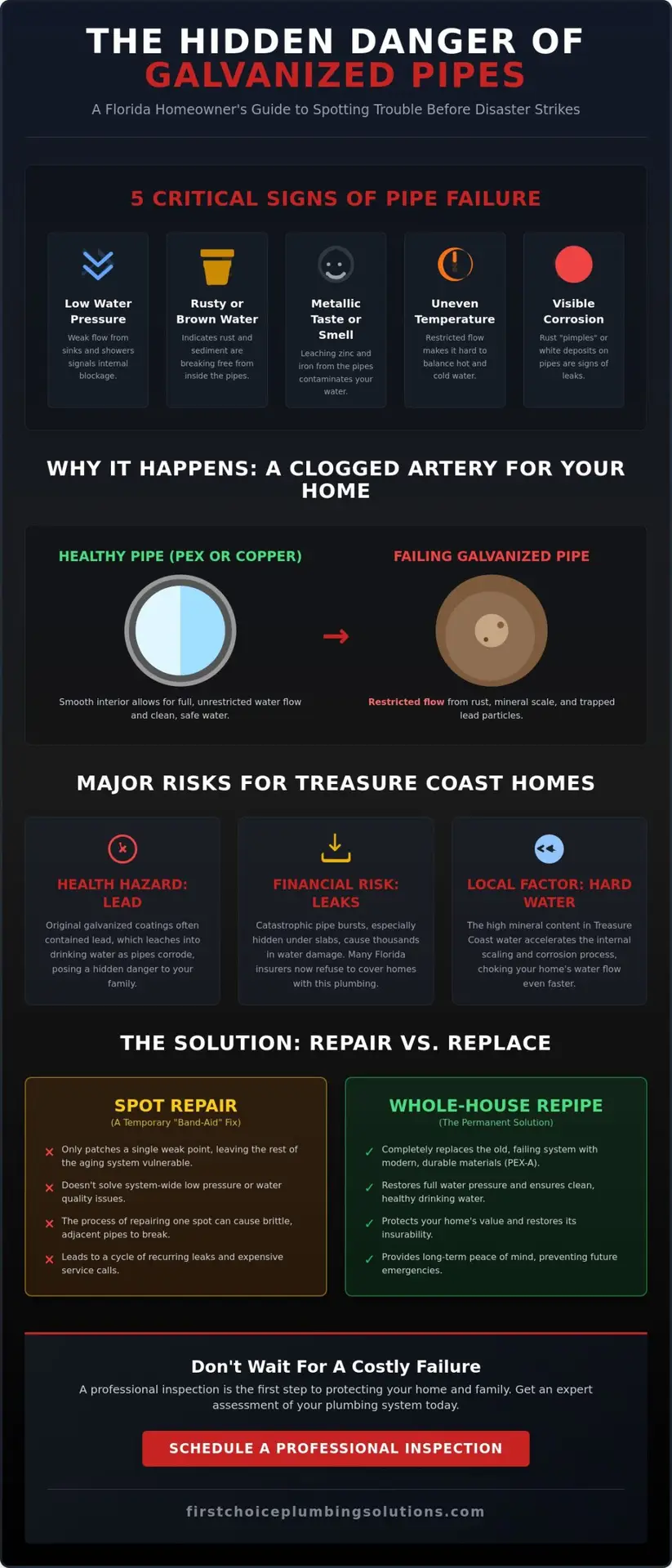
Galvanized pipes are a stealth threat because they don’t always leak right away. Instead, galvanized piping rusts from the inside out, creating a buildup of mineral scale that chokes your plumbing system. By the time you notice a problem, the damage is often widespread. Use this checklist to evaluate the health of your home’s water lines:
- Persistent low water pressure: If your kitchen sink and shower both feel weak simultaneously, it’s likely internal occlusion.
- Uneven water temperature: Internal corrosion restricts flow, making it difficult for your shower to balance hot and cold water. This often leads to sudden “scald” warnings.
- Metallic taste or smell: Leaching zinc and iron can make your drinking water taste like pennies or smell like old metal.
- Rusty water: Brown or orange tints appearing after the water has sat in the pipes for several hours.
- Visible ‘pimple’ corrosion: Small, crusty bumps on the exterior of the pipe or white calcium deposits at the joints.
Identifying Discolored Water and Metallic Taste
In many Port St. Lucie homes, the first red flag is sediment in the bathtub. Iron flakes and zinc particles often settle when the water is idle for a few hours. You can perform a “first draw” test by filling a clear glass with the very first water that comes out of the tap in the morning. If it looks cloudy, orange, or contains dark flakes, you are seeing clear signs of failing galvanized pipes. This sediment doesn’t just look bad; it creates permanent rust stains on white porcelain fixtures and ruins light-colored laundry in Fort Pierce households.
The ‘Pimple’ Test: Spotting External Corrosion
Take a flashlight to your garage or any exposed plumbing areas and inspect the pipe surface. Look for small, raised bumps that look like rust-colored pimples. These indicate a pinhole leak that has “self-sealed” with its own corrosion. It’s a temporary fix by nature. Whatever you do, don’t scrape these bumps. Removing that crust can trigger an immediate burst. If you find these, it’s time to discuss a whole house repipe to protect your home from sudden water damage.
Why Galvanized Pipes Are a Risk to Your Treasure Coast Home
Living on the Treasure Coast brings unique challenges to residential plumbing. The high humidity and specific local water chemistry in areas like Fort Pierce and Stuart can accelerate the deterioration of older systems. While you might be looking for signs of failing galvanized pipes to avoid a mess, the risks go far beyond a simple leak. These pipes represent a significant threat to your home’s structural integrity, your family’s health, and even your ability to stay insured in the Florida market.
Hard Water and Internal Occlusion
In many Treasure Coast communities, the water has a high mineral content that leads to rapid occlusion. This process involves rust and calcium building up inside the pipe, narrowing the internal diameter like a clogged artery. While some homeowners hope that installing water quality solutions will fix the issue, these systems cannot remove physical scaling that has already formed. Once the flow is restricted, the pressure will continue to drop until the pipe is completely blocked or the increased internal stress causes a catastrophic failure.
The Threat of Lead Contamination
The health of your family is the most critical factor to consider. Original galvanized coatings often contained lead that leaches into the water as the zinc layer corrodes over time. Lead-free water entering the home can become contaminated inside the pipes. This creates a hidden hazard for children and elderly residents in multi-generational households. The EPA addressed these concerns in the Lead and Copper Rule Improvements, which emphasize the necessity of removing these old lines to ensure safe drinking water.
Beyond health, there are major financial risks. Most homes in Jensen Beach and Palm City are built on concrete slabs. When galvanized pipes fail under the foundation, they lead to slab leaks that are incredibly destructive. Additionally, many Florida insurance carriers now refuse to provide coverage for homes with this plumbing, viewing them as a high-risk liability. If you are concerned about your home’s safety or insurability, a professional leak detection and inspection can help you identify trouble spots before they become emergencies.
The Verdict: Should You Repair or Repipe Your House?
Once you recognize the signs of failing galvanized pipes, you face a critical decision. Should you patch the immediate leak or invest in a full system replacement? While a spot repair might seem like the budget friendly choice, it often triggers a domino effect of failures. Galvanized steel becomes incredibly brittle as it ages. The vibration and pressure of a new repair can easily cause the next weakest point in the line to fail just days later.
Repair vs. Replace Comparison
Deciding on the best path for your home in Traditions or St. Lucie West requires looking at long term value. Patching is a temporary band aid; repiping is a permanent upgrade.
| Feature | Patching a Leak | Whole House Repiping |
|---|---|---|
| Upfront Cost | Lower | Higher Investment |
| Longevity | Temporary (weeks to months) | 50+ years (with PEX-A) |
| Reliability | Low; risk of new leaks | High; total peace of mind |
Mixing new materials with old steel also introduces dielectric corrosion. This occurs when two different metals, like copper and galvanized steel, touch and create an electrochemical reaction that accelerates rusting. To understand the full transition process, you can explore our specialized whole house repipe services to see how we modernize Florida homes. We focus on providing a seamless transition that restores your home’s water quality and pressure.
Taking the Next Step with a Local Expert
If you’re still unsure about the state of your plumbing, the best move is to consult an experienced professional who understands Treasure Coast infrastructure. We use specialized techniques to verify pipe integrity without tearing into your walls. First Choice Plus Plumbing & Air provides these expert assessments across Port St. Lucie and Jensen Beach, helping you identify hidden failures before they lead to a catastrophic burst. Scheduling a professional plumbing inspection gives you a clear, honest roadmap for your home’s maintenance. Taking action now ensures your water stays clean and your foundation remains dry for years to come.
Protecting Your Home’s Future
Ignoring the signs of failing galvanized pipes can lead to more than just a minor inconvenience; it can threaten your home’s foundation and your family’s health. We’ve explored how internal corrosion limits water pressure and how the unique hard water of the Treasure Coast accelerates this decay. Choosing a permanent solution like a whole-house repipe ensures your property remains insured and your water remains clean for decades.
Since 2007, First Choice Plus Plumbing & Air has served as a locally owned and operated pillar of the community. We specialize in slab leak detection and whole-house repiping, providing the steady hand needed to resolve complex plumbing issues. Whether you are in Port St. Lucie or Stuart, our team is ready to help with 24/7 emergency service when you need it most. We believe in transparency and honest work that protects your investment.
Worried about your pipes? Schedule a professional plumbing inspection with First Choice Plus today. Taking this small step now prevents a chaotic emergency later and keeps your home running smoothly for years to come.
Frequently Asked Questions
How long do galvanized pipes typically last in Florida?
Galvanized pipes typically last between 40 and 60 years. However, Treasure Coast homeowners often see failures much sooner due to our high mineral content and local humidity. In cities like Fort Pierce and Stuart, the internal zinc coating wears down quickly, which leads to the common signs of failing galvanized pipes. If your home was built before 1970, your plumbing has likely reached the end of its reliable service life and requires an inspection.
Can I just replace the visible galvanized pipes and leave the ones in the walls?
You can replace only the visible sections, but this is rarely a wise move. The pipes hidden behind your walls are usually in the same or worse condition than the ones you can see. Leaving old galvanized lines in place creates a permanent weak link in your system. When you increase water pressure with new fixtures, those older, brittle sections in the walls are much more likely to burst and cause mold growth.
Will failing galvanized pipes affect my water heater’s lifespan?
Yes, failing pipes can significantly shorten your water heater’s lifespan by sending rust flakes and mineral sediment directly into the unit. This debris settles at the bottom of the tank, creating an insulating layer that forces the heating elements to work harder. Over time, this leads to overheating and tank corrosion. Keeping your supply lines clean is essential for protecting your investment in a new tank or tankless water heater system.
Does insurance cover the cost of replacing old galvanized pipes?
Most Florida insurance policies don’t cover the preventative replacement of old pipes because it is considered standard home maintenance. However, if a pipe suddenly bursts and causes water damage, the cleanup and repair of your home’s structure might be covered. You should check your specific policy. Many carriers in the Port St. Lucie area now require homeowners to replace galvanized plumbing before they will issue or renew a policy in 2026.

Article by
Written by First Choice Plus Plumbing & Air Team
This article was created by the team at First Choice Plumbing Solutions, a licensed and experienced plumbing and HVAC company serving Port St. Lucie, Land O’ Lakes, and surrounding areas.
Our team specializes in plumbing and air conditioning services, including drain cleaning, leak detection, water heater repair and installation, AC repair, maintenance, and system installations. Our content is based on real-world experience and the common issues we solve for homeowners and businesses every day.
We aim to provide accurate, helpful, and easy-to-understand information so you can make informed decisions about your plumbing and HVAC needs.
If you need reliable, professional service, First Choice Plumbing Solutions is here to help.
Disclaimer
Disclaimer: The information provided in this article is for general informational purposes only and does not constitute professional plumbing or HVAC advice. Every situation is different, and readers should consult a licensed professional for proper diagnosis and repair. First Choice Plus Plumbing & Air is not liable for any damages or losses resulting from the use of this information.