
Have you ever walked across your kitchen and felt a sudden, unexplained warm patch on the tile, or heard the faint sound of rushing water while the house was completely silent? It’s an unsettling experience that often triggers immediate worries about foundation damage and those skyrocketing water bills that seem to appear out of nowhere. We know that your home is your greatest investment, and the thought of invasive repairs can feel overwhelming. Recognizing the early signs of a slab leak in Florida homes is the first step toward regaining your peace of mind and protecting your property from the shifting sandy soils that challenge our local foundations.
We’re here to help you confirm whether that damp spot is a simple spill or a serious plumbing issue beneath your feet. You’ll learn to identify subtle red flags before they compromise your home’s structural integrity. We’ll also explore modern, non-invasive detection methods and compare the long-term benefits of repiping versus traditional patch repairs. This guide provides the technical expertise and practical advice you need to handle this situation with confidence and calm.
Key Takeaways
- Learn how to spot the early signs of a slab leak in Florida homes, including sudden spikes in your utility bills and the sound of running water in a quiet house.
- Understand why Florida’s unique geography, characterized by a high water table and shifting sandy soils, creates high-risk conditions for foundation leaks.
- Discover how modern, non-invasive electronic leak detection allows experts to find the exact source of a pipe failure without damaging your home’s flooring.
- Explore the differences between spot repairs, line rerouting, and whole-house repiping to find the most sustainable solution for your property’s plumbing.
- Find out how to act quickly with 24/7 emergency services to protect your home’s structural integrity from the long-term effects of sub-slab water erosion.
Identifying the Visual and Auditory Signs of a Slab Leak
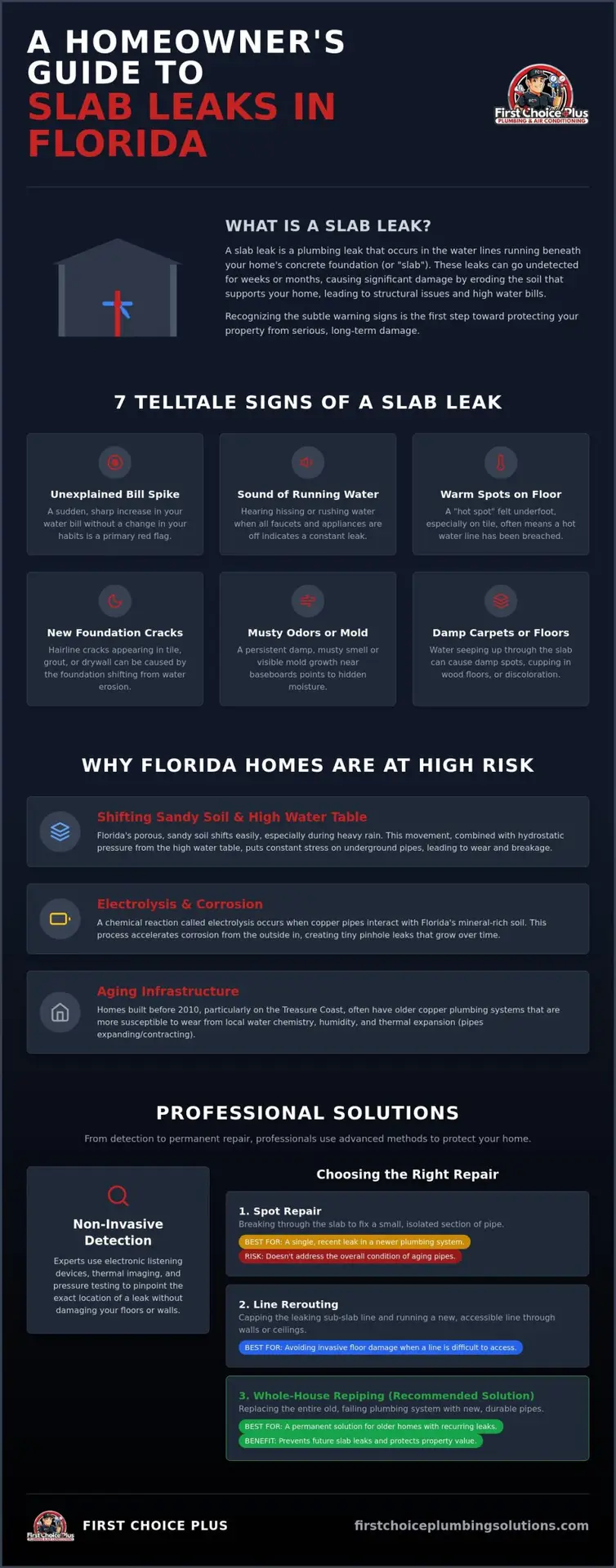
A slab leak rarely announces itself with a sudden flood. Instead, it often starts as a quiet drain on your home’s resources. One of the most common signs of a slab leak in Florida homes is a sharp, unexplained spike in your monthly utility bill. If your water usage habits haven’t changed but your costs are climbing, a pipe beneath your foundation is likely the culprit. You might also notice the sound of rushing or hissing water when every faucet in the house is tightly closed. This constant flow often indicates a pressurized line breach that requires immediate plumbing repairs to prevent further erosion of the soil supporting your home.
Olfactory and Structural Red Flags
Beyond what you see and hear, your home’s structure provides subtle clues. Persistent musty odors that linger despite deep cleaning often point to moisture trapped beneath the floorboards. As water saturates the ground, it can lead to structural settlement, causing new hairline cracks to appear in your tile grout or along the lower sections of your drywall. If you notice a sudden drop in water pressure across multiple fixtures, the leak has likely grown large enough to divert a significant amount of your home’s supply. These structural shifts are high-stakes warnings that your foundation is under stress.
The “Barefoot Test” for Florida Homeowners
Florida’s slab-on-grade construction makes the “barefoot test” an effective diagnostic tool for any homeowner. Walk slowly across your tile or concrete floors, especially near the perimeters of your kitchen and bathrooms. These areas are high-risk zones because they house the highest concentration of sub-slab plumbing lines. If you feel a distinct “hot spot” underfoot, it typically indicates a breach in a hot water line. Recognizing these signs of a slab leak in Florida homes allows you to act before the water compromises your floor’s integrity. Damp carpets or “cupping” in laminate flooring far from any sink or tub are also strong indicators that water is migrating upward through the concrete, necessitating a professional repipe or repair assessment.
Why Florida Homes are Vulnerable to Foundation Leaks
Florida’s unique geology creates a “perfect storm” for plumbing failures. Unlike many states, our homes rest on slab-on-grade foundations that interact directly with a high water table and highly porous, sandy soil. This environment places constant hydrostatic pressure against the concrete. When heavy rain cycles saturate the ground, sandy soil can shift or erode, leaving your copper plumbing lines unsupported. These lines then vibrate against the abrasive concrete every time a faucet turns on, eventually wearing through the metal. Understanding these environmental factors helps you stay vigilant for the early signs of a slab leak in Florida homes.
A major factor often overlooked is electrolysis. This chemical reaction occurs when Florida’s mineral-heavy soil comes into contact with aging copper pipes. It essentially turns your plumbing into a low-voltage battery, which accelerates corrosion from the outside in. This process is why many homeowners begin searching for the signs of a slab leak in Florida homes long before they expect their pipes to fail. Thermal expansion also plays a role. As water temperatures fluctuate, the pipes expand and contract against the rigid slab, leading to fatigue in the metal over several years.
The Impact of Aging Infrastructure in Port St. Lucie
Homes built before 2010 in Port St. Lucie and the surrounding Treasure Coast are at a significantly higher risk for these issues. The local water chemistry in Fort Pierce and Stuart contains specific mineral profiles that can thin copper walls over time. When combined with the high humidity common in our climate, these older systems often develop microscopic pinhole leaks. These tiny breaches are difficult to detect without specialized equipment but can cause massive damage if left unaddressed.
Foundation Shifting and Pipe Stress
Our intense wet-and-dry seasons cause the earth beneath your home to expand and contract. Even a tiny structural shift of 1/4 inch can put immense stress on rigid copper lines. The Florida Building Code foundation requirements set strict standards for slab construction, but they can’t entirely stop the natural movement of Florida’s terrain. If you suspect your foundation has shifted due to heavy rainfall, it’s vital to have a professional check for underlying pipe stress before a full breach occurs.
Professional Detection and Long-Term Repair Solutions
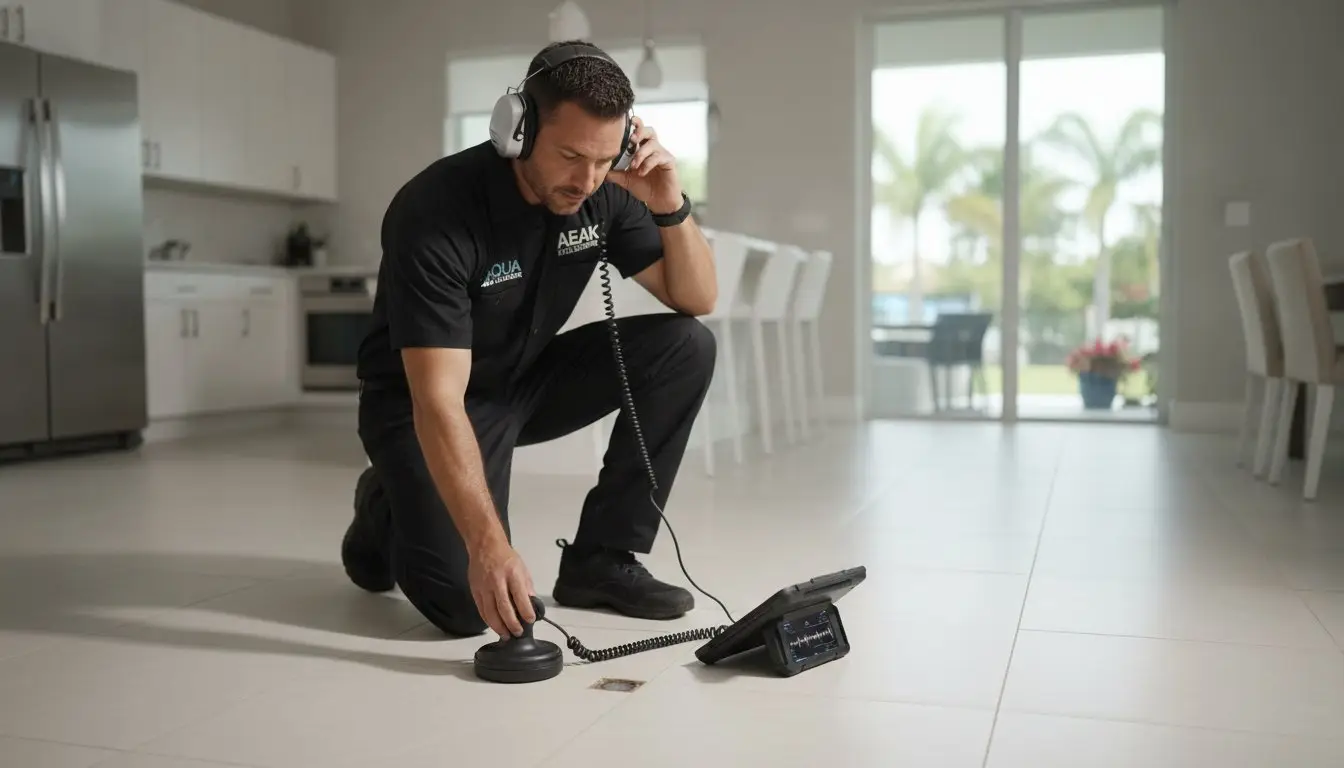
Confirming your suspicions requires more than just looking for the visible signs of a slab leak in Florida homes. Modern professionals utilize non-invasive electronic leak detection to find the exact source of a breach without tearing up your high-end tile or hardwood. By using pressure testing and highly sensitive ultrasonic sensors, experts can pinpoint the specific frequency of a sub-slab leak. This precise approach eliminates the guesswork and prevents unnecessary damage to your home’s interior.
Many homeowners fall into the “spot repair” trap. Fixing a single section of a 20-year-old pipe often increases the pressure on the surrounding weakened areas, leading to another leak just a few feet away. In many cases, strategic rerouting or a whole-house repipe is the only way to break this cycle of constant repairs. This “detect-and-divert” strategy moves the water lines from beneath the concrete to the walls or ceiling, permanently removing the risk of foundation erosion.
When to Choose Repiping Over a Patch
Deciding between a patch and a permanent fix depends largely on the age of your plumbing. If your home was built before 2010 and you’ve already experienced one leak, the cost of multiple sub-slab repairs will quickly exceed the investment of a modern system. Check out our guide on Repiping a House in Port St. Lucie: The Complete 2026 Homeowner’s Guide to see how this upgrade adds value and long-term security to your property. Modern PEX materials offer “leak-proof” security that traditional copper simply cannot match in Florida’s environment.
Steps to Take Immediately if You Suspect a Leak
Act fast to minimize structural damage. Locate your main water shut-off valve and turn it off immediately. This stops the flow of water that could be washing away the soil beneath your foundation. Take clear photos of any damp spots, warped flooring, or wall cracks for insurance purposes before any work begins. Finally, call a leak detection expert for a 24/7 emergency assessment. Professional validation is essential for a successful insurance claim and ensures the structural integrity of your Florida home remains intact.
Secure Your Home’s Future Today
Dealing with a foundation issue is stressful, but you don’t have to face it alone. Recognizing the early signs of a slab leak in Florida homes, from warm floor tiles to unexplained water bill hikes, is the best way to prevent long-term structural damage. Our unique local conditions, such as shifting sandy soils and high water tables, make these issues a common reality for Treasure Coast homeowners. By choosing non-invasive electronic detection, you can find the exact source of the problem without turning your living room into a construction zone.
Since 2007, we’ve served as the steady hand for families in Port St. Lucie, Stuart, and Fort Pierce. We provide a 24/7 emergency response because we know that hearing water running in the middle of the night can’t wait until morning. Our team specializes in expert slab leak detection and repair, offering honest guidance on whether a simple reroute or a whole-house repipe is your most cost-effective path forward. Don’t let a hidden leak undermine your home’s value. Schedule Your Professional Slab Leak Detection in Port St. Lucie today and regain the peace of mind you deserve.
Frequently Asked Questions
Will homeowners insurance in Florida cover a slab leak repair?
Most Florida homeowners insurance policies cover the “resultant damage” and the cost of accessing the leak, but they rarely pay for the actual pipe repair. This means your insurance might cover the cost of tearing out and replacing your flooring, while the plumbing fix itself is an out-of-pocket expense. Florida Statute §627.70131 requires your insurance company to acknowledge your claim within 14 days, so it’s vital to start the documentation process immediately after discovering a problem.
How long can I wait to fix a slab leak before foundation damage occurs?
You shouldn’t wait more than 24 to 48 hours to address a suspected leak. Because Florida homes sit on sandy soil, constant water flow can quickly wash away the ground beneath your foundation, creating large voids. Once the slab loses its underlying support, it can crack or shift under the weight of the house. Acting fast when you first notice signs of a slab leak in Florida homes is the only way to prevent these expensive structural failures.
Can a slab leak cause mold in a Florida home?
Yes, slab leaks are a common trigger for hidden mold growth in our humid climate. Water travels through the porous concrete slab and becomes trapped under your carpets, laminate, or behind baseboards. Mold spores can begin to colonize these damp areas in as little as 24 hours. If you smell a persistent musty odor that doesn’t go away with a dehumidifier, it’s likely that moisture from a foundation leak is fueling a mold colony beneath your feet.
Is it possible to have a slab leak without a high water bill?
It is entirely possible, especially if the breach is located on a sewer or drainage line. These pipes aren’t pressurized, so a leak won’t cause your water meter to spin or your bill to spike. Even on a fresh water supply line, a microscopic pinhole leak might not waste enough water to be noticeable on a monthly statement initially. However, these small leaks are still dangerous because they saturated the ground and lead to the structural signs of a slab leak in Florida homes over time.

Article by
Written by First Choice Plus Plumbing & Air Team
This article was created by the team at First Choice Plumbing Solutions, a licensed and experienced plumbing and HVAC company serving Port St. Lucie, Land O’ Lakes, and surrounding areas.
Our team specializes in plumbing and air conditioning services, including drain cleaning, leak detection, water heater repair and installation, AC repair, maintenance, and system installations. Our content is based on real-world experience and the common issues we solve for homeowners and businesses every day.
We aim to provide accurate, helpful, and easy-to-understand information so you can make informed decisions about your plumbing and HVAC needs.
If you need reliable, professional service, First Choice Plumbing Solutions is here to help.
Disclaimer
Disclaimer: The information provided in this article is for general informational purposes only and does not constitute professional plumbing or HVAC advice. Every situation is different, and readers should consult a licensed professional for proper diagnosis and repair. First Choice Plus Plumbing & Air is not liable for any damages or losses resulting from the use of this information.