
The most expensive mistake you can make with a slab leak isn’t choosing the wrong plumber; it’s choosing a repair that fails again in six months. When you hear water rushing under your floors or notice a warm spot on the tile, your first instinct is likely to patch the hole as quickly as possible. However, simply digging up your foundation to fix a single leak often ignores the bigger picture of your home’s plumbing health. We understand the anxiety that comes with watching a technician bring a jackhammer into your living room, and we’re here to provide a calmer, more permanent path forward.
In this guide, we’ll weigh the rerouting plumbing vs slab leak repair pros and cons to help you decide which method fits your budget and your long-term goals. Florida’s unique environmental factors, like our sandy soil and salt air, can be incredibly harsh on older copper pipes. You’ll learn how a strategic reroute can bypass vulnerable lines entirely, saving your floors from destruction and giving you peace of mind that your foundation is secure. We’ll also cover insurance considerations and the specific technical differences between these two common solutions so you can protect your home with confidence.
Key Takeaways
- Understand the fundamental differences between digging through your concrete foundation for a spot repair and bypassing the floor entirely with a professional pipe reroute.
- Evaluate the rerouting plumbing vs slab leak repair pros and cons to decide if a localized fix or a permanent repiping solution better protects your property value.
- Discover how Florida’s unique environmental factors, like sandy soil and high water tables, impact the longevity of original copper pipes versus modern PEX alternatives.
- Use our expert decision matrix to choose a repair method based on your home’s age, pipe material, and the specific location of the water leak.
- Learn why early leak detection is the most effective way to prevent secondary water damage and avoid the high costs of structural foundation restoration.
Understanding Your Options: Direct Slab Leak Repair vs. Pipe Rerouting
A slab leak is a pressurized water line breach beneath a home’s concrete foundation. In our region, most residential properties are built on Slab-on-Grade Foundations. This means your primary water supply lines are buried deep in the sand and encased in a thick layer of concrete. When these pipes fail, you generally face two distinct paths: digging down to the problem or bypassing it entirely. Understanding the rerouting plumbing vs slab leak repair pros and cons is the first step toward reclaiming your home’s safety and your peace of mind.
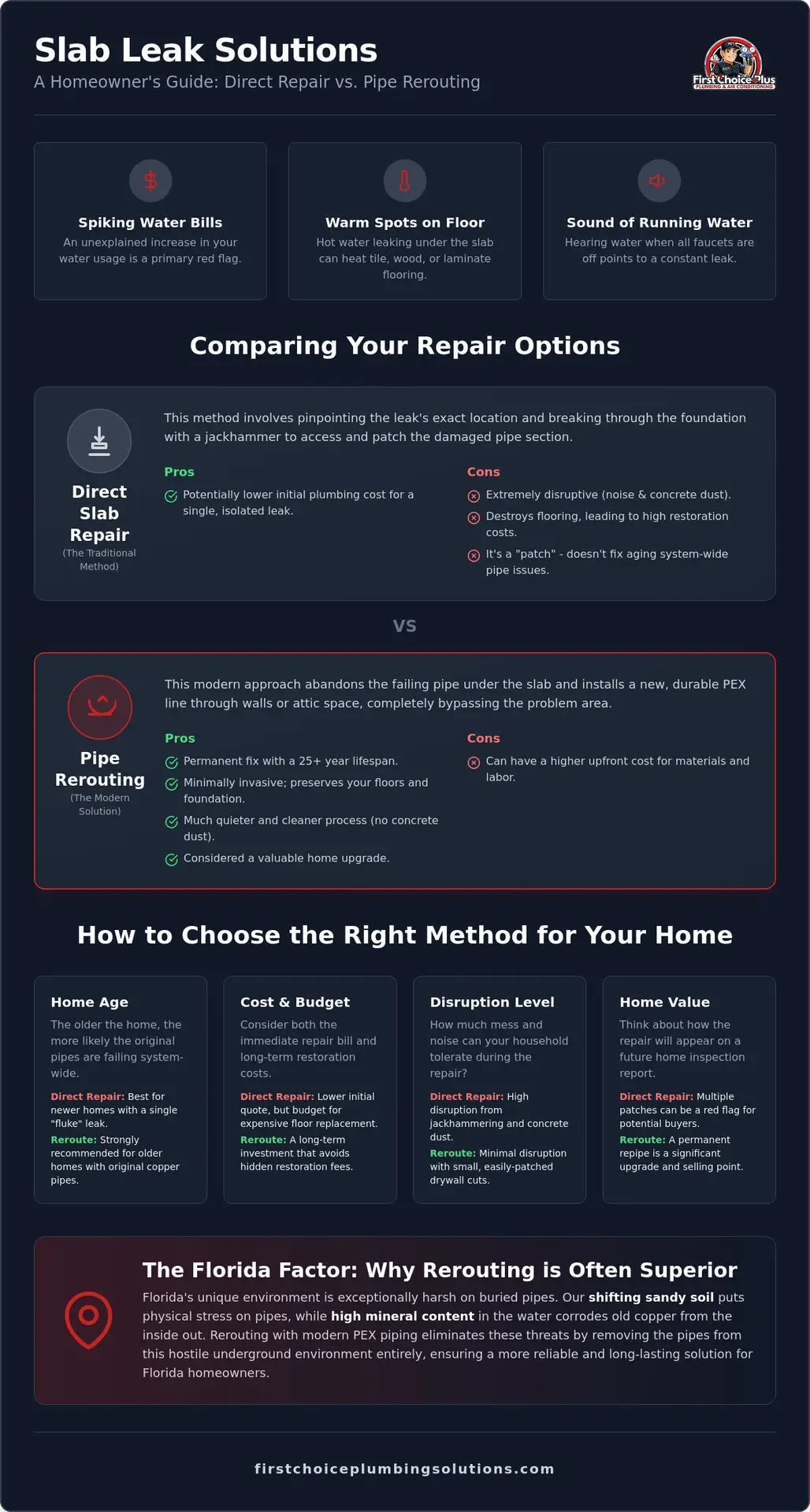
Before deciding on a fix, you must recognize the early warning signs of a breach. Florida homeowners should watch for unexplained spikes in water bills, warm spots on tile or laminate floors, and the persistent sound of rushing water underfoot even when all faucets are off. These issues are often triggered by our state’s shifting sandy soil and high mineral content, which physically stress and internally corrode older metal pipes over time. Catching these signs early prevents the leak from compromising your home’s structural integrity; if you suspect the damage has already started, Foundation ResQ provides specialized structural stabilization and repair.
The Direct Repair Process (Jackhammering or Tunneling)
Direct repair is the traditional, aggressive approach to a leak. We pinpoint the exact breach and use a jackhammer to break through your flooring and the concrete slab. It is a loud, invasive process that generates significant dust and requires you to replace sections of tile, wood, or carpet once the plumbing is fixed. This method makes the most sense for newer homes where a single “fluke” leak occurred in a high-quality pipe. However, you must consider the “patch” reality. Fixing one hole doesn’t stop the pipe two feet away from failing next month in an aging system.
The Rerouting Process (The Modern Alternative)
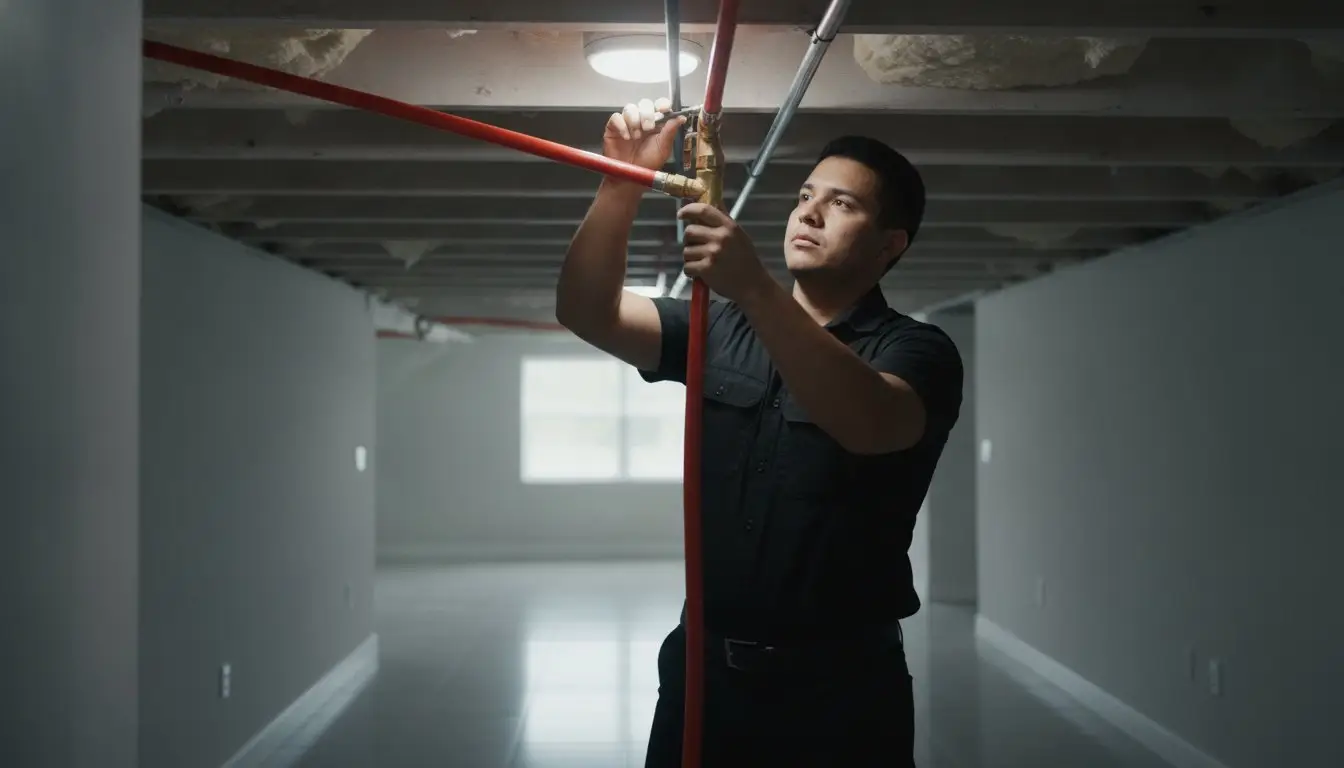
Rerouting is the cleaner, more proactive choice for many families. Instead of destroying your floors, we abandon the failing line under the slab and run a new, flexible PEX line through your walls or attic space. This method removes the vulnerability entirely because the new pipe is no longer buried in corrosive soil or trapped under concrete. It is a mess-free alternative that avoids concrete dust and preserves your expensive flooring. Before committing to a plan, it’s vital to work with a leak detection expert to confirm the source of the issue. Rerouting often emerges as the superior choice for long-term reliability in older Florida homes.
Pros and Cons: Weighing Cost, Disruption, and Longevity
Choosing between these methods requires a look at both your immediate budget and your home’s future value. When you analyze the rerouting plumbing vs slab leak repair pros and cons, the long-term savings of bypassing the slab become clear. A reroute typically follows a 2-day timeline from start to finish, while direct repairs often trigger a multi-day restoration cycle involving concrete curing and flooring replacement. According to this This Old House guide to slab leak repair costs, the total expense of a job often hinges on how much access is needed through the foundation.
- Direct Slab Repair: Often has a lower initial plumbing bill but carries higher restoration costs for flooring and concrete. It remains a localized “patch” that doesn’t address the health of the rest of the pipe.
- Pipe Rerouting: Involves higher material costs for PEX piping but offers a 25+ year solution. It is considered a permanent upgrade that eliminates the risk of future leaks in that specific line.
- Homeowner Disruption: Direct repair is loud and dusty due to jackhammering. Rerouting is significantly quieter and keeps your foundation intact.
Which Method is More Destructive?
The “mess factor” is the most immediate difference you’ll experience. Direct repairs involve jackhammering, which sends fine concrete dust into every corner of your home, even with professional plastic shielding. You also have to source matching tile or hardwood, which is nearly impossible for many older Florida homes. Rerouting avoids this structural demolition. We make small, precise cuts in the drywall that are easily patched and painted. For homeowners who value a high-end finish, looking to professional teams like Crandall Painting & Stucco can provide the necessary standard for seamless residential restoration. It’s a surgical approach rather than a demolition-first mindset that respects the integrity of your living space.
Long-Term Reliability and Home Value
Florida buyers are increasingly savvy about plumbing issues and foundation history. A home with multiple slab repair patches is often a red flag during a pre-sale inspection, suggesting a “domino effect” where one leak leads to another. This is especially common in Treasure Coast homes built before 2000 that still use original copper pipes. Rerouting is essentially a mini-repipe that adds permanent security to your system and protects your equity. If your home has suffered from recurring issues, you might want to consider repiping a house to solve the problem once and for all. You can always schedule a consultation with our team to see which path protects your home’s long-term value best.
Making the Right Call for Your Florida Home
Choosing the best path forward usually comes down to three factors: the age of your home, the material of your current pipes, and the exact location of the breach. If your property is over 15 years old and still relies on original copper, we almost always recommend a reroute. In our years serving Port St. Lucie and Stuart, we’ve seen that copper pipes in our acidic, sandy soil don’t just fail once; they fail repeatedly. When you evaluate the rerouting plumbing vs slab leak repair pros and cons, the long-term reliability of modern PEX piping almost always outweighs the lower upfront cost of a localized patch. Before making a final decision, ensure you have a professional leak detection and repair specialist from First Choice Plus Plumbing & Air confirm the source of the water with non-invasive technology.
Navigating Insurance and Documentation
Florida insurance policies often contain a specific clause known as “Access Coverage.” This typically means the policy covers the cost to reach the leak, such as the labor for jackhammering or tunneling, but it may not cover the actual pipe repair itself. Understanding this distinction is vital for your budget. First Choice Plus Plumbing & Air provides the detailed documentation, high-resolution photos, and professional reports your insurance adjuster needs to process your claim accurately. This transparency helps ensure you receive the maximum coverage allowed by your policy for the most expensive part of the process: the access and restoration.
Next Steps: What to Ask Your Plumber
Before you commit to a repair, you need to know exactly what you are paying for. Ask your plumber about the specific warranties they offer for both the labor and the materials. You should also clarify who is responsible for restoring the drywall or flooring once the plumbing work is finished. Our team at First Choice Plus Plumbing & Air prioritizes a mess-free experience, focusing on surgical precision to minimize disruption to your daily life. If you suspect a leak under your foundation, don’t wait for the damage to spread. Schedule a professional slab leak inspection with First Choice Plus Plumbing & Air to get a clear, honest assessment of your home’s plumbing health.
Protect Your Home and Your Peace of Mind
A slab leak doesn’t have to mean a disaster for your foundation or your finances. By carefully weighing the rerouting plumbing vs slab leak repair pros and cons, you can choose a solution that addresses the root cause of the issue rather than just patching a symptom. For many Florida homeowners, bypassing aging pipes through a professional reroute offers the most reliable, mess-free path to long-term security. It preserves your flooring, protects your home’s resale value, and puts an end to the anxiety of recurring leaks under your concrete.
Since 2007, First Choice Plus Plumbing & Air has served as the steady hand for families across Port St. Lucie and Stuart during plumbing emergencies. Our family-owned and operated team specializes in non-invasive leak detection to find the exact source of your trouble without unnecessary destruction. We provide 24/7 emergency service to ensure your home remains safe and dry no matter when a crisis strikes. You deserve a permanent fix that fits your budget and respects your property.
Ready to resolve your slab leak for good? Contact First Choice Plus Plumbing & Air for Expert Slab Leak Detection and Repair today. We’ll help you navigate the repair process with honesty and technical expertise so you can get back to your daily life with a plumbing system you can trust.
Frequently Asked Questions
Is it better to reroute a pipe or repair a slab leak?
Rerouting is often the superior long-term choice for Florida homes, especially those over 15 years old. While a direct repair fixes a single breach, it leaves the rest of the aging line under the concrete where it remains vulnerable to corrosion. Rerouting bypasses the slab entirely, eliminating the risk of future leaks in that specific section and avoiding the structural mess of jackhammering your floors.
How much does it cost to reroute a plumbing line in Florida?
The total investment for a reroute depends on the length of the new line and the specific layout of your home. Factors like the number of fixtures being bypassed and the accessibility of your attic or wall spaces will influence the final cost. While the initial plumbing bill might be higher than a spot repair, you often save money by avoiding foundation restoration and expensive flooring replacements.
Does homeowners insurance cover rerouting plumbing for a slab leak?
Most Florida policies cover the cost of “access and egress,” which includes the labor to reach the leak, but they rarely cover the actual pipe repair. When you weigh the rerouting plumbing vs slab leak repair pros and cons, it’s important to have professional documentation for your adjuster. A detailed inspection report can help demonstrate that rerouting is a necessary step to mitigate further water damage to your property.
How long does a pipe reroute take compared to a direct repair?
A professional pipe reroute typically takes one to two days to complete from start to finish. In contrast, a direct repair might only take a few hours to fix the actual pipe, but the subsequent restoration of your concrete slab and flooring can take a week or longer. Rerouting is a much faster way to restore full water service to your home with minimal disruption to your daily routine.

Article by
Written by First Choice Plus Plumbing & Air Team
This article was created by the team at First Choice Plumbing Solutions, a licensed and experienced plumbing and HVAC company serving Port St. Lucie, Land O’ Lakes, and surrounding areas.
Our team specializes in plumbing and air conditioning services, including drain cleaning, leak detection, water heater repair and installation, AC repair, maintenance, and system installations. Our content is based on real-world experience and the common issues we solve for homeowners and businesses every day.
We aim to provide accurate, helpful, and easy-to-understand information so you can make informed decisions about your plumbing and HVAC needs.
If you need reliable, professional service, First Choice Plumbing Solutions is here to help.
Disclaimer
Disclaimer: The information provided in this article is for general informational purposes only and does not constitute professional plumbing or HVAC advice. Every situation is different, and readers should consult a licensed professional for proper diagnosis and repair. First Choice Plus Plumbing & Air is not liable for any damages or losses resulting from the use of this information.