You have set your thermostat to a crisp 72 degrees, yet you still wake up with damp sheets and that heavy, sticky feeling in your living room. It is a common frustration for neighbors here in Port St. Lucie and across the Treasure Coast. Even when your air conditioner is running constantly, reducing humidity in house Florida climates can feel like a losing battle against the 80 percent outdoor moisture levels. You are likely worried about potential mold growth or the spike in your energy bill, but simply turning down the temperature is rarely the most effective solution.
We understand how uncomfortable a humid home can be for your family. This guide provides the most effective ways to control indoor moisture, ranging from simple lifestyle shifts to professional HVAC and plumbing fixes. You will learn about the impact of the latest SEER2 efficiency standards, the benefits of whole-house dehumidifiers, and how to spot hidden plumbing leaks that might be sabotaging your comfort. We will walk you through a clear, action-oriented plan to restore your home to the dry, cool sanctuary it should be.
Key Takeaways
- Understand why your air conditioner might be cooling your home without properly removing moisture and how system sizing affects your daily comfort.
- Discover practical methods for reducing humidity in house Florida climates, from sealing gaps in older homes to using exhaust fans more efficiently.
- Identify how leaky ductwork in your attic can pull hot, swampy air into your living spaces through the “venturi effect.”
- Learn why regular HVAC maintenance is essential for keeping condensate lines clear and preventing moisture buildup in your system.
- Explore how small lifestyle shifts and professional solutions can protect your Treasure Coast home from mold and high energy bills.
The Science of Florida Humidity: Why Your AC Might Be Struggling
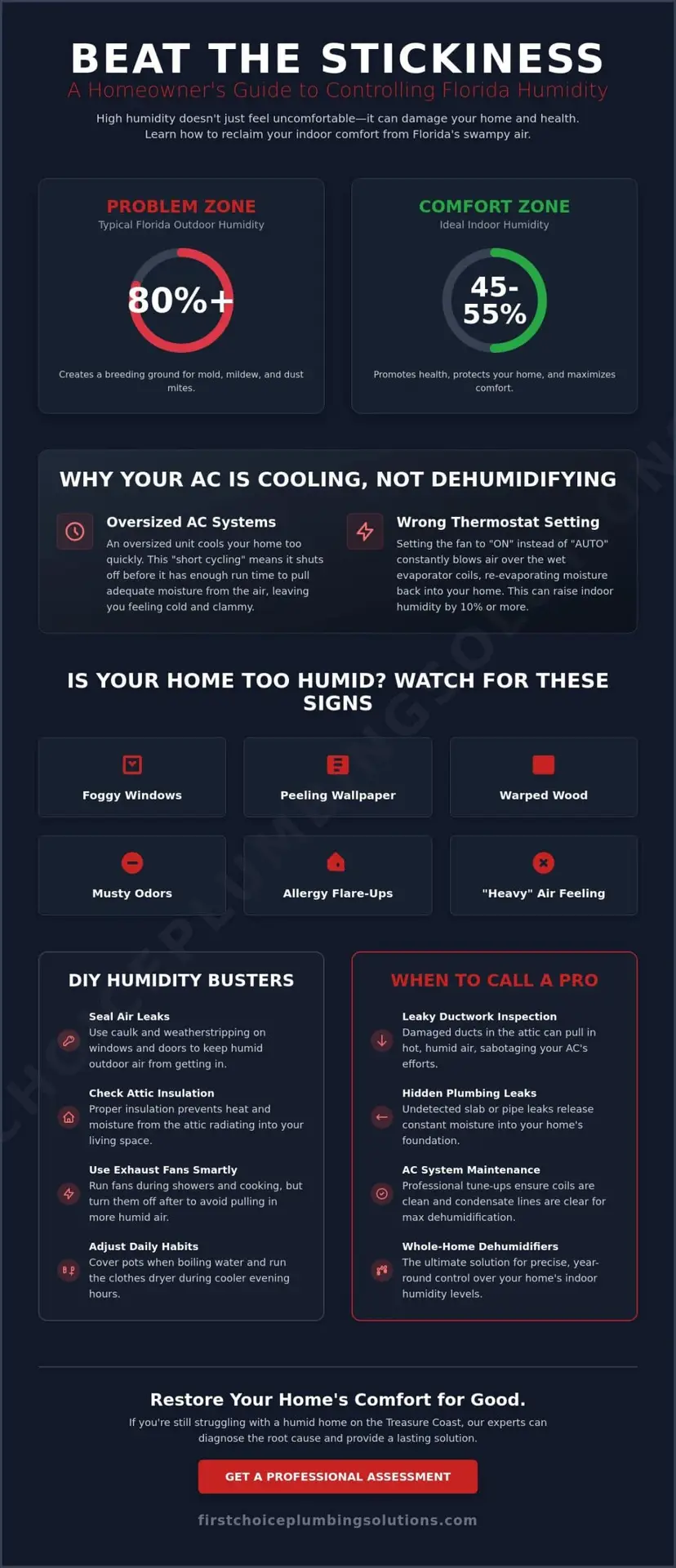
In Port St. Lucie and Fort Pierce, the air often feels heavy rather than just hot. The science of Florida humidity explains this phenomenon through the relationship between temperature and moisture. While relative humidity is what we usually hear on the news, the dew point is the true measure of your comfort. When the dew point is high, your body cannot efficiently evaporate sweat, leaving you feeling sticky even indoors. Your air conditioner’s primary job is actually to act as a massive dehumidifier. It pulls warm, moist air over cold evaporator coils, turning water vapor into liquid that drains outside. If your system is oversized, it cools the home so quickly that it cycles off before it can finish the dehumidification process. This leaves you with a cold, clammy environment that never feels quite right.
Homeowners should aim for an indoor humidity level between 45% and 55%. This range provides the best balance for your health and your home’s structural integrity. Once levels consistently exceed 60%, your house becomes a prime breeding ground for mold, mildew, and dust mites. For those focused on reducing humidity in house Florida environments, monitoring these levels is the first step toward a drier, healthier home.
The “Auto” vs. “On” Thermostat Debate
Many people believe running the HVAC fan constantly improves air circulation. In our tropical climate, this habit actually works against you. When your thermostat is set to “On,” the fan blows air across the wet evaporator coils even after the cooling cycle ends. This process evaporates the recently collected water right back into your living space. Always keep your thermostat fan set to “Auto” so it only runs while the system is actively cooling and removing moisture. Pro-tip: In the humid Treasure Coast climate, setting your thermostat fan to ON can raise indoor humidity by 10% or more in a single afternoon.
Signs Your Home Has a Moisture Imbalance
If you notice fogged windows or a persistent musty odor in your St. Lucie West closets, your humidity is likely out of control. Other sensory cues include warped floorboards, peeling wallpaper, or a general “heavy” feeling in the air. These conditions often trigger allergies and can lead to more serious respiratory issues. If your system is failing to pull moisture from the air, you may need emergency AC repair to check for dirty coils or a malfunctioning expansion valve.
Practical Strategies for Reducing Indoor Humidity
Controlling the air inside your home starts with keeping the Florida atmosphere outside. In older neighborhoods across Jensen Beach, houses often settle over time. This creates small gaps around windows and doors that act like straws, sucking in “swamp air” every time your AC cycles. Sealing these gaps with weatherstripping or fresh caulk is a cost-effective first step in reducing humidity in house Florida residents often overlook. Your attic insulation also plays a silent role. If it is thin or degraded, heat and moisture from the attic can radiate through your ceiling, forcing your cooling system to work much harder to maintain comfort.
Daily habits also contribute to the moisture load. Always use your exhaust fans while showering or cooking, but remember to turn them off once the steam clears. Leaving a bathroom fan running for hours actually pulls more humid outdoor air into your home through other small openings. Simple shifts like covering pots while boiling water and running the dryer during the cooler evening hours can prevent your indoor air from feeling like a sauna. By controlling moisture to prevent mold, you protect both your home’s structural integrity and your family’s health.
The Hidden Link: Could a Plumbing Leak Be the Culprit?
Sometimes, even the most disciplined lifestyle changes cannot fix a humidity problem. If your indoor air remains sticky despite a perfectly functioning AC, you might have a hidden plumbing issue. Slab leaks or pinhole pipe leaks under your floors release a constant stream of moisture into your foundation. This water eventually evaporates into your living space, keeping humidity levels high regardless of the weather. We recommend checking your water meter when no fixtures are running. If the dial is still spinning, you should contact a leak detection expert to find the source before it causes extensive damage.
Dehumidifier Comparison: Portable vs. Whole-Home Systems
If lifestyle changes aren’t enough, you may need mechanical assistance. Portable bucket-style units are common, but they are often loud and require constant emptying. They also only treat a single room at a time. In contrast, a whole-home dehumidifier integrates directly into your HVAC system. These units are highly efficient and operate independently, removing moisture even on those mild spring days when your AC isn’t running. If you are struggling with persistent dampness, our team can perform a plumbing inspection to rule out leaks while discussing the best air quality upgrades for your specific home.
Professional HVAC Solutions for a Bone-Dry Home
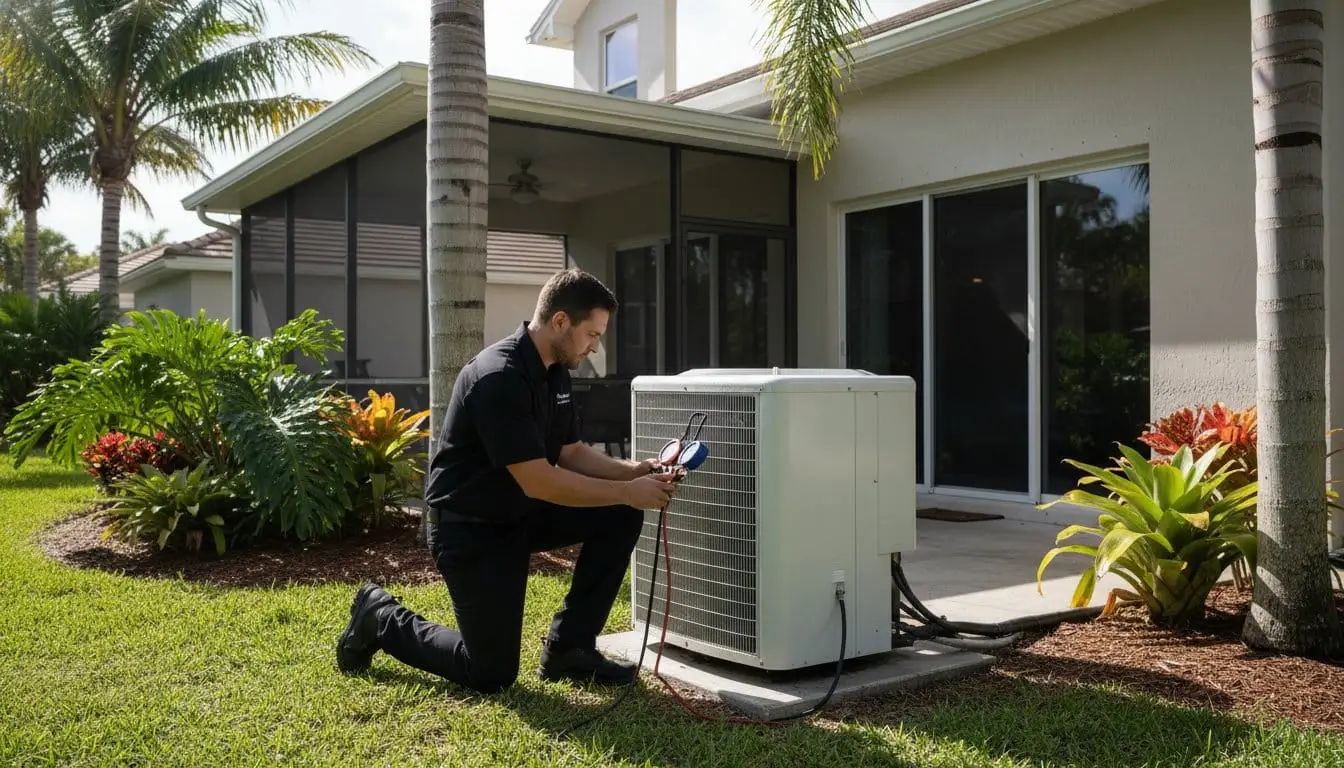
Maintaining your HVAC system is the most effective way of reducing humidity in house Florida residences. During a professional tune-up, technicians clear the condensate drain line and scrub the evaporator coils. If these coils are caked in dust, they cannot effectively pull moisture from the air. We also inspect your ductwork for leaks. When ducts in a hot attic have gaps, they create a “venturi effect,” pulling in humid attic air and distributing it throughout your rooms. This process forces your system to work overtime and keeps your home feeling swampy despite the AC running.
Advanced indoor air quality (IAQ) upgrades provide a secondary layer of protection against the Florida elements. UV air sanitizers and high-efficiency filters help manage the biological side-effects of high moisture, such as mold spores and allergens. For more comprehensive advice on managing your home environment, you can review the U.S. Environmental Protection Agency (EPA) guide on moisture control. If your unit is more than a decade old and struggles to keep up with the summer heat, it might be time to consider a system replacement. Modern units are much better at reducing humidity in house Florida homes while lowering monthly energy costs.
When to Call a Treasure Coast Expert
You should reach out for professional help if you notice persistent musty smells, see condensation on your windows, or if your humidity monitor stays above 60% consistently. These are clear signs that your home’s envelope or HVAC system is failing. Our team at First Choice Plus Plumbing & Air serves the entire Treasure Coast from our main office in Port St. Lucie. Please note that while we provide full HVAC and plumbing services in this area, we are plumbing-only in Land O’ Lakes. We provide 24/7 support for emergency AC repair in Port St. Lucie and Stuart to ensure your home remains a dry, comfortable sanctuary.
Take Control of Your Indoor Comfort Today
Living on the Treasure Coast means accepting the heat, but it doesn’t mean you have to live with sticky, uncomfortable indoor air. By balancing your thermostat settings, sealing your home’s envelope, and addressing hidden moisture sources like slab leaks, you can create a sanctuary away from the swampy outdoors. Success in reducing humidity in house Florida climates often comes down to proactive maintenance and knowing when a professional eye is needed to spot issues like leaky ductwork or failing coils.
Since 2007, First Choice Plus Plumbing & Air has served as a pillar of reliability for families in Port St. Lucie, Stuart, and the surrounding areas. We provide 24/7 emergency AC and plumbing support alongside expert slab leak detection to resolve even the most stubborn moisture problems. You don’t have to battle the Florida humidity alone. Breathe easier and stay cool—schedule your humidity consultation with First Choice Plus today! We are ready to help you reclaim your home’s comfort and efficiency.
Common Questions About Florida Humidity
What is the ideal humidity level for a house in Florida?
The ideal indoor humidity level for a Florida home is between 45% and 55%. Maintaining this range ensures your living space feels cool and prevents the growth of mold or mildew. If your home consistently stays above 60%, you are at a higher risk for biological growth and structural damage. Using a simple hygrometer from a local hardware store in Port St. Lucie can help you track these levels daily.
Why is my house so humid even with the AC running?
Your house may stay humid because the AC system is short cycling or is improperly sized for your square footage. When an air conditioner is too large, it cools the air quickly but turns off before it can remove enough moisture. Other common culprits include dirty evaporator coils or a clogged condensate drain line. These mechanical issues often require professional troubleshooting to restore the system’s ability to dehumidify while cooling.
Does a whole-house dehumidifier really make a difference in Florida?
A whole-house dehumidifier makes a significant difference because it operates independently of your air conditioning cycles. This is especially helpful during the mild Treasure Coast spring when the temperature is low but the moisture is high. By reducing humidity in house Florida residences through a dedicated system, you can often raise your thermostat by a few degrees and still feel perfectly comfortable, which helps lower your monthly energy costs.
How can I tell if a plumbing leak is causing high humidity?
You can identify a plumbing leak by monitoring your water meter when all faucets and appliances are turned off. If the meter continues to move, water is escaping somewhere in your system. Hidden slab leaks or pinhole pipe leaks in the foundation release constant moisture into the air. This makes it impossible for your AC to keep up. If you notice localized warm spots on your floor or a sudden musty smell, it’s time for professional leak detection.

Article by
Written by First Choice Plus Plumbing & Air Team
This article was created by the team at First Choice Plumbing Solutions, a licensed and experienced plumbing and HVAC company serving Port St. Lucie, Land O’ Lakes, and surrounding areas.
Our team specializes in plumbing and air conditioning services, including drain cleaning, leak detection, water heater repair and installation, AC repair, maintenance, and system installations. Our content is based on real-world experience and the common issues we solve for homeowners and businesses every day.
We aim to provide accurate, helpful, and easy-to-understand information so you can make informed decisions about your plumbing and HVAC needs.
If you need reliable, professional service, First Choice Plumbing Solutions is here to help.
Disclaimer
Disclaimer: The information provided in this article is for general informational purposes only and does not constitute professional plumbing or HVAC advice. Every situation is different, and readers should consult a licensed professional for proper diagnosis and repair. First Choice Plus Plumbing & Air is not liable for any damages or losses resulting from the use of this information.