
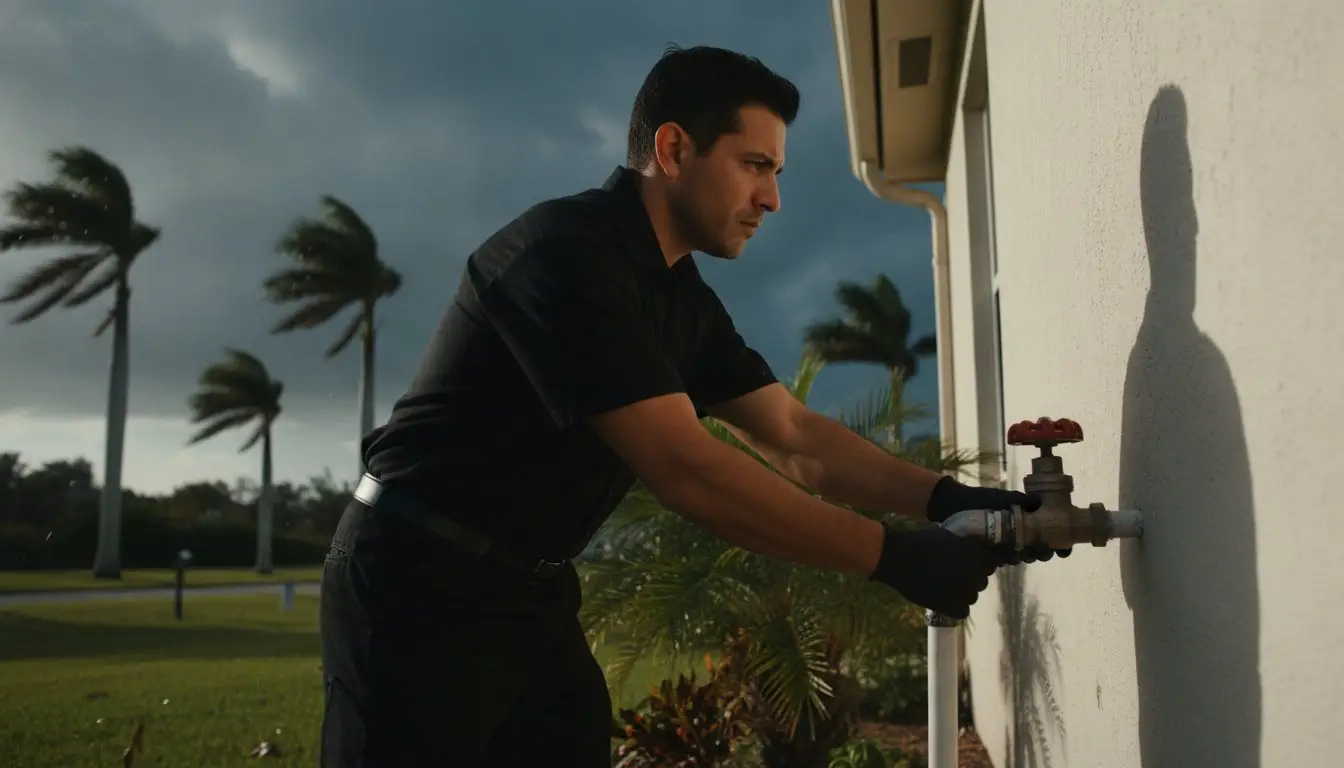
Imagine the wind howling over your roof in Jensen Beach while you’re suddenly hit with the realization that you didn’t check your main water valve. It’s a common source of anxiety for many of us on the Treasure Coast when storm season arrives. While we often focus on shutters and sandbags, protecting pipes during a hurricane is just as vital for preventing long-term damage to your home.
We understand the fear of sewage backing up or hidden leaks forming under your slab while local services are stretched thin. You want to know your family is safe and your property is secure. With the 9th Edition of the Florida Building Code set to take effect on December 31, 2026, there’s a renewed focus on home resilience that every homeowner should embrace. This guide provides the exact steps you need to safeguard your plumbing system from storm surges and pressure shifts before the next big one hits. We’ll walk through a clear checklist for pre-storm prep, explain when to shut off your water, and show you how to handle emergencies when help might be hours away.
Key Takeaways
- Learn how to locate and test your main water valve to prevent internal flooding and pressure damage before the storm arrives.
- Discover the essential steps for protecting pipes during a hurricane by securing outdoor spigots and pool fill lines from flying debris.
- Understand how to seal your sewer cleanout cap to prevent contaminated floodwaters from backing up into your home during heavy Treasure Coast rainfall.
- Master a simple water meter trick to identify hidden underground leaks and “soft spots” in your yard once the weather clears.
- Gain peace of mind by following a practical plumbing checklist designed specifically for the unique challenges of Florida storm surges.
The Pre-Hurricane Plumbing Checklist: Securing Your Water Lines
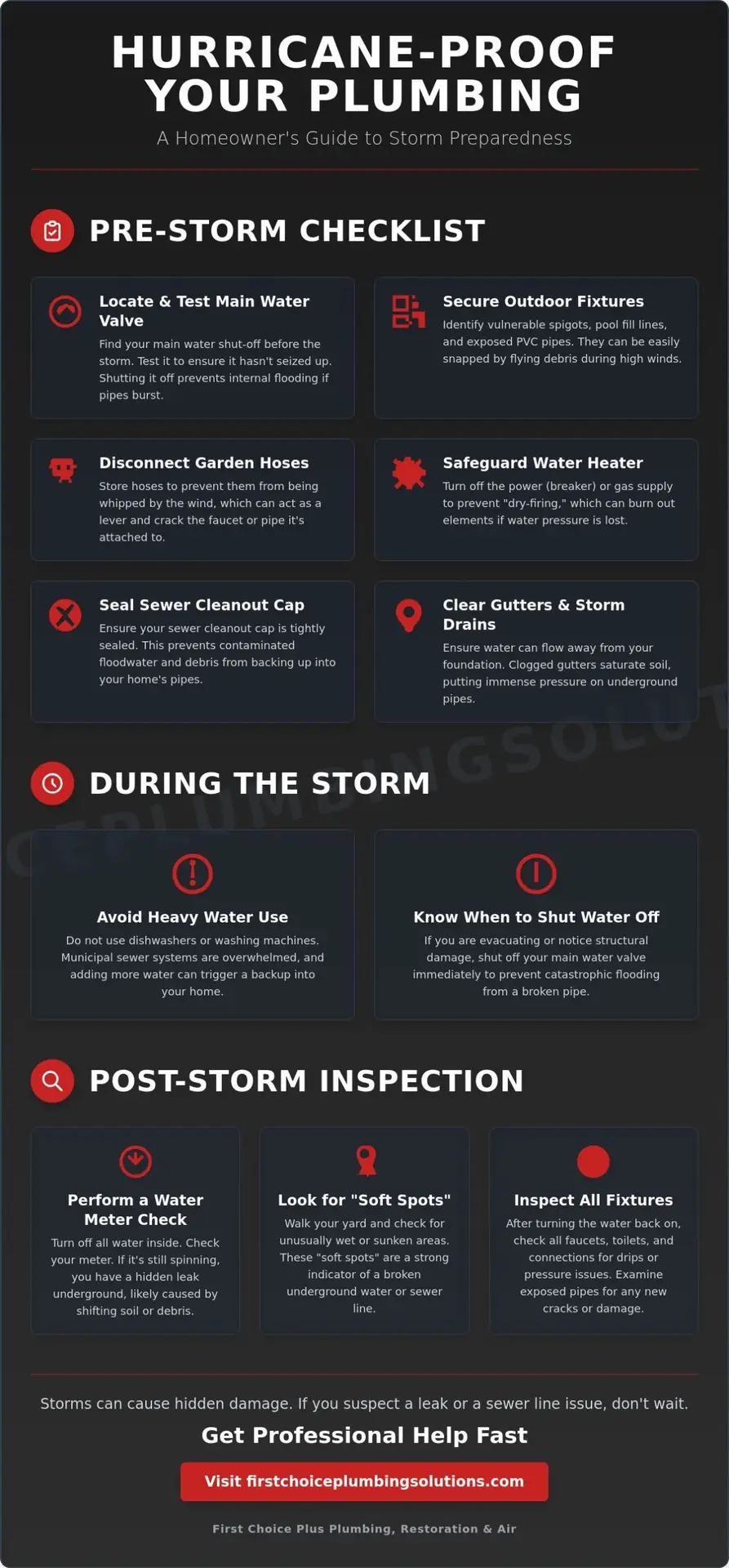
Before the wind speeds pick up, your first priority is finding your main water shut-off valve. Whether you live in a newer community in St. Lucie West or an established home in Stuart, you need to know exactly where this is. Locate and test your main water shut-off valve before the storm reaches the Treasure Coast. Valves that haven’t been turned in years can seize up, leaving you helpless when you need to act fast. Shutting off your main water valve prevents internal flooding if a pipe bursts due to structural shifts. This simple action is one of the most effective ways of protecting pipes during a hurricane.
As part of your broader tropical cyclone preparedness, take a walk around your property to identify vulnerable outdoor fixtures, including pool fill lines and garden spigots, that could be snapped by flying debris. These items are often made of PVC or thin copper that won’t stand up to a direct hit from a projectile. Disconnect and store all garden hoses to prevent them from acting as levers that could snap outdoor faucets in high winds. If a hose is left attached, the wind can whip it around with enough force to crack the pipe right where it enters your home.
Taking these steps early ensures you aren’t scrambling in the rain. Proactive maintenance is the best defense for protecting pipes during a hurricane and keeping your home’s interior dry during the worst of the weather.
Safeguarding Your Water Heater
If you lose water pressure, your water heater is at risk. Turn off the power at the breaker for electric models or shut the gas supply for gas units. This prevents dry-firing, which can burn out heating elements if the water level inside the tank drops. For tankless units, ensure the intake and exhaust vents are clear of potential debris. If your unit is older and sits in a flood-prone garage in Fort Pierce, consider a water heater inspection to ensure it’s secured and ready for the season.
Protecting Outdoor Fixtures and Pool Plumbing
Exposed PVC piping around your pool pump is a major weak point. High winds can turn a loose patio chair into a projectile that shatters these lines instantly. Secure or cover outdoor pumps and exposed pipes with heavy-duty materials or sandbags to mitigate impact. Also, remember to turn off the auto-fill valve for your pool. You don’t want the system trying to top off a pool that’s already overflowing from torrential rain, as this leads to unnecessary yard flooding and soil erosion near your foundation.
Preventing the Backflow Nightmare: Sewer and Drain Safety
One of the most distressing plumbing issues during a Florida storm isn’t a leak from above; it’s a backup from below. When torrential rain hits Port St. Lucie and Fort Pierce, municipal sewer systems can quickly become overwhelmed. This pressure can cause a “back-siphoning” effect, where waste is pushed back into residential lines. Protecting pipes during a hurricane must include securing your sewer connections to avoid this sanitation nightmare.
Start by inspecting your home’s sewer cleanout cap. This is usually a white or black PVC pipe sticking out of the ground near your foundation. Ensure it is tightly sealed and not obstructed by landscaping or mulch that could wash away and clog the opening. During the height of the storm, avoid using heavy appliances like dishwashers or washing machines. Your internal drainage system is already under stress from the high water table, and adding gallons of soapy discharge can trigger a backup when the city lines are full. A backwater valve is a one-way gate that prevents city sewage from entering your home during a flood.
The Role of Backwater Valves
A backwater valve provides an automatic defense against rising municipal sewer levels. It allows water to flow out of your home but snaps shut if pressure builds from the street side. If you notice slow drains or gurgling toilets during heavy summer showers, you may need a sewer line repair or valve installation before hurricane season peaks. This proactive step keeps your home’s interior safe from contaminated water even when the local infrastructure is struggling.
Managing Storm Drains and Gutters
Effective drainage is a key part of Ready.gov hurricane preparedness. Clear all area drains and gutters to ensure water moves away from your foundation and buried plumbing lines. If gutters are clogged, water pools at the base of your house, saturating the soil and putting immense pressure on your pipes. Ensure downspouts are directed at least six feet away from the home to prevent soil saturation near the slab. If you suspect your lines are already sluggish, a professional drain cleaning can clear the path before the clouds roll in.
Post-Storm Inspection: Identifying Hidden Pipe Damage
Once the skies clear over Jensen Beach and Palm City, the work shifts from preparation to inspection. Don’t just look at the roof. Your underground infrastructure deserves equal attention. Shifting soil during a storm can lead to slab leaks, which often require professional detection equipment to locate before they damage your flooring or foundation. Walk your property and look for “soft spots” in your yard or unusually lush patches of grass. These are often telltale signs that an underground line has fractured under the weight of saturated earth.
Protecting pipes during a hurricane involves monitoring the system even after the wind stops. Before you resume normal water use, perform a simple meter test. Turn your main valve back on and ensure all faucets are off. Monitor your water meter; if the dial moves while no water is running, you likely have a leak somewhere in the line. Pay close attention to the area around large trees. If high winds caused the root ball to shift, those roots may have crushed or cracked nearby PVC or cast iron pipes as they moved through the soil.
When to Call an Emergency Plumber
Don’t ignore subtle warning signs that suggest your system is struggling. Immediate red flags include the smell of sewage in the yard, gurgling sounds from your toilets, or low water pressure throughout the house. These symptoms often point to a compromised main line or a sewer blockage. First Choice Plus Plumbing & Air offers 24/7 emergency plumbing repairs across Port St. Lucie and Stuart. Acting quickly prevents a small fracture from turning into a costly flood inside your home.
The Danger of Shifting Foundations
Florida’s sandy soil is notorious for shifting when extreme saturation occurs. This movement puts immense stress on the “elbows” and joints of your plumbing system, which are the most common points of failure. For older Treasure Coast homes still using brittle copper or cast iron lines, these shifts can be devastating. We often advise homeowners on the long-term benefits of a whole house repipe to replace aging materials with modern, flexible PEX piping. This upgrade is a major component of protecting pipes during a hurricane for years to come.
Secure Your Home Before the Next Big Storm
Weathering a Florida hurricane is stressful enough without the added worry of a plumbing disaster. By locating your shut-off valves, securing outdoor PVC lines, and monitoring your water meter for hidden leaks, you take control of your property’s safety. Protecting pipes during a hurricane isn’t just about the immediate impact; it’s about preventing long-term damage from soil erosion and foundation shifts that can lead to expensive slab leaks later on.
If you discover gurgling drains or suspect underground damage after a storm passes, don’t wait for the problem to escalate. First Choice Plus Plumbing & Air has been family-owned and operated since 2007, providing expert 24/7 emergency response for families across Port St. Lucie, Stuart, and the surrounding Treasure Coast. Whether you need specialized slab leak detection or are considering a whole-home repipe for better resilience, our team is ready to help. Contact First Choice Plus for 24/7 Emergency Storm Support and ensure your home remains a safe haven for your family. Stay safe, stay prepared, and remember that professional help is only a phone call away.
Common Questions About Hurricane Plumbing Safety
Should I shut off my main water valve during a hurricane?
Yes, shutting off your main water valve is a vital part of protecting pipes during a hurricane. If structural damage occurs or a pipe bursts while you are sheltering, an open valve could lead to catastrophic internal flooding. Closing the valve also safeguards your home’s drinking water from potential contamination if the city’s water pressure drops or local lines are compromised by floodwaters during the storm.
What happens if a tree falls on my outdoor plumbing lines?
Falling trees or shifting root balls can easily crush buried PVC pipes or snap outdoor copper fixtures. If a major limb strikes an exposed line, it can cause an immediate rupture that wastes thousands of gallons of water. In areas like Jensen Beach or Stuart, where large oaks are common, shifting roots can also slowly crack cast iron pipes, leading to hidden leaks that only become apparent days after the storm has passed.
Can a hurricane cause a slab leak in my Florida home?
Yes, the intense soil saturation common during Treasure Coast hurricanes can cause the ground to shift, resulting in a slab leak. When the sandy soil beneath your foundation moves, it creates stress on the plumbing joints buried in the concrete. This can cause pipes to crack or separate. If you notice a sudden increase in your water bill or damp spots on your flooring after a hurricane, professional leak detection is necessary.
How do I prevent my toilet from backing up during a storm surge?
You can prevent backups by installing a backwater valve and strictly limiting water usage. When heavy rain overwhelms sewer systems in Port St. Lucie, the pressure can push waste back into residential lines. Protecting pipes during a hurricane includes managing your drains; a backwater valve prevents sewage from entering your home by snapping shut when it senses reverse pressure. Avoiding heavy appliance use also ensures your internal drains don’t overflow while the municipal system is at maximum capacity.
Article by
Written by First Choice Plus Plumbing & Air Team
This article was created by the team at First Choice Plumbing Solutions, a licensed and experienced plumbing and HVAC company serving Port St. Lucie, Land O’ Lakes, and surrounding areas.
Our team specializes in plumbing and air conditioning services, including drain cleaning, leak detection, water heater repair and installation, AC repair, maintenance, and system installations. Our content is based on real-world experience and the common issues we solve for homeowners and businesses every day.
We aim to provide accurate, helpful, and easy-to-understand information so you can make informed decisions about your plumbing and HVAC needs.
If you need reliable, professional service, First Choice Plumbing Solutions is here to help.
Disclaimer
Disclaimer: The information provided in this article is for general informational purposes only and does not constitute professional plumbing or HVAC advice. Every situation is different, and readers should consult a licensed professional for proper diagnosis and repair. First Choice Plus Plumbing & Air is not liable for any damages or losses resulting from the use of this information.