
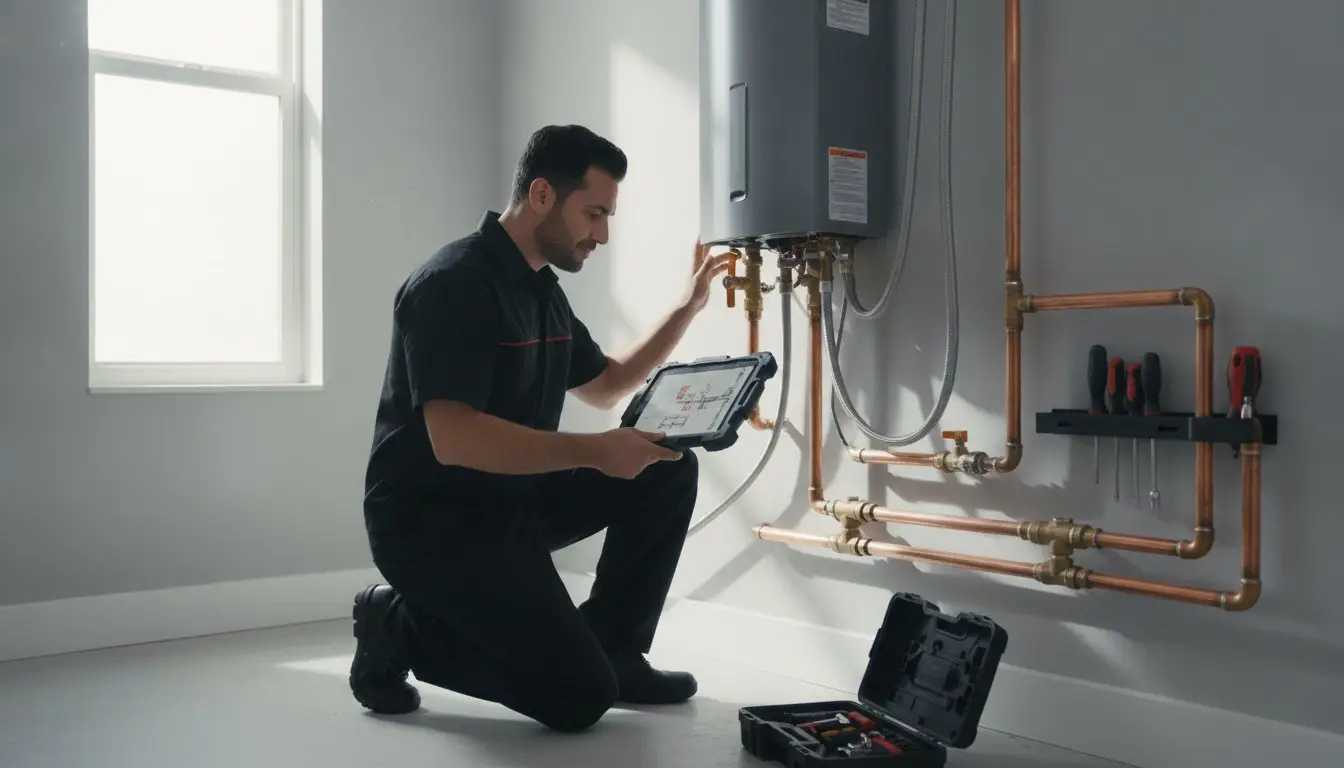
Imagine you’re standing in your kitchen in St. Lucie West, watching a municipal inspector pull into your driveway while you wonder if that tiny damp spot behind the guest toilet is about to cost you thousands of dollars. It’s a stressful moment that many Treasure Coast homeowners face, especially when they aren’t sure if they’ve done enough preparing for a plumbing inspection under the strict 2026 Florida Building Code. We know that the thought of a failed report or a hidden slab leak can keep you up at night. You want your home to be safe, efficient, and compliant without any expensive surprises.
By taking a few proactive steps today, you can ensure the process runs smoothly from the moment the inspector arrives at your door. This article provides a clear, step-by-step checklist tailored for our local environment, from Fort Pierce down to Stuart. We’ll cover how to provide total access to your systems, what common red flags to look for in your fixtures, and how to stay ahead of the latest regulations to keep your utility bills low and your foundation secure. Preparing your home doesn’t have to be a guessing game when you have a professional plan in place.
Key Takeaways
- Learn why clearing the space under your sinks and around your water heater is the most effective way to speed up the inspection process.
- Discover the specific red flags for slab leaks that Florida inspectors prioritize, including unexplained moisture and floor temperature changes.
- Understand the impact of the 2026 Florida Building Code on your home’s value and how to avoid the pitfalls of unpermitted work.
- See how preparing for a plumbing inspection can lead to lower utility bills and long-term protection for your home’s foundation.
- Differentiate between preventative maintenance and municipal code checks to ensure your Treasure Coast home meets every requirement.
Understanding the Different Types of Plumbing Inspections
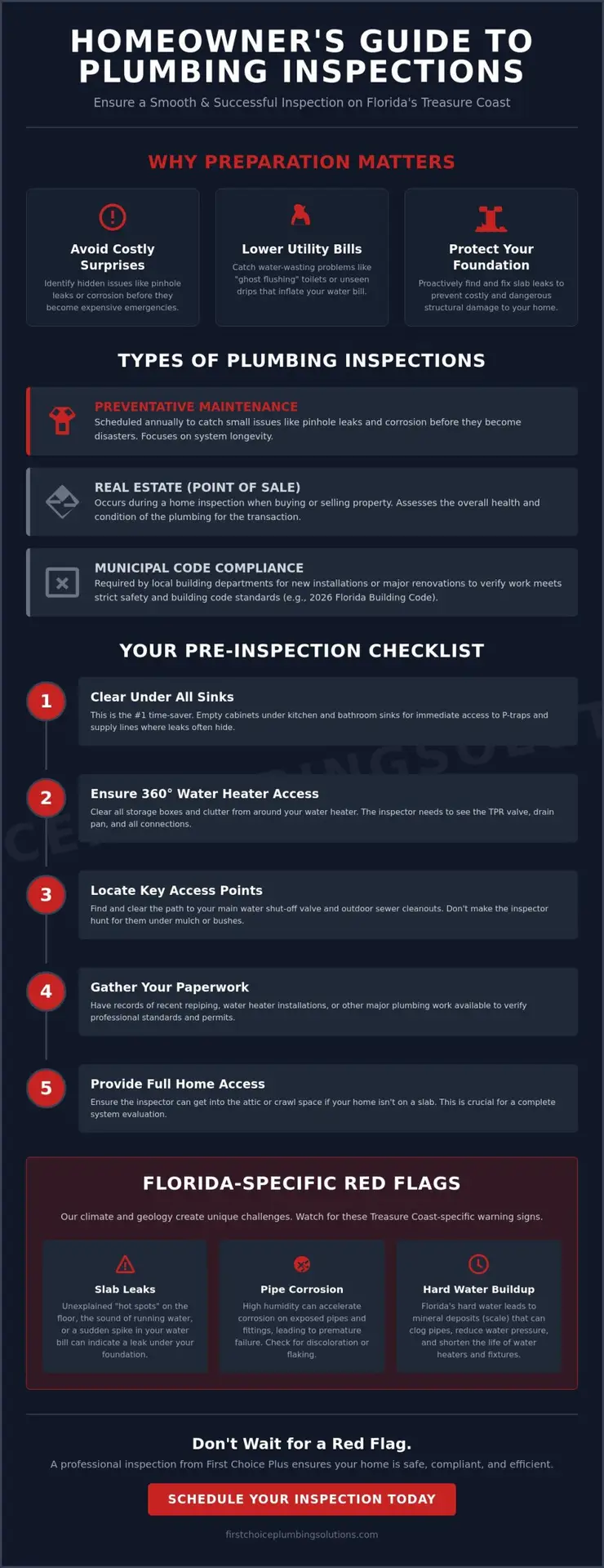
A plumbing inspection is a comprehensive health check of your home’s supply lines, drainage systems, and individual fixtures to ensure everything operates safely and efficiently. For homeowners in Port St. Lucie, this isn’t just a luxury; it’s a necessity. Our regional environment presents unique challenges that can shorten the lifespan of your pipes. High humidity and exceptionally hard water often lead to premature corrosion and mineral buildup. When you’re preparing for a plumbing inspection, it helps to know exactly what the professional is looking for and why.
There are three primary types of inspections you might encounter in the Treasure Coast area:
- Preventative Maintenance: These are scheduled annually to catch small issues like pinhole leaks before they become disasters.
- Real Estate (Point of Sale): These occur during a home inspection when buying or selling property in areas like Jensen Beach or Palm City.
- Municipal Code: These are required by local building departments to verify that new installations or major renovations meet strict safety standards.
Preparing for a plumbing inspection involves understanding whether the plumber is looking for simple wear or strictly checking for code compliance. While a standard walkthrough is visual, more complex issues often require a specialized drain camera inspection to see what’s happening deep inside your sewer lines.
Maintenance vs. Municipal Inspections
Municipal “rough-in” inspections focus specifically on code compliance during renovations. If you’re updating a home in Tradition or St. Lucie West, the city inspector wants to see the “skeleton” of your plumbing before the walls go up. In contrast, preventative maintenance is your best defense against emergency plumbing repairs. These visits focus on the longevity of your system, checking for slow leaks or corrosion that a city inspector might not prioritize.
The Role of Specialized Leak Detection
Standard visual checks don’t always reveal the full story. Florida’s sandy soil and high water table create a specific risk for slab leaks, where pipes under your concrete foundation fail. If you notice “hot spots” on your floor or a sudden spike in your water bill, you likely need a leak detection expert. We use specialized acoustic equipment to pinpoint underground failures, which is a critical part of protecting your home’s structural integrity.
Your Pre-Inspection Checklist: 5 Essential Steps
Efficiency is the key to a successful visit. When you’re preparing for a plumbing inspection, your goal is to remove any obstacles that prevent the professional from seeing the full picture. A well-prepared home allows our team to focus on technical details rather than moving your cleaning supplies. Start by emptying the cabinets under every sink in your home. This simple act is the top time-saver for any inspector, as it provides immediate access to P-traps and supply lines where many leaks hide. Next, ensure there is 360-degree clearance around your water heater. Whether it’s tucked in a garage corner or a tight closet in Palm City, the inspector needs to see the temperature-pressure relief valve and the drain pan without fighting through storage boxes.
Your third step involves locating and clearing the path to your main water shut-off valve and outdoor sewer cleanouts. If these are buried under mulch or overgrown landscaping in Stuart, find them now so the plumber doesn’t have to hunt for them. Fourth, gather your paperwork. Having records of recent repiping a house or water heater installations helps verify that the work was done to professional standards. Finally, ensure the plumber has clear access to your attic or crawl space if your home isn’t built on a slab. Following these Miami-Dade County plumbing inspection guidelines can serve as a great baseline for what local professionals expect to see when they arrive.
The Visual Self-Walkthrough
Run a quick test before our arrival. Turn on every faucet, flush every toilet, and check the showerheads for steady pressure. Listen for “ghost flushing,” which is when a toilet refills on its own despite no one using it. This usually points to a worn-out flapper that’s wasting water and driving up your utility bills. Catching these small issues early helps you decide if you need to schedule plumbing repairs before the official inspection begins.
Safety and Logistics
Think about the movement through your home. Secure your pets in a safe room or a crate so the plumber can move freely between your kitchen, bathrooms, and garage without worry. This keeps everyone safe and ensures the job stays on schedule. If you’ve recently noticed any slow drains or gurgling sounds, make a quick note of those locations to share with the technician during their walkthrough.
Florida-Specific Focus Areas for Treasure Coast Homes
Living on the Treasure Coast means your plumbing faces environmental stressors that northern homes simply don’t experience. While you’re preparing for a plumbing inspection, it’s vital to look at your foundation and outdoor fixtures through a local lens. For instance, slab leaks are a common concern in Florida due to our sandy soil and high water table. During the walkthrough, a plumber will scan for “hot spots” on your tile or unexplained moisture along baseboards. These are telltale signs that a pipe beneath your concrete slab has failed, which requires immediate attention to protect your home’s structural integrity.
Florida’s hard water also takes a heavy toll on tank and tankless systems. Mineral deposits can build up quickly, reducing efficiency and leading to premature failure. In coastal communities like Jensen Beach, the salt air acts as a corrosive agent on outdoor hose bibs and exposed fixtures. If you live in an older neighborhood in Fort Pierce or Stuart, your sewer lines might also be at risk from root intrusion. Large oak trees often find their way into aging pipes; this makes a sewer camera check a wise addition to your maintenance routine.
Evaluating Water Quality
High-end fixtures in newer developments like Tradition are particularly susceptible to limescale buildup. This white, chalky residue isn’t just an eyesore; it can clog aerators and damage internal valves. Part of preparing for a plumbing inspection should involve reviewing your water filtration or softener systems. Ensuring these systems are functioning correctly protects your investment and keeps your water tasting fresh.
When to Call a Professional
While clearing out cabinets is a great DIY task, identifying a hidden leak or testing a backflow preventer requires a licensed expert. First Choice Plus Plumbing & Air provides comprehensive inspections across the region. Our main Port St. Lucie location handles both plumbing and air conditioning needs for residents in St. Lucie West and surrounding areas. For those in the Land O’ Lakes area, our secondary office offers specialized plumbing expertise, though it does not provide AC services. Choosing a local professional ensures your home stays compliant with the latest 2026 standards.
Protect Your Treasure Coast Home with Confidence
A little bit of foresight goes a long way in maintaining a safe and efficient household. By clearing access to your water heater and emptying the cabinets under your sinks, you’ve already handled the most important parts of preparing for a plumbing inspection. Remember that our unique Florida environment, from the salt air in Jensen Beach to the hard water in Tradition, requires a specialized eye. Catching a potential slab leak or mineral buildup early doesn’t just save you from a headache; it protects your home’s foundation and your wallet.
We’ve been serving the Treasure Coast since 2007, and our expert slab leak detection specialists are always ready to provide the clear answers you deserve. Whether you need a routine check or 24/7 emergency service, we’re here to help. Schedule your professional plumbing inspection with First Choice Plus today! Our team is dedicated to giving you the peace of mind that comes with a healthy, compliant plumbing system.
Frequently Asked Questions
How long does a standard plumbing inspection take?
A standard plumbing inspection typically takes between 45 minutes and two hours to complete. The exact duration depends on the size of your Treasure Coast home and the complexity of its systems. For example, a visual walkthrough of a small villa in St. Lucie West is much faster than a full sewer camera inspection for a large estate in Stuart. Providing clear access to your fixtures is a major factor in keeping the timeline short.
Will a plumbing inspection find a slab leak?
Yes, a professional inspection can identify the warning signs of an underground failure. While a basic visual check might miss a hidden issue, our specialists look for specific indicators like “hot spots” on your flooring or unexplained moisture near baseboards. We use pressure testing and acoustic equipment to confirm if a pipe has failed beneath your foundation. This is a critical part of preparing for a plumbing inspection if you’ve noticed high water bills.
Do I need to be home for the plumbing inspection?
We strongly recommend that homeowners are present during the visit. You’ll need to provide access to every sink cabinet, the garage, and the main shut-off valve to ensure a thorough check. Being there also allows you to ask questions about our findings in real-time. If you can’t be home, you’ll need to arrange for a trusted representative to grant entry to all areas of your property, including the attic or crawl space.
What happens if my home fails a plumbing inspection?
If your home fails, you’ll receive a detailed report outlining the specific code violations or safety concerns found. This is common during renovations in Tradition or Jensen Beach when older systems don’t meet 2026 standards. You’ll simply need to schedule the necessary repairs to bring the system up to code. Preparing for a plumbing inspection by catching small drips early can often prevent a “failed” status on your final municipal or real estate report.
Article by
Written by First Choice Plus Plumbing & Air Team
This article was created by the team at First Choice Plumbing Solutions, a licensed and experienced plumbing and HVAC company serving Port St. Lucie, Land O’ Lakes, and surrounding areas.
Our team specializes in plumbing and air conditioning services, including drain cleaning, leak detection, water heater repair and installation, AC repair, maintenance, and system installations. Our content is based on real-world experience and the common issues we solve for homeowners and businesses every day.
We aim to provide accurate, helpful, and easy-to-understand information so you can make informed decisions about your plumbing and HVAC needs.
If you need reliable, professional service, First Choice Plumbing Solutions is here to help.
Disclaimer
Disclaimer: The information provided in this article is for general informational purposes only and does not constitute professional plumbing or HVAC advice. Every situation is different, and readers should consult a licensed professional for proper diagnosis and repair. First Choice Plus Plumbing & Air is not liable for any damages or losses resulting from the use of this information.