

Imagine waking up in your Port St. Lucie home, ready for that first cup of coffee, only to be met with a sharp whiff of chlorine or that unmistakable “rotten egg” sulfur smell from your kitchen tap. It is a common frustration for families across the Treasure Coast. You want clean, crisp water for your household, but local city water often carries minerals and chemical additives that ruin the taste and clog your faucet aerators with stubborn sediment. The fear of a DIY project turning into a major under-sink leak often keeps homeowners from taking the next step toward better water quality.
We understand that you need a solution that works without the stress of potential water damage. This guide will show you how to navigate point of use water filter installation so you can enjoy high-quality water at every tap. You will learn which filter types actually remove Florida’s specific contaminants and how to achieve a professional-grade, leak-free setup that lasts for years. We will cover everything from choosing the right reverse osmosis system to the practical maintenance tips that keep your water tasting great from Fort Pierce down to Stuart.
Key Takeaways
- Understand why localized filtration is the most effective way to combat specific water additives and sediment common in Port St. Lucie and Stuart homes.
- Learn the essential tools and the critical “pre-install inspection” steps needed to ensure your point of use water filter installation doesn’t result in a messy under-sink leak.
- Identify common red flags, such as corroded shut-off valves or aging copper pipes, that signal it is time to call a professional for a reliable setup.
- Discover how targeted filtration at your kitchen sink or ice maker improves the taste of your drinking water and protects your fixtures from mineral buildup.
- Get a clear breakdown of how to choose between DIY and professional installation to ensure your system remains leak-free and efficient for years.
Evaluating Point of Use Water Filter Systems for Florida Homes
A point of use (POU) system treats water right where you intend to use it. These localized units sit under your kitchen sink, attach to your refrigerator line, or connect to your bathroom faucet. While whole-house systems protect your pipes and appliances throughout the entire property, a point of use water filter installation provides that final, high-purity polish for drinking and cooking water at a single location. This targeted approach is often the most cost-effective way to ensure your family has access to premium water without treating the water used for toilets or laundry.
Treasure Coast residents in areas like Fort Pierce and Stuart often face unique water challenges. Local municipalities frequently use chlorine or chloramines to treat water, which leaves behind a chemical taste and a distinct odor. Additionally, homeowners in Jensen Beach and Palm City deal with high mineral content and fine sediment. These particles don’t just affect flavor; they physically clog small membranes in a water filter, meaning you need a system robust enough to handle Florida’s specific mineral profile. Planning a point of use water filter installation requires more than just picking a box off a shelf; you must account for the local sediment levels that can shorten a filter’s lifespan.
Choosing Between Carbon, Sediment, and Reverse Osmosis
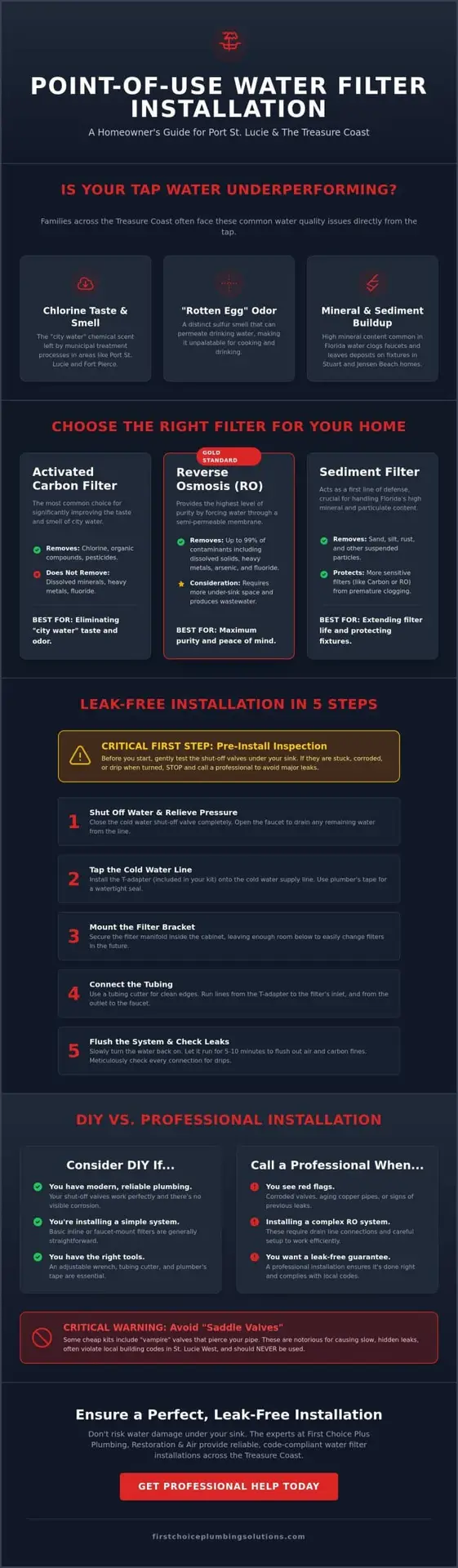
Carbon filters are the most common choice for improving taste and removing that “city water” smell. They use activated carbon to trap organic compounds and chlorine. If you want the highest purity level possible, a Reverse Osmosis (RO) system is the gold standard. RO units use a semi-permeable membrane to strip away dissolved solids and heavy metals. When exploring water quality solutions, it’s vital to match the filtration technology to the specific contaminants found in your neighborhood’s water supply.
Space and Flow Rate Considerations
Florida-style cabinetry can be deceptively tight. Before you buy a system, measure the clearance under your sink, especially if you already have a garbage disposal or a deep-basin sink installed. You also need to check the flow rate, measured in gallons per minute (GPM). A filter with a low GPM might purify your water effectively, but it will turn your kitchen faucet into a slow trickle. Aim for a system that balances high-grade filtration with the water pressure you need for efficient cooking and cleaning.
Step-by-Step Point of Use Water Filter Installation Guide
Before you begin your point of use water filter installation, gather your essential tools. You will need an adjustable wrench, a tubing cutter for clean edges, a small bucket to catch residual water, and plumber’s tape to ensure watertight seals. The most critical step happens before you even open the filter box: the pre-install inspection. In many older Port St. Lucie homes, the angle stops (the shut-off valves under your sink) can become brittle or “frozen” due to mineral buildup. Test these valves gently. If they don’t turn easily or if they begin to drip when touched, you may need professional plumbing repairs before proceeding with the filter setup.
Once you’ve confirmed your plumbing is sound, follow this five-step process:
- Shut off the water: Close the cold water angle stop completely and open the faucet to bleed off pressure.
- Tap the line: Install the T-adapter provided with your kit onto the cold water supply line.
- Mount the bracket: Secure the filter manifold to the side of the cabinet, ensuring enough clearance for future filter changes.
- Connect the tubing: Run the lines from the adapter to the filter inlet and from the outlet to your dedicated faucet or existing tap.
- Flush the system: Turn the water back on slowly and run it for several minutes to clear out carbon fines and air bubbles.
A vital warning for Treasure Coast homeowners: never use “saddle valves” that come in some cheap kits. These “vampire” valves pierce a hole in your pipe and are notorious for causing slow, hidden leaks that rot kitchen cabinets. They often violate local building codes in St. Lucie West and surrounding areas because they are prone to failure.
Preparing Your Sink and Plumbing Lines
Clear out the entire space under your sink to give yourself room to work. Identify the cold water line by feeling the pipes while the hot water is running; the cold one will stay chilled. When installing the T-adapter, use two wrenches. Use one to hold the valve steady and the other to tighten the nut. This prevents you from accidentally twisting and snapping the supply line, a common mishap in older homes with copper or PEX piping.
Mounting and Tubing Management
Position the filter housing so there is no tension on the plastic connections. If you are installing an RO system, refer to this EPA guide to POU reverse osmosis systems to understand how the drain line and storage tank interact. When using push-to-connect fittings, ensure the tubing is cut perfectly square and pushed past the internal O-ring. A common mistake is stopping at the first sign of resistance, which leads to a “midnight flood” once the system reaches full pressure.
DIY vs. Professional Installation: Ensuring Long-Term Performance
Deciding between a DIY project and calling in an expert often comes down to the condition of your existing pipes. While a handy homeowner can technically manage a basic point of use water filter installation, certain “Red Flags” demand a professional plumbing repair before you even open the filter kit. If you spot green oxidation on copper lines or brittle PEX connections, which are common in many older Treasure Coast neighborhoods, a simple turn of a wrench can lead to a snapped pipe. Professional installation provides a steady hand and ensures that your manufacturer’s warranty remains valid, as many high-end brands require certified setup for coverage. For our neighbors in Land O’ Lakes, our team provides expert plumbing support for these installations, though please note this location focuses exclusively on plumbing services.
Maintenance Tips for Florida Homeowners
Florida’s humidity and high water demand often mean your filters work harder than the national average. You should check your cartridges every three to six months rather than waiting for the full year. To prevent bacterial growth inside the housing, sanitize the system with a mild, food-grade solution during every filter change. This step is vital in our warm climate where microorganisms can thrive in stagnant water lines.
Signs Your Installation Needs a Professional Eye
Keep a close watch for persistent slow drips, a sudden drop in water pressure, or strange vibrating noises when the tap is running. These symptoms usually point to an air gap issue or a failing connection that could lead to water damage. If you discover that your under-sink plumbing is too corroded to support new fittings, it might be time to consider whole house repiping. This ensures your home’s entire infrastructure is sound before you invest in localized filtration.
If you’re ready to upgrade your water quality but want to avoid the risk of a DIY mishap, we are here to help. Our team can ensure your system is installed correctly the first time. Contact First Choice Plus Plumbing & Air today to schedule your service and enjoy the peace of mind that comes with professional workmanship.
Enjoy Cleaner Water in Your Florida Home
Securing high-quality drinking water for your family starts with understanding your home’s unique needs. Whether you choose a robust reverse osmosis system or a high-capacity carbon filter, a successful point of use water filter installation ensures that every glass of water is crisp and free from local contaminants. Remember to inspect your shut-off valves and clear enough workspace before starting. If your pipes show signs of age or corrosion, calling in a professional is the best way to prevent unexpected leaks and protect your investment. This small upgrade shields your fixtures from sediment and improves the daily experience of living on the Treasure Coast.
At First Choice Plus Plumbing & Air, we’ve been locally owned and operated since 2007. We provide transparent, upfront pricing and 24/7 emergency support for our neighbors throughout Port St. Lucie, Stuart, and Fort Pierce. If you’re ready to upgrade your tap, get expert water filter installation in Port St. Lucie today. Our team is ready to help you achieve the clean, reliable water your home deserves. Take the next step toward a healthier household with confidence and professional peace of mind.
Frequently Asked Questions
Do I need a plumber to install an under-sink water filter?
While many kits are marketed as DIY-friendly, hiring a professional is recommended if your under-sink plumbing is older or involves complex connections. A licensed plumber ensures that your point of use water filter installation meets local Florida building codes and doesn’t stress existing copper or PEX lines. This prevents the slow, hidden leaks that often occur when homeowners accidentally over-tighten plastic fittings or use improper adapters on aged valves.
How much does a point of use water filter installation typically cost in Florida?
The total investment depends on the complexity of the filtration system you choose and the current state of your kitchen plumbing. Factors such as whether you need a dedicated faucet hole drilled through granite or if your shut-off valves need replacement will influence the final price. It is always best to check with a local service provider for a transparent quote that accounts for your home’s specific requirements and any necessary permits.
Will an under-sink filter reduce my water pressure significantly?
You might notice a minor drop in pressure, but a correctly sized system should not disrupt your daily routine. Most modern filters are designed to maintain a functional flow rate, often measured in gallons per minute (GPM). If you experience a major loss in pressure, it often indicates that the filter is clogged with Florida sediment or that the system was not sized correctly for your faucet’s specific demand.
How often should I change the filters in my Treasure Coast home?
Most homeowners should replace their filter cartridges every six to twelve months, though our local water conditions might shorten this window. High levels of chlorine and sediment in areas like Fort Pierce and Jensen Beach can saturate filters faster than the manufacturer’s general estimate. Monitoring the taste of your water and the flow rate will help you determine the best schedule for your specific neighborhood and water usage habits.
What happens if I don’t flush the filter after installation?
Skipping the flushing process can lead to bitter-tasting water and carbon “fines” or black specks appearing in your first few glasses. Flushing also removes trapped air from the system, which prevents “sputtering” at the faucet and protects the filter membrane from premature wear. It is a simple but vital step that ensures your point of use water filter installation provides the high-quality results you expect from the very first drop.
Can I install a point of use filter on my own if I have a tankless water heater?
Yes, you can install these filters regardless of your water heater type because the filter typically connects only to the cold water supply line at the sink. Since tankless systems are sensitive to mineral buildup, having a filter at the point of use won’t interfere with the heater’s operation. If you are also considering a whole-house solution to protect your tankless unit, a professional can help you coordinate both systems for maximum efficiency and longevity.

Article by
Written by First Choice Plus Plumbing & Air Team
This article was created by the team at First Choice Plumbing Solutions, a licensed and experienced plumbing and HVAC company serving Port St. Lucie, Land O’ Lakes, and surrounding areas.
Our team specializes in plumbing and air conditioning services, including drain cleaning, leak detection, water heater repair and installation, AC repair, maintenance, and system installations. Our content is based on real-world experience and the common issues we solve for homeowners and businesses every day.
We aim to provide accurate, helpful, and easy-to-understand information so you can make informed decisions about your plumbing and HVAC needs.
If you need reliable, professional service, First Choice Plumbing Solutions is here to help.
Disclaimer
Disclaimer: The information provided in this article is for general informational purposes only and does not constitute professional plumbing or HVAC advice. Every situation is different, and readers should consult a licensed professional for proper diagnosis and repair. First Choice Plus Plumbing & Air is not liable for any damages or losses resulting from the use of this information.