
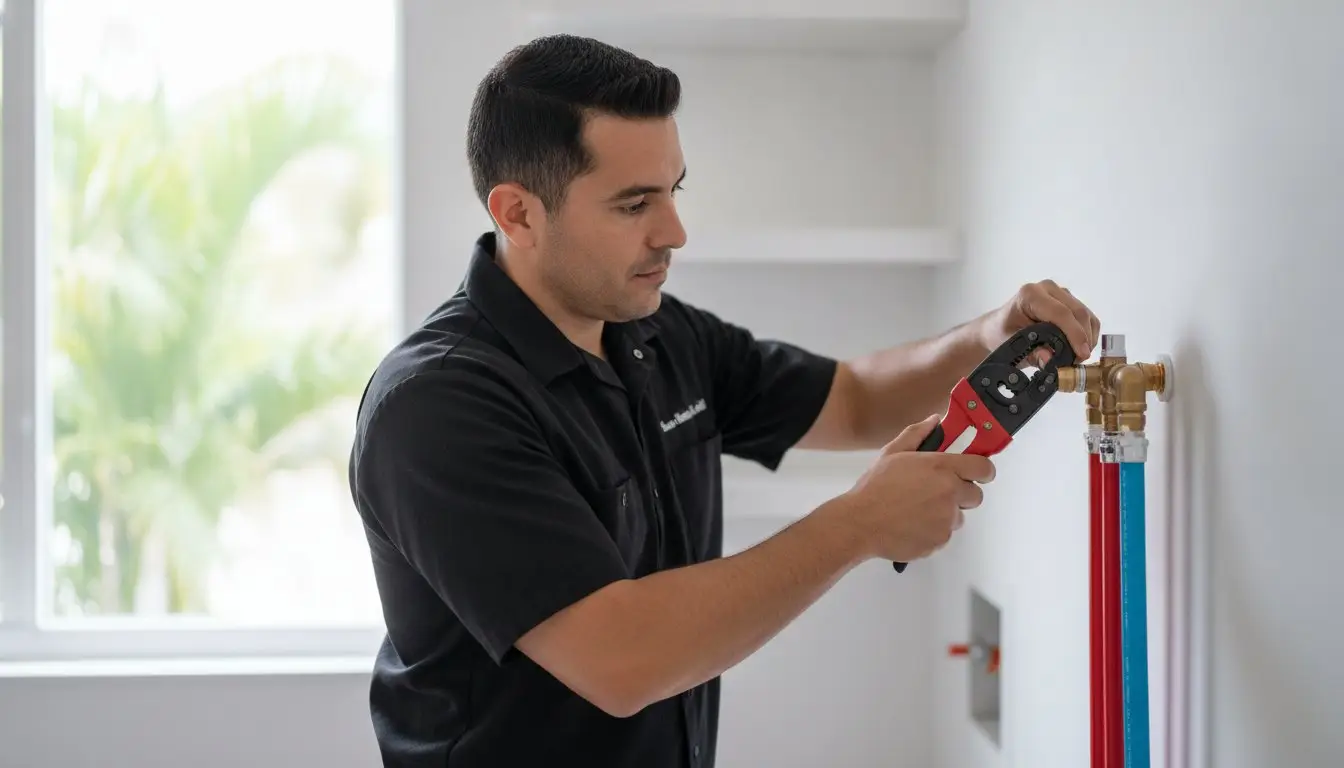
What if the most important decision you make for your home’s health isn’t the water filter you buy, but the pipes you choose to install? If you’ve spent any time researching plumbing online, you’ve likely seen the heated debates about plastic versus copper. It’s completely normal to feel uneasy when you hear conflicting reports about chemical leaching or that strange “plastic” taste that can follow a new installation. You want a home that’s safe, and that starts with the water running through your kitchen and bathroom taps in Port St. Lucie or Fort Pierce.
One of the most common questions we hear from our neighbors is is PEX piping safe for drinking water, especially given our unique local conditions. This 2026 guide will clear up the confusion by looking at the latest safety standards and how PEX performs against the Treasure Coast’s hard water. We will dive into the facts about chemical leaching, compare PEX to traditional materials, and provide a clear recommendation based on the current Florida Building Code so you can move forward with your repiping project with total confidence.
Key Takeaways
- Understand the rigorous NSF/ANSI 61 standards that certify PEX for potable water use and prevent chemical leaching into your home.
- Find out why is PEX piping safe for drinking water even when exposed to the high chlorine levels often found in Port St. Lucie municipal water.
- See how PEX-a, PEX-b, and PEX-c differ in their ability to withstand the intense heat and humidity common in Treasure Coast attics.
- Compare the long-term health profiles of plastic and copper, including how each material resists bacteria and mineral buildup.
- Get an expert perspective on how the 2026 building code updates affect your choice for a safe, reliable whole-house repipe.
Understanding PEX Safety Standards and Material Composition
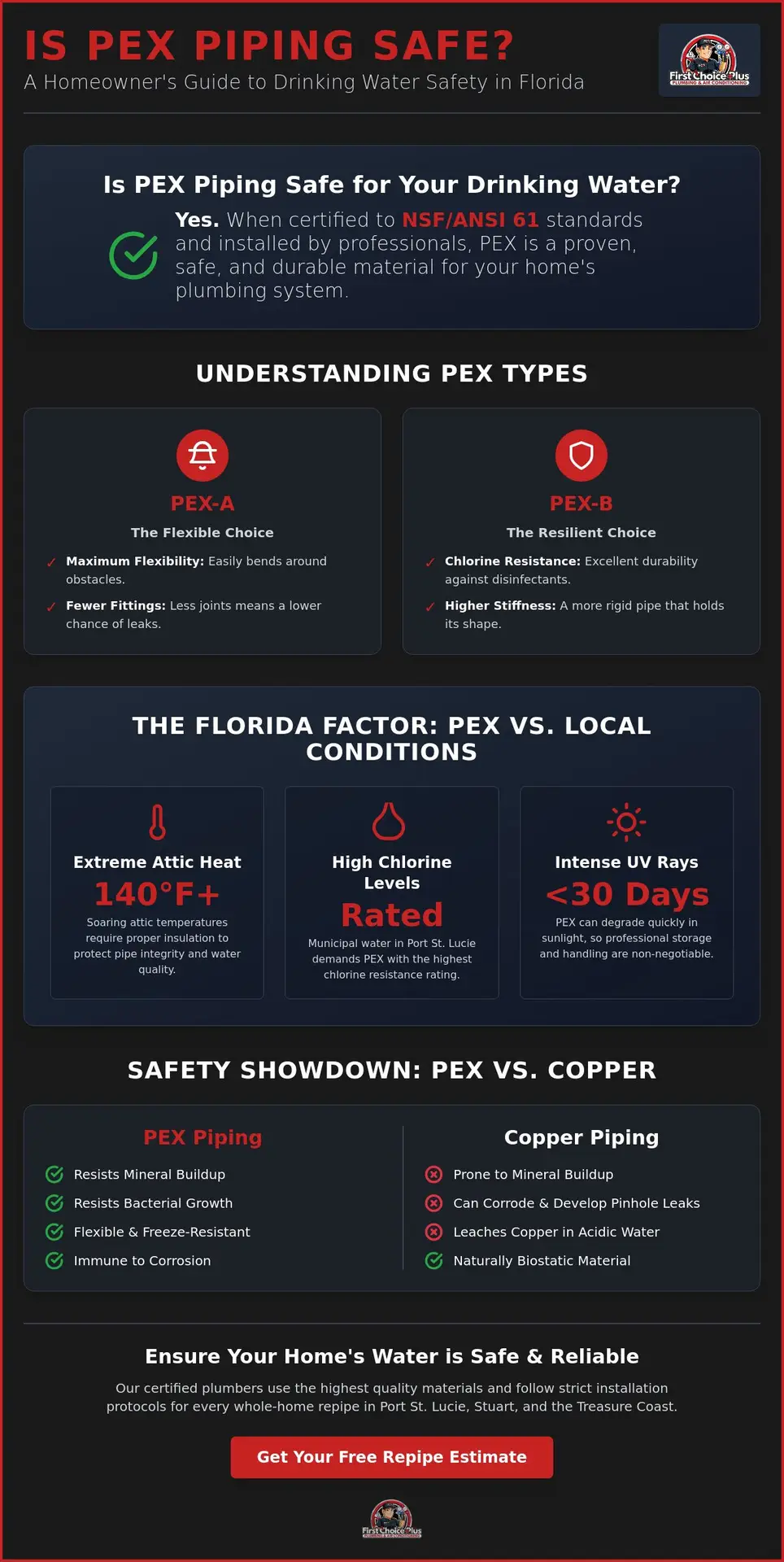
Determining if is PEX piping safe for drinking water starts with understanding its molecular structure. Cross-linked polyethylene (PEX) is a durable plastic created by bonding polyethylene molecules together. This process creates a material that withstands high temperatures and pressure far better than standard plastic. In 2026, the primary question for homeowners in Port St. Lucie isn’t just about durability, but chemical purity. PEX is made from high-density polyethylene (HDPE), which means it naturally avoids the endocrine-disrupting chemicals like Bisphenol A (BPA) found in other plastics. NSF/ANSI 61 serves as the industry’s regulatory benchmark for leaching and health effects in 2026, ensuring that every pipe meets strict safety criteria before it reaches your tap.
The Science of Chemical Leaching
The science of chemical leaching reveals that most concerns stem from the “leaching window.” This is a short period right after installation when new pipes might release trace levels of volatile organic compounds (VOCs). Modern manufacturing techniques have significantly improved this process, virtually eliminating the “plastic” taste or odor found in older versions. It is helpful to remember that every material, including copper, has leaching potential depending on the acidity of your local water supply. We ensure every system is thoroughly flushed to minimize any initial impact on water quality.
PEX-a vs. PEX-b: Which is safer for your home?
Choosing between PEX-a and PEX-b often comes down to the layout of your Fort Pierce home. PEX-a is created through a chemical cross-linking process that makes it incredibly flexible. This flexibility allows for fewer joints and fittings, which are the most common points for leaks or metal leaching from connectors. PEX-b is manufactured using a steam or moisture process, resulting in a stiffer pipe that offers excellent resistance to chlorine. Both types are certified safe for potable water. You can explore how these materials impact your project in our whole house repiping guide.
PEX in Florida: Addressing Chlorine, Heat, and Local Water Quality
Florida’s climate presents a unique set of challenges for any plumbing material. When homeowners ask is PEX piping safe for drinking water, we have to look closely at the “Florida Factor.” In cities like Port St. Lucie and Jensen Beach, attic temperatures can easily soar past 140 degrees during the summer. This intense heat can affect water quality if the pipes aren’t handled correctly. While PEX is rated for high temperatures, stagnant water sitting in a hot attic for hours can lead to the “plastic” taste some residents report. It’s also vital to protect the material before it even enters your home. UV rays from the relentless Florida sun can degrade PEX in as little as 30 days, so we ensure all materials are stored in shaded, climate-controlled environments before installation.
The Role of Chlorine in Pipe Degradation
Municipal water treatment in areas like St. Lucie West and Traditions often relies on high chlorine levels to keep water safe. However, excessive chlorine can be tough on plumbing. Over time, it can oxidize PEX-b pipes, potentially making them brittle or causing micro-fissures. To combat this, we only use PEX with a “5” rating for chlorine resistance, which is the highest industry standard available in 2026. If you want the ultimate protection for your family, consider adding water quality solutions like a whole-home carbon filter. These systems remove chlorine at the main shut-off, protecting both your health and the lifespan of your new pipes.
Installation Best Practices in the Treasure Coast
A safe plumbing system depends entirely on the quality of the installation. In Stuart and Fort Pierce, we follow strict protocols to prevent the issues highlighted in Purdue University research on PEX, which linked odors and chemical leaching to improper handling and extreme environmental exposure. We recommend insulating PEX lines in Florida attics to maintain stable water temperatures and minimize heat-related leaching. For residents near our Land O’ Lakes location, we offer these same specialized plumbing services to ensure your system is built to last. Before you start a repipe, always check your local water report for chlorine and pH levels to ensure you’re choosing the right grade of material for your specific neighborhood.
PEX vs. Copper: A Safety and Longevity Comparison
Choosing between PEX and copper often feels like a choice between modern efficiency and traditional reliability. While copper is often viewed as the “natural” metal option, it isn’t without its own health risks. In the Treasure Coast, our unique water chemistry can lead to internal corrosion and pinhole leaks. As copper pipes age and thin, they can leach heavy metals into your supply. Conversely, the question of whether is PEX piping safe for drinking water usually centers on VOCs. However, PEX has a distinct advantage regarding hygiene. Its incredibly smooth interior surface resists biofilm and bacterial growth far better than the pitted, oxidized interior of an old copper pipe. In Florida’s climate, both materials offer a respectable lifespan of 40 to 50 years, but PEX often wins on long-term performance in our hard water conditions.
When to Choose PEX for Your Repipe
PEX is particularly effective for homes in Jensen Beach and Palm City that are vulnerable to slab leaks. Because the material is flexible, it can be fished through walls and ceilings without the need to jackhammer your concrete floors. This makes repipe and repair services significantly less invasive and more affordable than traditional metal piping. Today, PEX is the industry standard for Florida residential plumbing because it balances safety, cost, and durability against the state’s specific environmental stressors.
The Final Verdict: Is it Safe?
The consensus among health organizations and plumbing experts is clear. Provided the material is NSF-certified and professionally installed, is PEX piping safe for drinking water? The answer is a resounding yes. Safety isn’t just about the pipe itself; it’s about the quality of the entire system. We recommend consulting with a leak detection expert to evaluate your current plumbing and determine the best path forward. Ultimately, a safe home depends on choosing the right material for your local water chemistry and ensuring the installation is handled by a steady, experienced hand.
Secure Your Home’s Water Future
Choosing the right plumbing material is about more than just cost; it is about the long-term health and security of your family. As we have explored, the answer to whether is PEX piping safe for drinking water depends heavily on the quality of the material and the expertise of the installer. By selecting NSF-certified pipes with high chlorine resistance and ensuring they are protected from Florida’s intense attic heat, you can enjoy a reliable system that resists the pinhole leaks and mineral buildup common in aging copper lines.
Our team of licensed and insured Florida plumbers brings decades of experience to every high-stakes repiping and leak detection project. We understand the unique water chemistry of the Treasure Coast and provide 24/7 emergency support to keep your home running smoothly. If you are ready to upgrade your home’s plumbing, contact us for a whole-house repipe consultation in Port St. Lucie today. We are here to provide the steady hand and technical authority you need to protect your property for years to come.
Frequently Asked Questions
Does PEX piping make water taste like plastic?
Most homeowners won’t notice a change in flavor, though a faint “plastic” taste can occur during the first few days after a new installation. This happens during the initial leaching window when trace compounds are first exposed to water. In Florida, this is often exacerbated by high attic temperatures, which is why we emphasize proper insulation and a thorough system flush to ensure your water tastes clean from day one.
Is PEX-a safer than PEX-b for drinking water?
Both types are equally safe and meet the same rigorous NSF/ANSI 61 health standards for potable water. The choice often depends on your specific home layout rather than a safety difference. When evaluating if is PEX piping safe for drinking water, remember that PEX-a offers more flexibility and fewer joints, while PEX-b provides superior resistance to the high chlorine levels found in many Treasure Coast municipal water systems.
Can rodents chew through PEX pipes in Florida?
Yes, rodents can chew through PEX pipes because the material is a flexible plastic rather than a hard metal. While this isn’t a frequent problem for most residents in Port St. Lucie or Jensen Beach, roof rats and mice can cause significant damage if they gain access to your attic or crawlspace. We recommend ensuring your home’s exterior is well-sealed and maintaining regular pest control to prevent any physical damage to your plumbing system.
How long does PEX piping last in a Florida home?
PEX piping typically lasts between 40 and 50 years when installed correctly and protected from environmental stressors. Its durability in Florida is excellent because it doesn’t corrode or develop pinhole leaks like copper does when exposed to hard water. To get the maximum lifespan out of your pipes, it’s vital to keep them away from direct sunlight and ensure they aren’t subjected to temperatures that exceed their rated capacity.

Article by
Written by First Choice Plus Plumbing & Air Team
This article was created by the team at First Choice Plumbing Solutions, a licensed and experienced plumbing and HVAC company serving Port St. Lucie, Land O’ Lakes, and surrounding areas.
Our team specializes in plumbing and air conditioning services, including drain cleaning, leak detection, water heater repair and installation, AC repair, maintenance, and system installations. Our content is based on real-world experience and the common issues we solve for homeowners and businesses every day.
We aim to provide accurate, helpful, and easy-to-understand information so you can make informed decisions about your plumbing and HVAC needs.
If you need reliable, professional service, First Choice Plumbing Solutions is here to help.
Disclaimer
Disclaimer: The information provided in this article is for general informational purposes only and does not constitute professional plumbing or HVAC advice. Every situation is different, and readers should consult a licensed professional for proper diagnosis and repair. First Choice Plus Plumbing & Air is not liable for any damages or losses resulting from the use of this information.