
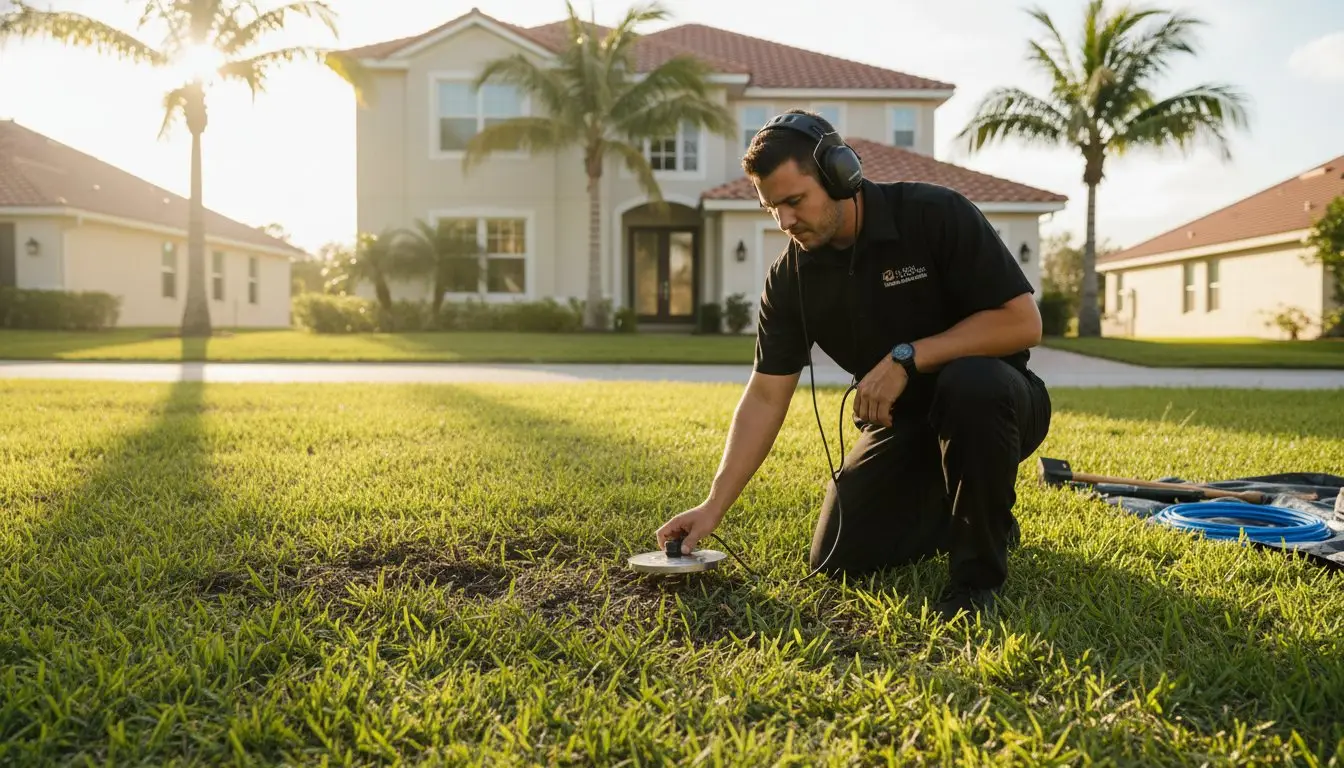
What if the most expensive problem in your home is one you can’t even see? For many homeowners in Port St. Lucie and Fort Pierce, a skyrocketing water bill is the first and only warning that a pipe has failed beneath the soil. You might find yourself staring at a damp patch in the grass, wondering if it’s just a result of the latest tropical downpour or a sign of something much worse. Learning how to tell if you have a water leak underground is the first step in protecting your property from foundation damage and the stress of wasted utility costs.
We know how unsettling it is to face an invisible plumbing emergency, especially when you’re worried about the potential costs of slab repairs. You want clear answers without having to tear up your yard or your floors just to find a pipe. That’s why we’ve put together this guide to help you confirm your suspicions with certainty. You’ll learn the silent warning signs unique to our sandy Florida terrain and a simple 30 minute meter test to verify a leak’s existence. We will also explain the key differences between a main line break and a slab leak, giving you the professional insight needed to choose the right path forward.
Key Takeaways
- Identify subtle warning signs in your landscape, such as unusually lush grass or persistent wet spots that don’t match recent rainfall patterns.
- Master a simple, 30-minute meter test to learn how to tell if you have a water leak underground without any digging or specialized equipment.
- Discover the difference between common yard leaks and more complex slab leaks to better understand the potential risks to your home’s foundation.
- Learn how professional non-invasive tools like acoustic sensors and thermal imaging pinpoint the exact source of a leak to prevent unnecessary property damage.
- Understand when to stop troubleshooting and call a local Treasure Coast expert to protect your home from skyrocketing utility bills and water damage.
Common Signs of an Underground Water Leak in Your Florida Yard
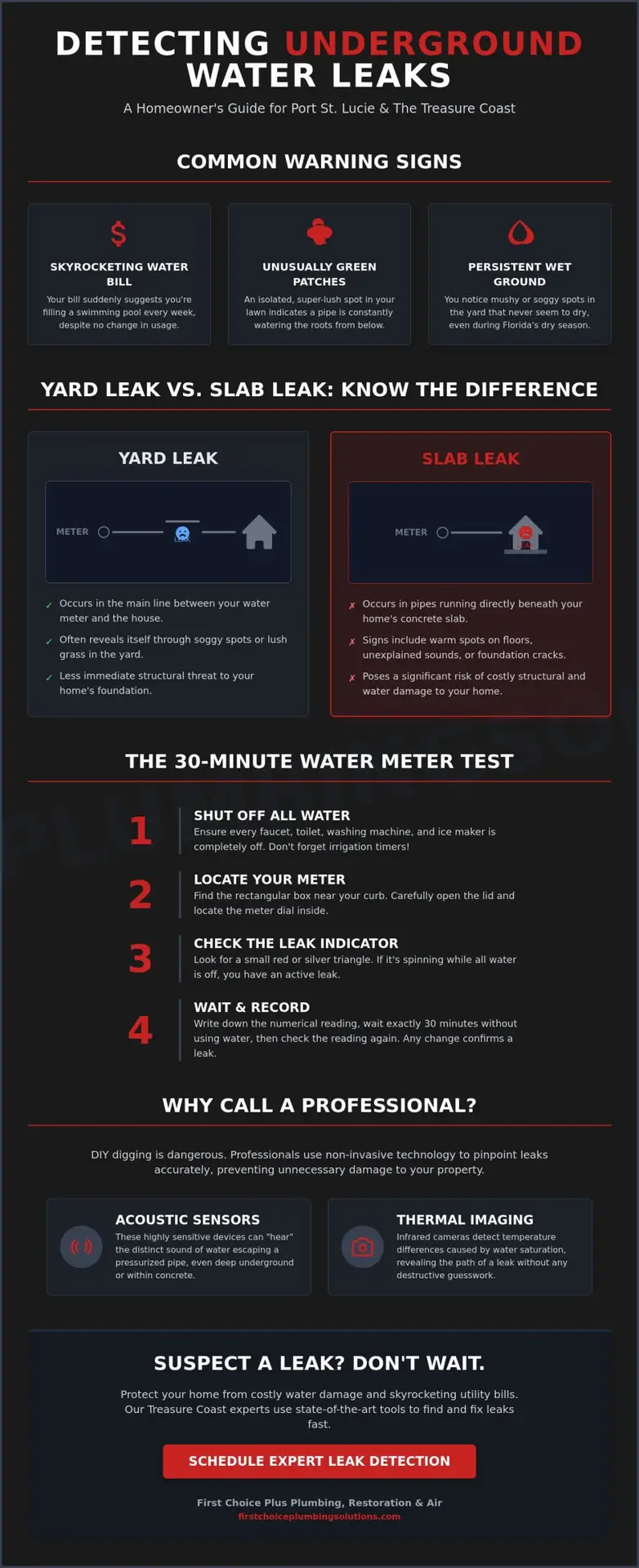
Finding an unexpected spike in your Port St. Lucie or Stuart water utility bill is often the first clue that something is wrong. If your usage hasn’t changed but the bill suggests you’re filling a swimming pool every week, it’s time to investigate. Walk your property and look for patches of grass that appear significantly greener or grow faster than the rest of the lawn. While lush grass is usually a goal, an isolated super-green spot often indicates that a pipe is fertilizing the roots with constant moisture from below.
In some cases, you might notice persistent mushy or soggy spots in the yard, even during the dry season. Stand still and listen for the faint sound of rushing or hissing water while all indoor faucets are closed. If you hear it, you likely have a significant break. Understanding how to tell if you have a water leak underground requires paying close attention to these subtle environmental shifts before they turn into a major property emergency.
Slab Leaks vs. Yard Leaks: Why the Difference Matters
Most homes in Florida use slab-on-grade construction. This means your plumbing runs directly beneath a thick concrete floor. A yard leak occurs in the main line between your meter and the house. A slab leak happens under your actual living space. Slab leaks are particularly destructive. They can cause warm spots on your tile or cracks in your baseboards. Because these pipes are encased in concrete, homeowners often need leak detection experts to identify the exact point of failure. These pros use various professional leak detection methods to find the problem without jackhammering your entire floor.
Florida Soil and the ‘Invisible’ Leak
The sandy soil across the Treasure Coast presents a unique challenge. Unlike clay-heavy soils that push water to the surface, our sand allows water to drain straight down. This can create an invisible leak where no puddles ever form. Instead, look for a sudden increase in sinkholes or small potholes in your yard. As water washes away the subsoil, the ground loses its structural integrity. If you notice the earth dipping near your main line, it’s a major red flag. You need to know how to tell if you have a water leak underground before the ground gives way beneath your feet.
How to Confirm an Underground Leak: The 30-Minute Water Meter Test
Once you’ve spotted surface signs like soggy grass or a high bill, you need a concrete way to verify your suspicions. The most reliable DIY method is the 30-minute meter test. Start by ensuring every water-consuming device in your home is completely off. This includes toilets, faucets, washing machines, and often-overlooked items like automatic ice makers or programmed irrigation timers. If any water is running, the test won’t be accurate.
Next, head out to the street. In Port St. Lucie and surrounding Treasure Coast neighborhoods, your water meter is typically housed in a rectangular concrete or plastic box near the curb. Open the lid carefully, as these boxes often attract local wildlife like spiders or frogs. Inside, you’ll see the meter dial. Many modern meters feature a dedicated leak indicator, which is usually a small, fast-spinning red or silver triangle. If that triangle is moving while your house is shut down, you have an active leak. To be thorough, record the current numerical reading, leave the water off for exactly 30 minutes, then check the numbers again. This is the simplest way to check your water meter and master how to tell if you have a water leak underground.
Interpreting Your Meter Results
If the indicator spins rapidly, you likely have a major pipe burst. If the change is subtle, you might have a slow leak. A slow leak is one that consumes less than five gallons per hour, yet even these can cause significant structural damage over time. To isolate the location, turn off the main water valve to your house. If the meter stops spinning, the leak is inside your home or under the slab. If it keeps moving, the leak is in the service line between the meter and the house. If the meter confirms your fears, our team offers specialized plumbing leak detection and repair to resolve the issue quickly.
Safety First: What NOT to Do
It’s tempting to grab a shovel and start hunting for the wet spot, but DIY digging is dangerous in Florida’s utility-heavy suburbs. Never dig without calling 811 first. You risk striking buried electrical lines or gas pipes, which creates a much larger emergency than a water leak. Professional equipment allows us to find the pipe without unnecessary excavation, keeping your yard and your family safe.
Professional Leak Detection: Why Specialized Tools are Necessary
Confirming a leak with a meter test is only the first step. The real challenge is pinpointing the exact location without turning your yard or living room into a construction zone. Professional plumbers use non-invasive technology to find the source with surgical precision. Acoustic ground microphones allow experts to listen for the specific frequency of pressurized water escaping a pipe, even through thick concrete slabs. Thermal imaging cameras provide another layer of insight by identifying temperature variances that signal moisture accumulation behind walls or under floors.
For the most elusive issues, we use tracer gas detection. This involves introducing a safe, pressurized gas into the plumbing system and using sensors to find where it escapes. The cost-benefit of these methods is clear. While a “guess-and-check” approach involves destructive digging and high restoration costs, specialized tools save your property. Knowing how to tell if you have a water leak underground is useful, but professional detection ensures the fix is as localized and affordable as possible.
When to Call a Professional Plumber
If you suspect a leak is affecting your home’s foundation or if the meter test showed a rapid spin, you need immediate help. Shut off your main water valve to prevent further damage and reach out for expert assistance. We provide emergency plumbing repairs 24/7 for residents in Fort Pierce, Jensen Beach, and the surrounding areas. It’s important to remember that while our Port St. Lucie location offers both plumbing and air conditioning services, our Land O’ Lakes location specializes in plumbing only and does not handle AC work.
Long-Term Solutions: From Spot Repair to Whole House Repiping
A simple patch might solve a one-time break in a relatively new service line. However, Florida’s notoriously hard water often causes widespread corrosion in older metal pipes. If your home has a history of multiple leaks, repiping a house is frequently the more cost-effective long-term strategy. Replacing the entire system eliminates the “ticking time bomb” of aging pipes and protects your home from future underground failures. This proactive approach is often the best way to ensure the long-term safety and comfort of your family.
Protect Your Treasure Coast Home from Hidden Water Damage
Ignoring a hidden leak won’t make it go away; it only leads to higher bills and potential foundation shifts. By watching for lush grass patches and performing a 30 minute meter test, you’ve already learned the essentials of how to tell if you have a water leak underground. Early detection is your best defense against the destructive power of water in our sandy Florida soil. It’s the difference between a simple repair and a major restoration project.
If your meter confirms a problem, you don’t have to face it alone. First Choice Plus Plumbing & Air has been locally owned and operated since 2007, providing 24/7 emergency response to Port St. Lucie and the surrounding Treasure Coast. We use advanced non-invasive acoustic technology to find the exact source of your trouble without tearing up your property. We’re committed to transparency and solving your plumbing issues with minimal stress.
Schedule a Professional Leak Detection with First Choice Plus Today. You can rest easy knowing your plumbing is in the hands of neighbors who care about your comfort and safety.
Frequently Asked Questions
Can an underground water leak fix itself?
No, an underground water leak will never fix itself. Because your plumbing system is constantly under pressure, any small crack or pinhole will naturally expand over time. While sediment in the water might occasionally slow the flow temporarily, the constant pressure eventually forces the opening to grow larger. Ignoring the problem only leads to more significant soil erosion and higher repair costs down the road.
How much water can a small underground leak actually waste?
A small leak can waste a surprising amount of water, often totaling thousands of gallons per month. Even a slow leak that releases just five gallons per hour will waste 3,600 gallons in a single 30 day billing cycle. This is why learning how to tell if you have a water leak underground is so important for your wallet. These invisible leaks are one of the most common causes of unexplained utility bill spikes in Florida.
Will my homeowners insurance cover an underground water leak repair?
Homeowners insurance typically covers the damage caused by a leak, such as ruined drywall or flooring, but it rarely covers the cost of repairing the pipe itself. Most policies exclude wear and tear or gradual deterioration, which are common causes for aging Florida plumbing. You should review your policy’s specific declarations or speak with your agent to see if you have specific endorsements for service line coverage or slab leak access.
What happens if I ignore a leak under my house’s slab?
Ignoring a slab leak can lead to severe structural damage and foundation failure. As water escapes beneath your home, it washes away the supporting soil and creates voids. This process causes the concrete slab to settle or crack, which can result in shifting walls and jammed doors. Additionally, the constant moisture creates a perfect environment for mold growth and attracts wood destroying pests like termites to your home’s structure.

Article by
Written by First Choice Plus Plumbing & Air Team
This article was created by the team at First Choice Plumbing Solutions, a licensed and experienced plumbing and HVAC company serving Port St. Lucie, Land O’ Lakes, and surrounding areas.
Our team specializes in plumbing and air conditioning services, including drain cleaning, leak detection, water heater repair and installation, AC repair, maintenance, and system installations. Our content is based on real-world experience and the common issues we solve for homeowners and businesses every day.
We aim to provide accurate, helpful, and easy-to-understand information so you can make informed decisions about your plumbing and HVAC needs.
If you need reliable, professional service, First Choice Plumbing Solutions is here to help.
Disclaimer
Disclaimer: The information provided in this article is for general informational purposes only and does not constitute professional plumbing or HVAC advice. Every situation is different, and readers should consult a licensed professional for proper diagnosis and repair. First Choice Plus Plumbing & Air is not liable for any damages or losses resulting from the use of this information.