
Imagine pulling a “clean” glass out of the dishwasher only to find it covered in the same stubborn white film you saw before you installed your filtration system. In Port St. Lucie, where our local water is classified as moderately hard at 68.6 mg/L, keeping your system running is essential for protecting your pipes and appliances. If you’ve started noticing these spots or your soap isn’t lathering like it used to, you are likely wondering how to tell if my water softener needs more salt before the tank runs completely dry.
It’s common to feel a bit of “tank anxiety” when you aren’t sure if your salt levels are sufficient or if a salt bridge has formed inside the unit. You shouldn’t have to be a master plumber to keep your water feeling great. This guide provides a clear checklist of visible signs and performance indicators so you can stop the guesswork. We’ll walk you through simple DIY tests to check your levels and help you establish a maintenance schedule that gives you total confidence in your home’s water quality.
Key Takeaways
- Maintain your salt levels above the halfway mark to ensure the ion exchange process works at peak efficiency.
- Watch for performance red flags like spotty glassware, stiff laundry, or white mineral buildup on your kitchen and bathroom faucets.
- Check for salt bridges regularly, as learning how to tell if my water softener needs more salt involves looking past a hard surface crust that might hide an empty tank.
- Account for Florida’s high humidity levels, which can cause salt to “mush” or clump at the bottom of the brine tank and block the system.
- Prevent expensive repairs and resin bed fouling by refilling your system before the brine tank runs completely dry.
Visual and Performance Signs Your Water Softener Is Low on Salt
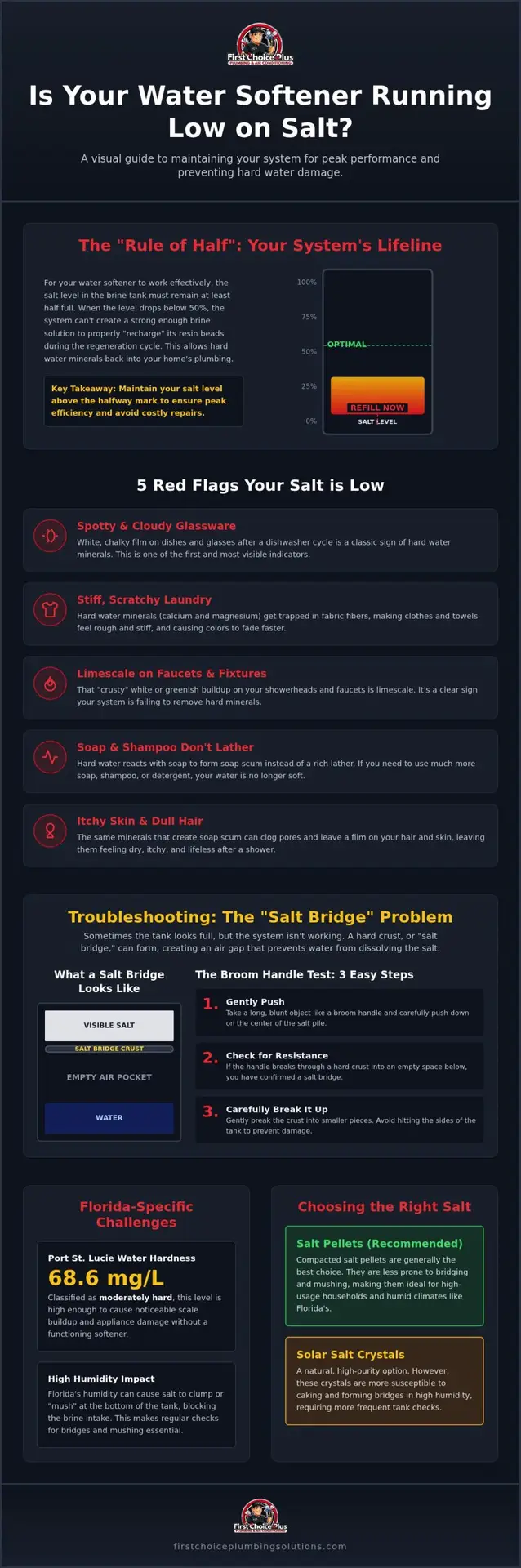
Your water softener isn’t a “set it and forget it” appliance. It relies on a specific chemical reaction to swap hard minerals for sodium ions. If you are wondering how to tell if my water softener needs more salt, start with the “Rule of Half.” For the best performance, your salt level should always stay at least half full. Once it drops below the 50% mark, the brine solution might not reach the concentration needed for the process of water softening to occur effectively during the regeneration cycle. When the salt gets too low, the resin beads inside the tank can’t be properly cleaned, meaning hard water starts flowing through your pipes again.
When salt levels dip, you will notice it in your daily chores. Your laundry might feel scratchy or stiff because calcium and magnesium are getting trapped in the fabric fibers. You might also see “crusty” white buildup on your faucets and showerheads. This is limescale; it is a clear sign your system is struggling. If your skin feels itchy or your hair feels dull after a shower, the minerals have likely returned. You can perform a simple soap lather test: if your dish soap or shampoo doesn’t produce rich, foamy bubbles like usual, your water is no longer being softened effectively.
Hard Water Symptoms in Your Treasure Coast Home
Port St. Lucie water is classified as moderately hard, sitting at about 68.6 mg/L. Without enough salt, those minerals quickly reappear in visible ways. Look for cloudy glassware coming out of the dishwasher or white, chalky scale buildup on high-end fixtures. These are more than just cosmetic issues; they indicate that hard water is beginning to take a toll on your plumbing fixtures and appliances.
Checking the Brine Tank Directly
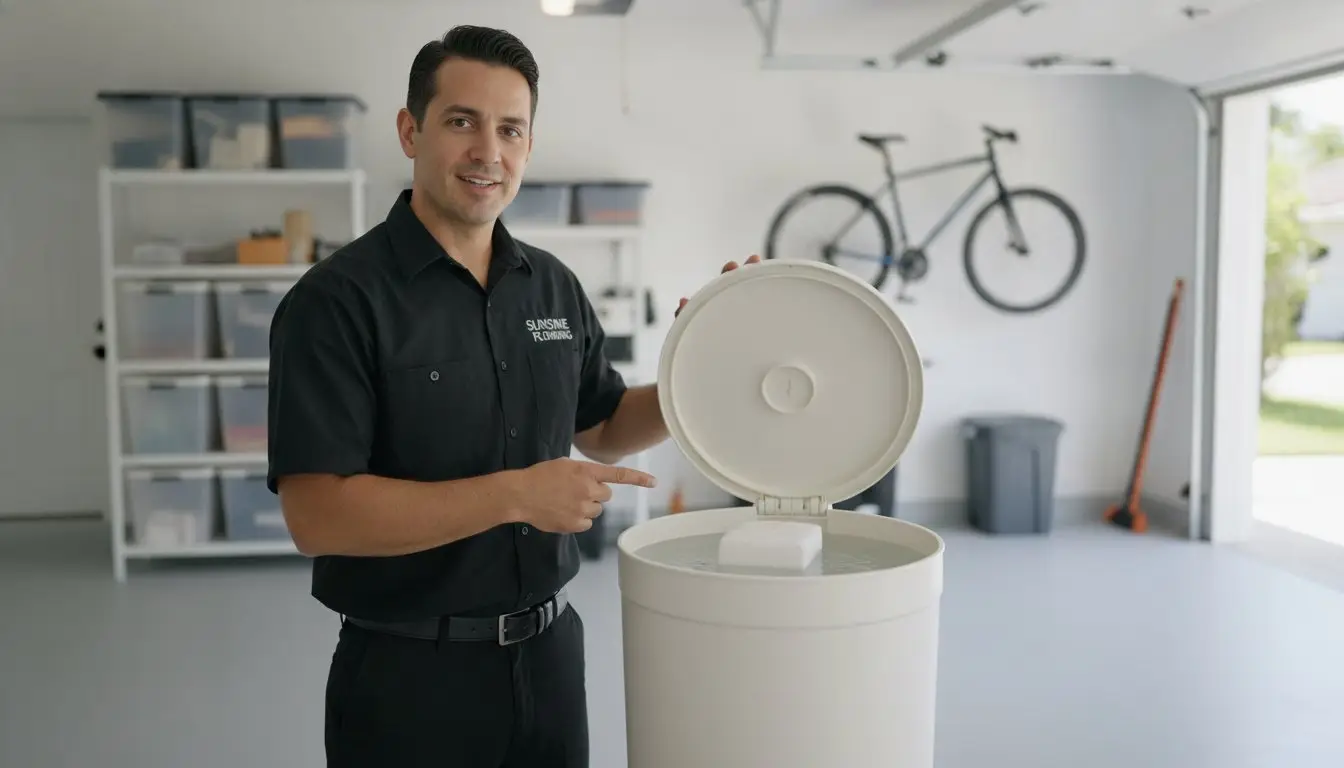
Open the lid on your brine tank once a month to inspect the levels. In most “dry” tank models, you should only see salt, not standing water. If you see water sitting above the salt pellets, you are dangerously low. In “wet” tank models, water is always present, but the salt should still be visible above the water line. If the salt is submerged or you can see the bottom of the tank, it is time to add more bags immediately to prevent a total system lapse. Understanding how to tell if my water softener needs more salt often comes down to this simple visual check.
Troubleshooting Salt Bridges and Choosing the Right Salt
Sometimes, a quick glance inside your brine tank can be deceiving. You might see what looks like a full supply of salt, but your water still feels hard. This often happens because of a “salt bridge.” This is a hard crust that forms across the tank, creating an empty pocket of air between the salt and the water. It’s a frustrating hurdle when you’re trying to figure out how to tell if my water softener needs more salt. According to the U.S. Geological Survey, water hardness is defined by the concentration of dissolved minerals, and if that water can’t reach your salt, the softening process stops completely.
Florida’s intense humidity plays a major role here. High moisture levels can cause salt to “mush” or clump together, especially at the bottom of the tank. This clumping blocks the intake and prevents the brine from circulating through the resin bed. To keep your system running smoothly in Port St. Lucie, we recommend a physical check once a month. It only takes a few minutes and saves you from the stress of unexpected hard water issues.
The Broom Handle Test for Salt Bridges
If you suspect a bridge, don’t just add more salt on top. Follow these steps to clear it safely:
- Step 1: Take a long, blunt object like a broom handle and gently push down on the surface of the salt.
- Step 2: If the salt feels like a solid shelf that won’t budge, or if the handle breaks through to a hollow space, you’ve found a bridge.
- Step 3: Carefully break the crust into smaller pieces. Be sure not to hit the sides or bottom of the brine tank to avoid damaging the unit.
Pellets vs. Crystals: Which Salt Is Best?
Choosing the right “fuel” for your system can prevent many of these headaches. Salt pellets are generally the best choice for high-usage households because they are less likely to bridge. Solar crystals are a natural alternative, but they are more prone to caking in our local climate. If you’re unsure which type fits your specific model, exploring our water quality solutions can help you find the right match for your home. If you’ve cleared a bridge and refilled your tank but still see spots on your dishes, it might be time to schedule professional plumbing repairs to ensure your system’s internal components are still functioning correctly.
Maintaining Water Quality in Port St. Lucie and the Treasure Coast
Living in Port St. Lucie or Stuart means your water likely comes from the Floridan Aquifer. This water is naturally high in calcium and magnesium because it sits in deep limestone layers. These minerals are the primary cause of hard water in our region. While knowing how to tell if my water softener needs more salt is your first line of defense, local homeowners must also understand the cost of neglect. If you allow your system to run dry, the resin beads that filter your water can become “fouled” or coated in iron and minerals. This reduces the system’s lifespan and can lead to expensive plumbing repairs that a simple bag of salt could have prevented.
A yearly professional tune-up is the best way to ensure your softener stays calibrated for your specific household size. As families grow or water usage changes, your regeneration cycle might need adjustment to stay efficient. If you’ve mastered the basics of troubleshooting salt bridges but still notice hard water symptoms, the issue might be mechanical. A professional inspection can identify if a control valve has failed or if the resin bed needs a deep chemical cleaning to restore its ion-exchange capacity.
Why Florida Hard Water Demands Consistent Maintenance
The moderately hard water in our area can quickly clog high-end appliances and showerheads if your softener fails. Over time, these minerals accumulate inside your plumbing. For those who have invested in whole house repiping, maintaining soft water is essential. It protects your new pipes from the internal scale buildup that eventually leads to low water pressure and pinhole leaks. Consistent salt checks are a small price to pay for extending the life of your home’s entire plumbing infrastructure.
When to Schedule a Professional Plumbing Inspection
If your brine tank is half full but your water remains hard, you might need a leak detection expert to ensure a hidden leak isn’t causing the system to overwork. Watch for “constant running” sounds or grinding noises coming from the softener’s head unit. These are signs of a valve failure or a motor issue rather than a salt deficiency. Understanding how to tell if my water softener needs more salt is helpful, but recognizing when the machine itself is struggling is what keeps your home’s water quality consistent year-round.
Keep Your Treasure Coast Water Soft and Clear
Maintaining your water softener doesn’t have to be a chore. By staying ahead of the “Rule of Half” and performing monthly visual checks, you can prevent mineral buildup from damaging your appliances and fixtures. Now that you know how to tell if my water softener needs more salt, you can spot performance red flags like spotty dishes or stiff laundry before they become expensive problems. Remember that Florida’s humidity often requires a closer look for salt bridges that can trick you into thinking the brine tank is full when it’s actually empty.
Since 2007, we’ve provided expert installation of custom water softener systems tailored to the unique mineral profile of Port St. Lucie. If your salt levels look fine but your water still feels hard, it might be time for a professional calibration or a resin bed cleaning. Is your water softener acting up? Contact First Choice Plus Plumbing, Restoration & Air today for expert maintenance and water quality solutions. We offer 24/7 emergency plumbing repairs to ensure your home stays protected day and night. Your family deserves the comfort of clean, soft water.
Frequently Asked Questions
How much salt should be in my water softener tank at all times?
Keep your brine tank at least half full at all times to ensure the water can reach the salt and create a proper brine solution. If the level drops below one-third, the system might not have enough sodium to clean the resin beads effectively during the regeneration cycle. Maintaining this level is the easiest way to avoid wondering how to tell if my water softener needs more salt.
Can I use regular table salt in my water softener?
No, you should never use table salt in your water softener system. Table salt is too fine and often contains additives like iodine that can clog the internal components or damage the resin bed. Always use high-quality salt pellets or solar crystals specifically designed for water softeners to ensure the ion exchange process works correctly and safely.
What happens if my water softener runs out of salt completely?
If your system runs out of salt, it will stop softening your water immediately. Hard minerals like calcium and magnesium will flow through your home’s pipes, causing scale buildup in your water heater and on your fixtures. Over time, running a system dry can lead to resin bed fouling, which often requires a professional cleaning or a full resin replacement to fix.
How often should I check the salt level in my brine tank?
Check your brine tank at least once every month to maintain consistent water quality in your Port St. Lucie home. A family of four typically uses about 9 to 10 pounds of salt per week, so a monthly inspection ensures you never fall below the halfway mark. Regular checks also help you catch salt bridges or “mushing” caused by local humidity before they disrupt your service.
Why is there water in my salt tank but no salt?
This usually means your salt level has dropped too low to be visible above the water line. While some “wet” tank models always have standing water, you should still see salt pellets stacked above that water level. If you see plenty of salt but the water isn’t reaching it, you likely have a salt bridge that needs to be broken up as described in our troubleshooting section.
Does a water softener affect my water bill if it runs out of salt?
An empty salt tank can indirectly increase your utility costs. When hard water returns, it creates mineral scale inside your water heater, forcing the unit to work harder and use more energy to heat the same amount of water. While the softener’s own water usage won’t change much, the loss of efficiency in other appliances can lead to higher monthly expenses. Knowing how to tell if my water softener needs more salt helps keep your entire plumbing system running efficiently.

Article by
Written by First Choice Plus Plumbing & Air Team
This article was created by the team at First Choice Plumbing Solutions, a licensed and experienced plumbing and HVAC company serving Port St. Lucie, Land O’ Lakes, and surrounding areas.
Our team specializes in plumbing and air conditioning services, including drain cleaning, leak detection, water heater repair and installation, AC repair, maintenance, and system installations. Our content is based on real-world experience and the common issues we solve for homeowners and businesses every day.
We aim to provide accurate, helpful, and easy-to-understand information so you can make informed decisions about your plumbing and HVAC needs.
If you need reliable, professional service, First Choice Plumbing Solutions is here to help.
Disclaimer
Disclaimer: The information provided in this article is for general informational purposes only and does not constitute professional plumbing or HVAC advice. Every situation is different, and readers should consult a licensed professional for proper diagnosis and repair. First Choice Plus Plumbing & Air is not liable for any damages or losses resulting from the use of this information.