
You’re lying in bed at 2 AM, and that rhythmic drip from the kitchen sink sounds like a ticking clock on your monthly water bill. It’s a common frustration for many Florida homeowners, and the urge to stop the noise is often met with the fear of making things worse. You know you need to stop the flow, but you don’t want to shut down the main valve and leave your family without water for showers or toilets. Learning how to shut off water to a single leaking faucet is the fastest way to regain your peace of mind without disrupting the entire household.
We understand that a stuck or corroded valve under a sink can be intimidating. You shouldn’t have to worry about causing a flood just to stop a simple drip. This guide will walk you through locating your fixture’s isolation valves and operating them safely, even if they haven’t been touched in years. We’ll cover how to identify different valve types, the right way to apply pressure to a stubborn handle, and the clear warning signs that tell you it’s time to call in a professional for an emergency repair. By the end, you’ll have the steady hand needed to handle this common maintenance task with confidence.
Key Takeaways
- Locate the specific isolation valves, also known as angle stops, tucked away under your kitchen or bathroom cabinets to isolate the problem.
- Follow our safe, step-by-step method on how to shut off water to a single leaking faucet without cutting the supply to the rest of your home.
- Learn the proper technique for turning stubborn handles to avoid snapping internal stems or causing a major plumbing emergency.
- Understand how Florida’s hard water causes mineral buildup and why you should never use a pipe wrench on a seized shut-off valve.
- Recognize the warning signs that indicate a simple drip is actually a symptom of high home water pressure that requires professional attention.
Locating the Isolation Valves: Where to Find Your Faucet Shut-Off
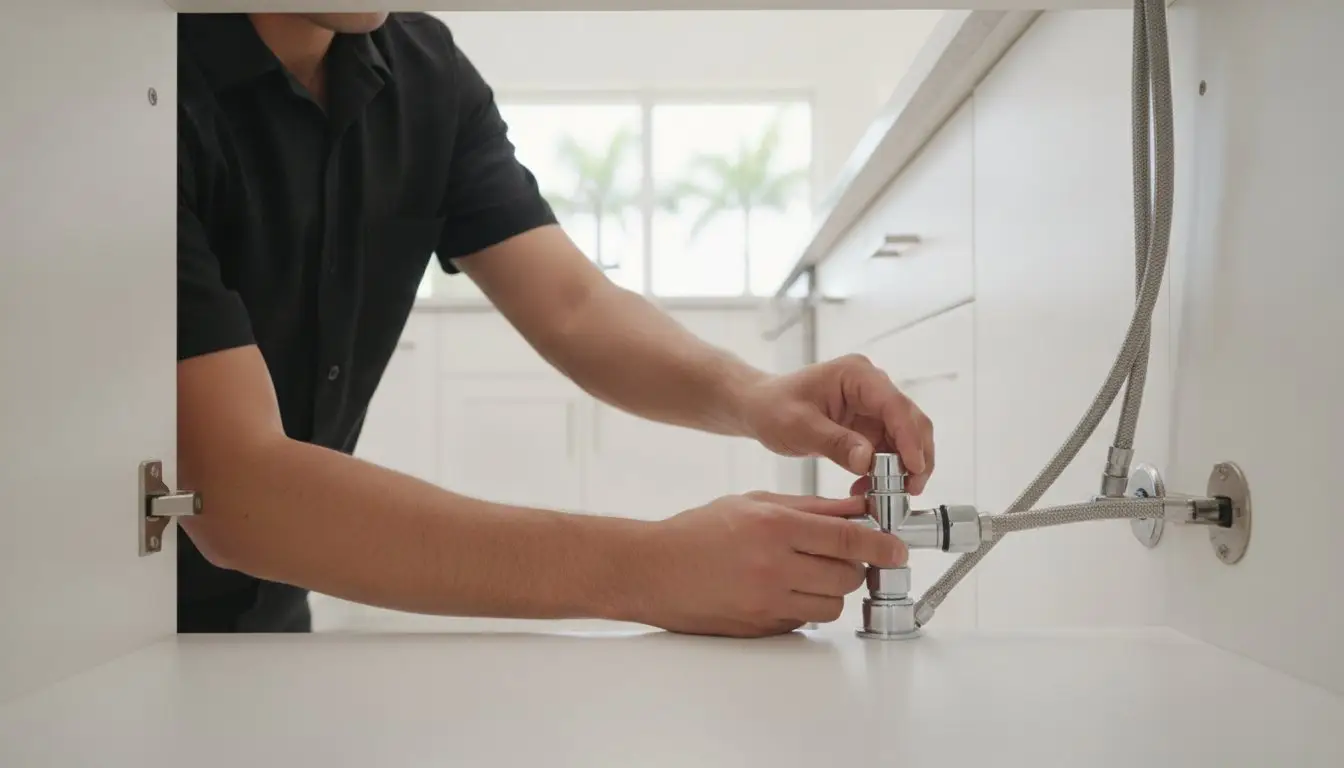
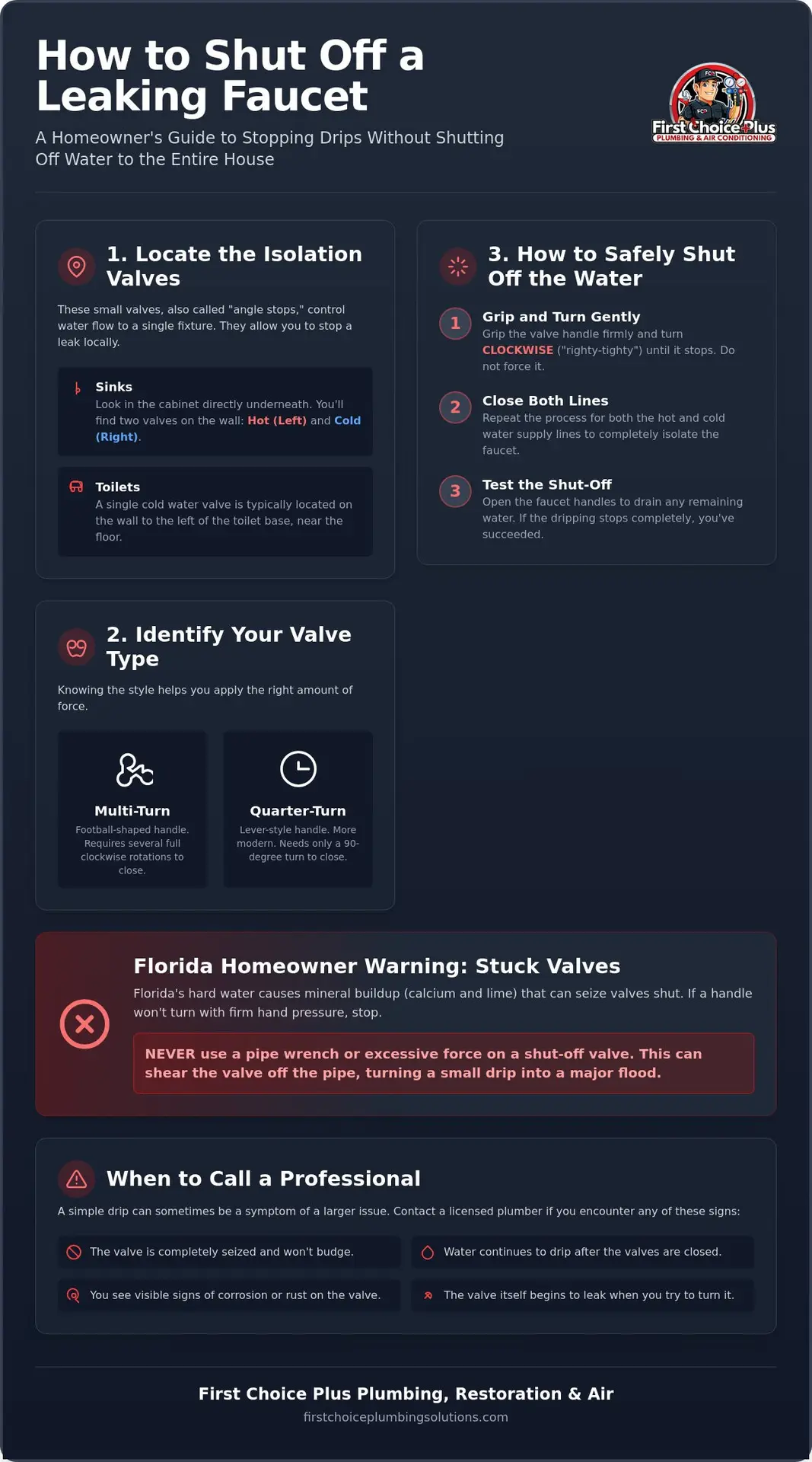
Before you can stop a drip, you have to find the source. Isolation valves, often called angle stops, are the small valves located near your plumbing fixtures. They allow you to stop the flow to one specific area without affecting the rest of your home. When you’re trying to figure out how to shut off water to a single leaking faucet, your first stop should be directly beneath the sink. Open the cabinet doors and clear out any cleaning supplies or storage bins to get a clear view of the pipes.
Look for two flexible supply lines, which are usually made of braided stainless steel or plastic. These lines run from the bottom of your faucet down to the wall or floor. You’ll see two separate valves at the end of these lines: one for the hot water side and one for the cold. In most Florida homes, the hot water is on the left and the cold is on the right. Identifying both is vital because a leak can occur on either side of the fixture.
Finding Valves for Toilets and Specialized Fixtures
While sinks are straightforward, other fixtures require a bit more hunting. Toilet valves are almost always found on the left side near the floor. If you have a pedestal sink, the valves are often tucked behind the porcelain column or even recessed inside the wall to maintain a clean look. For bathtubs and showers, look for an access panel in a nearby closet or on the opposite side of the shared wall. If no panel exists, you might have to use a secondary shut-off located in a utility room.
Understanding these locations is just as important for your appliances as it is for your faucets. If you’re looking for expert help with maintaining or repairing your home’s essential machinery, HomeFix provides the professional service needed to keep your household running smoothly.
Identifying Different Valve Styles
Understanding different types of faucet valves helps you know how much force to use. Traditional valves often have football-shaped handles. These are multi-turn valves that require several rotations to close. Modern homes often use lever-style handles, which are quarter-turn ball valves. These are much more reliable because they don’t rely on rubber washers that degrade over time. Some newer PEX systems might use push-pull valves, which you simply pull toward you to stop the flow. Knowing how to shut off water to a single leaking faucet safely starts with recognizing which style you have before you start turning.
Step-by-Step: How to Safely Shut Off the Water
Once you’ve cleared the space under your sink, you can begin the process of stopping the flow. Grip the valve handle firmly with your hand. Avoid using excessive force at first, especially if the handle feels stiff or hasn’t been moved in years. Snapping an internal stem can turn a minor drip into a major flood. To close the supply, rotate the valve handle to the right until it reaches its natural stopping point. Clockwise rotation is the universal direction for closing standard plumbing valves.
You must repeat this process for both the hot and cold supply lines to ensure the faucet is completely isolated. This is a critical step in learning how to shut off water to a single leaking faucet; even a small amount of pressure from one side can keep the leak active. If the handle doesn’t budge with moderate hand pressure, don’t reach for the pliers yet. You might need emergency plumbing repairs if the valve is completely seized.
Quarter-Turn vs. Multi-Turn Operation
Modern homes often feature quarter-turn valves. For these, the handle only needs to move 90 degrees until it’s perpendicular to the pipe. Older Florida homes usually have multi-turn valves. You’ll need to rotate these several times until the handle feels snug. Recognizing the importance of fixing leaks in Florida is the first step toward conservation and lower utility bills.
Testing the Shut-Off
After closing both valves, turn on the faucet handles to the full “on” position. This allows any remaining water in the lines to drain out. Watch the spout for at least 30 seconds. If the drip stops entirely, you’ve successfully isolated the fixture. If water continues to flow or the drip persists, the internal seal of the isolation valve has likely failed. In this case, you’ll need to shut off the main water valve to the house before attempting any faucet repairs.
Troubleshooting Common Shut-Off Problems in Florida Homes
Florida’s hard water presents unique challenges for home maintenance. High concentrations of calcium and lime often create mineral deposits that seize valves over time, making them nearly impossible to turn by hand. If you find the handle won’t budge, resist the urge to use a large pipe wrench. Excessive torque can easily shear the valve right off the pipe, turning a minor drip into a major emergency. Successfully learning how to shut off water to a single leaking faucet requires knowing when the hardware is no longer safe to operate by hand.
If the isolation valve fails to stop the flow, you must locate the main water shut-off valve for the entire house. This is usually found where the main line enters your home or near the water meter. Sometimes a persistent leak indicates that your home’s water pressure is too high. This constant stress wears out seals and cartridges prematurely, even if you’ve successfully turned the valve off. Checking your home’s pressure regulator is a smart preventative step to avoid future fixture failures.
Dealing with Seized or Corroded Valves
Start by applying a small amount of penetrating oil to the valve stem. Let it sit for about 15 minutes to help dissolve the mineral bonds. Gently wiggle the handle back and forth in tiny increments rather than forcing it in one direction. If the valve starts to leak from the stem as you turn it, use a small wrench to tighten the packing nut slightly. This simple adjustment often stops the leak while allowing the valve to function again without further drama.
When to Call a Professional Plumber
Some situations are beyond a simple DIY fix. If the valve is completely frozen or you’re worried about breaking the pipe, professional emergency plumbing repairs are the safest choice to avoid a burst pipe. Our team at First Choice Plus Plumbing & Air provides 24/7 support for residents in Port St. Lucie, Stuart, and Fort Pierce. Whether you need a faucet replacement or repair or a full valve upgrade, we provide the steady hand needed to resolve the issue efficiently.
Protect Your Home and Your Peace of Mind
Mastering how to shut off water to a single leaking faucet is a valuable skill that protects your home from water damage and keeps your utility bills in check. By locating your isolation valves and understanding the specific needs of Florida plumbing hardware, you can handle minor drips without the stress of a whole-house water shutdown. Remember to always work with a steady hand and respect the limits of older, corroded valves. If a handle won’t budge or the leak persists after you’ve closed the supply, don’t risk a pipe burst by forcing the issue.
Stuck with a leaking faucet or a frozen valve? Contact First Choice Plus Plumbing & Air for 24/7 Emergency Plumbing Repairs. Our team of licensed and insured Florida plumbers is ready to help with upfront, honest pricing and the local expertise you can trust. We’re here to provide the professional validation and immediate availability you need to resolve any plumbing crisis. You’ve taken the right steps to stay informed; and we’re always here to provide the expert support to finish the job right.
Common Questions About Faucet Water Shut-Off
What do I do if there is no shut-off valve under my sink?
You’ll need to locate and close the main water supply valve for your entire home if individual isolation valves are missing. While current Florida building codes require shut-off valves for most fixtures, older homes may lack them. The main valve is typically found near the water meter or where the plumbing enters your house. Once the main supply is off, you can safely address the leak or install new valves.
Can I use pliers to turn a stuck water valve?
You should only use pliers as a last resort and with very light pressure. Forcing a seized valve with heavy tools often leads to a snapped stem or a broken pipe, which creates a much larger emergency. If the handle doesn’t move after you’ve applied penetrating oil and tried gentle wiggling, the internal components are likely fused by mineral deposits. It is best to contact a professional at that point.
Why is my faucet still dripping after I turned the water off?
A continued drip usually indicates that the isolation valve’s internal rubber seal has degraded or mineral buildup is preventing a full closure. When you are learning how to shut off water to a single leaking faucet, it’s important to wait at least 30 seconds for the lines to drain. If the water keeps coming, the shut-off valve itself is faulty and will need to be replaced by a licensed plumber to ensure a reliable seal.
Should I turn off the hot or cold water for a leaking faucet?
It is best practice to turn off both the hot and cold water valves to fully isolate the fixture. Because most modern faucets use a single mixing cartridge, pressure from one line can sometimes force water through the other side even if only one side is leaking. Shutting off both ensures no water reaches the faucet, allowing you to perform repairs without any unexpected spraying or persistent dripping.

Article by
Written by First Choice Plus Plumbing & Air Team
This article was created by the team at First Choice Plumbing Solutions, a licensed and experienced plumbing and HVAC company serving Port St. Lucie, Land O’ Lakes, and surrounding areas.
Our team specializes in plumbing and air conditioning services, including drain cleaning, leak detection, water heater repair and installation, AC repair, maintenance, and system installations. Our content is based on real-world experience and the common issues we solve for homeowners and businesses every day.
We aim to provide accurate, helpful, and easy-to-understand information so you can make informed decisions about your plumbing and HVAC needs.
If you need reliable, professional service, First Choice Plumbing Solutions is here to help.
Disclaimer
Disclaimer: The information provided in this article is for general informational purposes only and does not constitute professional plumbing or HVAC advice. Every situation is different, and readers should consult a licensed professional for proper diagnosis and repair. First Choice Plus Plumbing & Air is not liable for any damages or losses resulting from the use of this information.