
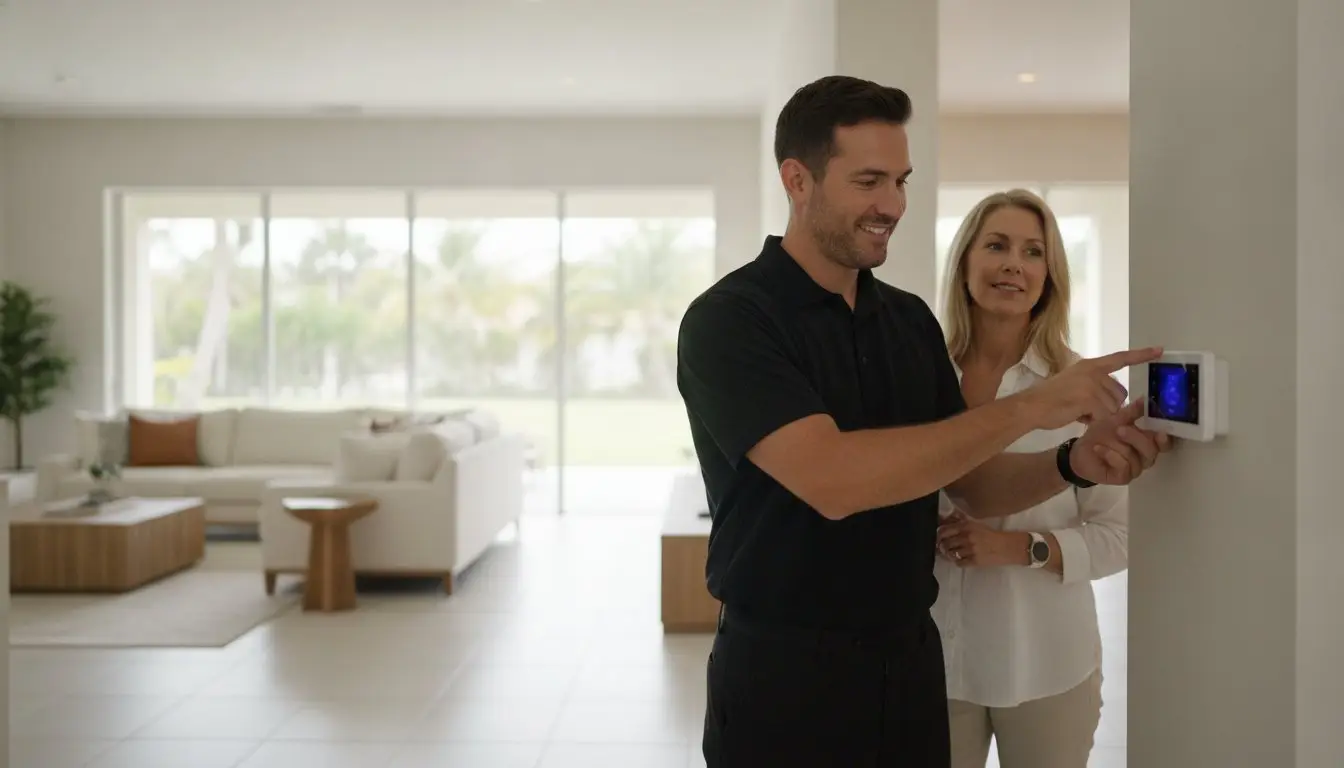
What if the reason your living room feels like a sauna isn’t the temperature, but your humidity settings? Many homeowners in Port St. Lucie try to “dry out” the moisture by dropping the AC to 68 degrees, but this often leads to high energy bills and a home that still feels clammy. Knowing exactly how to set humidity on thermostat in Florida summer is the secret to staying comfortable without overworking your system. We understand the frustration of a sticky house; it’s a common struggle on the Treasure Coast, where outdoor humidity frequently hits 90% and makes indoor air feel heavy and thick.
You deserve a home that feels like a sanctuary, not a swamp. In this guide, you’ll learn the professional settings and local tricks you need to keep your environment crisp, dry, and mold-free. We will walk you through the ideal humidity range of 45% to 55%, explain why your fan setting matters more than you think, and show you how to optimize your thermostat to lower your monthly costs while protecting your property from mold growth.
Key Takeaways
- Discover why maintaining the 45% to 55% “Goldilocks Zone” is essential for comfort and how to stay below the 60% threshold where mold thrives.
- Learn exactly how to set humidity on thermostat in Florida summer using step-by-step instructions for the most popular smart thermostat models.
- Understand the critical “Fan Auto” rule and why leaving your blower motor running constantly can actually pump moisture back into your living space.
- Identify when high indoor humidity is caused by technical equipment issues like short-cycling or dirty coils rather than just your thermostat settings.
- Save on monthly cooling costs by learning how to use your air conditioner as an efficient dehumidifier without needing to drop the temperature to uncomfortable levels.
Finding the Ideal Humidity Setting for Your Florida Home
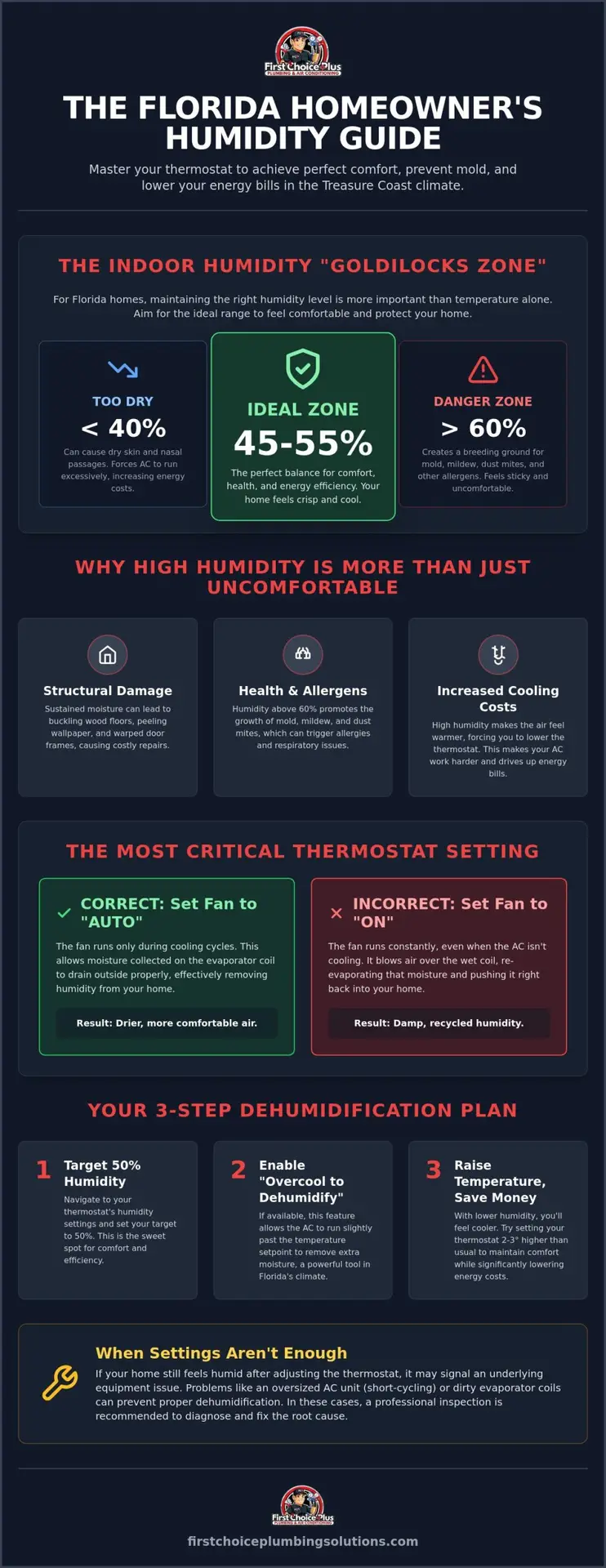
Living on the Treasure Coast means dealing with outdoor humidity that regularly climbs above 80%. Inside your home, you need a different strategy. The “Goldilocks Zone” for indoor comfort is between 45% and 55% relative humidity. Staying within this range ensures your skin feels dry and your home feels crisp. If you are researching how to set humidity on thermostat in Florida summer, aim for 50% as your primary target for the best results.
Once indoor moisture levels cross the 60% danger threshold, you are no longer just dealing with discomfort. High humidity creates a breeding ground for mold spores to activate and spread. To understand the science behind this, it helps to know what humidity is: a measure of water vapor in the air that dictates how effectively your body can cool itself. Your air conditioner acts as a primary dehumidifier by pulling this vapor out of the air as it passes over the cold evaporator coil, turning gas into liquid drainage.
The Risks of High Indoor Humidity in the Treasure Coast
Excessive moisture doesn’t just feel sticky; it attacks your home’s structure. In coastal areas like Jensen Beach, we often see buckling wood floors and peeling wallpaper caused by sustained high moisture levels. Health is another major factor to consider. Dust mites and other common allergens thrive when humidity stays above 70%, which can lead to respiratory issues for your family. Relative humidity is essentially the amount of water vapor present in the air expressed as a percentage of the amount needed for saturation at that same temperature.
Balancing Comfort and Energy Costs
Controlling moisture actually saves you money. When the air is dry, your sweat evaporates faster, making you feel cooler even at higher temperatures. This means you can often set your thermostat 2 to 3 degrees higher than usual while maintaining the same level of comfort. Don’t try to push humidity below 40%, though. Doing so forces your AC to run almost constantly, which will spike your electric bill without providing much additional benefit. Finding that 50% balance is the most efficient way to manage your Port St. Lucie home during the peak of summer.
Step-by-Step: How to Configure Your Thermostat for Dehumidification
If you are ready to adjust your home’s climate, start by locating the humidity menu on your specific device. For Nest users, this is usually under “Settings” then “Equipment.” Honeywell systems often place it in “Advanced Setup” or “Menu > Humidity,” while Ecobee users will find it under “Main Menu > Settings > Installation Settings > Thresholds.” Learning how to set humidity on thermostat in Florida summer is a great first step toward a more comfortable home, but you must also ensure the fan logic is correct to see real results.
Many modern systems include an “Overcool to Dehumidify” feature. This tool tells the AC to keep running even if the temperature goal is reached, provided the humidity is still too high. It usually allows for a 1 or 2 degree drop below your setpoint. This is a very effective method for energy-efficient humidity control because it addresses the moisture that makes you feel hot in the first place. We also recommend buying a standalone hygrometer to verify your thermostat’s accuracy. If your wall unit says 50% but your handheld device reads 65%, you may need a professional AC inspection to recalibrate the sensors.
The Critical “Fan Auto” Setting
The “Auto” setting is essential for Treasure Coast homes. When the fan is set to “On,” the blower motor runs continuously. This means that as soon as the cooling cycle ends, the fan blows air over a soaking wet evaporator coil. Instead of draining away, that moisture evaporates right back into your ductwork and living spaces. Using “Auto” allows the water to collect and drain out of the house properly before the fan starts up for the next cycle.
Advanced Smart Thermostat Features
Modern smart thermostats offer “Away” modes that are perfect for our local climate. You can program the system to prioritize a maximum humidity level of 58% while you’re at work. This protects your furniture and prevents mold without wasting energy on deep cooling an empty house. Most of these units also send push notifications to your phone if the indoor humidity crosses the 60% mark, giving you a chance to react before a minor moisture issue becomes a major problem.
When Settings Aren’t Enough: Troubleshooting High Humidity
Sometimes you’ve mastered how to set humidity on thermostat in Florida summer, but the air inside your home still feels heavy and thick. This usually points to an underlying mechanical or structural issue that settings alone cannot fix. One common culprit is an oversized air conditioner. While a larger unit might seem better, it often leads to short-cycling. This happens when the system cools the air so quickly that it shuts off before it has time to remove the moisture. You end up with a cold but clammy house because the cooling cycle was too brief to act as a dehumidifier.
Another common issue involves dirty evaporator coils or a clogged condensate drain line. If your coils are covered in dust, they cannot effectively pull water vapor out of the air. If you notice water pooling around your air handler or humidity spiking despite your best efforts, it is time to call for emergency AC repair in Port St. Lucie. Our team can quickly clear these blockages and restore your system’s moisture-stripping power.
The Role of Preventive Maintenance
Regular maintenance is the best defense against Treasure Coast humidity. A professional tune-up ensures your refrigerant levels are exactly where they need to be. Low coolant prevents the coils from getting cold enough to condense water vapor, leaving your air heavy. Checking these levels and cleaning the system should be part of your seasonal routine to avoid unexpected spikes in moisture. You can find more details on proper timing and care in our AC repair Port St. Lucie guide.
Hidden Leaks and Humidity Spikes
If your AC is in perfect shape but one specific room feels damp, you might be facing a plumbing crisis rather than an HVAC one. A hidden slab leak or a slow pipe burst behind a wall can dump gallons of water into your home’s foundation. This moisture evaporates into the air, overwhelming your air conditioner’s ability to keep up. Even if you’ve mastered how to set humidity on thermostat in Florida summer, you can’t fight a hidden leak with a thermostat. If you see “sweating” on your baseboards or floors, you need a leak detection expert to find the source before mold takes hold.
Take Control of Your Home’s Climate Today
Managing your indoor environment doesn’t have to be a guessing game. By mastering how to set humidity on thermostat in Florida summer, you’ve already taken the most important step toward a drier, healthier home. Remember to keep your target between 45% and 55%, always leave your fan on the “Auto” setting, and stay vigilant for signs of mechanical trouble like short-cycling or hidden moisture sources. These small adjustments make a massive difference in your daily comfort and your monthly power bill.
If your home still feels sticky despite these changes, there might be a deeper issue with your equipment or a hidden plumbing leak. Our team of local Treasure Coast experts is ready to help with honest, transparent pricing and the specialized tools needed to find the root cause. Whether you need a quick calibration or 24/7 emergency support, we’re here to ensure your peace of mind. Schedule an AC tune-up with First Choice Plus today! You deserve a home that feels crisp and refreshing all summer long.
Frequently Asked Questions
What is the best humidity setting for a Florida home in the summer?
The ideal indoor humidity level for a home in Florida is between 45% and 55%. This range prevents that sticky feeling while protecting your property from mold growth. If you are learning how to set humidity on thermostat in Florida summer, try to stay below the 60% mark suggested by the EPA. This ensures your home remains crisp and dry without forcing your system to run constantly.
Why is my house so humid even though the AC is running?
Your house might feel humid because the air conditioner is short-cycling, meaning it cools the air too fast to remove moisture. This often happens if the unit is too large for your square footage. Other common causes include a frozen evaporator coil or a blocked condensate drain line. These mechanical issues prevent the system from stripping water vapor from the air effectively, regardless of your thermostat settings.
Should I leave my AC fan on “Auto” or “On” in Florida?
You should always leave your thermostat fan on the “Auto” setting during a Florida summer. When set to “On,” the fan runs continuously even after the cooling cycle stops. This blows air over the wet coils and pushes moisture right back into your rooms. The “Auto” setting gives the water time to drain out of the house properly between cooling cycles, keeping your indoor air much drier.
Can a plumbing leak cause high indoor humidity?
Yes, a hidden plumbing leak is a frequent cause of sudden humidity spikes that an AC system cannot manage. A slab leak or a burst pipe behind a wall releases constant moisture that evaporates into your indoor air. If you’ve adjusted your settings and still feel dampness near the floor or baseboards, you likely need a professional leak detection inspection to find the source before mold takes hold.

Article by
Written by First Choice Plus Plumbing & Air Team
This article was created by the team at First Choice Plumbing Solutions, a licensed and experienced plumbing and HVAC company serving Port St. Lucie, Land O’ Lakes, and surrounding areas.
Our team specializes in plumbing and air conditioning services, including drain cleaning, leak detection, water heater repair and installation, AC repair, maintenance, and system installations. Our content is based on real-world experience and the common issues we solve for homeowners and businesses every day.
We aim to provide accurate, helpful, and easy-to-understand information so you can make informed decisions about your plumbing and HVAC needs.
If you need reliable, professional service, First Choice Plumbing Solutions is here to help.
Disclaimer
Disclaimer: The information provided in this article is for general informational purposes only and does not constitute professional plumbing or HVAC advice. Every situation is different, and readers should consult a licensed professional for proper diagnosis and repair. First Choice Plus Plumbing & Air is not liable for any damages or losses resulting from the use of this information.