Imagine walking through your front door after a relaxing summer vacation, only to be met by the thick, musty stench of a home that has literally started to rot from the inside out. For many Treasure Coast residents, the fear of coming home to a swamp is enough to ruin a holiday. You want to save on energy bills, but you also know that in our climate, mold can begin to grow within just 24 to 48 hours of moisture exposure. Learning how to prevent mold in pipes while away for the summer is the only way to ensure your sanctuary does not turn into a costly remediation project while you are gone.
We understand the stress of balancing utility costs with home security. It is a delicate act to manage the wet-dry cycle of your plumbing and the relentless Florida humidity, which often hits 90% in the summer mornings. This guide provides a clear, professional checklist of plumbing and HVAC steps to protect your property. You will learn the exact AC settings needed to keep humidity below dangerous levels and the essential maintenance tasks that provide total peace of mind. From drain prep to UV air sanitizers, we provide the steady hand you need to keep your home safe until you return.
Key Takeaways
- Learn why Florida’s high humidity causes “sweating pipes” and how organic biofilm in your drains creates a perfect breeding ground for mold while your home is vacant.
- Discover the essential steps for how to prevent mold in pipes while away for the summer, including why you must drain your lines after turning off the main water valve.
- Master the “P-trap” preservation technique using non-toxic mineral oil to stop water evaporation and block sewer gases from entering your home.
- Understand the critical link between your AC system and plumbing health, specifically how to avoid a clogged condensate line that can lead to indoor flooding.
- Identify the professional thermostat settings and secondary defenses like UV air sanitizers that protect your Treasure Coast home from airborne spores.
Understanding Why Plumbing Pipes Are Vulnerable to Mold During Florida Summers
Florida homeowners often focus on securing windows and doors before leaving, but the plumbing system is one of the most vulnerable areas during a humid July. When you leave your home for weeks, the environment inside and around your pipes changes. One major issue is the “sweating pipe” phenomenon. Because our groundwater is relatively cool, cold water pipes can reach temperatures below the dew point of the surrounding air. In the Treasure Coast heat, this causes moisture to condense on the exterior of the metal or plastic, creating perfect Indoor mold growth conditions behind your walls or under your sinks. Knowing how to prevent mold in pipes while away for the summer starts with recognizing that moisture doesn’t just come from leaks; it can be pulled right out of the air.
Inside the pipes, another threat lurks. Biofilm is a colony of microorganisms that forms a coating on plumbing surfaces during periods of inactivity. Without the regular friction of running water to scrub these surfaces, this organic slime thrives and produces distinct, musty odors. You also face the “dry trap” danger. The P-traps under your sinks and floor drains are designed to hold a small amount of water to block sewer gases. In the summer heat, this water evaporates. This allows mold spores and foul odors from the municipal sewer system to drift directly into your living space, where they find plenty of moisture to start a colony.
The Role of Stagnant Water in Your Plumbing System
Standing water is a bacterial playground. When your home is closed up, the water in your toilet bowls and water heater remains stagnant in temperatures that often hover around 80 degrees. This heat accelerates the growth of bacteria. Additionally, sediment buildup in the bottom of your water heater can trap organic matter, providing a food source for microorganisms while the unit sits dormant. If a small leak occurs while you’re gone, mold can begin to grow within 24 to 48 hours of that moisture exposure.
Florida Humidity: The Invisible Catalyst
Humidity is the primary fuel for mold. During a typical summer, morning relative humidity levels in Florida often hit 95%. If your indoor humidity rises above 60%, even a small amount of pipe condensation can trigger a major outbreak. Without consistent airflow to dry these surfaces, mold spreads rapidly. This is why learning how to prevent mold in pipes while away for the summer is about more than just shutting off a valve; it is about controlling the environment of your entire home to keep surfaces dry.
A Step-by-Step Guide to Protecting Your Plumbing Before Summer Vacation
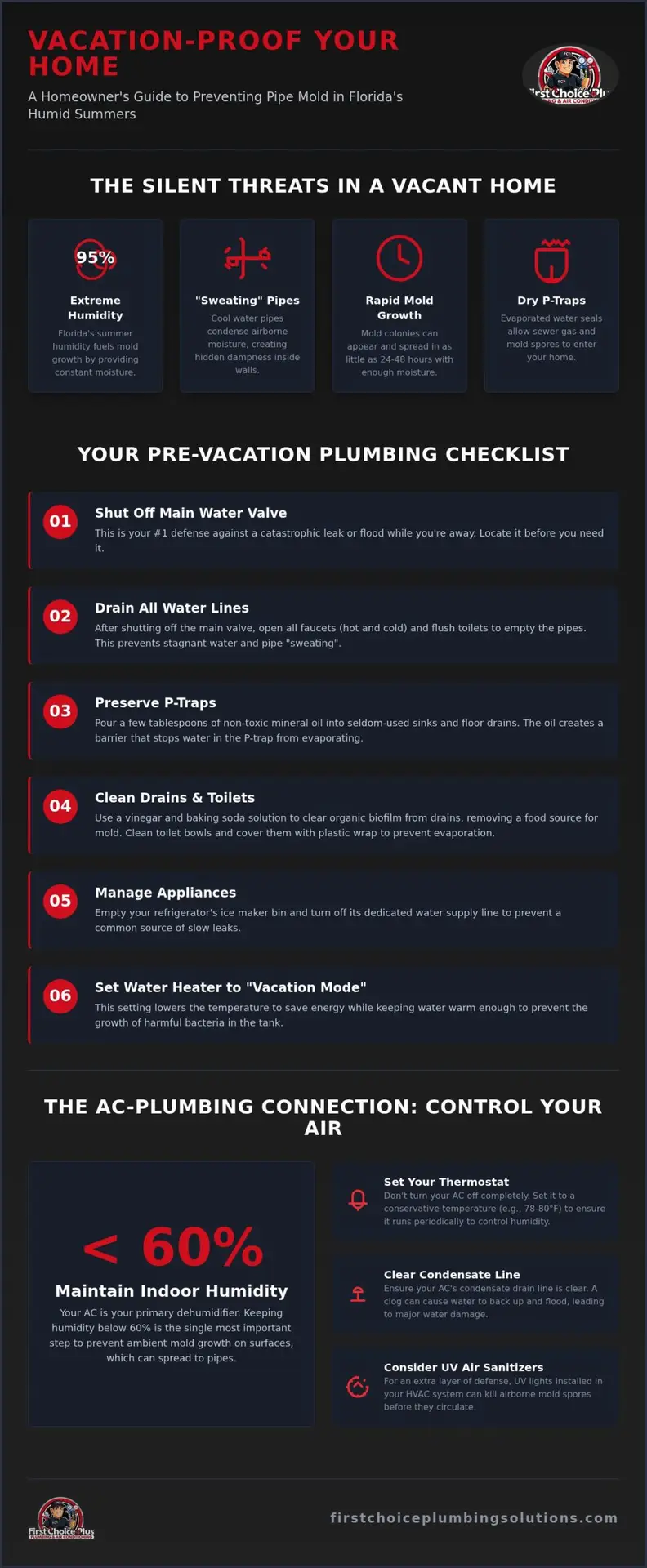
Taking proactive steps now prevents a disaster later. Start by turning off your main water valve. This is the single most effective way to stop a major flood, but you cannot stop there. You must open your faucets and flush your toilets to drain the remaining water from the lines. This prevents the “sweating pipe” moisture we discussed earlier from accumulating in your walls. If you have any existing drips, schedule plumbing repairs before you head out. Even a tiny leak can provide enough moisture for mold to colonize a room in less than 48 hours.
For guest baths and floor drains, use non-toxic mineral oil or a specialized trap sealer. A thin layer of oil on top of the water in the P-trap prevents evaporation. This ensures the water seal remains intact, blocking sewer gases and spores from entering your home. These EPA mold prevention tips emphasize that keeping surfaces dry is key, and managing your drains is a big part of that strategy. Finally, set your water heater to “Vacation Mode.” This keeps the water warm enough to prevent bacterial growth without wasting energy or risking a tank failure. Knowing how to prevent mold in pipes while away for the summer is about layering these small protections.
Preparing Your Drains and Toilets
Clean your drains before you leave. Use a mixture of vinegar and baking soda to kill the organic biofilm lining the pipes. This removes the food source mold needs to grow. For your toilets, clean the bowl thoroughly and then cover it with plastic wrap. This simple trick stops the water from evaporating and keeps the humidity in your bathroom under control.
Appliances and Filtration Systems
Don’t forget your appliances. Empty your ice maker and turn off its dedicated supply line to prevent a slow leak from ruining your kitchen flooring. If you have a water softener, you should bypass the system if the main water is off. This protects the resin bed and prevents stagnant water from sitting in the tank. If you want a professional eye to check your system, our team can perform a quick plumbing inspection to ensure everything is secure.
The AC-Plumbing Connection: Preventing Condensate Mold
Your air conditioner does more than just cool the air; it serves as the primary dehumidifier for your entire home. If your system fails while you’re away, indoor humidity will quickly climb above 60%. This creates the exact conditions needed for pipes to sweat and mold to flourish. Controlling moisture to prevent mold is nearly impossible without a functioning AC unit. Before you leave, check your system or schedule an emergency AC repair inspection to ensure the unit is reliable. For specific thermostat recommendations, our AC repair Port St. Lucie guide suggests keeping the home between 77 and 80 degrees to manage humidity without spiking your power bill.
The “condensate trap” is a critical intersection of your HVAC and plumbing systems. As the AC pulls moisture from the air, that water must go somewhere. If the drain line clogs with algae or mold, the water backs up into the air handler and eventually onto your floor. This is a common cause of home “swamps” that occur during summer vacancies. Ensuring this line is clear is a vital part of knowing how to prevent mold in pipes while away for the summer.
Clearing the Condensate Line
Pouring a cup of distilled vinegar down the condensate drain line is a simple but effective maintenance task. This kills the algae and mold “slugs” that often form in the stagnant water of the trap. We also recommend verifying that your “float switch” is operational. This safety device shuts down the entire system if it detects a backup. It is your best defense against a flood while the house is silent.
Professional Leak Detection: The Ultimate Safety Net
A tiny slab leak can cause massive mold growth under your floors before you even realize there’s a problem. When a house is empty, these hidden drips have weeks to saturate the concrete and drywall without being noticed. First Choice Plus uses specialized acoustic and thermal technology to find these hidden issues before you lock the door. This level of preventative care provides the steady hand needed to protect your Treasure Coast home from the unexpected.
Protect Your Treasure Coast Home with Confidence
Leaving your home for the summer shouldn’t feel like a gamble. By managing the wet-dry cycle of your drains and ensuring your AC remains a powerful dehumidifier, you remove the fuel mold needs to grow. We’ve discussed the importance of draining your lines, sealing P-traps with mineral oil, and checking your condensate drain line for potential clogs. These steps are the foundation of how to prevent mold in pipes while away for the summer, keeping your property dry and your indoor air clean.
First Choice Plus offers the local expertise and expert HVAC and plumbing synergy you need for total peace of mind. We are A+ rated for leak detection and restoration, providing a steady hand to resolve issues before they become emergencies. With our 24/7 emergency support in Port St. Lucie, you can rest easy knowing we’re always available if an unexpected issue arises. Schedule a Pre-Vacation Plumbing Inspection with First Choice Plus!
Enjoy your summer travels knowing your home is secure, dry, and ready for your return. We are proud to serve as your trusted neighbor and master craftsman for all your home maintenance needs.
Frequently Asked Questions
Should I turn off my main water valve when I leave for the summer?
Yes, turning off the main water valve is the most effective way to prevent catastrophic flooding while you are away. It stops the supply to the entire house, ensuring a small leak doesn’t become a disaster. After closing the valve, remember to open your faucets to drain the pressure. This is a key step in how to prevent mold in pipes while away for the summer because it removes the water that causes pipe sweating and condensation.
What is the best temperature to set my AC at while I’m on vacation in Florida?
Set your thermostat between 77 and 80 degrees Fahrenheit to maintain proper humidity control. In Florida, the goal isn’t just cooling; it’s keeping indoor relative humidity below 60%. If the air gets too humid, moisture will condense on your plumbing and walls, inviting mold growth. Many modern thermostats also have a dehumidistat setting that runs the AC specifically to pull moisture from the air regardless of the temperature.
How do I stop my drains from smelling like rotten eggs when I return?
That rotten egg smell usually comes from a dry trap where the water in the P-trap has evaporated, allowing sewer gases to enter your home. To stop this, pour a tablespoon of non-toxic mineral oil into your drains and toilets before you leave. The oil creates a seal on top of the water that prevents evaporation. This simple trick keeps your home smelling fresh and blocks mold spores from drifting in from the municipal sewer lines.
Can mold grow inside my water heater if it’s turned off?
Mold and bacteria can grow in a stagnant water heater, especially if it is turned off completely in the Florida heat. Water sitting in a tank at 80 degrees becomes a breeding ground for microorganisms. Instead of turning it off, use the Vacation setting on your unit. This maintains a safe, low temperature that prevents bacterial growth while consuming very little energy, ensuring your water is safe when you return.
Is it worth having a plumber do an inspection before I leave for three months?
A professional inspection is absolutely worth it to provide peace of mind and prevent chaotic emergencies. A technician can identify hidden slab leaks or failing AC condensate lines that you might miss. This proactive check ensures you won’t be one of the thousands of Floridians filing mold-related insurance claims each year. It is a small investment that protects your home’s integrity and helps you master how to prevent mold in pipes while away for the summer.

Article by
Written by First Choice Plus Plumbing & Air Team
This article was created by the team at First Choice Plumbing Solutions, a licensed and experienced plumbing and HVAC company serving Port St. Lucie, Land O’ Lakes, and surrounding areas.
Our team specializes in plumbing and air conditioning services, including drain cleaning, leak detection, water heater repair and installation, AC repair, maintenance, and system installations. Our content is based on real-world experience and the common issues we solve for homeowners and businesses every day.
We aim to provide accurate, helpful, and easy-to-understand information so you can make informed decisions about your plumbing and HVAC needs.
If you need reliable, professional service, First Choice Plumbing Solutions is here to help.
Disclaimer
Disclaimer: The information provided in this article is for general informational purposes only and does not constitute professional plumbing or HVAC advice. Every situation is different, and readers should consult a licensed professional for proper diagnosis and repair. First Choice Plus Plumbing & Air is not liable for any damages or losses resulting from the use of this information.