
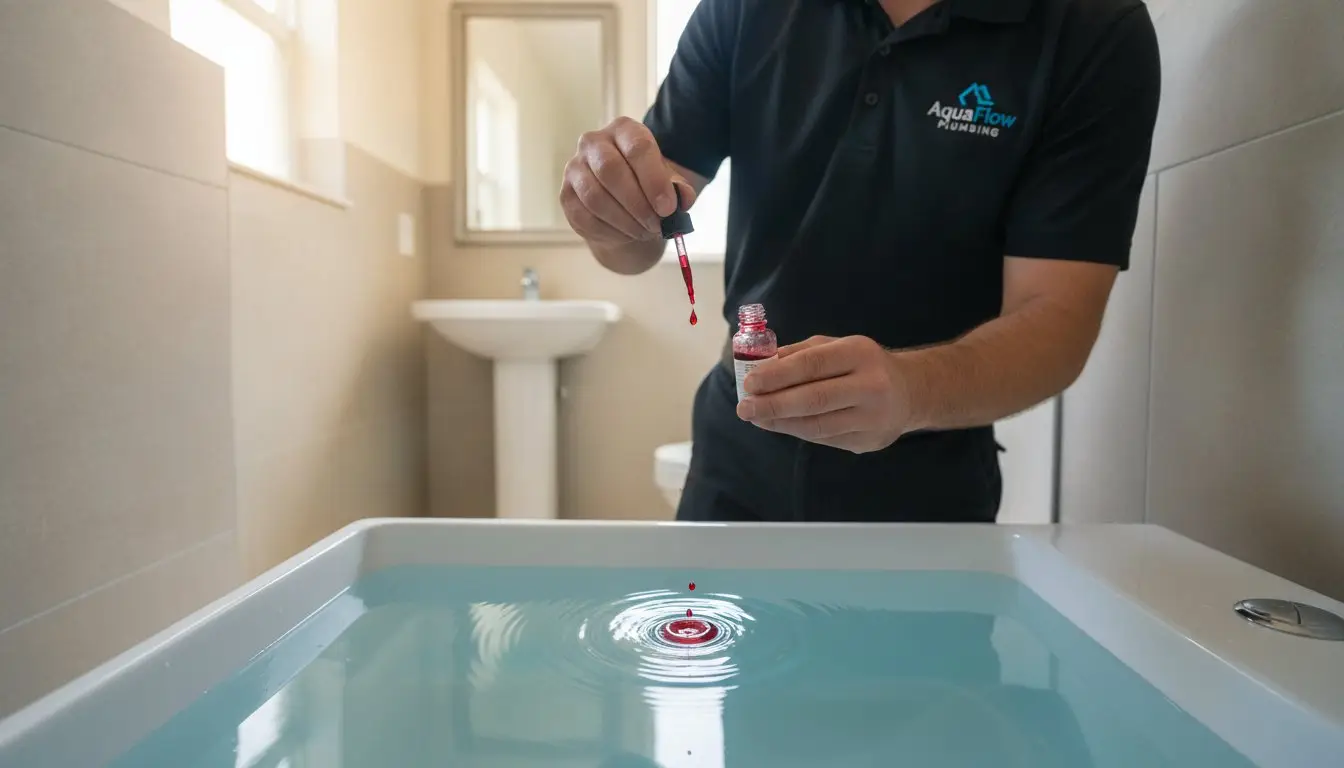
Did you know a single silent toilet leak can waste approximately 200 gallons of water every day? That is enough to fill a large hot tub every 24 hours without you ever hearing a drip or hiss. If you have opened your utility statement recently only to find a price spike that does not match your household usage, you are likely searching for how to find a silent toilet leak that’s raising my water bill. These hidden leaks are financial vampires that bypass your senses while draining your bank account; they can easily add over $320 to your annual water costs if left ignored.
It is incredibly frustrating to pay for resources you are not even using, especially when you work hard to keep your home running efficiently. We believe home maintenance should be transparent and stress-free, so we have put together this expert-led guide to help you regain control of your plumbing. You will learn how to confirm if your toilet is the source of the spike, identify which specific internal part is failing, and take the right steps to lower your monthly bill. From simple dye tests to diagnosing worn-out flappers, we will show you how to stop the waste for good.
Key Takeaways
- Understand the “financial vampire” effect, where a silent leak can add $50 to $100 to your monthly Florida water bill without making a sound.
- Master the step-by-step tank-to-bowl dye test to learn exactly how to find a silent toilet leak that’s raising my water bill using simple household food coloring.
- Identify the specific internal culprit, such as a degraded flapper or a faulty fill valve, to ensure you only replace the parts that are actually broken.
- Recognize the limits of DIY repairs and when issues like high house water pressure or cracked valve seats require professional diagnostic equipment.
- Discover how installing a water filtration system can protect your plumbing fixtures from mineral buildup that causes seals to fail prematurely.
The Cost of Silence: Why Your Water Bill is Spiking
Most homeowners expect a plumbing leak to announce itself with a puddle on the bathroom floor or a frantic spraying sound under the sink. However, the most expensive leaks are often the ones you never see or hear. A silent toilet leak occurs when water escapes the tank and enters the bowl internally, bypassing the traditional “running” sound that usually alerts you to a problem. This creates a “Financial Vampire” effect on your utility statement. Based on projected 2026 water rates in Florida, a leak wasting 200 gallons a day can add $50 to $100 to your monthly bill. If you are searching for how to find a silent toilet leak that’s raising my water bill, you are facing a common mystery for many Treasure Coast families.
The Anatomy of a Quiet Leak
To solve the mystery, you first need to understand how a toilet works. The system relies on two main components: the flapper valve and the fill valve. The flapper is a rubber seal that lifts to allow a flush and drops to seal the tank. In our local area, high mineral content in the water often causes these rubber seals to become brittle and warped. When the seal fails, water seeps into the bowl. This triggers “ghost flushing,” that sudden sound of the toilet refilling for a few seconds even though no one touched the handle. Professional plumbing repairs are often needed when these internal components fail beyond a simple cleaning, especially when mineral deposits build up on the flush valve seat itself.
Why You Can’t Always Trust Your Ears
Modern toilets are engineered for quiet operation. While this is great for a peaceful home, it masks small issues. A leak doesn’t have to be loud to be expensive; even a pinhole-sized gap in a flapper can waste thousands of gallons monthly. Because the water flows directly down the drain, there is no mess to alert you. This is why investing in water quality solutions like filtration is so valuable. It prevents the mineral buildup that eats away at your toilet’s internal hardware and keeps your seals flexible. Remember, your water meter is recording every drop, even if you can’t hear the trickle.
Step-by-Step: How to Detect a Silent Toilet Leak at Home
Detecting a hidden leak doesn’t require high-tech sensors or a background in engineering. You can start with items already in your pantry. To learn how to find a silent toilet leak that’s raising my water bill, gather some dark food coloring, like blue or red, or specialized leak detection tablets. Before you begin, a word of caution: never use bleach cleaning tablets for this test or for general maintenance. The high chlorine concentration corrodes rubber flappers and plastic components, actually creating the very leaks you are trying to prevent. Stick to simple dyes that won’t damage your hardware.
Performing the Dye Test Like a Pro
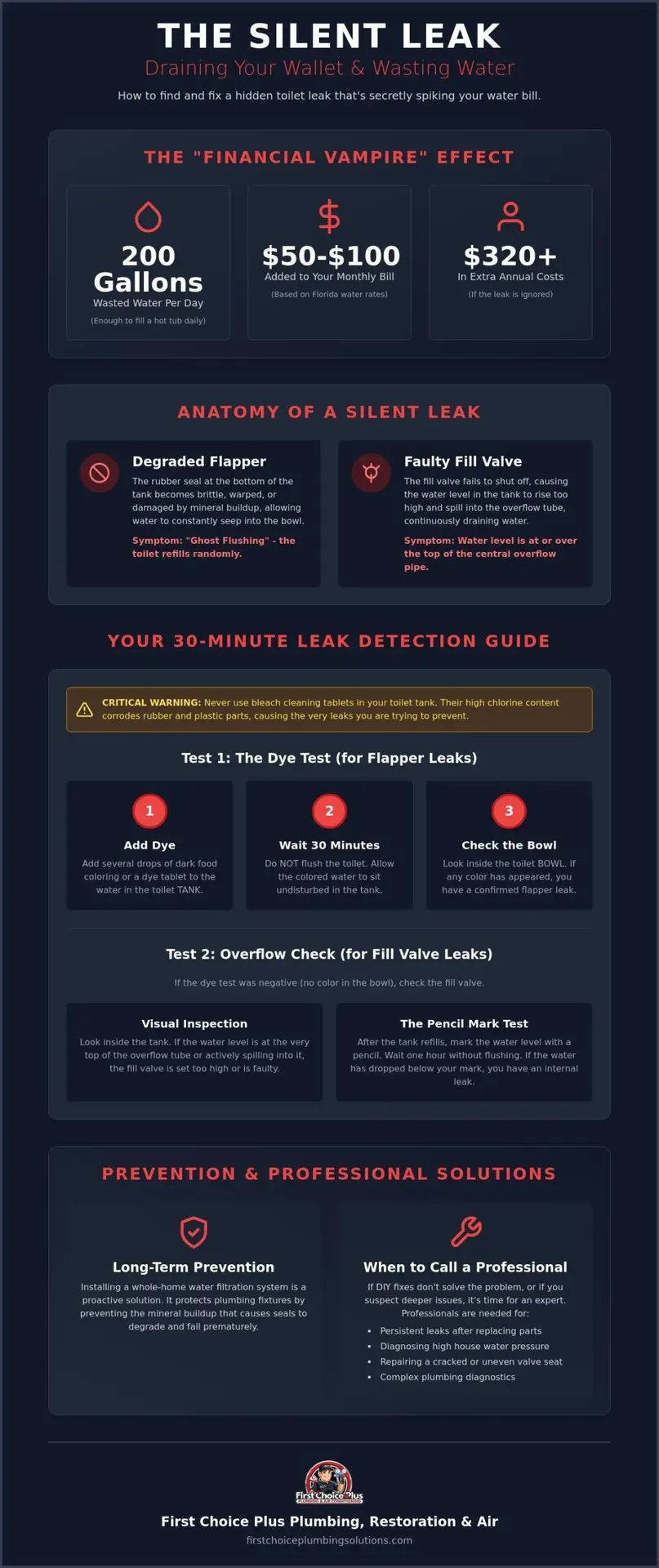
The most reliable DIY method is the tank-to-bowl dye test. Follow these three steps to get a clear answer. First, remove the tank lid and add several drops of dye or a tablet until the water is deeply colored. Second, wait exactly 30 minutes. Do not flush the toilet during this time. Third, look inside the toilet bowl. If the water has changed color, you have a confirmed flapper leak. If the water remains clear, the seal is holding, but you aren’t done yet. The EPA suggests you Check your toilet for leaks at least once a year to stay ahead of these silent costs.
Inspecting the Overflow Tube
If the dye test is negative, the culprit is likely the fill valve. Remove the tank lid again and look at the open vertical pipe in the center. This is the overflow tube. If the water level is sitting at the very top or spilling into it, your fill valve is not shutting off correctly. You can often fix this by adjusting the float arm or dial to lower the water level. Another effective trick is the pencil mark test. Flush the toilet, let it refill completely, and then use a pencil to mark the water level inside the tank. Check it again after one hour of non-use. If the water has dropped below your mark, you have confirmed an internal leak. For more persistent issues, you may need professional plumbing leak detection to ensure your pipes aren’t the real source of the high bill.
Professional Solutions and Prevention for Florida Homeowners
Sometimes, even after learning how to find a silent toilet leak that’s raising my water bill, the standard DIY fixes don’t quite solve the problem. In Port St. Lucie, our unique water chemistry and high humidity create a harsh environment for plumbing fixtures. High mineral content in the local water supply accelerates the degradation of rubber seals, while high house water pressure can force water past even a brand-new fill valve. If you have already replaced the flapper and verified the water level is correct, but your meter is still spinning, the issue might be a cracked flush valve seat or a more complex pressure problem that requires technical expertise.
Professional Plumbing Leak detection & Repair services use specialized acoustic equipment and pressure gauges to find leaks that a simple dye test might miss. We often recommend installing water filtration & softener systems to protect your investment. By removing the harsh minerals that cause pitting and corrosion on valve seats, you extend the life of every toilet in your home and prevent the rubber components from becoming brittle prematurely.
When to Call a Licensed Plumber
Knowing when to put down the wrench saves you from expensive mistakes. Overtightening the bolts between the tank and bowl is a common DIY error that can easily crack the porcelain, turning a small leak into a major flooding emergency. You should contact a professional if you experience any of the following:
- Persistent “ghost flushing” that continues after you have replaced the internal flapper and fill valve.
- Water pooling around the base of the toilet, which could indicate a failing wax ring rather than an internal tank leak.
- A spiking water bill where no toilet leak is found, suggesting a potential slab leak hidden under your home’s foundation.
Preventative Maintenance Checklist
Prevention is always more affordable than a midnight emergency repair. Use this checklist to keep your bathroom plumbing in top shape and your utility costs low:
- Conduct an annual dye test on every toilet in the home to catch silent leaks early.
- Select “chlorine-resistant” flappers specifically designed for the treated water found in Florida homes.
- Check the shut-off valve behind the toilet for any signs of corrosion or stiffness once every six months.
- Listen for any unusual whistling or vibrating sounds during the refill cycle, which can signal a failing fill valve.
Take Control of Your Home’s Plumbing Health
You now have the tools and knowledge to identify the “financial vampire” hiding in your bathroom. By mastering the dye test and understanding how Port St. Lucie’s water chemistry affects your fixtures, you’ve taken a major step toward lowering your utility costs. While learning how to find a silent toilet leak that’s raising my water bill is a great start, some plumbing mysteries require the steady hand of a master craftsman to solve permanently. We believe every homeowner deserves transparency and a home free from hidden water waste.
Since 2007, First Choice Plus Plumbing & Air has served as a dependable, family-owned pillar of the Treasure Coast community. We specialize in expert leak detection and remain available for 24/7 emergency repairs when a DIY fix isn’t enough. Our team is committed to professional validation, honest pricing, and the long-term comfort of your home. Stop the drain on your wallet; Schedule a professional leak inspection with First Choice Plus Plumbing & Air today! We look forward to helping you restore peace and efficiency to your home’s plumbing system.
Common Questions About Silent Toilet Leaks
Is a silent toilet leak an emergency?
A silent toilet leak is rarely a structural emergency, but it is a financial one that requires prompt attention. While it won’t flood your bathroom floor like a burst pipe, the constant flow of water through the internal system can inflate your utility costs significantly. If you aren’t sure how to find a silent toilet leak that’s raising my water bill, you should investigate as soon as possible to prevent another month of overpaying.
How much water does a leaking toilet really waste?
A typical silent leak wastes approximately 200 gallons of water every day. If the issue escalates to a full running toilet, the waste can reach as high as 4.5 gallons per minute, which totals over 6,000 gallons in a single day. This volume of water is enough to fill a standard swimming pool in less than a week. Catching these leaks early is the most effective way to protect your household budget.
Why does my toilet flush itself occasionally?
This phenomenon is known as “ghost flushing” and happens when water seeps out of the tank into the bowl. When the water level in the tank drops below a certain point, the fill valve automatically opens to replenish it, creating a short flushing sound. This is a definitive sign of a failing flapper or a warped seal. Replacing the internal components usually stops the noise and the associated water waste immediately.
Can I use a leak detection dye tablet if I have a septic tank?
Yes, most specialized leak detection tablets and standard food colorings are non-toxic and safe for septic systems. They contain biodegradable dyes that won’t harm the beneficial bacteria your tank needs to process waste. However, you should always avoid using drop-in bleach or chemical cleaning tablets. Those harsh chemicals can kill the bacteria in your septic tank and corrode the rubber seals inside your toilet tank, eventually leading to more expensive repairs.

Article by
Written by First Choice Plus Plumbing & Air Team
This article was created by the team at First Choice Plumbing Solutions, a licensed and experienced plumbing and HVAC company serving Port St. Lucie, Land O’ Lakes, and surrounding areas.
Our team specializes in plumbing and air conditioning services, including drain cleaning, leak detection, water heater repair and installation, AC repair, maintenance, and system installations. Our content is based on real-world experience and the common issues we solve for homeowners and businesses every day.
We aim to provide accurate, helpful, and easy-to-understand information so you can make informed decisions about your plumbing and HVAC needs.
If you need reliable, professional service, First Choice Plumbing Solutions is here to help.
Disclaimer
Disclaimer: The information provided in this article is for general informational purposes only and does not constitute professional plumbing or HVAC advice. Every situation is different, and readers should consult a licensed professional for proper diagnosis and repair. First Choice Plus Plumbing & Air is not liable for any damages or losses resulting from the use of this information.