

Did you know that the extremely hard water in Fort Pierce can actually destroy your appliances from the inside out long before their time? It’s a frustrating reality for many of our neighbors across the Treasure Coast who find themselves dealing with a flooded garage or a sudden cold shower. If you’re wondering how to extend the life of your water heater and avoid these messy emergencies, you aren’t alone. Most homeowners in Port St. Lucie expect their tank to last at least a decade, but local mineral buildup and sediment often have other plans.
We understand the stress that comes with rising utility bills and the fear of a major plumbing failure. That’s why we’ve compiled this guide to help you take control of your home’s efficiency. You’ll discover professional maintenance secrets and local water quality tips that can add years to your unit’s lifespan and prevent costly Florida plumbing emergencies. We’ll walk you through a practical maintenance schedule and show you how to keep your system running safely so you can enjoy total peace of mind.
Key Takeaways
- Learn why Treasure Coast hard water often causes tank heaters to fail early and how to compare lifespan expectations for tank versus tankless units.
- Discover the “sacrificial anode rod,” a critical component that protects your tank from corrosion and should be inspected every three years.
- Master a simple 4-step maintenance routine, including annual flushes, to clear out the sediment that leads to high energy bills and noisy tanks.
- Find out how to extend the life of your water heater by using thermal expansion tanks and whole-house filtration to manage pressure and mineral buildup.
Understanding Water Heater Lifespan in the Treasure Coast
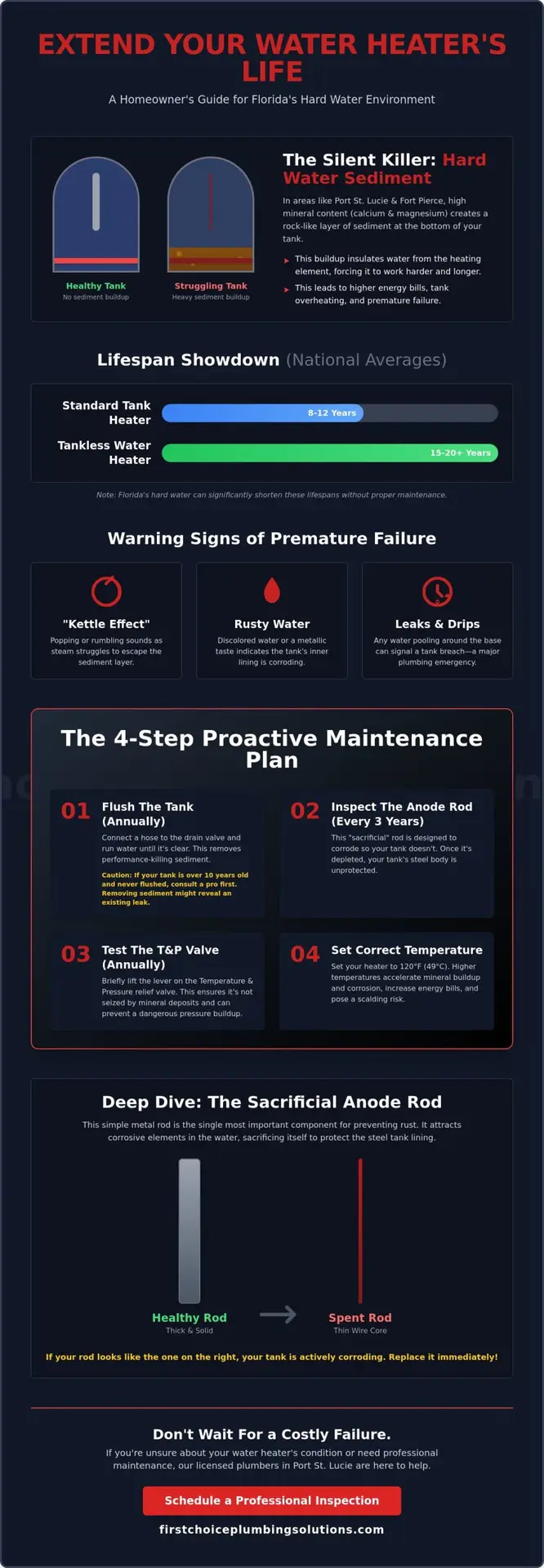
Standard tank models typically provide 8 to 12 years of service, while tankless units offer a longer horizon, often reaching 15 to 20 years. When choosing between different Types of water heaters, it is vital to consider the local environment. In cities like Port St. Lucie, these national averages don’t always apply. Our local water chemistry can drastically shorten these timelines if you don’t take proactive steps. Learning how to extend the life of your water heater starts with recognizing that our regional conditions are uniquely harsh on plumbing.
The primary threat to your system is sediment. Over time, minerals settle at the base of the tank, creating a thick layer of scale. This buildup acts as an insulator, forcing the heating element to work much harder to warm the water above it. This extra strain leads to overheating at the bottom of the tank, which eventually compromises the structural integrity of the steel. This is why many water heater services in the area focus heavily on flushing and cleaning. Understanding these factors is key to knowing how to extend the life of your water heater in a coastal climate.
Why Florida Water Quality Matters
Florida’s groundwater is naturally filtered through limestone, which adds significant amounts of calcium and magnesium to the supply. Hard water is defined as a high concentration of dissolved minerals that create scale buildup on plumbing fixtures and inside heating appliances. In Fort Pierce, where water is exceptionally hard, this limestone settles into a rock-like crust. This “insulation effect” prevents the burner from heating water efficiently, causing your energy bills to climb while your tank’s lifespan plummets.
Warning Signs of Premature Failure
Your heater will often tell you it’s struggling before it fails. Listen for the “kettle effect,” a popping or rumbling sound that occurs when steam bubbles struggle to rise through the sediment layer. You might also notice rusty-colored water or a metallic taste, which suggests the internal lining is deteriorating. It’s critical to distinguish between a minor leak from a pressure valve and a catastrophic tank breach. A breach often results from years of unchecked corrosion, leading to sudden, significant water damage in your home.
The 4-Step Maintenance Routine to Extend System Life
Consistent care is the most effective way to protect your investment. To understand how to extend the life of your water heater, you must move beyond reactive repairs and adopt a proactive schedule. We recommend an annual tank flush and a professional anode rod inspection every three years. Before starting any work, prioritize safety. Always turn off the power at the circuit breaker for electric models or set the gas valve to “pilot” for gas units. This prevents dry-firing the heating elements, which can cause immediate and permanent damage.
Don’t forget to check your Temperature and Pressure (T&P) relief valve. This safety fail-safe is designed to release water if internal pressure reaches dangerous levels. Testing it once a year ensures the valve isn’t seized by mineral deposits. Integrating these simple checks with broader energy-saving strategies helps your system run efficiently while keeping your home safe from pressure-related failures.
How to Flush Your Water Heater Tank
Flushing removes the “sludge” that settles at the bottom of your tank. Connect a standard garden hose to the drain valve at the base of the unit and run the other end to a safe drainage area. Open the valve and let the water run until it appears clear. For a more thorough clean, try a “power flush” by briefly opening the cold water inlet while the drain is still open. This creates turbulence that helps lift stubborn sediment. If your unit is over 10 years old and has never been flushed, proceed with caution. In some cases, heavy sediment is the only thing preventing a leak, and removing it could reveal an existing breach. If you’re unsure about the state of your older unit, scheduling a professional plumbing inspection is a smart first step.
Checking and Replacing the Anode Rod
The sacrificial anode rod is a magnesium or aluminum component that attracts corrosive minerals, allowing it to rust so your steel tank doesn’t have to. A healthy rod looks thick and solid, while a “spent” rod will look like a chewed-up wire core. If you see that wire, the rod can no longer protect your tank. These rods can often become seized due to the hard water in our area. If you can’t loosen the rod with a standard socket wrench, it’s best to call a plumber in Port St. Lucie to handle the replacement without damaging the tank’s threads.
Advanced Protection: Water Quality and Pressure Management
While routine flushing handles existing sediment, advanced protection stops the damage before it starts. One of the simplest ways to understand how to extend the life of your water heater is to adjust your thermostat. Adjusting your setting to 120°F is a smart move. It reduces the rate of mineral precipitation inside the tank. This small change prevents scalding and keeps your heating elements from working overtime. A professional plumbing inspection can also identify hidden issues like pinhole leaks or failing valves before they turn into a full-scale emergency in your garage.
Florida homeowners often face high ambient temperatures and humidity, which can stress external components. Adding a thermal expansion tank is a reliable way to manage this. These small tanks handle the extra volume created when water expands as it heats up. Without one, the constant pressure changes can weaken the welds on your main tank, leading to a premature breach and water damage.
The Impact of Water Softeners on Longevity
In Treasure Coast communities like Stuart and Palm City, the minerals in our water supply are the primary cause of appliance failure. Installing water quality solutions like a softener or whole-house filtration system removes these minerals at the source. This protects your water heater and helps prevent the type of internal pipe corrosion that eventually requires repiping a house. By treating the water itself, you eliminate the rock-hard scale that would otherwise insulate your heating elements and drive up your monthly utility costs.
Managing Water Pressure and Thermal Expansion
High water pressure is a silent killer for many units in Port St. Lucie neighborhoods. If your home’s pressure is consistently high, it puts constant stress on the tank’s structure. A Pressure Reducing Valve (PRV) acts as a shield for your entire plumbing system, keeping pressure at a safe level. If your current system is already showing signs of age or frequent repairs, you might consider upgrading to a tankless water heater. These units eliminate the storage tank entirely, removing the risk of tank-related corrosion and providing a much longer operational life for your home.
Take Control of Your Home’s Hot Water Today
Protecting your investment doesn’t have to be a source of stress. By committing to annual flushes and keeping a close eye on your anode rod, you can effectively combat the harsh mineral content found throughout Port St. Lucie and Fort Pierce. These small, proactive steps prevent the heavy sediment buildup that leads to inefficient heating and unexpected tank failures. Managing your home’s water pressure and investing in quality filtration will further shield your system from the unique challenges of the Florida climate. Learning how to extend the life of your water heater is the best way to ensure your family enjoys consistent comfort without the threat of a sudden plumbing emergency.
First Choice Plus Plumbing & Air has been serving Port St. Lucie since 2007. Our team of expert tank and tankless specialists is here to help you navigate these maintenance tasks with ease. We provide 24/7 emergency plumbing support to ensure you’re never left in a difficult situation. Don’t wait for a flood; schedule your professional water heater tune-up with First Choice Plus today. You deserve the peace of mind that comes with a safe, efficient, and long-lasting home.
Common Questions About Water Heater Maintenance
How often should I flush my water heater in Florida?
You should flush your water heater at least once every year to prevent sediment from hardening into scale. In areas like Fort Pierce where the water is described as extremely hard, doing this every six months is a better strategy. Regular flushing is a foundational step in learning how to extend the life of your water heater and keeps your energy bills from spiking by maintaining heating efficiency.
What happens if I never replace my water heater’s anode rod?
If you never replace the anode rod, the corrosive minerals in the water will attack the steel lining of your tank once the rod is fully dissolved. This leads to internal rusting, which eventually causes the tank to leak or burst. Replacing this sacrificial component every three to five years is one of the most cost-effective ways to avoid a total system replacement and protect your home from water damage.
Can hard water really break my water heater in just a few years?
Yes, untreated hard water can significantly shorten a unit’s lifespan by causing massive scale buildup on heating elements and the tank floor. In some Treasure Coast neighborhoods, we’ve seen units fail in as little as five or six years because the sediment caused the tank to overheat and crack. This is why many local homeowners choose to install water softeners to protect their plumbing and maintain system efficiency over time.
Is it worth repairing a 10-year-old water heater?
Generally, it isn’t worth investing in major repairs for a tank-style heater that has reached the 10-year mark. Since the average lifespan is 8 to 12 years, a repair at this stage is often just a temporary fix for a system nearing the end of its life. If you’re looking for how to extend the life of your water heater long-term, upgrading to a high-efficiency or tankless model is usually the more financially sound decision.

Article by
Written by First Choice Plus Plumbing & Air Team
This article was created by the team at First Choice Plumbing Solutions, a licensed and experienced plumbing and HVAC company serving Port St. Lucie, Land O’ Lakes, and surrounding areas.
Our team specializes in plumbing and air conditioning services, including drain cleaning, leak detection, water heater repair and installation, AC repair, maintenance, and system installations. Our content is based on real-world experience and the common issues we solve for homeowners and businesses every day.
We aim to provide accurate, helpful, and easy-to-understand information so you can make informed decisions about your plumbing and HVAC needs.
If you need reliable, professional service, First Choice Plumbing Solutions is here to help.
Disclaimer
Disclaimer: The information provided in this article is for general informational purposes only and does not constitute professional plumbing or HVAC advice. Every situation is different, and readers should consult a licensed professional for proper diagnosis and repair. First Choice Plus Plumbing & Air is not liable for any damages or losses resulting from the use of this information.