
Would you rather spend twenty dollars on a gallon of vinegar today or over a thousand dollars on a new heat exchanger next year? In places like Port St. Lucie and Stuart, our water is notoriously hard, often reaching 12 grains per gallon of mineral content. This “liquid rock” quickly turns into limescale that chokes your pipes and kills your appliance’s efficiency. You’ve likely noticed the signs already, like rattling noises or a drop in water pressure, and you’re searching for how to descale a tankless water heater in Florida before the system shuts down entirely.
We know how frustrating it is to deal with rising energy bills and lukewarm showers when you just want a reliable home. This guide will show you the exact steps to protect your tankless water heater from Florida’s aggressive hard water and restore its peak performance. We’ll cover the necessary tools for a DIY flush, the common warning signs of scale buildup, and how to tell when it’s time to call a professional from the Treasure Coast to ensure your system survives for its full twenty-year lifespan.
Key Takeaways
- Understand why the high mineral content in the Florida aquifer makes regular maintenance essential for your unit’s survival.
- Learn how to descale a tankless water heater in Florida using a simple submersible pump kit and food-grade white vinegar.
- Follow a safe shutdown procedure to protect your heat exchanger and ensure you remain compliant with manufacturer warranty requirements.
- Explore long-term solutions like whole-home water softeners to stop mineral buildup before it ever reaches your plumbing fixtures.
Why Florida’s Hard Water Makes Descaling Your Tankless Heater Essential
Florida homeowners often don’t realize their water source is essentially a liquid version of the limestone bedrock our state sits on. The Floridan Aquifer is rich in calcium and magnesium. While these minerals are natural, they create a massive headache for tankless systems. Understanding what hard water is helps explain why your heater struggles. When your unit heats water, these minerals crystallize and “bake” onto the heat exchanger. This layer of scale acts like an insulator, forcing the unit to work harder and run longer to reach the desired temperature.
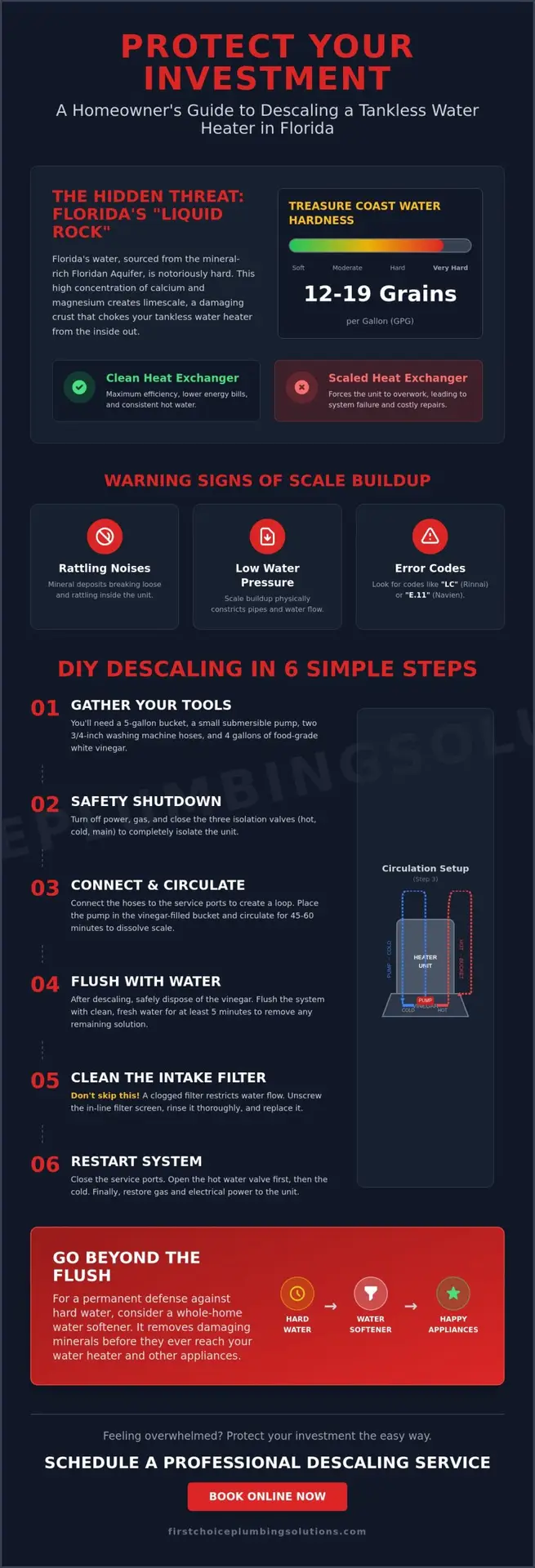
Ignoring this buildup leads to a cascade of problems. You’ll notice a significant drop in hot water pressure at your faucets in Port St. Lucie or Stuart. Eventually, the scale becomes so thick that the system can’t vent properly or detect water flow. This is when you’ll see common error codes like “LC” (Scale Buildup) on a Rinnai or “E.11” on a Navien. If you don’t learn how to descale a tankless water heater in Florida, that scale will eventually cause the heat exchanger to overheat and crack. This results in a replacement cost that dwarfs the price of a simple maintenance flush.
The Treasure Coast Hard Water Factor
In cities like Fort Pierce and Jensen Beach, water hardness levels often reach 12 to 19 grains per gallon. This is considered very hard. While city treatment plants remove some impurities, they rarely eliminate the minerals that cause scale. If you are on a private well in the Land O’ Lakes region, your mineral content might be even higher, requiring more frequent attention. To stop this cycle, many homeowners invest in water quality solutions like softeners to protect their investment. Knowing how to descale a tankless water heater in Florida is your first line of defense against these local geological challenges.
Step-by-Step Guide: How to Descale a Tankless Water Heater Safely
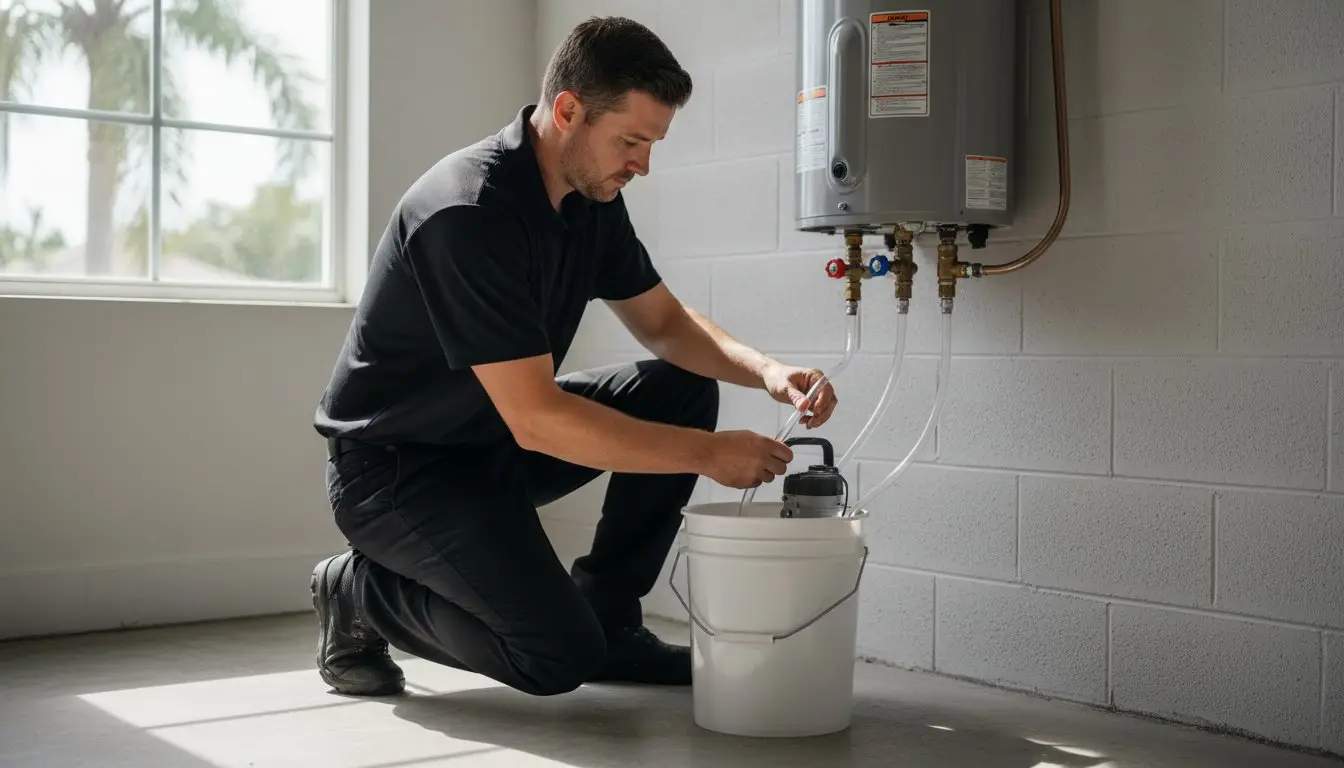
Learning how to descale a tankless water heater in Florida is a skill that pays for itself. Before you start, gather a 5-gallon bucket, a small submersible pump, and two 3/4-inch washing machine hoses. You’ll also need about 4 gallons of food-grade white vinegar. Some homeowners prefer commercial descalers, but vinegar is highly effective at dissolving the calcium deposits found in our Treasure Coast water.
Safety is your priority. Begin by turning off the electrical power supply and the gas or electric source to the unit. Next, close the three isolation valves: the cold water inlet (blue), the hot water outlet (red), and the main gas line. This stops water from entering your home during the flush. Remove the caps from the service ports and connect your hoses. Place the pump in the bucket filled with vinegar, connect the “in” hose to the cold service port, and run the “out” hose from the hot service port back into the bucket. Plug in the pump and let it circulate for 45 to 60 minutes. Maintaining peak performance is a goal shared by the U.S. Department of Energy, and this circulation time ensures the heat exchanger is completely clear.
Flushing and Cleaning the Intake Filter
Once the hour is up, turn off the pump and dump the vinegar. You must flush the system with fresh water for five minutes to prevent internal corrosion. Don’t skip the most important part: the in-line filter. This small screen catches sediment before it can damage the unit. A clean heat exchanger is useless if the intake filter is clogged with Florida limestone sand. Unscrew it, rinse it under a tap, and put it back.
Restarting Your System
To restart, close the service ports first. Open the hot water isolation valve (red) and then the cold water valve (blue). This order helps push air out of the lines naturally. Finally, turn the gas and power back on. If your unit has a “Service Required” light, you might need to consult your manual or reset the control board. Knowing how to descale a tankless water heater in Florida helps you avoid unnecessary emergency calls. If this process feels like more than you want to tackle on a Saturday morning, our team offers professional water heater services to handle the heavy lifting for you.
Beyond the Flush: Maintaining Peak Efficiency in the Treasure Coast
Establishing a consistent maintenance schedule is the only way to stay ahead of Florida’s geology. While manufacturers often suggest an annual flush, our local water quality usually dictates a more aggressive approach. Because the U.S. Geological Survey defines water hardness by the concentration of calcium and magnesium, homeowners in Port St. Lucie and Stuart often find that descaling every 6 to 12 months is necessary to prevent efficiency loss. If you wait too long, you might hear a persistent rattling sound inside the unit. This often indicates that scale has broken loose and is bouncing around the heat exchanger, which can lead to permanent damage.
When to Call First Choice Plus
Sometimes, knowing how to descale a tankless water heater in Florida isn’t enough to save a neglected unit. If you notice leaks from the bottom of the heater or if the “Service Required” light returns immediately after a flush, professional intervention is required. DIY attempts carry risks, such as pump failures or accidentally snapping a brittle isolation valve. Our team handles these complex issues across Fort Pierce and Jensen Beach every day. If a maintenance attempt goes wrong, we provide emergency plumbing repairs to get your hot water back online safely.
Long-Term Protection Strategies
A “Scale Shield” or whole-home water softener is the best way to stop mineral buildup permanently. These systems treat the water before it ever reaches your heater, protecting your pipes and your whole house repipe investment. We are available 24/7 for residents in Tradition and St. Lucie West who need expert guidance on water quality. Protecting your home’s infrastructure is a marathon, not a sprint, and we are here to help you every step of the way with honest advice and reliable service.
Secure Your Home’s Hot Water for Years to Come
Maintaining a tankless system in the Treasure Coast is a unique challenge that requires consistent action. You now have the essential knowledge on how to descale a tankless water heater in Florida, from handling the vinegar flush to cleaning the intake filter that traps local sediment. Remember that performing this maintenance every six to twelve months is the best way to avoid a premature heat exchanger failure and keep your monthly energy bills low. By staying proactive, you protect your unit from the aggressive minerals found in our local aquifers.
If you prefer to leave the pumps and hoses to the experts, our team is ready to step in. First Choice Plus Plumbing & Air has been locally owned and operated since 2007, and we possess deep expertise in managing high-mineral Florida water systems. We provide 24/7 emergency service in Port St. Lucie to ensure your home remains comfortable and functional at all times. We take pride in being the steady hand that keeps your plumbing running smoothly.
Schedule Your Professional Tankless Flush with First Choice Plus Today!
Your water heater is a major investment in your home’s long term comfort. With a little bit of regular care and the right local partner, your system will provide reliable hot water for decades.
Frequently Asked Questions
How often should I descale my tankless water heater in Florida?
You should descale your tankless water heater every 6 to 12 months to combat our local water conditions. Because Florida’s aquifer is naturally rich in limestone, mineral buildup happens much faster here than in many other states. If you live in a high-mineral area like Fort Pierce or Jensen Beach, a bi-annual flush is often the safest way to maintain your manufacturer’s warranty and keep your energy efficiency high.
Can I use regular vinegar to descale my tankless water heater?
Yes, you can use standard food-grade white vinegar to descale your unit effectively. It’s an affordable and safe option that dissolves calcium deposits without the harshness of industrial chemicals. You’ll typically need about 4 gallons for a thorough cleaning. This is the preferred method for how to descale a tankless water heater in Florida because it’s environmentally friendly and won’t damage the sensitive internal gaskets of your system.
What happens if I never descale my tankless water heater?
If you never descale your heater, the mineral layer will eventually cause the heat exchanger to overheat and crack. This neglect leads to total system failure and a replacement that can cost over a thousand dollars. Before it fails, you’ll deal with rising energy bills and inconsistent temperatures. Learning how to descale a tankless water heater in Florida is the best way to prevent these expensive Treasure Coast plumbing emergencies.
Do I need a special pump to flush my water heater?
You do need a small submersible pump to circulate the cleaning solution through the internal copper piping. A standard garden hose doesn’t provide the necessary loop or pressure required for a proper flush. Most homeowners use a 1/6 HP submersible pump placed inside a 5-gallon bucket. This setup ensures the vinegar moves continuously through the narrow passages of the heater to dissolve every bit of scale.
Will descaling my water heater improve my water pressure?
Descaling will significantly improve your hot water pressure if mineral deposits were obstructing the flow. Scale often collects in the narrow passages of the heat exchanger and the cold water intake filter. By clearing these blockages, you restore the original flow rate to your showers and faucets. It’s a simple way to bring back the performance your system had when it was first installed in your home.

Article by
Written by First Choice Plus Plumbing & Air Team
This article was created by the team at First Choice Plumbing Solutions, a licensed and experienced plumbing and HVAC company serving Port St. Lucie, Land O’ Lakes, and surrounding areas.
Our team specializes in plumbing and air conditioning services, including drain cleaning, leak detection, water heater repair and installation, AC repair, maintenance, and system installations. Our content is based on real-world experience and the common issues we solve for homeowners and businesses every day.
We aim to provide accurate, helpful, and easy-to-understand information so you can make informed decisions about your plumbing and HVAC needs.
If you need reliable, professional service, First Choice Plumbing Solutions is here to help.
Disclaimer
Disclaimer: The information provided in this article is for general informational purposes only and does not constitute professional plumbing or HVAC advice. Every situation is different, and readers should consult a licensed professional for proper diagnosis and repair. First Choice Plus Plumbing & Air is not liable for any damages or losses resulting from the use of this information.