
Did you know that the “Florida well water cocktail” flowing through your home could be costing you up to $1,980 every year in appliance damage and wasted soap? If you live in Lutz, you have likely seen the orange stains on your laundry or dealt with the embarrassing sulfur odor that hits the air when guests use the bathroom. Understanding how to choose a water softener for well water in Lutz is about more than just getting rid of “hard” water. It is about defending your home against the specific blend of calcium, iron, and sulfur that defines our local aquifer.
We know how stressful it is to watch your dishwasher and water heater slowly succumb to scale buildup. In this 2026 guide, we will walk you through the essential steps to select a system that provides clean, odorless water while extending the lifespan of your plumbing. You will learn about the latest FDEP regulations and why salt-based systems are often the only reliable choice for the 8 to 15 grains of hardness found in our area. Let’s get your home back to being a place where you can enjoy a fresh shower without the worry of stains or smells.
Key Takeaways
- Identify the three main culprits—calcium, iron, and sulfur—that make up the unique “Lutz well water cocktail” and ruin your household fixtures.
- Master how to choose a water softener for well water in Lutz by prioritizing salt-based ion exchange systems for the region’s 8-15 grains of hardness.
- Learn why pairing your softener with an Air Injection Oxidizing (AIO) system is the secret to removing stubborn sulfur odors and tea-colored stains.
- Protect your plumbing investment by understanding the importance of professional drainage and backwash routing to avoid premature system failure.
- Discover how a tailored treatment plan can save your water heater and pipes from over $1,000 in annual hard water damage.
Identifying the ‘Florida Well Water Cocktail’ in Your Lutz Home
Lutz property owners face a specific set of challenges because of our local geology. Our homes sit atop a porous limestone shelf that saturates the shallow aquifer with minerals. This creates what we often call the “Florida Well Water Cocktail.” Understanding this mixture is the first step in learning how to choose a water softener for well water in Lutz. You aren’t just fighting simple hardness; you are managing a complex blend of calcium, ferrous iron, and hydrogen sulfide gas.
You can start with a simple visual assessment at home. Look inside your toilet tank or at your showerhead. A white, chalky buildup indicates high calcium levels, which typically range from 8 to 15 grains per gallon in our area. If your water looks clear but leaves orange streaks in the sink, you have “clear water” iron. A distinct rotten egg smell confirms the presence of hydrogen sulfide. While these signs are helpful, they don’t tell the whole story. We always recommend a professional lab-grade test. The Florida Department of Health in Hillsborough County provides testing for bacteria and nitrates, which is essential for private well safety.
Signs Your Lutz Well Needs More Than a Basic Softener
Hard water scale and iron staining are different beasts. Scale destroys your water heater’s efficiency, while iron ruins your laundry and fixtures. If you notice tea-colored water that doesn’t settle, you likely have tannins. These organic materials require a specific filtration stage because they can coat and “blind” standard softening resins. Understanding what water softening is helps you realize that a one-size-fits-all approach won’t work for Pasco County groundwater.
Why ‘City Water’ Softeners Often Fail on Lutz Wells
Many homeowners make the mistake of buying a retail system designed for municipal water. City water is already filtered and disinfected. Raw well water is unpredictable. A standard softener might handle calcium, but it will clog or fail prematurely if your iron levels are high. Investing in professional water quality solutions ensures your system is built for raw groundwater, providing the heavy-duty filtration required for our local environment.
Comparing the Best Water Softener Types for Lutz Well Water
Salt-based ion exchange systems remain the gold standard for Florida homes. These units physically remove calcium and magnesium ions, replacing them with sodium. This is the only proven method to handle the 8 to 15 grains of hardness common in our area. While “salt-free” conditioners are popular, they don’t actually remove minerals. They just temporarily suspend them. For raw well water with iron and sulfur, these conditioners almost always underperform. Many homeowners ask how to choose a water softener for well water in Lutz when they realize a basic store-bought unit isn’t cutting it.
If your well has that rotten egg smell or orange staining, an Air Injection Oxidizing (AIO) system is a necessary addition. It uses a pocket of air to oxidize sulfur and iron so they can be filtered out before the water reaches your softener. Larger families in Land O’ Lakes often benefit from dual-tank systems. These provide soft water 24/7, even when one tank is regenerating. The Florida Department of Health recommends testing your well water annually to ensure your system still matches your water chemistry.
Sizing Your System: Grains, Flow Rate, and Family Size
Calculating your Daily Softening Requirement (DSR) is vital. Multiply the number of people in your home by 75 gallons of water per day, then multiply that by your grains of hardness. A family of four in a Lutz home with 10 grains of hardness needs a system that can handle at least 3,000 grains daily. Most local homes require a 32,000 to 48,000-grain unit. Knowing how to choose a water softener for well water in Lutz means looking past the marketing and focusing on these technical specs. Flow rate is just as important as capacity. If the flow rate is too low, you’ll experience frustrating pressure drops when two showers are running at once.
Essential Features for Well Water Reliability
Look for demand-initiated regeneration. Older timer-based systems waste salt and water by regenerating on a schedule, regardless of usage. Modern units track your actual water consumption. High-quality resin beads are also crucial. They resist the fouling caused by residual iron. If you are unsure which configuration fits your property, exploring professional water quality solutions can help you avoid a costly mismatch.

Professional Installation and Long-Term Care for Lutz Systems
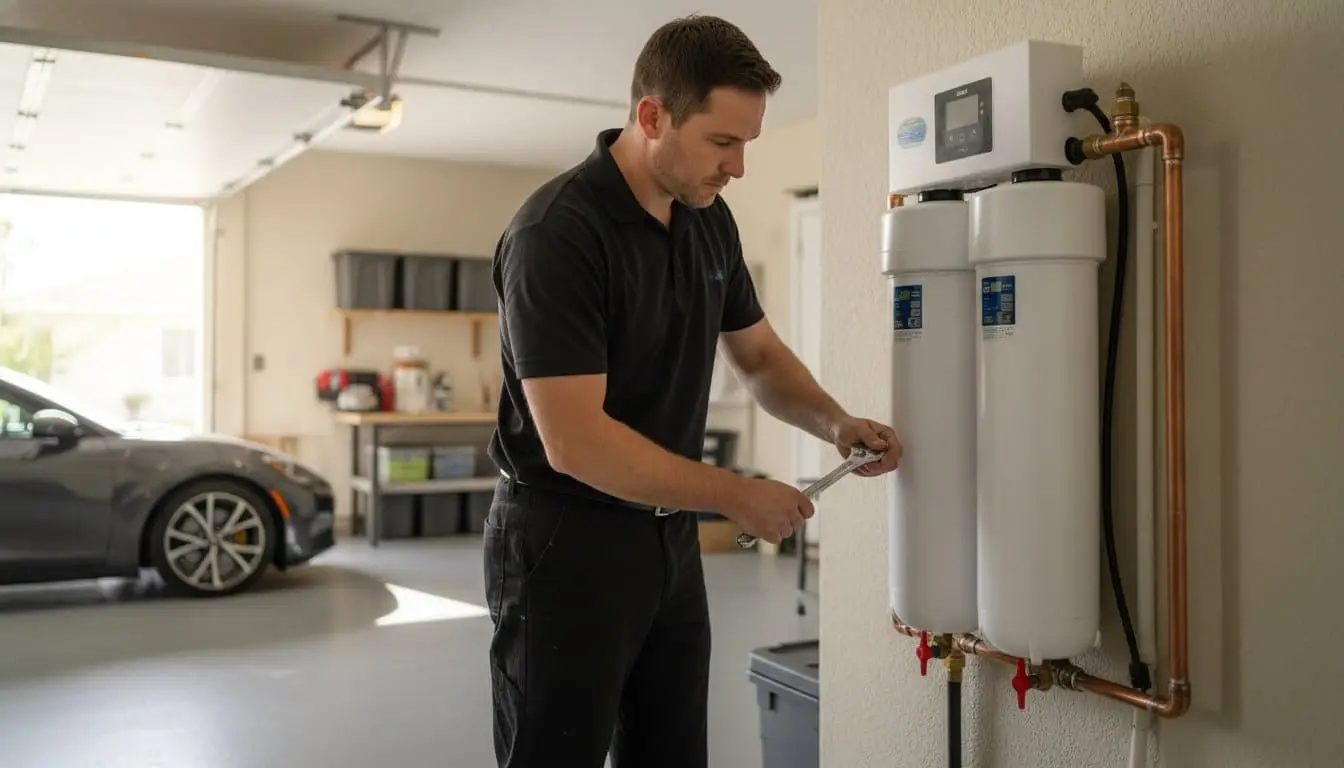
Installing a treatment system for well water is more complex than a standard city water hookup. DIY attempts often lead to “short-cycling,” where the system regenerates too frequently or at the wrong time. This mistake wastes salt and puts unnecessary strain on your well pump. When you are finalizing how to choose a water softener for well water in Lutz, you must consider how the unit integrates with your existing pressure tank. If the softener isn’t calibrated to your pump’s specific flow rate, you may notice a significant drop in water pressure throughout the house.
Proper drainage is another critical factor. The “backwash” or brine discharge needs a dedicated routing path that complies with local Pasco County codes. It shouldn’t just dump into a nearby flower bed or near your well head. For more technical details on system upkeep, this Department of Energy guide to water softeners provides a great baseline for understanding the regeneration process. Regular maintenance is simple but vital. You will need to add salt monthly and clean the brine tank once a year to prevent “salt bridges” from forming.
Choosing a Local Expert in Land O’ Lakes and Lutz
Regional expertise matters because our local geology is unique. A technician who understands the limestone shelf in Lutz can calibrate your system with precision. This local knowledge ensures your settings are optimized for the 2026 water quality standards. Our Land O’ Lakes location specializes in these water softening solutions. Having a neighborly expert on standby for plumbing repairs gives you peace of mind when maintenance emergencies arise.
Protecting Your Home Investment
A properly installed softener is a shield for your entire home. It stops scale from choking your pipes, which can eventually lead to the need for whole house repiping. Your expensive appliances benefit too. By removing harsh minerals, you significantly extend the lifespan of your dishwasher, laundry machine, and water heaters. Learning how to choose a water softener for well water in Lutz is the best way to ensure your home’s infrastructure remains reliable for years to come.
Secure Your Lutz Home’s Water Quality Today
Protecting your plumbing from the harsh minerals found in our local aquifer doesn’t have to be a guessing game. By identifying the specific levels of calcium, iron, and sulfur in your supply, you can select a system that truly works for your household’s needs. We have covered the technical side of how to choose a water softener for well water in Lutz, from sizing your grain capacity to adding essential air injection stages. These steps ensure your water heater and pipes remain clear of scale and corrosion for the long haul.
Our team has served the Lutz and Land O’ Lakes community since 2007. We specialize in the unique chemistry of Florida well water, providing honest recommendations and transparent service with no high-pressure sales. Ready to stop the staining and odors? Schedule your Lutz water quality test with First Choice Plus Plumbing & Air today!
You deserve water that is as clean and refreshing as the Florida sunshine. Let’s work together to keep your home’s plumbing running smoothly.
Frequently Asked Questions
Is well water in Lutz considered ‘hard’?
Yes, Lutz well water is classified as hard, typically measuring between 8 and 15 grains per gallon. This level of mineral content is high enough to cause significant scale buildup in your plumbing and appliances over time. Because of our local limestone geology, untreated water in this range will eventually lead to decreased efficiency in your water heater and white spotting on your fixtures.
How do I get rid of the rotten egg smell in my well water?
You can eliminate the rotten egg smell by installing an Air Injection Oxidizing (AIO) system or a specialized sulfur filter. This odor is caused by hydrogen sulfide gas trapped in the groundwater. While a standard softener removes minerals, it cannot effectively strip away gas. An AIO system oxidizes the gas into a solid form that can then be filtered out before the water enters your home.
Can I use a salt-free water conditioner on a Lutz well?
Salt-free conditioners are generally not recommended for Lutz wells because they don’t physically remove minerals or iron. These systems only “condition” water to prevent scale, which often fails when hardness levels exceed 8 grains per gallon. When researching how to choose a water softener for well water in Lutz, you will find that salt-based ion exchange is the only reliable way to achieve truly soft, mineral-free water.
How much salt will my water softener use each month?
Most Lutz households use between 40 and 80 pounds of salt per month, though this varies based on your water usage and hardness levels. A modern demand-initiated regeneration system is much more efficient than older models because it only uses salt when necessary. Keeping your brine tank at least half-full ensures the system can properly clean the resin beads and maintain peak performance for your plumbing.
Will a water softener help with the orange stains in my tub?
A water softener can help remove low levels of “clear water” iron, but heavy orange staining usually requires an iron filter or an AIO system. If iron levels are high, the mineral can foul the softener’s resin bed and cause the system to fail prematurely. Understanding your specific iron count is a key part of how to choose a water softener for well water in Lutz that protects your fixtures from permanent damage.
Do I need a separate filter for drinking water if I have a softener?
Yes, we typically recommend a Reverse Osmosis (RO) system for drinking water even if you have a softener. Softeners are designed to protect your plumbing by removing minerals, but they don’t filter out contaminants like nitrates, lead, or PFAS. An RO system provides an extra layer of security, ensuring your family has access to purified, great-tasting water for cooking and drinking regardless of your well’s raw water quality.

Article by
Written by First Choice Plus Plumbing & Air Team
This article was created by the team at First Choice Plumbing Solutions, a licensed and experienced plumbing and HVAC company serving Port St. Lucie, Land O’ Lakes, and surrounding areas.
Our team specializes in plumbing and air conditioning services, including drain cleaning, leak detection, water heater repair and installation, AC repair, maintenance, and system installations. Our content is based on real-world experience and the common issues we solve for homeowners and businesses every day.
We aim to provide accurate, helpful, and easy-to-understand information so you can make informed decisions about your plumbing and HVAC needs.
If you need reliable, professional service, First Choice Plumbing Solutions is here to help.
Disclaimer
Disclaimer: The information provided in this article is for general informational purposes only and does not constitute professional plumbing or HVAC advice. Every situation is different, and readers should consult a licensed professional for proper diagnosis and repair. First Choice Plus Plumbing & Air is not liable for any damages or losses resulting from the use of this information.