
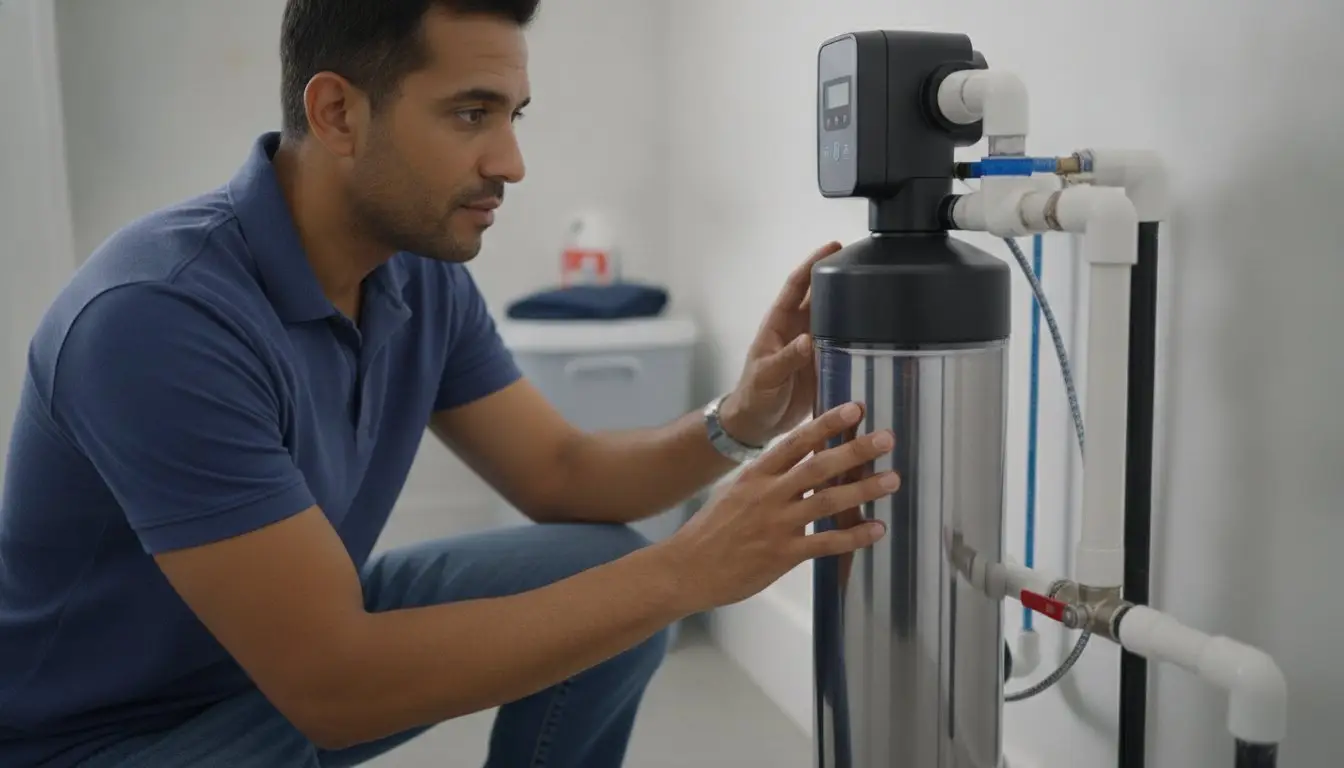
You step out of the shower only to find your skin feels itchy and those stubborn white spots have returned to your expensive bathroom fixtures. You have been adding salt to the brine tank, but your water still feels “hard” and your soap refuses to lather. It is a common frustration for many Florida homeowners who suspect their system has stopped its cleaning cycle. Learning how to check if your water softener is regenerating is the first step in protecting your plumbing and your comfort. You deserve to know that the equipment you rely on is actually working to combat the mineral-heavy water common in our local area.
We understand that home maintenance can feel stressful when you aren’t seeing the results you paid for. In this guide, you will learn the physical signs and technical checks to verify your system is functioning correctly. We will cover how to listen for the motor, check salt levels, and even how to force a manual cycle if you need immediate results. By the end, you will have the confidence to manage your system or know exactly when it is time to call a professional plumber for a more detailed inspection.
Key Takeaways
- Understand the ion exchange process and why regular regeneration is vital for removing hard minerals from your Florida water supply.
- Master the technical steps for how to check if your water softener is regenerating by inspecting your control valve and digital display.
- Use the practical “salt level test” to confirm your unit is moving through its cycles and effectively using its brine solution.
- Learn to spot and resolve common physical blockages like salt bridges and mushing that prevent the system from cleaning itself.
- Gain the confidence to troubleshoot your unit at home while knowing exactly when it’s time to call in a local plumbing expert.
The Science of Soft Water: What Happens During Regeneration?
Think of your water softener as a hardworking filter that eventually reaches its limit. Regeneration is the “cleaning” phase where the system flushes out the mineral buildup it has collected from your home’s water. This process relies on a concentrated brine solution to refresh the resin beads inside the tank. Without this cycle, the beads stay coated in minerals, and hard water begins to flow through your faucets again. Knowing how to check if your water softener is regenerating ensures you aren’t wasting salt on a system that has stopped its vital cleaning process.
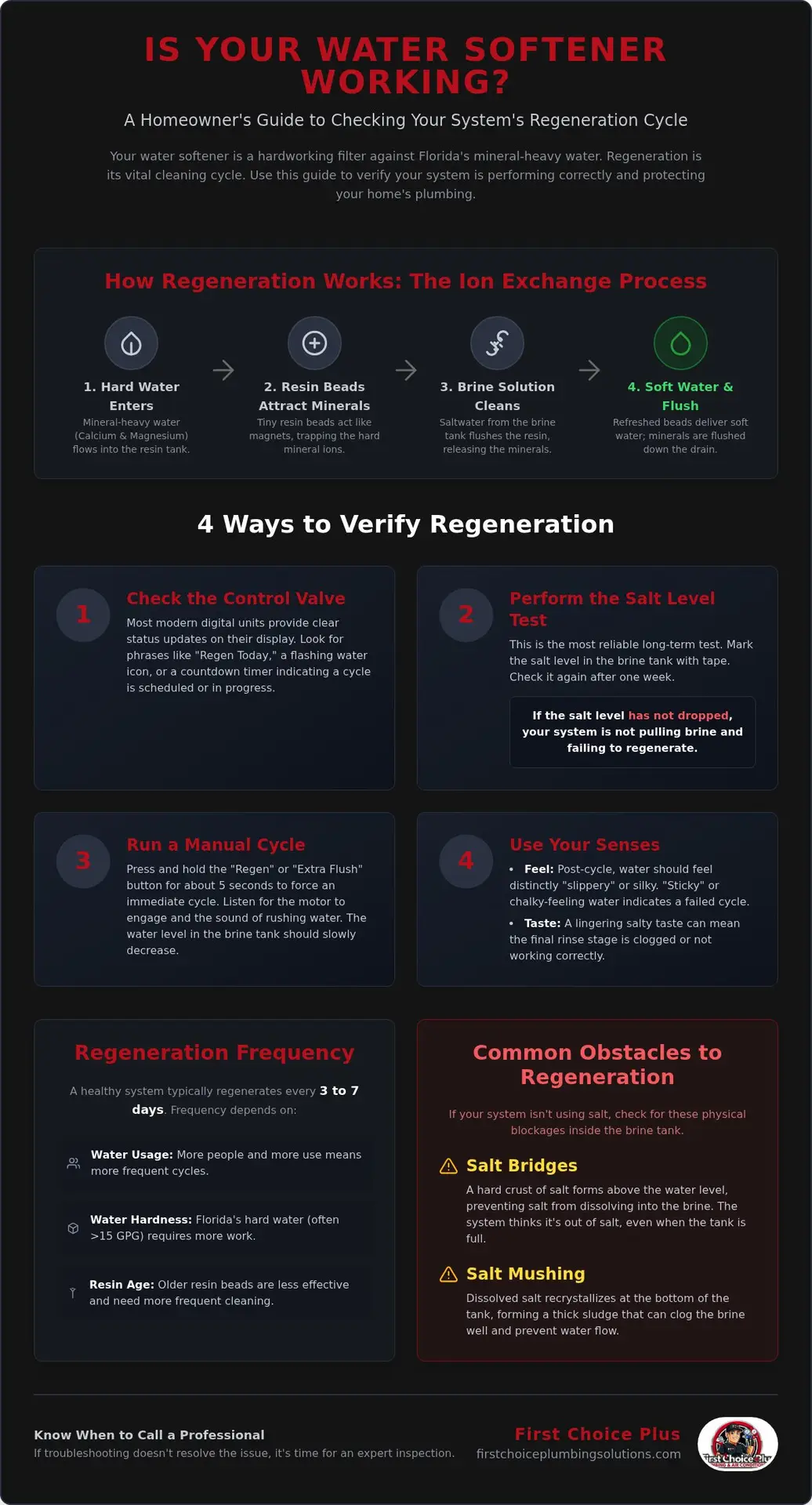
The magic happens through a specific ion-exchange process. Inside the tank, millions of tiny resin beads act like magnets, grabbing onto calcium and magnesium ions. During regeneration, the system floods these beads with saltwater. The sodium in the brine swaps places with the hard minerals, which are then flushed down the drain. This leaves the beads refreshed and ready to soften another batch of water.
Living in Florida adds a layer of complexity to this process. Our state sits on a massive bed of limestone, which saturates our groundwater with high levels of calcium carbonate. In many local areas, water hardness can exceed 15 grains per gallon. This heavy mineral load means your system’s resin beads saturate much faster than they would in other parts of the country. Reliable water quality solutions depend on a system that can handle this constant mineral assault through regular, effective regeneration.
How Often Should Your System Regenerate?
Most healthy systems cycle every 3 to 7 days. Several factors influence this frequency, including:
- Water Usage: A full house with frequent laundry and showers triggers cycles more often.
- Hardness Levels: Higher mineral content in your local supply forces the system to work harder.
- Resin Age: Older resin beads lose their “magnetic” strength and may require more frequent cleaning to stay effective.
Timer vs. Demand: Knowing Your Valve Type
Identify your system type by looking at the control valve on top of the tank. Older models typically use timer-based systems. These function like a simple clock, triggering a cycle at a set time regardless of how much water you actually used. Modern homes usually feature demand-initiated regeneration (DIR) systems. These units use digital sensors to track actual gallon usage. They only regenerate when the resin is nearly full, which saves water and salt. Knowing which one you own helps you understand when to expect the system to kick into gear.
Step-by-Step: How to Verify Your Water Softener is Regenerating
Confirming your system’s operation starts with the control valve located at the top of your tank. Most modern digital units provide clear status updates. Look for phrases like “Regen Today,” a flashing faucet icon, or a countdown timer. If the display is blank or showing an error code, the system likely isn’t triggered to clean itself. Learning how to check if your water softener is regenerating doesn’t require specialized tools, just a bit of consistent observation over a few days.
The “Salt Level Test” is the most reliable way to track performance over time. Mark the outside of your brine tank with a piece of painter’s tape at the current salt level. Check it again after one week. If the salt level hasn’t dropped at all, your system is stagnant and failing to pull the brine solution it needs to refresh the resin beads. You can also observe the discharge pipe during a suspected cycle. A steady flow of water indicates the softener regeneration discharge is successfully clearing out trapped minerals from the tank.
Performing a Manual Regeneration Test
You don’t have to wait until 2:00 AM to see if your system works. Most valves have a “Regen” or “Extra Flush” button. Press and hold this button for five seconds to force an immediate cycle. Listen for the motor to engage and the sound of rushing water. During the “Brine Draw” stage, watch the water level in the brine tank; it should slowly decrease as the system pulls the saltwater into the resin tank.
The Sensory Checklist: Sounds and Water Feel
Pay attention to how the water feels on your skin immediately following a cycle. Soft water has a distinct “slippery” or silky feel because it lacks the abrasive minerals found in hard water. If your water suddenly feels “sticky” or leaves a chalky residue on your hands, the regeneration cycle likely failed. A successful cycle should also leave your water tasting clean. If you notice a lingering salty taste, the final rinse stage may be clogged. For comprehensive Water quality solutions for Florida homes, our team can help you calibrate your settings to match the specific hardness levels in your neighborhood.
Common Obstacles: What to Do if Regeneration Fails
Even if you understand how to check if your water softener is regenerating, you might find that the system simply isn’t responding to your manual commands. Physical blockages are often the primary culprit. A “salt bridge” occurs when a hard crust forms across the brine tank, creating a hollow space between the salt and the water below. You can often break this bridge by gently pushing on the salt with a broom handle. Be careful not to use excessive force, as you don’t want to crack the plastic tank walls or damage the internal components.
Another common physical issue is “salt mushing.” This happens when salt pellets break down into a thick, pasty sludge at the bottom of the tank. This mush clogs the intake well, preventing the system from drawing the brine solution into the resin tank. Beyond physical blocks, keep an eye on your digital display for error codes like E1 or E2. These usually indicate a motor failure or a synchronized gear issue. If the screen is completely blank, your circuit board may have suffered a surge, which is a frequent problem during Florida’s stormy season.
In areas like Port St. Lucie, homeowners using well water often deal with high iron and sediment levels. These particles can lead to resin bed fouling. When iron coats the resin beads, the standard saltwater brine can’t wash it away. Your system might go through the motions of a cycle, but the water stays hard because the beads are physically blocked from performing the ion exchange.
When to Call a Professional Plumber
Some repairs require the steady hand of a master craftsman to avoid further damage. You should reach out for professional help if you notice:
- Water actively leaking from the control valve or pooling at the base of the unit.
- The system getting stuck in a “regeneration loop,” where it runs continuously and wastes hundreds of gallons of water.
- Hard water persists even after you’ve cleared salt bridges and verified the brine draw is working.
Maintenance Tips for Treasure Coast Homeowners
Consistent maintenance is the key to local water security. We recommend an annual professional inspection to deep-clean the brine tank and test the valve’s mechanical parts. Using high-quality evaporated salt pellets instead of rock salt also reduces the risk of bridges and mushing. If your system fails or starts leaking unexpectedly, our team provides reliable Emergency plumbing repairs in Port St. Lucie to get your soft water back online. Taking these small steps now prevents the stress of a major plumbing emergency later.
Protect Your Home with Reliable Soft Water
Managing the mineral content in your Florida home doesn’t have to be a guessing game. By understanding the ion-exchange process and keeping a close eye on your brine tank, you can ensure your system stays in top shape. Knowing how to check if your water softener is regenerating allows you to catch minor issues like salt bridges or power failures before they result in itchy skin or damaged fixtures. Regular observation and simple manual tests are your best defense against the heavy limestone deposits found in our local groundwater.
When DIY troubleshooting isn’t enough, you need a steady hand you can trust. First Choice Plus Plumbing & Air brings over 15 years of local experience to every service call. We pride ourselves on honest, transparent pricing and remain available with 24/7 emergency service for your most urgent needs. Still seeing spots on your dishes? Schedule a water softener inspection with First Choice Plus Plumbing & Air today! We are committed to keeping your water soft and your plumbing protected for the long haul.
Common Questions About Water Softener Regeneration
How long does a water softener regeneration cycle usually take?
A typical regeneration cycle takes between 85 and 120 minutes to complete. The exact duration depends on your system’s capacity and the specific settings programmed into the control valve. During this time, the unit moves through several stages, including backwashing, brine drawing, and a final rinse to ensure all salt is cleared from the resin beads before the system returns to service.
Can I use water while my softener is regenerating?
You can use water during a cycle, but it won’t be softened. Most systems feature an automatic bypass that allows water to flow into your home while the resin tank is cleaning itself. However, this water bypasses the softening process, meaning you’ll be sending hard minerals directly into your water heater and plumbing fixtures. It’s best to avoid running the dishwasher or laundry until the cycle finishes to prevent scale buildup.
Why is my water softener regenerating every night?
Regenerating every night usually indicates that your hardness settings are too high or you have a hidden plumbing leak. If you are researching how to check if your water softener is regenerating at the correct frequency, look for running toilets or dripping faucets that might be tricking a demand-based system into overworking. Most local households only require a cycle every 3 to 7 days.
What does it mean if my water softener display is blank?
A blank display usually means the system has lost power or the circuit board has failed. Check the power cord and ensure the outlet hasn’t tripped a GFCI breaker. Florida’s frequent lightning strikes and power surges can easily fry internal electronics. If the power source is active but the screen stays dark, the control head likely needs a professional repair or replacement to restore functionality.
Is it normal to hear water running in the middle of the night from my softener?
Yes, it’s perfectly normal to hear rushing water or a humming motor during the early morning hours. Most softeners are factory-set to regenerate at 2:00 AM when water usage is at its lowest. These sounds are simply the system flushing the brine solution and trapped minerals through the drain line. If the noise continues for more than two hours, the valve might be stuck and requires attention.

Article by
Written by First Choice Plus Plumbing & Air Team
This article was created by the team at First Choice Plumbing Solutions, a licensed and experienced plumbing and HVAC company serving Port St. Lucie, Land O’ Lakes, and surrounding areas.
Our team specializes in plumbing and air conditioning services, including drain cleaning, leak detection, water heater repair and installation, AC repair, maintenance, and system installations. Our content is based on real-world experience and the common issues we solve for homeowners and businesses every day.
We aim to provide accurate, helpful, and easy-to-understand information so you can make informed decisions about your plumbing and HVAC needs.
If you need reliable, professional service, First Choice Plumbing Solutions is here to help.
Disclaimer
Disclaimer: The information provided in this article is for general informational purposes only and does not constitute professional plumbing or HVAC advice. Every situation is different, and readers should consult a licensed professional for proper diagnosis and repair. First Choice Plus Plumbing & Air is not liable for any damages or losses resulting from the use of this information.