
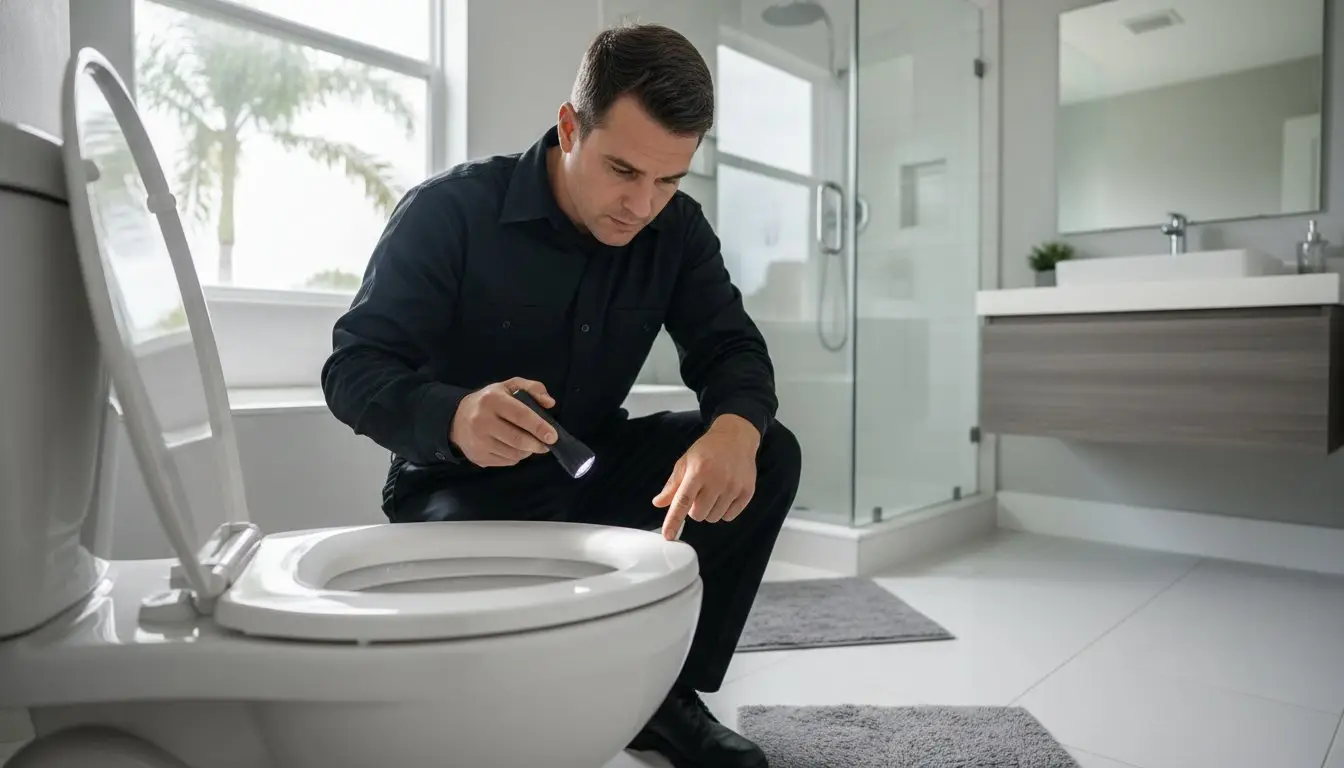
Did you know a running toilet can waste a full gallon of water every 30 seconds? In Port St. Lucie, where water rates climbed by 3.5% for the 2025/2026 fiscal year, that “ghost flushing” sound in the middle of the night is more than just a minor annoyance. It’s a direct hit to your monthly budget. Learning how to check for toilet leaks is the first step in protecting your home from the mineral-rich water of the Floridan Aquifer, which often wears down internal components and causes silent, costly drips.
We understand how stressful it is to open a utility bill and see an unexpected spike. Many Treasure Coast homeowners in St. Lucie West and Tradition worry that a hidden leak might be damaging their subfloor or simply flushing money away. This guide will teach you how to confirm if a leak exists and identify the specific part needing replacement before your next bill arrives. We’ll walk through simple diagnostic tests, explain why our local hard water causes these issues, and highlight how you can save money through local toilet replacement rebates.
Key Takeaways
- Learn how to check for toilet leaks using simple “Sound” and “Paper Towel” tests to catch silent internal drips before they impact your utility bill.
- Discover why Port St. Lucie’s mineral-rich water and common “in-tank” cleaners act as a “hidden tax” by corroding rubber seals and valves.
- Identify the warning signs of external leaks around the base that can lead to expensive subfloor damage in Florida homes.
- Pinpoint the exact internal part needing replacement, allowing you to handle simple repairs or know exactly what to tell a professional.
- Understand how to qualify for local toilet rebates in areas like St. Lucie West to offset the cost of upgrading to high-efficiency models.
The Three-Step Diagnostic: How to Check for Internal Toilet Leaks
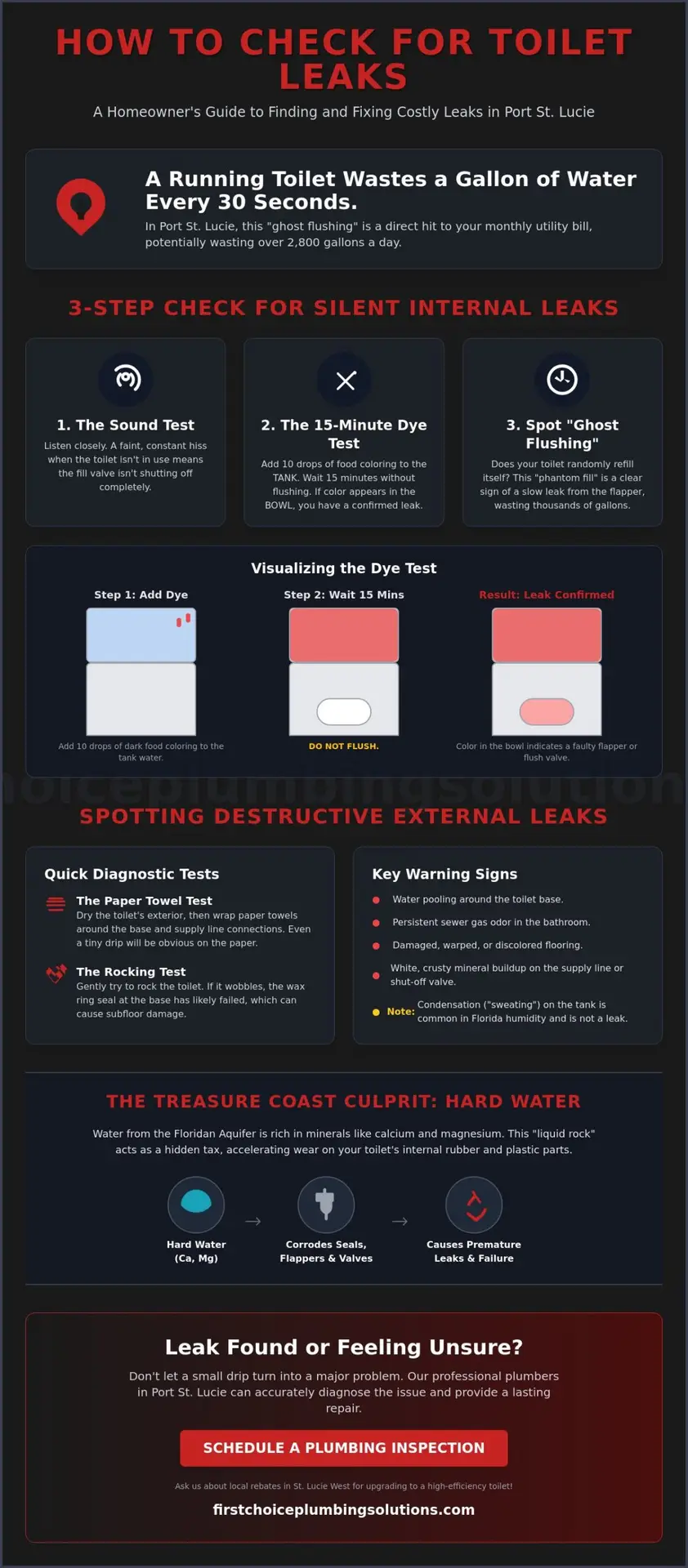
Most homeowners expect a leak to look like a puddle on the bathroom floor. However, internal leaks are much more common and far more deceptive. These silent drips occur within the tank and bowl, making them impossible to spot with a quick glance. Because a running toilet can waste a gallon of water every 30 seconds, knowing how to check for toilet leaks is essential for keeping your Port St. Lucie utility bills manageable. Start by performing a simple sound test. If you hear a faint, constant hiss or the sound of running water when the toilet hasn’t been used, the fill valve likely isn’t shutting off properly.
Performing the 15-Minute Dye Test
This is the most reliable way to confirm a silent leak. First, carefully remove the tank lid and set it safely on a towel. Add about 10 drops of dark food coloring, such as blue or green, into the water inside the tank. It is vital that you do not flush the toilet for at least 15 minutes while the dye sits. If you see colored water seeping into the bowl after that time, you have a confirmed leak. Seeing color in the bowl indicates a faulty flapper or a flush valve seat that no longer creates a watertight seal, which is a common issue in many low-flush toilet models found across the Treasure Coast.
Identifying ‘Ghost Flushing’ and Phantom Fills
Have you ever heard your toilet suddenly start refilling for a few seconds in the middle of the night? This phenomenon is known as “ghost flushing.” It occurs when a slow leak at the flapper allows the water level in the tank to drop below a specific threshold. The fill valve then kicks on automatically to top the tank back up. This cycle repeats endlessly, day and night, wasting thousands of gallons over a single billing period. If you notice this pattern in your home, it is time to consider professional plumbing repairs to replace the internal seals before the damage to your wallet worsens.
Checking the Perimeter: Signs of External Toilet Leaks
While internal leaks waste water, external leaks destroy property. If you see water pooling around the base of your commode, treat it as a priority. Florida subfloors are particularly vulnerable to moisture; it can quickly lead to structural rot or mold growth in our humid climate. Understanding how to check for toilet leaks on the outside of the fixture requires a keen eye for subtle moisture. Use the “Paper Towel Test” to identify slow drips from tank bolts or the supply line. Wipe the entire fixture dry, then wrap a fresh paper towel around the connections. Even a single drop will show up clearly on the paper, helping you detect a leaky toilet before it saturates your flooring.
During a Port St. Lucie summer, don’t mistake condensation for a leak. “Sweating” happens when the cold water inside the tank meets the warm, humid air of your bathroom. If the moisture is only on the surface of the tank and doesn’t reappear after you’ve dehumidified the room, it’s likely just condensation.
Inspecting the Supply Line and Shut-off Valve
Check the compression nut and the shut-off valve behind the toilet. The mineral-rich water in Fort Pierce and Stuart often causes white, crusty mineral buildup on these metal components. This “liquid rock” can corrode the valve over time, making it brittle. Be especially careful with older plastic supply lines. These can snap under pressure without warning, leading to a major flood. If you see green corrosion or moisture on the valve, it’s time to replace it.
Diagnosing a Failed Wax Ring
The wax ring creates the seal between your toilet and the sewer pipe. If your toilet wobbles when you sit, the seal is likely compromised. This “Rocking Test” is a primary indicator of a failed wax ring. You might also notice a persistent sewer gas odor. When the seal breaks, gasses escape into your home along with small amounts of water. Because this water can seep into the foundation, a failing wax ring requires immediate attention to prevent issues that might eventually require slab leak detection near me. If you’re unsure if the moisture is coming from the base or the tank, our team can provide a professional plumbing inspection to pinpoint the exact source.
Why Treasure Coast Water Accelerates Toilet Leaks
Port St. Lucie residents often ask why their toilet components fail so quickly. The answer lies in our local water chemistry. Water sourced from the Floridan Aquifer is rich in calcium and magnesium. These minerals act like “liquid rock,” creating a sandpaper-like surface on the flush valve seat that prevents a watertight seal. When you are learning how to check for toilet leaks, it’s helpful to remember that chlorine, used for city water treatment, also causes rubber flappers to become brittle or gummy over time.
Avoid using “in-tank” bleach cleaning tablets. While they keep the bowl looking clean, they are the number one enemy of your toilet’s internal seals. These chemicals sit in the tank water 24/7, causing rubber components to warp or blister in just a few months. For more tips on maintaining your fixtures, the EPA’s guide to fixing leaks provides excellent visual aids for identifying worn-out parts that lead to high utility bills.
Hard Water and Mineral Buildup in PSL
Calcium deposits don’t just affect the flapper. They can also clog the small rim holes under the seat. This leads to a weak, incomplete flush that might make you think the toilet is clogged when it’s actually just struggling with mineral scale. If you notice white crusty buildup around your fixtures, exploring water quality solutions like a whole-home softener can protect your plumbing from this “hidden tax” on your appliances.
When to Call a Professional Plumber
Sometimes a simple part replacement isn’t enough. If you see hairline fractures in the porcelain tank or bowl, the toilet is no longer safe and must be replaced immediately to avoid a catastrophic flood. Persistent leaks that continue after you’ve replaced the flapper and fill valve may indicate a larger issue with your home’s water pressure or a need for repiping a house if the shut-off valves are failing. First Choice Plus Plumbing & Air serves Port St. Lucie, Stuart, and Jensen Beach with reliable, 24/7 support for any plumbing emergency you can’t solve on your own.
Protect Your Home and Your Budget
Mastering how to check for toilet leaks is a vital skill for every Treasure Coast resident. By using the simple dye test to find silent internal drips and checking the perimeter for failed wax rings, you can prevent structural damage and unexpected utility bill spikes. Our local hard water is notoriously tough on rubber components. Regular inspections are your best defense against the “liquid rock” that wears down your fixtures. If you’ve performed these tests and still hear that phantom flush, it’s time to bring in a professional who understands the specific plumbing challenges of St. Lucie West and Tradition.
Don’t let a silent leak drain your wallet—contact First Choice Plus for expert leak detection in Port St. Lucie today. As expert leak detection specialists serving the Treasure Coast since 2007, we offer the 24/7 emergency plumbing availability you need to resolve chaotic situations with calm competence. Whether you need a simple flapper replacement or a high-efficiency toilet installation, we are here to help. Taking these small steps today ensures your home remains efficient and your utility bills stay predictable for the long term.
Frequently Asked Questions
Will food coloring stain my toilet during a leak test?
Standard food coloring will not stain your toilet bowl as long as you flush the unit immediately after your 15 minute diagnostic period. If you leave high concentration dye in a porous or older porcelain bowl for several hours, you might see a faint ring, but this usually scrubs away with standard bathroom cleaner. This is the safest way to learn how to check for toilet leaks without using harsh chemicals that could damage the internal rubber seals.
How much water does a leaking toilet actually waste per day?
A running toilet can waste a gallon of water in approximately 30 seconds, which adds up to thousands of gallons over a single billing cycle. According to the EPA, a leaky toilet can waste 200 gallons of water a day. In Port St. Lucie, where tiered water rates reach $12.20 per 1,000 gallons for usage over 15,000 gallons, a silent leak can quickly add significant costs to your monthly utility bill.
Why is there water on the floor around the base of my toilet?
Water pooling at the base typically indicates a failed wax ring or a leak from the supply line connection. If the water appears only after a flush, the wax seal between the toilet and the floor flange has likely been compromised. However, if the water is constant, check the compression nut on the shut-off valve for mineral buildup. Treasure Coast hard water often corrodes these metal parts, leading to slow, persistent drips.
Can I fix a toilet leak myself or should I call a plumber?
Most homeowners can successfully replace a worn flapper or a fill valve using basic tools and parts from a local hardware store. However, if your diagnostic shows a leak coming from a cracked porcelain tank or a failed wax ring, it is best to call a professional. These repairs involve removing the entire fixture and can lead to significant subfloor damage or sewer gas leaks if the new seal is not seated perfectly.
How often should I replace the flapper in my Port St. Lucie home?
You should plan to replace your toilet flapper every one to three years in the Port St. Lucie area. While some manufacturers claim longer lifespans, the chlorine and high mineral content in our local water supply accelerate the breakdown of rubber seals. Routine replacement is a low cost way to avoid the stress of “ghost flushing” and the high water bills that follow. This is a critical part of how to check for toilet leaks and maintain your home.
What does it mean if my toilet makes a whistling sound after flushing?
A whistling or screaming sound usually points to a faulty fill valve or a restricted water supply. As the valve tries to close, internal parts may vibrate or struggle against mineral deposits from our local aquifer. If you hear this noise, it is a clear signal that the internal components are failing. You should address this quickly before the valve fails completely and causes a constant, high volume run that spikes your water bill.

Article by
Written by First Choice Plus Plumbing & Air Team
This article was created by the team at First Choice Plumbing Solutions, a licensed and experienced plumbing and HVAC company serving Port St. Lucie, Land O’ Lakes, and surrounding areas.
Our team specializes in plumbing and air conditioning services, including drain cleaning, leak detection, water heater repair and installation, AC repair, maintenance, and system installations. Our content is based on real-world experience and the common issues we solve for homeowners and businesses every day.
We aim to provide accurate, helpful, and easy-to-understand information so you can make informed decisions about your plumbing and HVAC needs.
If you need reliable, professional service, First Choice Plumbing Solutions is here to help.
Disclaimer
Disclaimer: The information provided in this article is for general informational purposes only and does not constitute professional plumbing or HVAC advice. Every situation is different, and readers should consult a licensed professional for proper diagnosis and repair. First Choice Plus Plumbing & Air is not liable for any damages or losses resulting from the use of this information.