
Imagine it is a sweltering Tuesday afternoon in Port St. Lucie, the humidity is climbing toward 90 percent, and your air conditioner suddenly lets out a final, metallic sigh. It is the moment every Treasure Coast homeowner dreads, but knowing how to budget for an emergency AC replacement before the heat settles in can turn a household crisis into a manageable project. We understand that a sudden system failure feels like a direct hit to your family’s financial security, especially with the complex new energy standards and refrigerant changes taking effect in 2026.
You don’t have to face this cooling crisis with a sense of panic or worry about the immediate strain on your bank account. Our goal is to provide you with a steady hand and a clear financial roadmap so you can make an informed decision under pressure. In the following sections, we will break down the true costs of modern high-efficiency units, explain how the transition to A2L refrigerants affects your bottom line, and highlight the local Florida incentives and financing options that make a fast replacement possible without breaking your budget.
Key Takeaways
- Identify the primary cost drivers for modern systems, including unit tonnage, SEER2 efficiency ratings, and the logistical premiums associated with emergency installs.
- Learn how to budget for an emergency AC replacement by navigating the transition to A2L refrigerants and identifying available Florida-specific energy incentives.
- Explore flexible financing strategies and manufacturer warranties that can help bridge the gap between your emergency fund and the cost of a high-efficiency system.
- Apply the “50% Rule” to decide whether a costly repair is worth the investment or if a full system replacement is the more financially sound long-term choice.
- Understand how the unique salt air environment of the Treasure Coast impacts the “Age Factor” of your unit and when to start planning for its inevitable retirement.
Understanding the Cost Factors of an Emergency AC Replacement
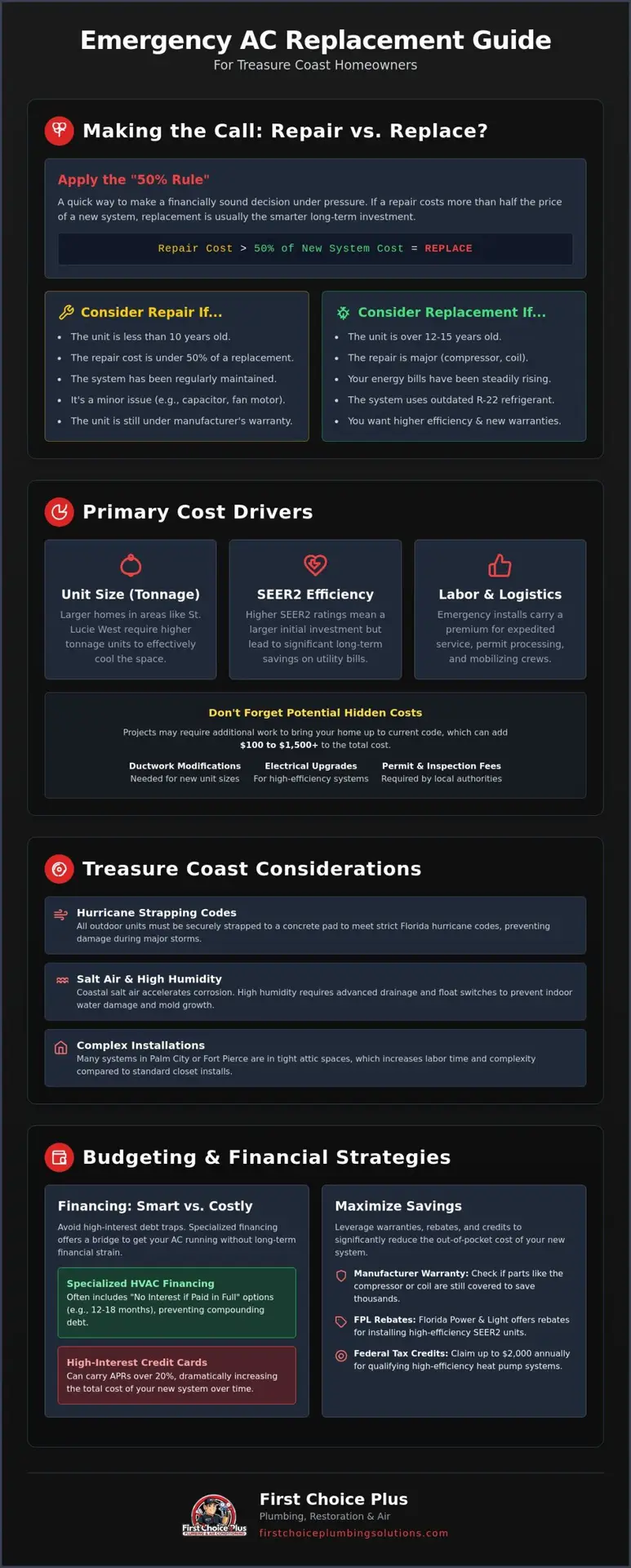
When your cooling system fails in the middle of a Port St. Lucie summer, the pressure to make a quick decision is intense. Knowing how to budget for an emergency AC replacement starts with understanding that three primary factors drive the total investment: the size of the unit (tonnage), the SEER2 efficiency rating, and the labor required for a proper install. A larger home in St. Lucie West or Traditions requires a higher tonnage unit to move enough air, while higher efficiency ratings often come with a higher upfront cost but lower monthly utility bills.
An emergency replacement often carries a logistical premium because it requires a “steady hand” to reorganize local crews and expedite equipment delivery. Unlike a planned upgrade where you might wait weeks for a specific model, an emergency requires immediate action to prevent mold growth in Florida’s humidity. This urgency involves expedited permit processing and rapid mobilization of technicians to areas like Jensen Beach or Stuart to restore your home’s safety as quickly as possible.
Florida homeowners also face unique regional requirements that affect the budget. Every Heating, ventilation, and air conditioning (HVAC) system installed on the Treasure Coast must meet strict hurricane strapping codes to ensure the outdoor condenser stays put during a storm. Additionally, our high humidity necessitates advanced drainage solutions and float switches to prevent water damage. You should also account for hidden costs like electrical upgrades or permit fees, which can range from $100 to $1,500 depending on whether your project requires new ductwork or a panel upgrade.
The Impact of 2026 SEER2 Efficiency Standards
As of 2026, new energy standards mean that even the “base” models are more efficient than those from a decade ago. While these units represent a larger initial investment, they are designed to slash your PSL utility bills. Many high-efficiency systems, particularly heat pumps, qualify for federal tax credits under Section 25C, which can provide up to $2,000 in annual savings to help offset the cost of your AC installation.
While these changes are specific to Florida’s climate, the shift toward higher efficiency is a national trend; for those interested in how these mandates are being addressed in other regions, Legacy Home Comfort offers a comprehensive look at the 2026 standards and their impact on HVAC system replacements.
Labor and Logistics in the Treasure Coast
Local expertise is vital because an improperly sized unit will struggle with our coastal salt air and humidity. In many Palm City or Fort Pierce homes, systems are tucked into tight attic spaces, which increases labor time compared to a standard closet installation. A professional team ensures that the transition to new A2L refrigerants is handled safely, protecting your family and your long-term investment.
Financial Strategies for Unexpected HVAC Expenses
Facing a total system failure is a significant financial shock. Most families don’t have thousands of dollars sitting idle for a major appliance, so learning how to budget for an emergency AC replacement requires a multi-step approach. First, check if your unit is still under a manufacturer’s warranty. Even if the labor isn’t covered, a free compressor or coil can save you a substantial amount. You should also review your home insurance policy; while standard wear and tear isn’t covered, damage from power surges or specific weather events might be.
Financing Options for Port St. Lucie Homeowners
If your emergency fund falls short, look into specialized HVAC financing rather than reaching for a high-interest credit card. Many specialized programs offer “no interest if paid in full” within a specific window, such as 12 or 18 months. This allows you to spread the cost over a year without the burden of compounding interest. Traditional credit cards often carry APRs exceeding 20 percent, which can turn a manageable monthly payment into a long-term debt trap.
Maximizing Local Rebates and Incentives
You can significantly offset the cost of a new system by leveraging local and federal incentives. Florida Power & Light (FPL) provides rebates for homeowners who upgrade to high-efficiency SEER2 units. To qualify, you must ensure the installation is performed by a licensed professional who can provide the necessary AHRI certificate. Additionally, the federal Energy Efficient Home Improvement Credit allows you to claim up to $2,000 for qualified heat pump systems.
- Verify Warranty Status: Look for the manufacture date on your outdoor unit’s nameplate to see if parts are still covered.
- Compare Total Value: Prioritize quotes that include a labor warranty and a first-year maintenance plan to protect your investment.
- Check for Specials: Review current air conditioning offers to see if there are local discounts available for your specific neighborhood.
Documenting every step of the process is essential. Keep your receipts, the AHRI certificate, and the professional load calculation. These documents are required to validate your warranty and secure your tax credits during the next filing season. Taking these steps ensures that while the initial failure was a surprise, the financial recovery is fully under your control.
Making the Call: Repair vs. Replace Under Pressure
Deciding whether to sink money into a repair or invest in a new unit is the most stressful part of a cooling crisis. To simplify your choice, use the “50% Rule.” If the quote for a repair exceeds 50% of the unit’s total value, it is time to move on. Pouring thousands into an aging system often leads to throwing good money after bad, especially when you consider that a repair doesn’t reset the clock on other components likely to fail soon. When you’re figuring out how to budget for an emergency AC replacement, this rule helps you avoid wasting funds that could be better spent on a long-term solution.
The “Age Factor” is particularly brutal on the Treasure Coast. In our salt-heavy air, a unit over 10 years old is often on borrowed time. Beyond mechanical failure, waiting too long to replace a struggling unit can trigger secondary emergency costs like mold remediation. In the high humidity of Stuart or Fort Pierce, a non-functioning AC allows moisture to accumulate quickly, potentially turning a mechanical issue into a major home restoration project. Vetting a contractor in Port St. Lucie quickly is essential; look for 24/7 responsiveness, verified local reviews, and proper licensing before signing any agreement.
The Long-Term Budgeting View
Remember the “cost of waiting” when evaluating your options. An inefficient old unit bleeds money every month through high energy bills. A new SEER2 system can lower these costs significantly, effectively paying for a portion of itself over time. Once the new system is in place, consistent preventative maintenance is your best defense against the next surprise failure. It keeps your warranty valid and ensures your investment lasts as long as possible.
Choosing a Reliable Partner in a Crisis
In a high-stakes situation, you need a steady hand that prioritizes transparency. First Choice Plus Plumbing & Air focuses on providing honest, upfront pricing for emergency AC installation without high-pressure sales tactics. We treat our neighbors in St. Lucie West and Traditions with the same respect we’d want for our own homes.
It is important for homeowners to note our service structure to ensure you get the right help fast. First Choice Plus Plumbing & Air provides full air conditioning and plumbing services from our main location in Port St. Lucie, serving the entire Treasure Coast including Palm City and Jensen Beach. While we have a secondary location in Land O’ Lakes, that office provides plumbing services only and does not handle AC work. For any cooling emergency, our primary Port St. Lucie team is ready to restore your comfort with local expertise.
Take Control of Your Home’s Future Comfort
Mastering how to budget for an emergency AC replacement doesn’t have to be an overwhelming task when you have a clear plan. By applying the 50% rule and understanding the long-term savings of modern SEER2 standards, you can turn a stressful breakdown into a smart investment for your home. Remember that acting quickly is the best way to prevent secondary issues like mold growth in our intense Florida humidity. Leveraging federal tax credits and local utility rebates can significantly lower your upfront costs while slashing your monthly power bills in the years to come.
Since 2007, we’ve served as the steady hand for homeowners throughout Port St. Lucie and the Treasure Coast. Our team provides 24/7 emergency service to ensure you never have to suffer through a sweltering night. We offer flexible financing options to help bridge the gap and keep your family cool without the immediate financial strain. Facing a cooling crisis? Get a transparent, emergency AC replacement quote from First Choice Plus today. We are here to provide the local expertise and honest pricing you deserve.
Frequently Asked Questions
Is an emergency AC replacement more expensive than a scheduled one?
Yes, emergency replacements often carry a premium compared to a planned upgrade. This cost difference is due to the expedited logistics required to source equipment and the immediate mobilization of labor to prevent mold growth in your home. When you schedule a replacement in advance, you have the luxury of waiting for specific manufacturer rebates or seasonal sales that may not be available during a sudden cooling crisis.
What is the average lifespan of an AC unit in Port St. Lucie, FL?
In Port St. Lucie, most air conditioning units last between 10 and 15 years, though our coastal environment can shorten this window significantly. The salt air and relentless humidity cause faster corrosion on outdoor condenser coils and electrical components compared to inland regions. If your system is approaching the 10-year mark, it is a good idea to learn how to budget for an emergency AC replacement to avoid being caught off guard.
Can I finance a new AC unit if my credit isn’t perfect?
Yes, many homeowners qualify for financing even if their credit scores are not in the top tier. Specialized HVAC lenders often provide flexible programs for essential home services that consider factors beyond just your credit history. Some manufacturers also offer deferred interest plans or low-interest monthly payments that help you manage the cost of a high-efficiency system without requiring a large upfront cash payment.
Does homeowners insurance ever cover emergency AC replacement?
Homeowners insurance rarely covers a replacement caused by age, lack of maintenance, or normal wear and tear. You may be eligible for coverage if the system failure was caused by a “covered peril,” such as a lightning strike, fire, or a sudden power surge during a storm. It is important to document the cause of failure with a professional diagnostic report and contact your insurance agent to see if your specific policy applies to the situation.

Article by
Written by First Choice Plus Plumbing & Air Team
This article was created by the team at First Choice Plumbing Solutions, a licensed and experienced plumbing and HVAC company serving Port St. Lucie, Land O’ Lakes, and surrounding areas.
Our team specializes in plumbing and air conditioning services, including drain cleaning, leak detection, water heater repair and installation, AC repair, maintenance, and system installations. Our content is based on real-world experience and the common issues we solve for homeowners and businesses every day.
We aim to provide accurate, helpful, and easy-to-understand information so you can make informed decisions about your plumbing and HVAC needs.
If you need reliable, professional service, First Choice Plumbing Solutions is here to help.
Disclaimer
Disclaimer: The information provided in this article is for general informational purposes only and does not constitute professional plumbing or HVAC advice. Every situation is different, and readers should consult a licensed professional for proper diagnosis and repair. First Choice Plus Plumbing & Air is not liable for any damages or losses resulting from the use of this information.