
You finally set the thermostat to a crisp 72 degrees, yet your home office feels like a sauna while the kitchen is practically a walk-in freezer. It is a common frustration for many Treasure Coast homeowners who find themselves cranking the AC and watching their utility bills skyrocket just to cool one stubborn room. Learning how to balance air dampers in HVAC system for even cooling is the most effective way to stop this cycle and reclaim your comfort. With over 80% of residential systems suffering from improper sizing or airflow issues, taking control of your ductwork is a vital step for any savvy homeowner.
We understand how exhausting it is to deal with interrupted sleep and confusing technical jargon when all you want is a consistent breeze. This expert guide provides a clear, step-by-step path to eliminate hot spots and optimize your home’s airflow. You will learn how to locate your manual dampers, adjust them for the Florida heat, and recognize the warning signs that indicate your system needs a professional touch to stay efficient through 2026 and beyond. We will walk you through the entire process so you can enjoy a more comfortable home and a much smaller power bill.
Key Takeaways
- Understand the difference between your visible supply registers and the internal trunk line dampers that act as the traffic cops for your home’s airflow.
- Learn how to balance air dampers in HVAC system for even cooling by using a simple digital thermometer to identify and resolve temperature variations.
- Prepare your home for successful balancing by setting a steady thermostat temperature and keeping all interior doors open to ensure unrestricted air movement.
- Recognize critical warning signs like whistling noises or frozen coils that suggest your system is under too much pressure from improper adjustments.
- Identify when it is time to transition from DIY fixes to professional ductwork inspections to find hidden leaks that impact your comfort and utility costs.
What are Air Dampers and Why is Your Home Cooling Unevenly?
Think of your HVAC system as a network of highways. In this analogy, air dampers are the traffic cops. While the supply registers are the vents you see in your ceiling or floor, dampers live inside the metal or flexible trunk lines of your ductwork. They regulate the volume of air flowing to specific zones of your home. When these “cops” are out of position, you end up with a guest room that feels like a refrigerator while your master bedroom stays stiflingly hot.
Uneven cooling is a major headache for homeowners in Port St. Lucie. Florida homes often face intense solar gain from south-facing windows or high vaulted ceilings that trap heat. If you don’t know how to balance air dampers in HVAC system for even cooling, your AC unit will likely run longer cycles to compensate for these hot spots. This creates unnecessary wear and tear on your compressor and blower motor, eventually leading to a higher risk of a breakdown during a mid-August heatwave.
Manual vs. Automatic Dampers: Identifying Your System
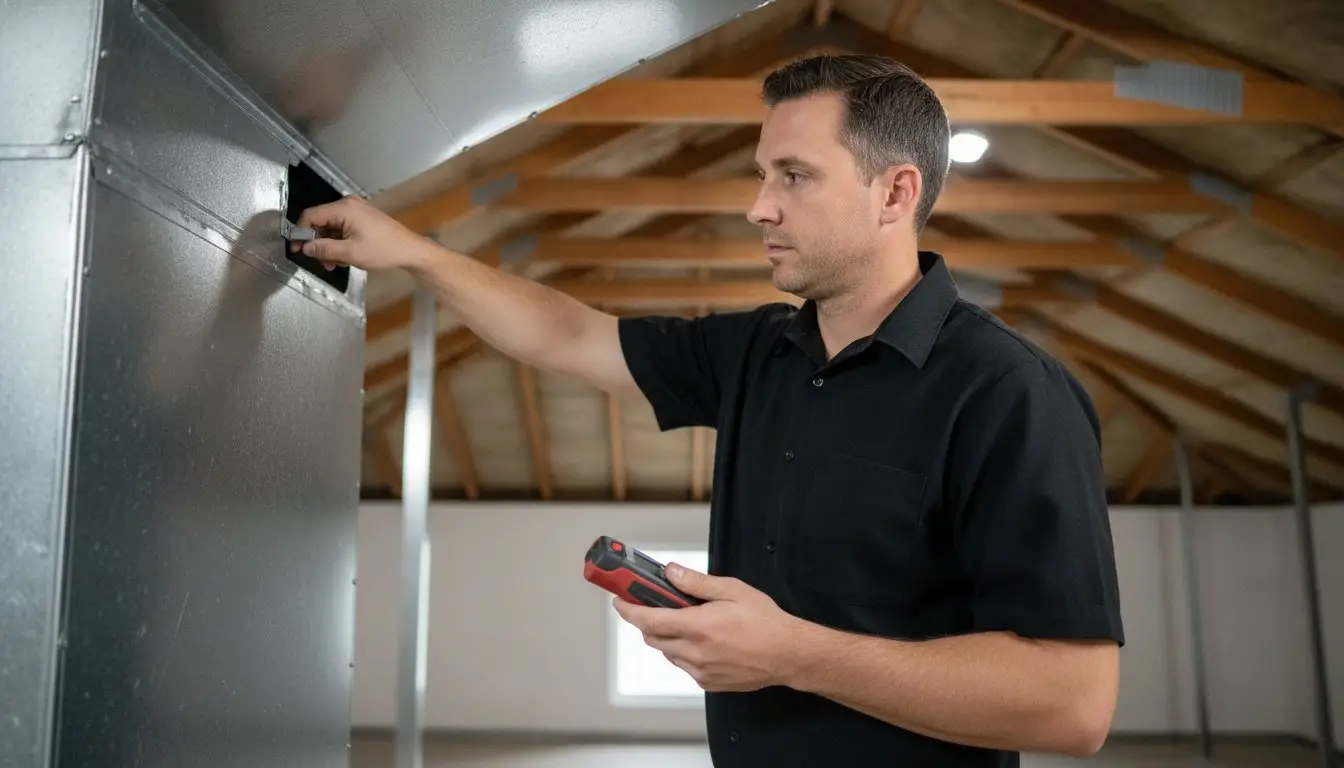
Before you start making adjustments, you need to know what you are looking at. Most residential systems use manual dampers. You can find these by looking at the ductwork near your air handler, typically located in a garage or attic. Look for small metal handles or levers on the side of the ducts. If your home has a sophisticated zoning system with multiple thermostats, you likely have motorized automatic dampers. If your ducts are wrapped in thick silver insulation, you may need to feel along the trunk line for a small wing nut or a protruding handle that indicates a damper’s location.
The Impact of Florida Humidity on Airflow
Airflow isn’t just about temperature; it’s about moisture control. In the Treasure Coast, poor airflow in specific rooms can lead to localized humidity spikes. When air stays stagnant in a walk-in closet or a corner bedroom, it can’t be dehumidified by the AC, which often leads to musty odors or mold growth. Static pressure is the specific measurement of resistance that your air handler must overcome to move air through the ductwork. If you close too many dampers at once, you increase this pressure, which can actually cause your cooling coils to freeze over and stop the cooling process entirely.
Step-by-Step Guide: How to Balance Your HVAC Dampers for Even Cooling
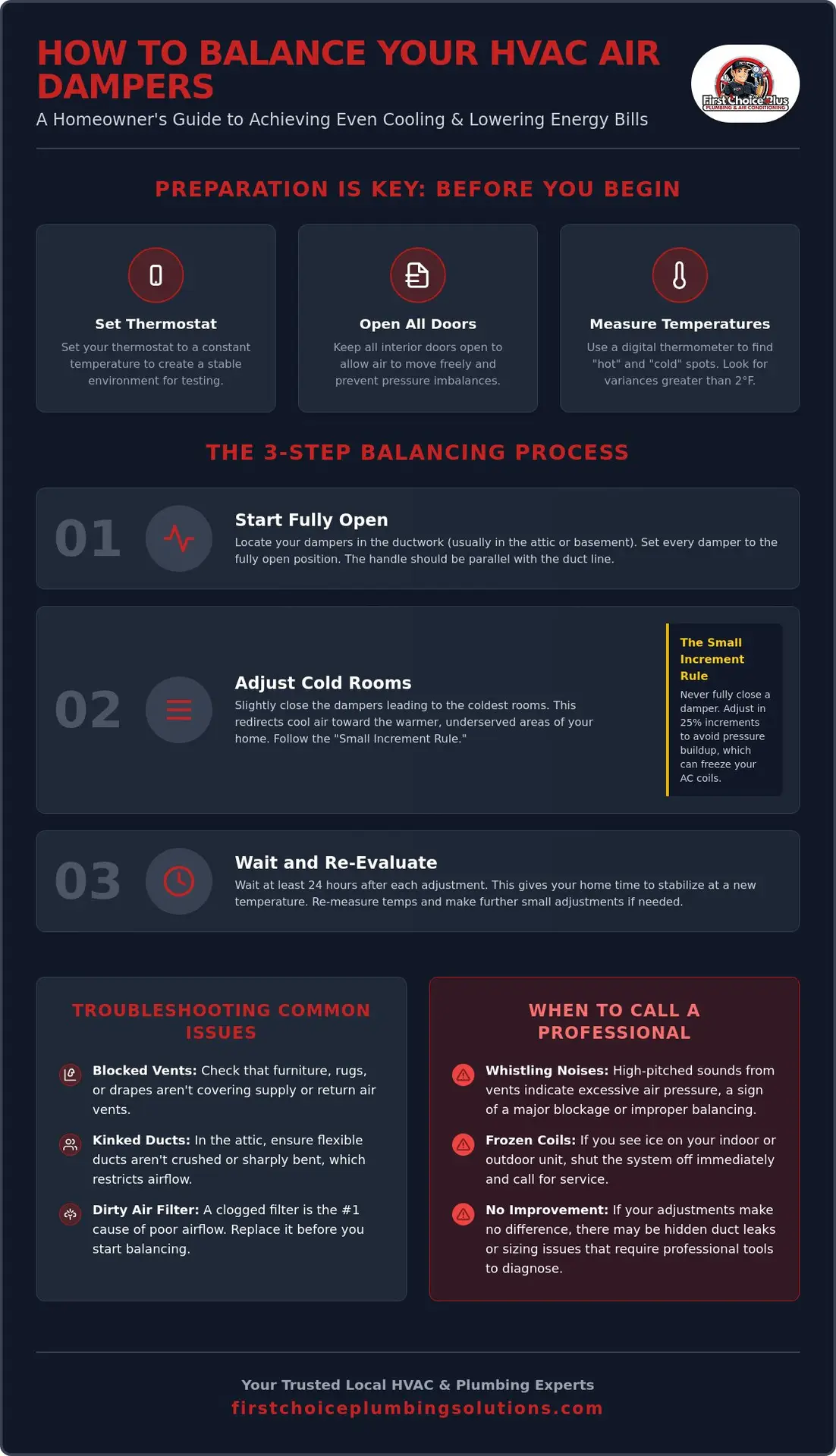
Learning how to balance air dampers in HVAC system for even cooling is a game of patience. Before you touch a single lever, you must prepare the environment for an accurate test. Set your thermostat to a constant temperature and open every interior door. This allows the air to move freely and prevents pressure imbalances from skewing your results. Grab a basic digital thermometer to identify your “Hot Spots” and “Cold Spots” throughout the house. You are looking for temperature variances greater than two degrees between rooms to determine where the air is failing to reach.
The most important rule for any homeowner is the “Small Increment Rule.” Never fully close a damper. Doing so can cause air to back up and freeze your evaporator coil, leading to an expensive breakdown. Move the handles in 25% increments instead. Once you find the sweet spot for each room, use a permanent marker to label the settings as “Summer” or “Winter” directly on the metal ductwork. This makes it easy to switch back when the seasons change without starting the process from scratch.
The Balancing Process: From Plenum to Register
- Step 1: Start with all dampers in the fully open position. The handle should be parallel to the duct to allow maximum airflow.
- Step 2: Gradually restrict airflow to the coldest rooms. This pushes more air toward the warmer areas of the house that need extra cooling power.
- Step 3: Wait at least 24 hours between adjustments. Your home needs time to reach a new thermal equilibrium before you can judge if the change was successful.
Troubleshooting Common Airflow Obstructions
Sometimes the issue isn’t the damper at all. Check for furniture or heavy drapes blocking your return air grilles, as this prevents the system from “breathing.” In Florida attics, flexible ducts can often become kinked or crushed under storage boxes, which mimics the effect of a closed damper. Always ensure you have a fresh air filter installed. A clogged filter reduces the system’s ability to push air through the ducts, making it impossible to learn how to balance air dampers in HVAC system for even cooling effectively. If you find that your adjustments aren’t making a difference, a professional AC repair specialist can help identify deeper mechanical issues or duct leaks.
When DIY Balancing Isn’t Enough: Professional HVAC Solutions
While basic adjustments solve many comfort issues, some temperature imbalances require a deeper look. If you hear a high-pitched whistling sound or notice your evaporator coil freezing over after making changes, your system is likely “starved” for air. This happens when the total airflow is restricted too much, putting dangerous stress on your blower motor. A professional AC repair in Port St. Lucie can identify if the problem is actually a hidden duct leak or a disconnected trunk line that no amount of damper adjustment will fix.
Persistent hot spots often stem from an improperly sized system. Technicians use a “Manual J” load calculation to determine the exact cooling needs of every room based on square footage, window placement, and insulation levels. In rooms where circulation remains stubbornly low, integrating indoor air quality solutions like UV sanitizers can help prevent the musty odors common in Florida’s humid climate. Learning how to balance air dampers in HVAC system for even cooling is a great start; however, it cannot compensate for a system that was never designed for the home’s specific layout.
Professional Air Balancing Tools and Techniques
Expert technicians don’t guess about airflow. They use calibrated anemometers and flow hoods to measure the exact Cubic Feet per Minute (CFM) exiting each vent. This data-driven approach is especially beneficial for homes in Stuart and Jensen Beach, where salt air and high humidity can degrade duct seals over time. A comprehensive HVAC Port St. Lucie tune-up always includes a detailed airflow audit to ensure your dampers are working in harmony with your air handler’s capacity.
Long-Term Comfort in the Treasure Coast
For larger two-story homes, a multi-zone system upgrade might be the only way to achieve true temperature perfection. These systems use automated dampers and multiple thermostats to direct air exactly where it’s needed in real-time. Regular preventative maintenance is the best way to keep your manual dampers from seizing up due to dust or corrosion. If your home still feels like two different climates, contact First Choice Plus Plumbing & Air for a professional cooling evaluation today!
Reclaim Your Home’s Comfort and Efficiency
Taking control of your home’s climate is a rewarding project that pays off in both comfort and savings. By identifying your manual dampers and following the incremental adjustment strategy, you can finally eliminate those stubborn hot spots. Remember to mark your seasonal settings and allow for the necessary stabilization period after each change. Mastering how to balance air dampers in HVAC system for even cooling is one of the most effective ways to lower your utility costs and reduce unnecessary strain on your equipment.
If your DIY efforts reveal deeper issues like disconnected trunk lines or chronic temperature swings, professional help is just a call away. First Choice Plus Plumbing & Air has served Port St. Lucie and the Treasure Coast since 2007, offering everything from expert ductwork repair to 24/7 emergency support. We prioritize transparency and reliable local service to ensure your family stays cool year-round. Schedule Your 2026 AC Tune-Up & Airflow Audit today and experience the difference of a perfectly balanced home.
Frequently Asked Questions
Is it okay to completely close an HVAC damper in an unused room?
No, you should never completely close a damper in your home. Closing a damper entirely increases the static pressure within your ductwork; this forces the blower motor to work harder and can lead to a frozen evaporator coil. It is much safer to leave the damper at least 25% open to maintain healthy airflow while still redirecting the majority of the air to rooms that need it more.
How do I know if my ductwork has dampers if I can’t see them?
You can usually find dampers by inspecting the metal trunk lines near your air handler in the garage or attic. If your ducts are wrapped in silver insulation, feel for small metal handles or wing nuts protruding through the wrap. If you have multiple thermostats for different areas of the house, you likely have motorized dampers that are controlled automatically by your system’s zoning board.
Will balancing my air dampers really lower my Florida electric bill?
Yes, learning how to balance air dampers in HVAC system for even cooling can significantly reduce your monthly utility costs. When air is distributed evenly, your AC doesn’t have to run extra-long cycles just to reach a comfortable temperature in a single hot room. Proper balancing reduces system strain and helps you avoid the high costs of premature equipment failure in the harsh Florida heat.
What is the difference between a register and a damper?
A register is the visible metal grille on your ceiling or floor that you can adjust by hand, while a damper is a valve located deep inside the ductwork. Registers are meant for minor direction changes, but dampers control the actual volume of air flowing to an entire room or zone. For major temperature corrections, you must adjust the damper rather than just closing the register slats.
How often should I re-balance my home’s airflow?
You should ideally re-balance your airflow twice a year as the seasons change. In the summer, you want to push more air to the upper floors or south-facing rooms that catch the most sun. During our brief Florida winters, you may need to adjust them again to account for the fact that heat naturally rises, ensuring your home remains comfortable regardless of the outside temperature.
Why is my upstairs always hotter than my downstairs even after balancing?
Heat naturally rises, and your attic acts as a massive radiator that pushes heat through the second-floor ceiling. Even after you learn how to balance air dampers in HVAC system for even cooling, you might still face this issue if your insulation is thin or if your system isn’t powerful enough. In these cases, you may need a professional airflow audit to see if a dedicated zoning system or ductwork repair is necessary.

Article by
Written by First Choice Plus Plumbing & Air Team
This article was created by the team at First Choice Plumbing Solutions, a licensed and experienced plumbing and HVAC company serving Port St. Lucie, Land O’ Lakes, and surrounding areas.
Our team specializes in plumbing and air conditioning services, including drain cleaning, leak detection, water heater repair and installation, AC repair, maintenance, and system installations. Our content is based on real-world experience and the common issues we solve for homeowners and businesses every day.
We aim to provide accurate, helpful, and easy-to-understand information so you can make informed decisions about your plumbing and HVAC needs.
If you need reliable, professional service, First Choice Plumbing Solutions is here to help.
Disclaimer
Disclaimer: The information provided in this article is for general informational purposes only and does not constitute professional plumbing or HVAC advice. Every situation is different, and readers should consult a licensed professional for proper diagnosis and repair. First Choice Plus Plumbing & Air is not liable for any damages or losses resulting from the use of this information.