
What if that lingering stench in your kitchen isn’t just yesterday’s leftovers, but a specific chemical warning sign? It’s incredibly frustrating when your garbage disposal smells like rotten eggs, especially when you’re trying to keep a clean home for your family here in Port St. Lucie or Stuart. You might worry about potential sewer gas leaks or feel embarrassed when guests step into the kitchen. It’s a common issue that affects many of the 3% of U.S. households reporting plumbing problems each year, but it doesn’t necessarily mean your disposal is broken.
We understand that a smelly sink can make your whole house feel less than inviting. The good news is that this sulfur scent, usually caused by hydrogen sulfide gas from trapped organic matter, is almost always fixable with a few simple steps. You’ll learn exactly why your sink smells this way and how to neutralize the bacteria causing it. We’ll also share a professional maintenance routine to help homeowners from Jensen Beach to St. Lucie West keep their drains clear and their kitchens smelling fresh year round.
Key Takeaways
- Identify the biological cause of the sulfur odor, specifically how anaerobic bacteria feeding on organic sludge produce hydrogen sulfide gas.
- Learn the proper safety protocol to follow when your garbage disposal smells like rotten eggs, starting with disconnecting the power before any manual cleaning.
- Discover the most common hiding spot for odor-causing gunk beneath the rubber splash guard and the exact steps to scrub it away.
- Determine when the problem is deeper than the disposal, such as a dry P-trap or a blocked plumbing vent following a heavy Florida storm.
Understanding Why Your Garbage Disposal Smells Like Rotten Eggs
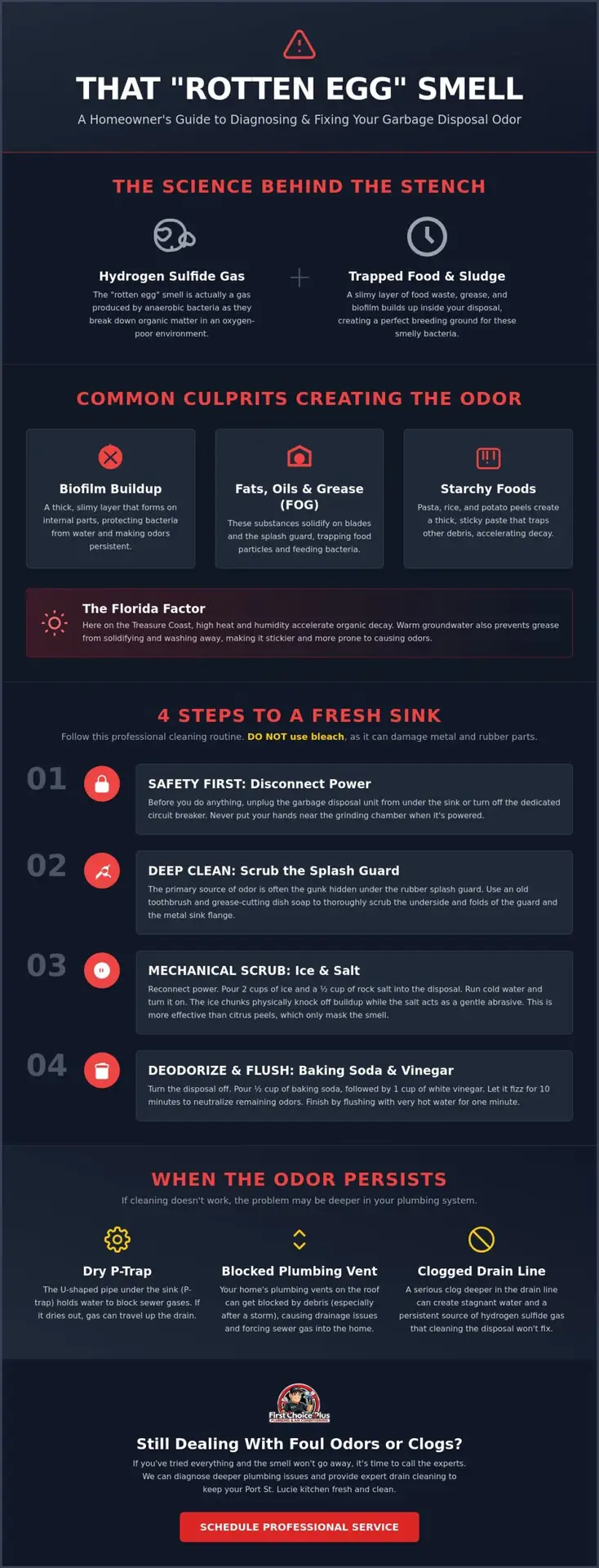
That sulfur scent isn’t just a nuisance; it’s a chemical signal. When your garbage disposal smells like rotten eggs, you’re actually smelling hydrogen sulfide gas. This gas is a byproduct of bacterial decay in stagnant plumbing environments. It occurs when anaerobic bacteria start feasting on the organic materials trapped inside your Garbage disposal unit. These microorganisms thrive in dark, damp spaces where oxygen is limited, turning your kitchen sink into a miniature laboratory for unpleasant odors.
The Florida Factor: Why Treasure Coast Drains Smell Faster
Living in Florida adds a unique layer to this common plumbing problem. In cities like Port St. Lucie and Fort Pierce, the high humidity and intense heat accelerate the decomposition of organic matter in your pipes. Our warm groundwater temperatures also prevent grease from cooling and flushing away effectively. Instead, it stays soft and sticky, clinging to your plumbing and becoming a breeding ground for bacteria. High humidity levels in Jensen Beach and Stuart can even lead to faster mold and mildew growth around the sink flange, adding to the kitchen’s “swampy” aroma.
Common Culprits: Food Scraps and Biofilm
Bacteria need a food source to produce that rotten egg smell. They find it in the “sludge” that collects in the grinding chamber and drain lines. Several common items contribute to this buildup:
- Starchy foods: Pasta, rice, and potato peels create a thick, sticky paste that traps other food debris.
- Fats, Oils, and Grease (FOG): These substances solidify on the disposal blades and the underside of the rubber splash guard.
- Biofilm: Over time, a thick, slimy layer forms on internal components. This biofilm acts as a shield, protecting bacteria from simple water rinses and making it difficult to eliminate the odor with just a quick flush.
If your garbage disposal smells like rotten eggs, it’s usually because these materials have bonded together to create a persistent source of decay. Understanding this biological process is the first step toward reclaiming a fresh, clean kitchen.
How to Clean and Deodorize Your Disposal: A Step-by-Step Guide
If your garbage disposal smells like rotten eggs, don’t reach for the bleach. While it’s a common household cleaner, bleach can actually corrode metal components and dry out the rubber gaskets over time. Instead, follow this professional cleaning routine to eliminate the source of the odor without damaging your plumbing. Start by disconnecting the power. Unplug the unit under the sink or turn off the dedicated breaker. Safety is the priority whenever you’re working near the grinding chamber.
Deep Cleaning the Splash Guard and Flange
Many homeowners in Tradition and Palm City are surprised to learn that most odors originate from the underside of the rubber baffle, not the blades. This area collects grease and food particles that water alone can’t reach. Use an old toothbrush and grease-cutting dish soap to scrub the folds of the rubber splash guard. Clean the sink flange where the unit meets the basin. Finally, rinse with hot water to ensure all loosened biofilm is flushed toward the sewer line.
The ‘Ice and Salt’ Mechanical Scrub
While citrus slices smell nice, they often just mask the problem. To remove stubborn buildup, pour two cups of ice cubes and a half-cup of rock salt into the disposal. Reconnect the power, run cold water, and turn the unit on. The ice physically knocks debris loose while the salt acts as a safe abrasive. This method is much more effective than masking the smell with lemon peels, as it cleans the components that bacteria cling to.
Finish the process with a biological flush. Pour a half-cup of baking soda followed by a cup of white vinegar. Let it sit for ten minutes before flushing with hot water. For a more professional result, consider a bio-enzyme cleaner. A 2lb canister of a high-quality product like Bio-Clean typically costs around $49.95 and uses active bacteria to “eat” organic sludge. If you find yourself dealing with frequent clogs alongside the odor, our team can provide expert drain cleaning and clog removal to keep your kitchen running smoothly.
When the Odor Persists: Identifying Deeper Plumbing Issues
If you’ve scrubbed the splash guard and used the ice-and-salt method but your garbage disposal smells like rotten eggs still, the problem likely lies deeper in your plumbing system. A persistent sulfur scent often indicates that sewer gases are escaping into your home. This happens when the P-trap, the U-shaped pipe under your sink, loses its water seal. Without that small pool of water, there’s nothing to block gases from drifting up from the sewer line and into your kitchen.
Checking the P-Trap and Venting
If you haven’t used the guest wing sink or a secondary kitchen in a while, the water in the P-trap might have evaporated. Simply running the tap for a minute can often restore the seal and stop the smell. However, for homeowners in Jensen Beach or Stuart, older metal pipes may suffer from salt-air corrosion. This can lead to pinhole leaks that slowly drain the trap over time. Inspect the cabinet for moisture or warped wood. Additionally, heavy Florida storms can blow debris or bird nests into your roof vents. A blocked vent prevents air from flowing properly, which can siphon water out of your traps and allow odors to enter the house.
When to Call First Choice Plus Plumbing
Sometimes a smell is a red flag for a more serious emergency. If the rotten egg scent is present throughout the house or accompanied by other symptoms, you could be facing a slab leak or a major sewer backup. Watch for these critical warning signs:
- Toilets gurgling when you run the kitchen sink or dishwasher.
- Slow drainage that persists even after thorough cleaning.
- Multiple drains backing up at the same time.
These symptoms suggest a main line blockage that requires professional plumbing repairs to prevent water damage. Our team provides 24/7 emergency support to Port St. Lucie, Fort Pierce, and the entire Treasure Coast. We can use sewer camera inspections or hydro jetting to clear the line and ensure your home remains safe, comfortable, and odor-free.
Reclaim Your Fresh Kitchen and Peace of Mind
Handling a garbage disposal smells like rotten eggs is more than just a kitchen nuisance; it’s a clear signal that your plumbing needs attention. By cleaning the splash guard and using a mechanical scrub with ice and salt, you can eliminate most bacterial buildup. However, if that sulfur scent lingers or you notice gurgling drains, the issue might involve your P-trap or sewer venting. Don’t let a minor odor turn into a major plumbing emergency.
Since 2007, First Choice Plus Plumbing & Air has been the trusted neighbor for homeowners in Port St. Lucie, Stuart, and Fort Pierce. As a family owned and locally operated team, we specialize in expert leak detection and comprehensive sewer services. Whether it’s a routine maintenance check or 24/7 emergency plumbing, we provide the steady hand needed to resolve any residential issue. Still smelling something foul? Schedule a professional drain cleaning with First Choice Plus today! You deserve a kitchen that feels clean and a plumbing system you can trust.
Frequently Asked Questions
Is the rotten egg smell from my disposal dangerous?
The odor itself is usually hydrogen sulfide gas from decaying food particles, which isn’t immediately life-threatening in small amounts but can indicate a health hazard if it’s actually sewer gas. If the smell is strong enough to cause headaches or nausea, it’s a sign of a significant venting issue that needs immediate attention. You should address it promptly to ensure your home’s air quality remains safe for your family.
Can I use bleach to get rid of the sulfur smell in my sink?
You should avoid using bleach in your garbage disposal because it can harden and damage the rubber seals and gaskets over time. While it might kill some bacteria, it’s a harsh chemical that causes more harm than good to the unit’s internal components. Instead, stick to natural cleaners like baking soda and vinegar or specialized bio-enzyme solutions that break down organic sludge safely without corroding your plumbing.
Why does my garbage disposal smell like sewage even after I clean it?
If your garbage disposal smells like rotten eggs even after a deep clean, the odor is likely originating from the P-trap or the venting system rather than the disposal unit. A dry trap or a blockage in the roof vent can allow sewer gases to bypass the water seal and enter your kitchen. This often happens in Florida homes after a heavy storm or during long periods of high humidity when organic matter in the pipes decomposes faster.
How often should I perform maintenance on my garbage disposal to prevent smells?
We recommend a quick maintenance routine every one to two weeks to prevent odors from returning. Running a few ice cubes and a handful of rock salt through the unit helps keep the blades clear of biofilm and trapped debris. For a more thorough deep clean, perform the baking soda and vinegar flush once a month. This simple schedule helps homeowners in Port St. Lucie and Stuart avoid the embarrassment of kitchen odors.

Article by
Written by First Choice Plus Plumbing & Air Team
This article was created by the team at First Choice Plumbing Solutions, a licensed and experienced plumbing and HVAC company serving Port St. Lucie, Land O’ Lakes, and surrounding areas.
Our team specializes in plumbing and air conditioning services, including drain cleaning, leak detection, water heater repair and installation, AC repair, maintenance, and system installations. Our content is based on real-world experience and the common issues we solve for homeowners and businesses every day.
We aim to provide accurate, helpful, and easy-to-understand information so you can make informed decisions about your plumbing and HVAC needs.
If you need reliable, professional service, First Choice Plumbing Solutions is here to help.
Disclaimer
Disclaimer: The information provided in this article is for general informational purposes only and does not constitute professional plumbing or HVAC advice. Every situation is different, and readers should consult a licensed professional for proper diagnosis and repair. First Choice Plus Plumbing & Air is not liable for any damages or losses resulting from the use of this information.