
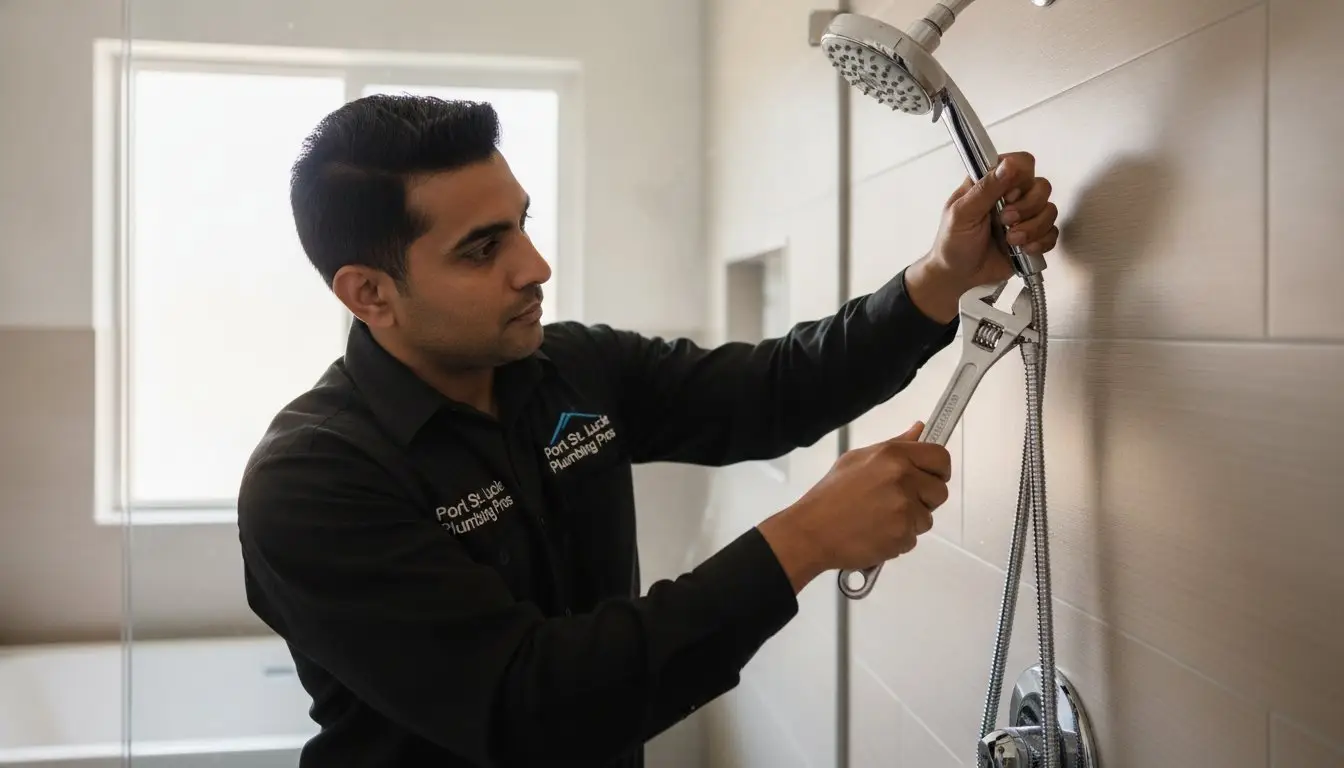
You step into the shower after a long day under the Treasure Coast sun, expecting a refreshing blast of water, but instead, you are met with a weak, frustrating trickle. It is incredibly annoying to stand there wasting time just trying to rinse off soap, especially when you know the kitchen sink and guest bath are working perfectly fine. You might worry that a hidden pipe leak is draining your wallet, but isolated issues like this are often simpler than they seem.
The good news is that fixing low water pressure in a shower head only is usually a localized problem that you can solve with a few basic tools. This guide will help you identify the specific cause of your “weak” shower and provide straightforward DIY steps to restore your water flow quickly. We will explore everything from mineral buildup caused by our local Florida hard water to internal valve failures. You will learn how to save money on unnecessary service calls and understand the clear warning signs that tell you it is time to bring in a professional for a more complex repair.
Key Takeaways
- Identify why your shower feels weak even when other faucets work perfectly, focusing on localized fixture issues rather than whole-home plumbing problems.
- Discover how to use a simple vinegar soak to dissolve the stubborn Florida mineral deposits that frequently clog shower heads in the Treasure Coast area.
- Master the DIY steps for fixing low water pressure in a shower head only by cleaning the hidden filter screens and aerators located inside the fixture.
- Learn to recognize the signs of a failing shower valve cartridge or internal pipe blockages that require the steady hand of a professional.
- Save time and avoid expensive service calls by determining if your pressure problem is a quick fix or if it requires a master plumber to prevent further damage.
Why Is My Shower Pressure Low (But the Faucets Are Fine)?
If you turn on your kitchen faucet and the water flows with plenty of force, but your master shower barely produces a mist, you are dealing with an isolated issue. This means the problem isn’t your main water line or a city-wide supply problem. Instead, the restriction lives somewhere between the bathroom wall and the shower head. We define isolated low water pressure as a localized restriction in the fixture or branch line. Identifying this early is the key to fixing low water pressure in a shower head only before you spend money on major repairs. Most of these cases boil down to three primary culprits: mineral buildup, clogged flow restrictors, or a mechanical failure in the shower valve.
The Role of Mineral Buildup and Hard Water
Living on the Treasure Coast means dealing with unique water chemistry. Our local water often contains high levels of calcium and magnesium, which eventually crystallize into a hard white substance called “scale.” These minerals settle inside the tiny nozzles of your shower head, slowly choking off the flow. You might also see this after a water heater flush or a nearby main repair. Stirred-up sediment travels through your pipes and gets trapped right at the end of the line, usually in your shower’s internal filter screen. Often, fixing low water pressure in a shower head only is simply a matter of clearing these stubborn deposits.
Flow Restrictors: The Silent Pressure Killer
Modern fixtures are designed for efficiency, but they can be too effective at saving water. Manufacturers install small plastic discs called flow restrictors to meet EPA WaterSense standards. While these help lower your utility bill, they easily become clogged with small debris. It helps to distinguish between “pressure” and “flow.” Pressure is the force of the water pushing through the pipes. Flow is the actual volume of water coming out. A clogged restrictor kills your flow, making even a high-pressure system feel weak and unsatisfying.
4 Steps for Fixing Low Water Pressure in a Shower Head Only
Most homeowners can restore their shower’s power with a few common household items. Fixing low water pressure in a shower head only usually starts with addressing the fixture directly before assuming there is a major pipe failure. Systematically clearing these common points of resistance often solves the problem in under an hour.
How to Deep Clean Your Shower Head with Vinegar
You don’t need a toolbox to handle local mineral buildup. Fill a sturdy plastic bag with plain white vinegar and submerge the entire shower head while it is still attached to the wall. Secure the bag with a heavy-duty rubber band around the shower arm and let it sit for at least four hours. This soak breaks down the stubborn limestone and calcium deposits common in our Treasure Coast water. After removing the bag, run hot water to flush out the dissolved debris. If some nozzles remain blocked, use a toothpick to gently poke through the silicone holes to clear any remaining grit.
Inspecting and Adjusting the Flow Restrictor
Modern shower heads contain a small plastic disc called a flow restrictor. While designed to save water, these discs often trap sediment and completely throttle your pressure. Carefully unscrew your shower head and locate the restrictor, which is usually a bright-colored plastic piece behind the mesh filter screen. Use needle-nose pliers to pull it out for a thorough cleaning. While some homeowners choose to leave it out to maximize flow, keep in mind this may increase your monthly water bill. If you find the fixture is damaged or corroded during this process, it might be time for professional plumbing repairs to ensure your new installation is leak-free.
If the vinegar soak and restrictor cleaning don’t do the trick, check these final two areas:
- Inspect the Shower Hose: If you have a handheld unit, check the hose for sharp kinks or internal collapses. Sometimes the inner liner pulls away from the outer mesh, creating a hidden blockage.
- The Pipe Test: Remove the shower head entirely and turn on the water. If the water gushes out of the shower arm with high force, the problem is definitely the shower head. If it barely trickles out of the open pipe, the restriction is likely inside the shower valve or the branch line behind your tile.

When DIY Isn’t Enough: Hidden Plumbing Causes
Sometimes, fixing low water pressure in a shower head only requires looking deeper than the fixture itself. If you performed the diagnostic test by removing the head and the water still trickled weakly out of the shower arm, the restriction is mechanical and hidden behind your bathroom tile. In these cases, the problem usually involves the internal components of your plumbing system that require specialized tools to access safely.
The most common culprit is a failing shower valve cartridge. This small plastic and brass component lives inside the handle assembly and balances the mix of hot and cold water. Over time, the internal ports can become packed with the same mineral scale that clogs your shower head. Additionally, sediment can become trapped in the narrow 1/2-inch branch lines that feed your shower. In some Florida homes, a hot-side slab leak can also specifically sap pressure from your shower while other fixtures seem unaffected. These in-wall issues are complex and typically require professional plumbing repairs to resolve without causing water damage to your home’s structure.
Signs Your Shower Mixing Valve Is Failing
Pay close attention to how your shower handle behaves. If it feels “sticky,” grinds when you turn it, or fails to provide truly hot water, the cartridge is likely failing. You may also experience “cross-over,” where the water remains lukewarm regardless of the handle position. Some homeowners even report a distinct humming or vibrating sound coming from the wall when the shower runs. Replacing a cartridge is a high-precision job for a plumber in Port St. Lucie because even a minor misalignment during installation can lead to a slow, hidden leak behind your shower wall.
When to Call First Choice Plus Plumbing & Air
It is time to bring in the experts if your pressure remains low on both the hot and cold settings after cleaning the fixture. We recommend calling a pro if the “test without the head” fails or if you notice water stains on the ceiling below the bathroom. We provide 24/7 emergency availability for Stuart and Jensen Beach residents who lose water service entirely or discover a major leak. Our team has the experience to identify whether you need a simple valve replacement or a more comprehensive solution to restore your home’s water flow.
Restore Your Refreshing Shower Experience
You now have the knowledge to determine why your shower has lost its power. Most of the time, the solution is as simple as the vinegar soak we discussed to remove the hard water scale that accumulates in our local Florida fixtures. Remember to check your flow restrictors and handheld hoses before assuming there’s a major problem with your pipes. Success in fixing low water pressure in a shower head only usually comes down to this step-by-step process of elimination.
If you’ve tried these DIY methods and your shower still feels like a weak trickle, there’s likely a mechanical issue with your mixing valve or a hidden blockage in the branch line. These in-wall repairs require a steady, professional hand to avoid accidental water damage. Our family-owned team at First Choice Plus Plumbing & Air has been serving the Treasure Coast since 2007 with A+ rated reliability. Whether it’s a routine inspection or a 24/7 emergency repair, we’re here to help you get your plumbing back in top shape.
Tried these fixes and still have a weak shower? Schedule a professional plumbing inspection with First Choice Plus Plumbing & Air today! You deserve a shower that works as hard as you do.
Frequently Asked Questions
Can a single clogged shower head affect the whole bathroom?
No, a clogged shower head is an isolated issue that will not impact other fixtures in the room. If your bathroom sink and toilet also have weak flow, you are likely dealing with a larger plumbing issue like a pipe leak or a main line restriction. Fixing low water pressure in a shower head only is a task specific to that one fixture and its immediate internal components.
Why is my shower pressure low only on the hot water setting?
This usually points to a problem with your water heater or the hot-side port of your shower’s mixing valve. Sediment from our local Treasure Coast water can settle at the bottom of your tank and travel into the hot water lines, clogging the smaller openings. It could also mean the internal cartridge in your shower handle is failing to open fully on the hot side, which requires a professional to replace.
Will a “high pressure” shower head actually fix my problem?
A high pressure shower head might improve the sensation of the spray, but it cannot fix an underlying plumbing blockage. If the water flow into the fixture is already restricted by mineral scale or a bad valve, a new head will still underperform. You should focus on fixing low water pressure in a shower head only by clearing the supply lines and cleaning the internal filters before investing in a specialty fixture.
Is it safe to remove the flow restrictor from my shower head?
It is generally safe to remove the restrictor, though it will increase your water consumption and monthly utility costs. These small plastic discs are designed to meet federal efficiency standards by limiting the gallons per minute. Removing them can provide a boost in volume, but you must be careful not to damage the internal O-ring or the threads of the shower head during the process.

Article by
Written by First Choice Plus Plumbing & Air Team
This article was created by the team at First Choice Plumbing Solutions, a licensed and experienced plumbing and HVAC company serving Port St. Lucie, Land O’ Lakes, and surrounding areas.
Our team specializes in plumbing and air conditioning services, including drain cleaning, leak detection, water heater repair and installation, AC repair, maintenance, and system installations. Our content is based on real-world experience and the common issues we solve for homeowners and businesses every day.
We aim to provide accurate, helpful, and easy-to-understand information so you can make informed decisions about your plumbing and HVAC needs.
If you need reliable, professional service, First Choice Plumbing Solutions is here to help.
Disclaimer
Disclaimer: The information provided in this article is for general informational purposes only and does not constitute professional plumbing or HVAC advice. Every situation is different, and readers should consult a licensed professional for proper diagnosis and repair. First Choice Plus Plumbing & Air is not liable for any damages or losses resulting from the use of this information.