

You are standing in your St. Lucie West kitchen while water gushes from a burst pipe, but you suddenly realize your home doesn’t have a basement or a utility room like houses up north. It’s a terrifying moment when you’re frantic and can’t find the handle to stop the flood. Most homeowners in Port St. Lucie and Stuart feel that same panic because Florida homes are built differently. Knowing your emergency plumbing shut off valve location is the only thing standing between a quick mop-up and a catastrophic repair bill.
We’ve helped neighbors from Fort Pierce to Palm City handle these exact crises with calm competence. We promise to help you find that valve quickly, whether it’s hiding behind your landscaping or tucked away in the garage. This guide provides clear steps to identify your main water source, tips for handling stuck valves, and advice on how to keep your plumbing system secure. We’ll show you exactly where to look so you can act with confidence the next time a pipe decides to let go. Whether you’re in the Treasure Coast or near our plumbing-focused office in Land O’ Lakes, being prepared is your best defense against water damage.
Key Takeaways
- Learn the most likely spots for your emergency plumbing shut off valve location in Florida homes, which often lack basements and utilize exterior wall entry points.
- Identify the difference between a modern lever-style ball valve and an older wheel-style gate valve to ensure you operate them correctly during a crisis.
- Discover how to access the water meter box at the street as a reliable backup plan if your main house valve is stuck or inaccessible.
- Pick up practical maintenance tips to keep your valves turning smoothly so you’re never left helpless when a plumbing leak occurs.
Hunting for the Handle: Common Locations in Florida Homes
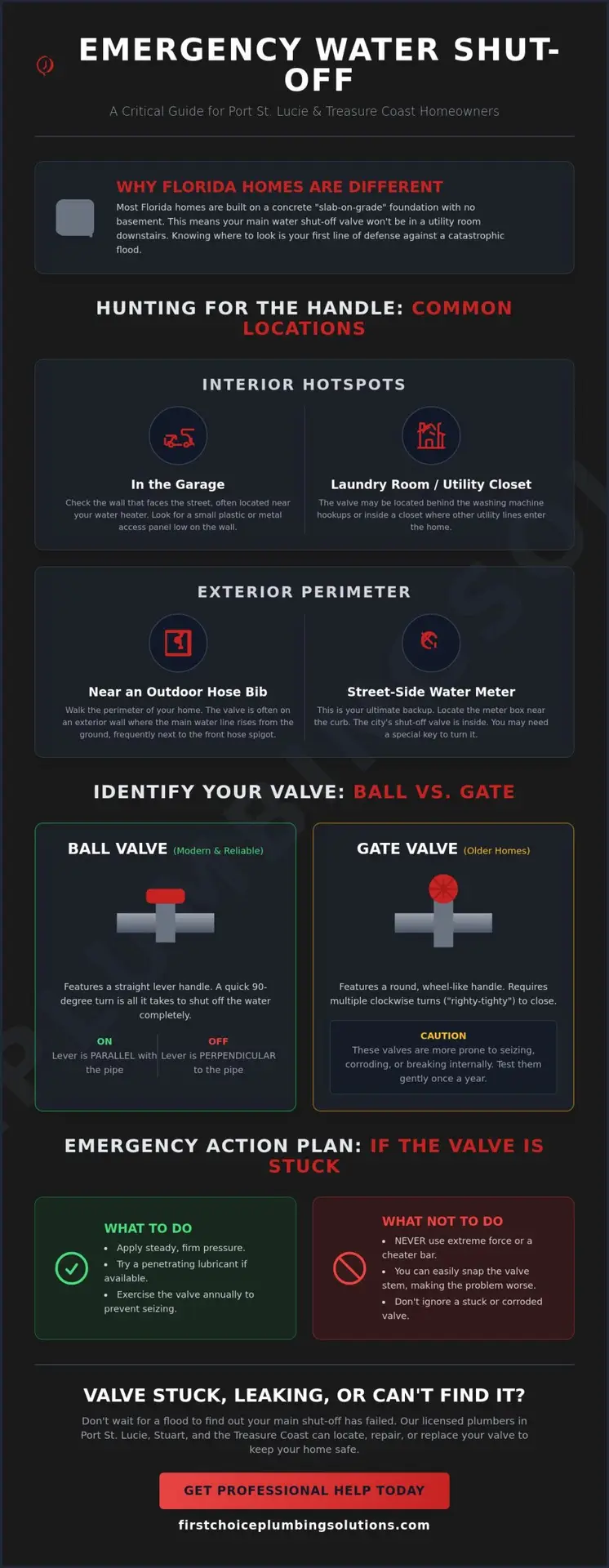
In the plumbing world, the main shut-off valve acts as the master switch for your entire home. It controls every drop of pressurized water that enters your pipes from the municipal supply. The main shut-off valve is the primary defense against catastrophic water damage. If you live in Port St. Lucie or Jensen Beach, you’ve likely noticed your home lacks a basement or a deep crawlspace. Florida’s high water table means our homes use slab-on-grade construction, which changes where your emergency plumbing shut off valve location will be.
Start your search by using the street-side rule. Locate your water meter box near the curb and draw a mental line straight to your house. Most builders install the entry point along this path to minimize underground piping. Technically known as a stopcock, this valve must be accessible in seconds during a burst pipe emergency.
Interior Hotspots: Garage and Laundry Rooms
Check the wall in your garage that faces the street. You’ll often find the valve near the water heater or tucked behind the washing machine hookups. Builders in neighborhoods like St. Lucie West often install a plastic or metal access panel low on the wall to hide the plumbing while keeping it reachable. Pop these panels off to see if the handle is hiding inside.
Exterior Perimeter: Foundation and Hose Bibs
Walk the perimeter of your home and look for where the main line rises from the ground. In many Treasure Coast communities, the valve is located directly beneath or next to the front hose bib. If no handle is visible on the exterior wall, look for a buried curb box near the property line. These small plastic or concrete lids often protect the secondary shut-off point for the home.
Identifying and Operating Your Valve Types
Once you’ve identified your emergency plumbing shut off valve location, you must understand the specific hardware in your home. Most residences in Palm City and Stuart use one of two main designs. Identifying yours quickly can save thousands in potential water damage during a crisis.
Ball Valves: These are the gold standard for modern plumbing. They feature a straight lever handle that operates on a simple 90-degree turn. If the lever sits parallel to the pipe, the water is on. Turn it so it stands perpendicular to the pipe to shut the water off completely. It’s a fast, visible way to verify your home is safe. Because they have fewer moving parts, they’re less likely to fail when you need them most.
Gate Valves: Common in older Treasure Coast properties, these feature a round, wheel-shaped handle. These require multiple clockwise rotations to lower an internal gate and block the flow. Always remember the “righty-tighty” rule. These valves are more prone to mechanical failure over time, so you should check them regularly. You can find more detailed diagrams to help you locate your main water shutoff valve and identify these parts visually if you’re unsure which type you have.
Main Valves vs. Local Shut-Offs
Not every leak requires shutting down the entire house. Most fixtures, like toilets and sinks, have “point-of-use” valves located directly behind or beneath them. Use these to isolate a single problem while keeping the rest of your home functional. However, if a pipe bursts inside a wall or under your slab, head straight for the main valve. If your local valves are leaking or won’t turn, it’s time for professional plumbing repairs to ensure your backup systems actually work when you need them.
Dealing with Stuck or Corroded Valves
Florida’s salt air and relentless humidity cause metal components to corrode faster than in other climates. This often leads to “frozen” valves that refuse to budge during an emergency. Never use extreme force on a gate valve. The internal stem can snap, leaving the valve stuck in the closed position and leaving you without water. Apply a steady, firm grip or use a lubricant designed for plumbing. If a valve feels brittle or won’t move with moderate pressure, a professional inspection can prevent a minor issue from becoming a broken pipe. Keeping your valves in good working order is a simple way to protect your property from unexpected floods.
What to Do if You Can’t Find or Turn the Valve
If you’ve searched every likely emergency plumbing shut off valve location and still can’t stop the flow, you have a reliable backup at the street level. While most homeowners prefer using the house valve, the municipal meter box is your final line of defense during a major pipe failure in Port St. Lucie or Fort Pierce. Use these steps to gain control of the situation immediately.
- Step 1: Locate the water meter box at the street. This is usually a concrete or plastic lid tucked into the grass near your property line.
- Step 2: Use a “meter key” or a pair of large pliers to turn the valve inside the box. A quarter turn is usually all it takes to kill the supply.
- Step 3: Open the lowest faucet in the house. This drains the remaining pressurized water from your pipes and stops the spray at the leak site.
- Step 4: Document the damage. Take clear photos and videos for insurance purposes before you begin the cleanup process.
When to Call a Professional
You should contact a licensed expert if your main valve is seized, leaking, or if the water doesn’t fully stop after you’ve turned the handle. Another critical warning sign is if your water meter continues to spin after all fixtures are off, which often indicates a slab leak. In these cases, a leak detection expert is necessary to identify the source and protect your home’s foundation from erosion. Attempting to force a broken valve yourself can lead to a secondary burst pipe, turning a localized repair into a major flood.
Modernizing Your Main Shut-Off
Many older homes in Traditions or Jensen Beach still rely on outdated gate valves that are prone to mechanical failure. Upgrading to a modern ball valve during a whole house repipe is a smart investment in your property’s safety. If your home lacks a dedicated master shut-off, our team can install one in a more accessible location. For immediate help or preventative maintenance, First Choice Plus Plumbing & Air provides 24/7 emergency plumbing to keep your Treasure Coast property safe and dry.
Protect Your Florida Home from Water Damage
Finding your emergency plumbing shut off valve location is a simple task that pays massive dividends when a pipe fails. Take a moment this weekend to walk your property and identify the handle, whether it’s tucked in your garage or sitting near a front hose bib. Remember that your street-side meter box is a reliable backup if your interior valve is seized or inaccessible. Regular maintenance prevents these vital metal components from corroding in our humid Treasure Coast air, ensuring they work when every second counts.
First Choice Plus Plumbing & Air has been locally owned and managed since 2007, serving neighbors across Port St. Lucie and the surrounding areas. We are specialized slab leak experts who understand the unique challenges of Florida’s slab-on-grade construction. If you find yourself facing a plumbing emergency, call First Choice Plus Plumbing & Air for 24/7 expert repairs. Our team is ready to restore your home’s safety with transparent pricing and steady, professional expertise. You don’t have to face a flood alone; a bit of preparation and a trusted local partner make all the difference. Stay proactive and keep your home dry and secure.
Frequently Asked Questions
Is the water shut-off valve always outside in Florida?
No, your shut-off valve isn’t always on the exterior wall. While many Treasure Coast homes have a valve near the front hose bib, many modern builds in St. Lucie West and Traditions place them inside the garage. Look near the water heater or behind the washing machine hookups. If your home is on a slab, these interior spots are common alternatives for your emergency plumbing shut off valve location.
What do I do if my main water shut-off valve is stuck?
Don’t use excessive force if the handle won’t budge, especially on older wheel-style gate valves. Salt air corrosion often freezes metal parts in our coastal environment. You can try applying a small amount of penetrating oil to the stem and letting it sit for several minutes. If it still won’t turn, call a professional to replace it. Forcing a stuck valve can snap the internal components, causing a permanent leak.
Can I shut off my water at the street meter myself?
You can legally shut off the water at the municipal meter box during an emergency. This box sits in the grass near the street under a concrete or plastic lid. You’ll need a meter key or a large pair of channel-lock pliers to turn the valve a quarter turn. It’s a vital backup when you can’t find your primary emergency plumbing shut off valve location or if the house valve fails.
How do I know if my shut-off valve is failing?
Look for visible mineral deposits, rust, or dampness around the valve body. If the handle is difficult to turn or feels crunchy when you move it, the internal components are likely corroded. A clear sign of failure is if water continues to drip from your faucets after you’ve fully closed the valve. Testing your valve twice a year ensures it’s ready to protect your home from sudden flooding or slab leaks.

Article by
Written by First Choice Plus Plumbing & Air Team
This article was created by the team at First Choice Plumbing Solutions, a licensed and experienced plumbing and HVAC company serving Port St. Lucie, Land O’ Lakes, and surrounding areas.
Our team specializes in plumbing and air conditioning services, including drain cleaning, leak detection, water heater repair and installation, AC repair, maintenance, and system installations. Our content is based on real-world experience and the common issues we solve for homeowners and businesses every day.
We aim to provide accurate, helpful, and easy-to-understand information so you can make informed decisions about your plumbing and HVAC needs.
If you need reliable, professional service, First Choice Plumbing Solutions is here to help.
Disclaimer
Disclaimer: The information provided in this article is for general informational purposes only and does not constitute professional plumbing or HVAC advice. Every situation is different, and readers should consult a licensed professional for proper diagnosis and repair. First Choice Plus Plumbing & Air is not liable for any damages or losses resulting from the use of this information.