
What if the most expensive repair your Port St. Lucie home ever needs is currently hiding in plain sight behind a fresh coat of paint? Detecting leaks in walls early is the only way to prevent a small drip from turning into a structural nightmare. It’s a stressful thought for any homeowner along the Treasure Coast, especially when you notice a sudden spike in your water bill or catch a faint, musty scent in the hallway. You know something is wrong, but the fear of high repair costs and the anxiety of hidden mould growth in our Florida humidity can make it tempting to look the other way.
The good news is that finding a solution doesn’t require destructive guesswork. This 2026 diagnostic checklist will teach you how to use sensory clues and non-invasive tests to confirm if a leak exists and locate it with professional precision. We’ll guide you through the process of protecting your home from structural damage while focusing on solutions that keep your walls intact. From Fort Pierce to Stuart, we’re helping neighbors regain their peace of mind with a clear, step-by-step approach to home health and safety.
Key Takeaways
- Identify the early warning signs of water damage, such as unexplained utility bill spikes and persistent musty odors near your baseboards.
- Learn the 30-minute water meter test to confirm if a leak exists without ever touching your drywall.
- Discover how professional technology like thermal imaging and acoustic sensors makes detecting leaks in walls a non-invasive process.
- Protect your Florida home from the rapid mould growth and structural decay common in Treasure Coast humidity by catching hidden drips early.
The Homeowner’s Checklist: 7 Warning Signs of Leaks Behind Your Walls
Early detection starts with paying attention to the subtle shifts in your home’s environment. If your monthly water bill suddenly jumps without a change in your family’s habits, it’s a primary indicator that water is escaping somewhere. Beyond the numbers, keep an eye on your walls. Discoloration, specifically yellow, brown, or copper-colored stains, often signals structural dampness caused by a slow pipe failure. You might also notice bubbling paint, peeling wallpaper, or ‘soft’ spots in the drywall where moisture has compromised the material’s integrity. Detecting leaks in walls requires a keen eye for these physical changes before they escalate into a major repair.
Sensory Clues: What to Listen and Smell For
Listen closely when the house is quiet. If you hear rushing or dripping water behind your walls while all faucets are off, you likely have a pressurized leak. In areas like St. Lucie West or Traditions, homeowners often report ‘warm spots’ on the floor or wall. This usually points to a hot water line issue. It’s also vital to distinguish between plumbing and AC problems. In our Port St. Lucie office, we handle both plumbing and air conditioning; we often see leaks caused by clogged AC condensate lines rather than broken pipes. Our Land O’ Lakes location, however, focuses exclusively on plumbing solutions and does not handle AC work.
The Florida Factor: Mould and Mildew
Our local climate adds a layer of complexity. Hidden moisture behind walls in the Treasure Coast leads to rapid mould spores that can impact your indoor air quality and structural safety. Always check high-risk areas like the dark spaces behind bathroom vanities, kitchen cabinets, and laundry room walls. Humidity levels above 60% can mask early leak symptoms by making surfaces feel naturally damp or clammy. This makes it even more important to watch for persistent, earthy odors that don’t go away after a deep cleaning. Whether you’re in Fort Pierce or Jensen Beach, catching these signs early is the best way to avoid the high costs of structural remediation.
DIY Diagnostic Steps: How to Confirm a Leak Without Opening Drywall
Confirming a leak doesn’t have to mean tearing into your drywall immediately. If you’ve noticed the warning signs mentioned earlier, the next step is active verification. One of the most effective ways of detecting leaks in walls involves using your home’s water meter as a diagnostic tool. This simple process tells you if water is moving through your pipes when it shouldn’t be, providing the hard evidence you need before deciding on a repair strategy.
Performing the Water Meter Test
- Turn off every water-consuming appliance in the house, including ice makers and irrigation systems.
- Locate your water meter box, usually near the street, and record the current reading.
- Wait 30 to 60 minutes without using a single drop of water.
- Check the meter again. Any movement in the low-flow indicator or a change in the digits confirms a leak.
To pinpoint the general area, use the ‘Isolation Method.’ Shut off the main water valve to your house and check the meter again. If the meter stops moving, the leak is definitely inside your home’s plumbing. If it keeps moving, the problem is in the service line outside. This distinction is vital for homeowners from Palm City to Jensen Beach, as it determines which part of your property needs the most attention.
Mapping the Moisture
Once you’ve confirmed a leak exists, you can narrow down its location using basic tools. A pinless moisture meter is an excellent investment for this; it allows you to scan the wall surface to find the highest concentration of water without leaving marks. You can find helpful professional tips on how to find a water leak using these tools to map out a ‘damp zone.’ For a low-tech approach, press a glass or the handle of a screwdriver against the wall and listen. This acts as a basic stethoscope to amplify the sound of water movement. If your readings reach ‘critical’ levels or you hear clear dripping, it is best to seek leak detection and repair services to prevent structural decay.

Professional Leak Detection: Non-Invasive Technology vs. Traditional Methods
Confirming a leak with a water meter is only the first step. The real challenge is pinpointing the exact location without turning your home into a construction zone. Traditional methods often involved exploratory demolition, where plumbers cut multiple holes in the drywall hoping to find the source. Modern professional technology has completely changed this process. By using non-invasive tools, we find the issue with surgical precision, saving you from unnecessary repair costs and the mess of extensive drywall restoration.
According to the EPA, household leaks can waste nearly 1 trillion gallons of water nationwide every year. In the Treasure Coast, these leaks often hide behind thick insulation or under concrete slabs. We use acoustic leak detection to listen for the specific hiss of a pinhole leak that the human ear simply cannot catch. Electronic pipe locating then allows us to map your entire plumbing layout. This ensures that when we finally do make an entry point, it’s exactly where it needs to be. Detecting leaks in walls today is about using data rather than guesswork.
The Power of Infrared (Thermal) Technology
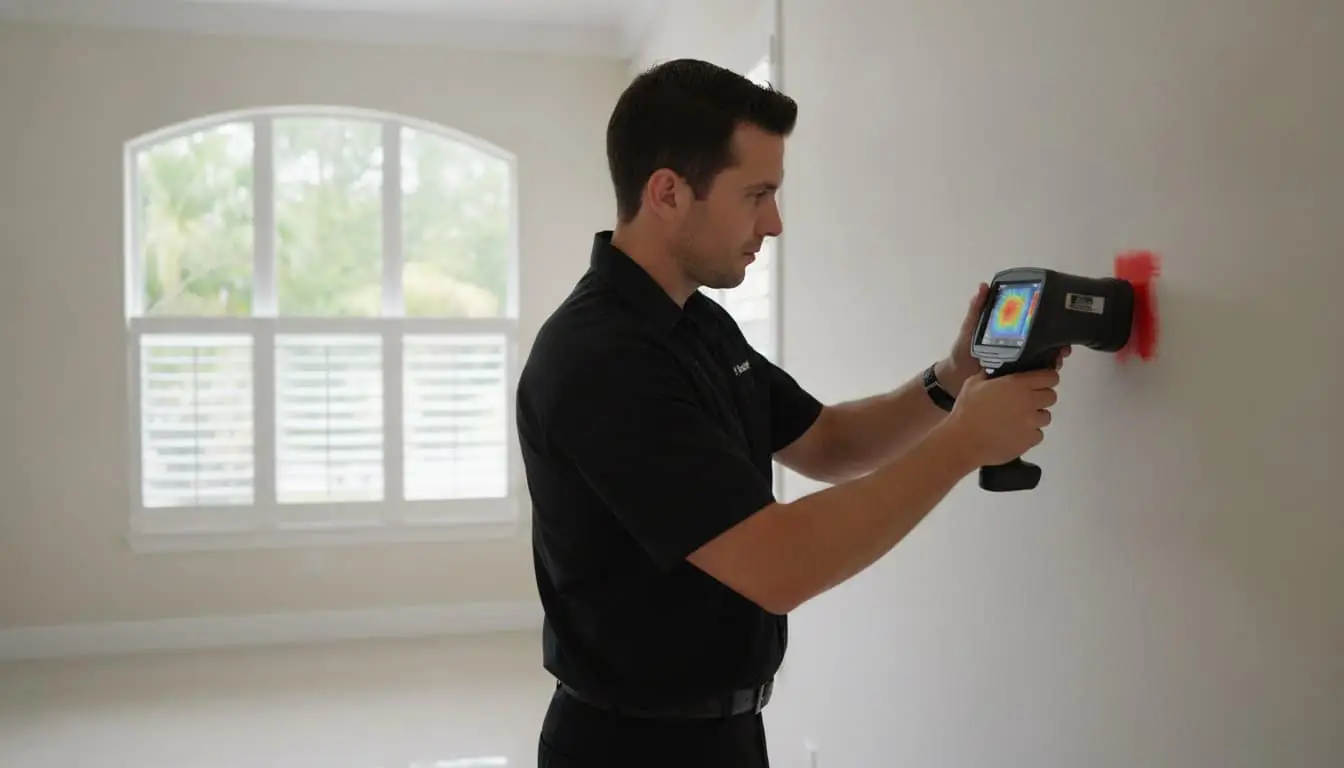
Thermal imaging is one of the most powerful tools in a master craftsman’s arsenal. These cameras identify evaporative cooling patterns where moisture is present behind the drywall, even if the surface looks dry. Thermal imaging can detect a leak within a few inches of its source, which is essential for identifying slab leaks in Florida homes. While consumer cameras are available, professional interpretation is required to distinguish between a leak and normal temperature variances from AC ducts or insulation gaps.
When to Call a Treasure Coast Expert
You should call a professional if your water meter moves but you see no visible signs of damage. DIY patch jobs on aging Florida plumbing systems often lead to secondary failures because they don’t address the underlying pipe condition. If you’re in Port St. Lucie, Fort Pierce, or Stuart, our team provides both plumbing and AC solutions to ensure your home stays dry. For those near our Land O’ Lakes location, please remember we focus strictly on plumbing and don’t handle AC repairs. To learn more about protecting your property, read our leak detection expert guide for deep-dive protection tips.
Securing Your Treasure Coast Home Against Hidden Water Damage
Detecting leaks in walls is a process that moves from simple observation to high-tech confirmation. By tracking your water meter and watching for shifts in wall texture or persistent odors, you can catch a problem before it compromises your home’s structural integrity. Remember that Florida’s humidity doesn’t just make leaks hard to spot; it accelerates the growth of mould. Taking these diagnostic steps now ensures your home remains a safe, dry environment for your family.
Since 2007, our family-owned team has supported neighbors across Port St. Lucie, Fort Pierce, and Stuart. We utilize state-of-the-art thermal imaging technology to find hidden drips without unnecessary demolition. While our Port St. Lucie headquarters provides 24/7 emergency plumbing and AC services, our Land O’ Lakes location offers expert plumbing solutions for local residents. No matter which office you call, you receive the same commitment to transparency and master craftsmanship. Schedule your non-invasive leak detection with First Choice Plus today to stop a small drip from becoming a big disaster. You’ve done the hard work of identifying the signs; now let us handle the technical resolution.
Frequently Asked Questions
Can you see a water leak through a wall?
You can often see the physical evidence of a leak before you see actual standing water. Discoloration in the form of yellow, brown, or copper-colored stains on the drywall is a primary indicator. You might also notice the wall texture changing; it may appear soft, swollen, or wavy to the touch. In our humid Florida climate, bubbling paint or peeling wallpaper are common visual cues that moisture is trapped behind the surface.
How do I find a leak in my wall without cutting it?
Finding the exact source without demolition requires specialized technology. Detecting leaks in walls is most effectively done using thermal imaging cameras that identify temperature variances caused by moisture behind the drywall. We also use acoustic listening devices to pinpoint the specific sound of escaping water. For a DIY approach, the 30-minute water meter test is the best way to confirm a leak exists before calling a Treasure Coast professional for non-invasive locating.
What does a hidden water leak sound like?
A hidden leak usually presents as a consistent hissing, whistling, or splashing sound behind your baseboards or cabinets. If the leak is a pinhole type, it often sounds like air escaping from a tire. Larger failures might sound like water rushing through a pipe even when no fixtures are in use. You’ll notice these sounds most clearly at night when your Port St. Lucie home is quiet and ambient noise is low.
Does homeowners insurance cover leaks inside walls?
Most standard homeowners insurance policies cover sudden and accidental water damage, such as a burst pipe. However, they typically exclude damage caused by gradual leaks or a lack of maintenance. This is why early detection is critical for Treasure Coast residents. If a leak goes unnoticed for months and leads to extensive mould growth, your claim might be denied. Always verify your specific coverage with your local insurance agent.

Article by
Written by First Choice Plus Plumbing & Air Team
This article was created by the team at First Choice Plumbing Solutions, a licensed and experienced plumbing and HVAC company serving Port St. Lucie, Land O’ Lakes, and surrounding areas.
Our team specializes in plumbing and air conditioning services, including drain cleaning, leak detection, water heater repair and installation, AC repair, maintenance, and system installations. Our content is based on real-world experience and the common issues we solve for homeowners and businesses every day.
We aim to provide accurate, helpful, and easy-to-understand information so you can make informed decisions about your plumbing and HVAC needs.
If you need reliable, professional service, First Choice Plumbing Solutions is here to help.
Disclaimer
Disclaimer: The information provided in this article is for general informational purposes only and does not constitute professional plumbing or HVAC advice. Every situation is different, and readers should consult a licensed professional for proper diagnosis and repair. First Choice Plus Plumbing & Air is not liable for any damages or losses resulting from the use of this information.