

Imagine it’s a humid July afternoon in Port St. Lucie and your vents suddenly start blowing warm, sticky air. It’s a scenario every Treasure Coast homeowner dreads, especially when the heat index climbs into triple digits. You aren’t alone if you’re noticing a musty “dirty sock” smell or watching your power bill skyrocket during the summer peak. These are among the most common AC problems in Florida, where our unique mix of salt air and intense moisture works against your equipment every single day.
We understand that a failing air conditioner is more than an inconvenience; it’s a source of real stress for your family. You likely already know that Florida units work harder than systems in almost any other state, often leading to a shorter 10 to 15 year lifespan. This guide will help you identify the specific environmental stressors causing your cooling issues and show you how to protect your system from our harsh climate. We’ll explore why local units fail faster, which simple issues you can fix yourself, and exactly when you need to call for a professional repair to keep your home cool and safe.
Key Takeaways
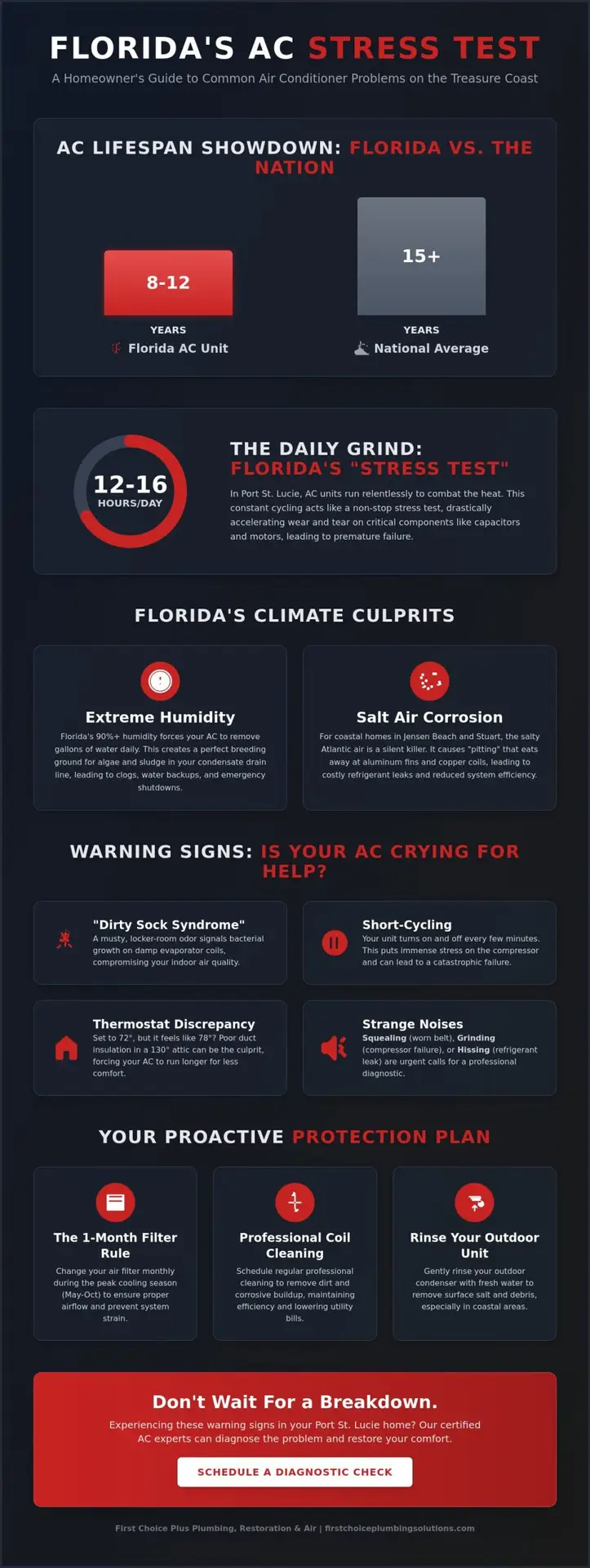
- Learn why the unique combination of Treasure Coast humidity and salt air often reduces HVAC lifespans to just 8-12 years compared to drier climates.
- Identify common AC problems in Florida, including how to spot “dirty sock syndrome” and the short-cycling issues that lead to expensive compressor failures.
- Understand the “Stress Test” effect and how 16-hour daily run times in Port St. Lucie put extreme pressure on your system’s capacitors.
- Master the “1-Month Rule” for air filter maintenance to ensure your unit survives the intense peak cooling season from May through October.
- Discover how professional coil cleaning maintains heat transfer efficiency to help lower your monthly utility bills and prevent system strain.
The Tropical Toll: Why Florida’s Climate Causes Unique AC Failures
Air conditioners in the Sunshine State face a brutal reality. While a unit in a dry climate might last 15 years or more, Florida systems typically reach the end of their road in just 8 to 12 years. This shortened lifespan happens because our environment acts as a constant “Stress Test.” In Port St. Lucie, units often run 12 to 16 hours daily just to maintain a comfortable temperature. This relentless cycling wears down vital components like capacitors, which act as the system’s battery for starting the motor. The 2026 summer heatwaves have only added to this strain, with local grid fluctuations making every start-up a challenge for aging equipment. While we provide expert plumbing help for our neighbors in Land O’ Lakes, our full-service AC expertise is dedicated to the Treasure Coast families we serve daily.
Humidity and the Infamous Clogged Condensate Drain
Florida’s 90% humidity forces your unit to act as a giant dehumidifier. To understand how air conditioning works, you have to realize the system must pull gallons of water from your indoor air every single day. This constant moisture creates a perfect breeding ground for an “algae bloom” inside your drain lines. When this sludge builds up, water backs up into the emergency pan. If your system suddenly stops running, a triggered float switch is one of the most common AC problems in Florida. When this happens, you may need emergency AC repair to clear the blockage and restore cooling.
Salt Air Corrosion: The Silent Killer in Jensen Beach and Stuart
Salt air corrosion is a silent killer for homes in Jensen Beach and Stuart. Salt spray from the Atlantic causes “pitting” in aluminum fins and copper coils, which eats away at the metal and leads to refrigerant leaks. There is a noticeable difference between coastal units and those further inland in areas like Tradition or St. Lucie West. Coastal systems face much higher corrosion rates due to the direct sea breeze. Rinsing your outdoor condenser with fresh water can remove surface salt deposits, but professional chemical cleaning is required for deep-seated corrosion that threatens your system’s integrity. Understanding these common AC problems in Florida is the first step toward preventing a total system breakdown during a heatwave.
Identifying Common AC Problems: Warning Signs for Treasure Coast Homeowners
Recognizing the early warning signs of common AC problems in Florida can mean the difference between a simple tune-up and a total system collapse. One of the most frequent complaints we hear from homeowners is “Dirty Sock Syndrome.” This musty, locker-room odor isn’t a sign of a dirty house. Instead, it’s caused by bacterial growth on the evaporator coils. Because our air is so heavy with moisture, these coils stay damp, creating a perfect environment for mold and mildew to thrive. If you smell something off when the air kicks on, your indoor air quality is already compromised.
Short-cycling is another red flag that requires immediate attention. If your unit turns on and off every five minutes, it’s putting immense pressure on the compressor. This behavior often stems from an oversized unit or a failing control board. According to the U.S. Department of Energy, achieving Efficient cooling in hot, humid climates requires a system that can effectively manage moisture without these rapid cycles. For a deeper look at system health, our HVAC Port St. Lucie guide offers comprehensive local insights.
Strange Noises and What They Actually Mean
Your AC shouldn’t sound like a construction site. Squealing noises usually point to a worn belt or a motor bearing that needs lubrication. If you hear grinding, it’s often the sound of metal-on-metal contact in the compressor. This is a serious warning that a replacement may be looming. Hissing is the tell-tale sign of a refrigerant leak. These leaks are frequently caused by the coil corrosion we discussed earlier. If you’re hearing these sounds, a quick diagnostic check can prevent a mid-summer breakdown.
Thermostat Discrepancies: Is it the AC or the Controls?
It’s frustrating when your thermostat reads 78 degrees even though it’s set to 72. In many Stuart and Palm City homes with older duct systems, this discrepancy is rarely the thermostat’s fault. Poor ductwork insulation in a 130-degree Florida attic allows the air to warm up before it ever reaches your vents. This forces the system to run longer, driving up bills while failing to reach the target temperature. Addressing these common AC problems in Florida early keeps your home comfortable and your energy costs manageable.
The Florida Protection Plan: Proactive Solutions for 2026
Preventing common AC problems in Florida requires a strategy built for our specific environment. While national advice often suggests changing air filters every three months, that timeline doesn’t work for the Treasure Coast. During our peak season from May through October, you must follow the “1-Month Rule.” Dust, pet hair, and pollen accumulate rapidly when your system runs nearly 24/7. A clogged filter restricts airflow, forcing the blower motor to work harder and eventually burn out. Keeping a fresh filter in place is the simplest way to protect your investment.
Professional coil cleaning is another non-negotiable for lowering your Port St. Lucie utility bills. When dirt and grime coat your evaporator coils, they lose their ability to transfer heat efficiently. This forces the system to run longer cycles to reach your desired temperature. If your unit has already surpassed its 10-year Florida lifespan, frequent repairs may no longer be cost-effective. In these cases, exploring modern AC installation services often provides better long-term value through improved energy ratings. Don’t forget the outdoor unit, either. Clear away any vines, mulch, or debris from around the condenser to ensure it has the breathing room it needs to shed heat.
Beyond Cooling: UV Air Sanitizers and Mold Prevention
Installing UV lights inside your air handler is a powerful way to combat the biological growth that thrives in our humidity. These lights shine directly on the evaporator coil, preventing the “Dirty Sock Syndrome” we discussed earlier. Allergy sufferers in Fort Pierce often notice a significant improvement in air quality once these systems are in place. UV air sanitizers use specific light wavelengths to neutralize airborne pathogens and mold spores before they circulate through your home’s ductwork. This keeps your coils cleaner for longer, maintaining high airflow and reducing the strain on your entire system.
When to Call a Professional vs. DIY Troubleshooting
You can handle several basic troubleshooting steps yourself before calling for help. If the system won’t turn on, check your circuit breakers and ensure the thermostat has fresh batteries. You can also use a wet/dry vacuum to clear a backed-up condensate drain line. However, certain common AC problems in Florida require a technician’s expertise. You should never attempt to handle refrigerant, perform electrical testing, or repair internal motor components. These tasks involve high-voltage safety risks and specialized tools. A small tune-up in the spring prevents a midnight emergency call in July, ensuring your family stays comfortable through the hottest months of the year.
Protect Your Investment and Stay Cool All Year
Living on the Treasure Coast means your air conditioner never truly gets a day off. By understanding the common AC problems in Florida, from salt air corrosion in Stuart to humidity-driven drainage issues in Port St. Lucie, you can take proactive steps to extend your system’s life. Small habits like monthly filter changes and professional coil cleanings prevent the massive headaches of a mid-summer breakdown. Addressing these signs early keeps your home a sanctuary against the intense humidity.
First Choice Plus Plumbing & Air is here to help you stay ahead of the weather. We provide 24/7 emergency AC repairs in Port St. Lucie and expert UV air sanitizer installation to keep your indoor air fresh. Locally owned and managed by Manuel J. Duran Jr., our team is committed to the long-term comfort of our neighbors. Schedule your Treasure Coast AC tune-up with First Choice Plus today! Your home deserves a cooling system that’s as reliable as it is efficient.
Frequently Asked Questions
Why is my AC running but not cooling my Florida home?
Your AC is likely running without cooling because of a refrigerant leak or a severe airflow restriction. In the Treasure Coast, we often find that a thick layer of dust on the evaporator coil or a clogged filter has caused the system to “freeze up” into a block of ice. If you see ice on the copper lines or the air feels room-temperature, turn the system off immediately to prevent compressor damage.
How often should I change my AC filter in Port St. Lucie?
You should change your air filter every 30 days during the peak Florida summer months from May through October. While some manufacturers claim filters last longer, the intense humidity and constant run times in Port St. Lucie cause them to clog rapidly. Staying on top of this simple task is one of the best ways to avoid common AC problems in Florida and keep your monthly energy costs under control.
What causes water to leak from my indoor AC unit?
Water leaking from your indoor air handler is typically caused by a blockage in the condensate drain line. As your AC removes humidity from the air, the water flows through a PVC pipe that can easily become clogged with algae or sludge. This causes the water to back up into the emergency pan. If the drain isn’t cleared, the water will eventually overflow and cause damage to your drywall or flooring.
Is it worth repairing a 10-year-old AC unit in Florida?
Whether a repair is worth it depends on the specific component failure and the unit’s maintenance history. Given that Florida systems typically last between 8 and 12 years due to extreme heat, a 10-year-old unit is nearing the end of its reliable life. While our Port St. Lucie team handles these AC evaluations daily, please remember our Land O’ Lakes location focuses exclusively on plumbing and does not perform air conditioning work.
How can I lower my AC bill during a Florida summer?
Lowering your AC bill requires a combination of smart thermostat habits and regular system maintenance. Setting your thermostat to 78 degrees while you are home and using ceiling fans can make the house feel cooler without lowering the temperature further. Additionally, ensuring your outdoor condenser is free of debris and your indoor coils are professionally cleaned will help the system run more efficiently, reducing the energy needed to cool your home.
Can salt air really ruin my air conditioner in Jensen Beach?
Salt air is a primary cause of premature system failure for homeowners in coastal areas like Jensen Beach and Stuart. The salt spray causes a chemical reaction called pitting, which eats away at the aluminum fins and copper coils of your condenser. This corrosion leads to refrigerant leaks and forces the system to work harder, making it one of the most destructive common AC problems in Florida for coastal residents.
Article by
Written by First Choice Plus Plumbing & Air Team
This article was created by the team at First Choice Plumbing Solutions, a licensed and experienced plumbing and HVAC company serving Port St. Lucie, Land O’ Lakes, and surrounding areas.
Our team specializes in plumbing and air conditioning services, including drain cleaning, leak detection, water heater repair and installation, AC repair, maintenance, and system installations. Our content is based on real-world experience and the common issues we solve for homeowners and businesses every day.
We aim to provide accurate, helpful, and easy-to-understand information so you can make informed decisions about your plumbing and HVAC needs.
If you need reliable, professional service, First Choice Plumbing Solutions is here to help.
Disclaimer
Disclaimer: The information provided in this article is for general informational purposes only and does not constitute professional plumbing or HVAC advice. Every situation is different, and readers should consult a licensed professional for proper diagnosis and repair. First Choice Plus Plumbing & Air is not liable for any damages or losses resulting from the use of this information.