
Is the “Florida smell” in your tap water making you reach for another plastic bottle, even though you know the cost and waste are adding up? If you’re tired of seeing hard water spots on your fixtures in Jensen Beach or worrying about local groundwater pollutants, it’s time to settle the debate of carbon water filter vs reverse osmosis for your home. Most Treasure Coast homeowners just want a reliable way to protect their families, but the technical jargon can make the choice feel more complicated than it needs to be.
Just as you look for high-end solutions for your home’s water, preserving your vehicle’s exterior from mineral damage is equally important, and Peotter’s Auto Spa offers the specialized surface preservation required to maintain a car’s aesthetic value.
We believe in providing clear, honest information so you can make the best decision for your property in Port St. Lucie, Stuart, or Fort Pierce. This guide compares the pros, cons, and contaminant removal capabilities of both systems to help you find the perfect solution for your water quality. We’ll preview how each technology handles everything from chlorine to the 99% removal of heavy metals, giving you the facts you need to resolve your water concerns once and for all.
Key Takeaways
- Understand the mechanical differences between carbon adsorption and the multi-stage membrane process used in reverse osmosis.
- Identify which contaminants each system targets, ranging from common chlorine odors to dissolved solids and heavy metals.
- Evaluate the performance of a carbon water filter vs reverse osmosis based on your home’s water pressure and daily consumption needs.
- Learn why Treasure Coast homeowners in areas like Stuart and Fort Pierce often benefit from pairing filtration with a water softener.
- Discover the maintenance requirements for each system to ensure your family’s water remains clean and safe for the long term.
Carbon vs. Reverse Osmosis: Understanding the Filtration Technology
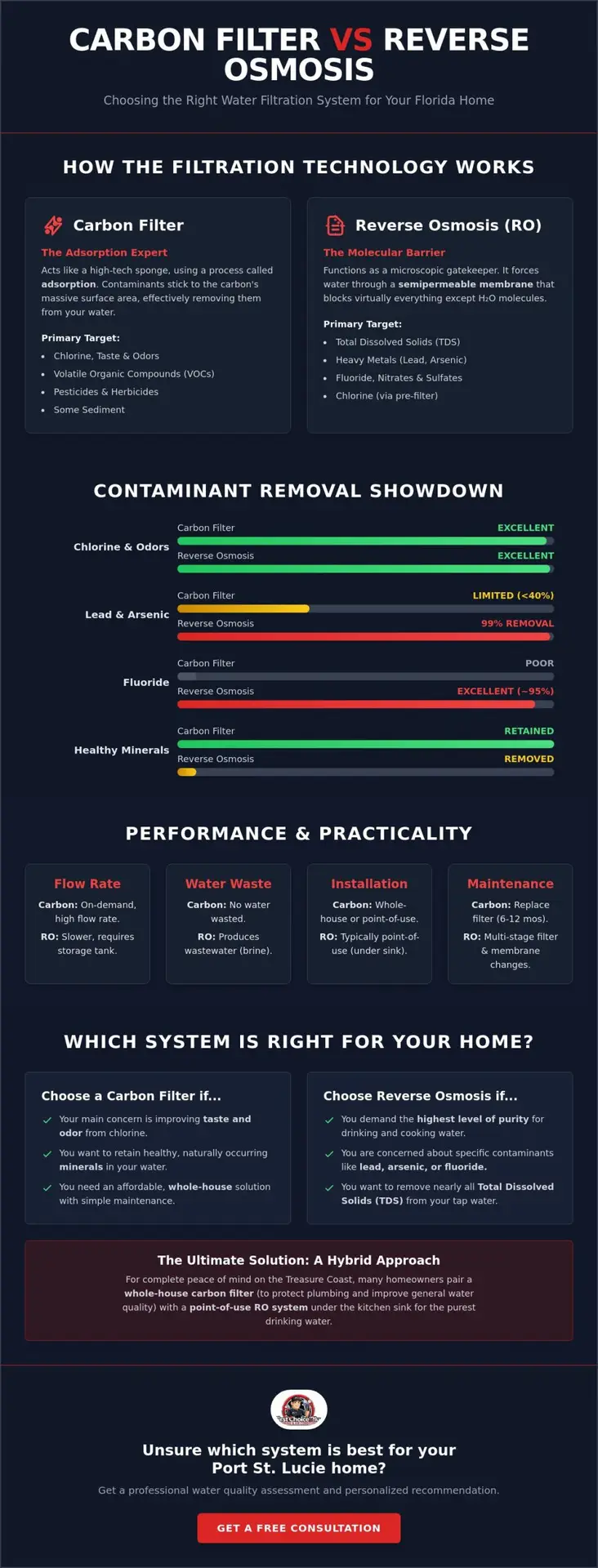
Choosing between a carbon water filter vs reverse osmosis starts with understanding how they treat the water entering your Port St. Lucie home. These aren’t just different brands of the same product. They are entirely different mechanical processes. One acts like a high-tech sponge, while the other functions as a microscopic gatekeeper. For homeowners in the Treasure Coast area, selecting the right one can mean the difference between simply removing a bad smell and stripping out dangerous heavy metals.
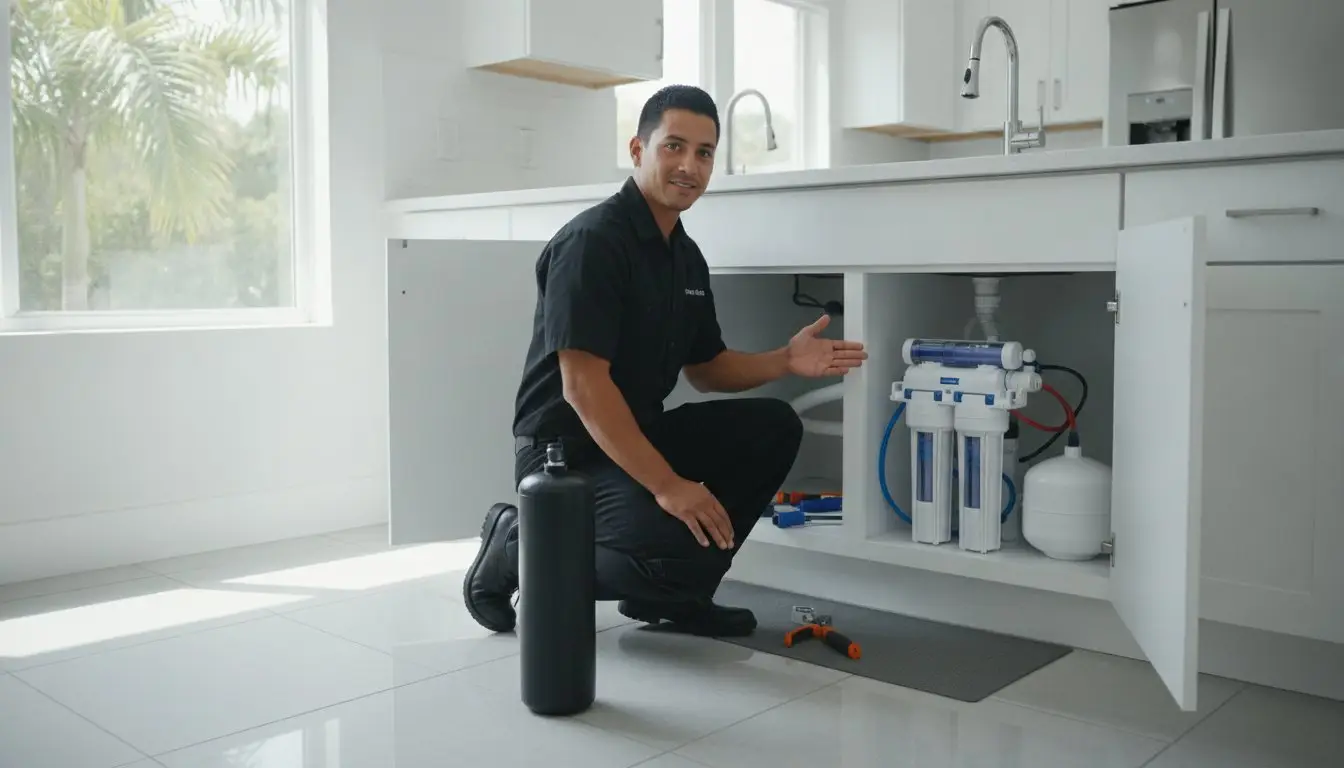
Many people assume these systems are competitors, but they often work together. In fact, professional-grade reverse osmosis (RO) systems almost always include carbon filters as a preliminary stage. This setup protects the delicate RO membrane from chlorine, which can eat away at the material and cause premature failure. While carbon filters can be installed for the whole house to protect your entire plumbing system, RO is typically a “point of use” solution installed under the kitchen sink for drinking and cooking.
The Carbon Filter Advantage: Adsorption at Work
Carbon filters are the masters of taste and odor. They utilize Carbon filtering technology to remove chlorine, volatile organic compounds (VOCs), and those “swampy” smells common in Florida groundwater. This process relies on adsorption. Adsorption is a physical bond where contaminants stick to the massive surface area of the carbon block like iron filings to a magnet. Beyond just making your coffee taste better, removing chlorine helps extend the life of your plumbing. High chlorine levels can degrade rubber seals in faucets and toilets, eventually leading to the types of pinhole leaks that plague homes in Stuart and Jensen Beach. Using a carbon block with a low micron rating ensures that even tiny physical particles are trapped before they reach your glass.
Reverse Osmosis: The Molecular Barrier
If carbon is the sponge, reverse osmosis is the ultimate barrier. It forces water through a semipermeable membrane that only allows H2O molecules to pass. This process is the gold standard for removing dissolved solids (TDS) that a standard filter simply can’t touch. While a carbon block might trap sediment, RO strips away fluoride, arsenic, and nitrates at a molecular level. For families concerned about local groundwater pollutants or those who want the highest possible purity, our water quality solutions provide the technical precision needed to keep your drinking water safe. It’s a purity powerhouse that ensures your family isn’t consuming the salts and heavy metals often found in our local aquifers.
Performance Showdown: Contaminants, Waste, and Flow Rates
When comparing a carbon water filter vs reverse osmosis, the best system for your home depends on what you want to remove and how much water you use daily. Carbon filters excel at removing chemical disinfectants, but they leave dissolved solids behind. Reverse osmosis (RO) is a total purification solution that strips almost everything from the water, including salts and heavy metals. The following table highlights the primary differences in their removal capabilities.
| Contaminant | Carbon Filter | Reverse Osmosis |
|---|---|---|
| Chlorine & Odors | Excellent | Excellent |
| Lead & Arsenic | Limited (under 40%) | 99% Removal |
| Fluoride | Poor | Excellent |
| Healthy Minerals | Retained | Removed |
Flow rate is another major factor. Carbon filters provide “on-demand” water, meaning the flow is limited only by your home’s water pressure. RO is a much slower process. To ensure you have enough water for a pot of pasta, RO systems use a pressurized storage tank. This can lead to a “flat” taste because the water is so pure it lacks the minerals that give water its character. If you notice your fixtures are suffering from corrosion or low pressure, it might be time to schedule plumbing repairs to ensure your filtration system is performing correctly.
Contaminant Removal: What They Leave Behind
Carbon filters are selective. They allow healthy minerals like calcium and magnesium to pass through, which keeps the water’s pH balanced. However, carbon has a limit. Once the filter is saturated, “breakthrough” can occur, where contaminants start leaking back into your tap. RO provides a consistent barrier until the membrane itself fails. One risk with RO is that the water becomes “aggressive.” Because it is stripped of all minerals, it can actually leach metals from older copper pipes if it isn’t properly remineralized before it reaches your faucet.
Efficiency and Environmental Impact
Efficiency varies wildly between these two. Carbon filters operate without electricity and produce zero waste. Reverse osmosis is pressure-driven and creates a byproduct called “brine” that carries contaminants away. For every gallon of RO water produced, 3-4 gallons may go to the drain. Modern high-efficiency systems can mitigate this with permeate pumps, but the waste is a reality homeowners in Stuart and Fort Pierce should consider. If you’re concerned about your environmental footprint, a high-quality carbon block is the more efficient choice for simple taste and odor issues.
Choosing the Right System for Your Treasure Coast Home
Deciding on a carbon water filter vs reverse osmosis often comes down to your specific address and what’s in your pipes. In Port St. Lucie, municipal reports frequently highlight chlorine as a primary concern. While this keeps water safe from bacteria, it isn’t great for your skin or your plumbing. If you live in Jensen Beach or Palm City, you might also deal with that unmistakable sulfur or “rotten egg” smell. In these cases, a specialized carbon system is often the first line of defense, but for the highest purity, RO remains the leader.
Maintenance is another factor. Most whole-house carbon systems require a simple filter swap once a year. Reverse osmosis is more complex, involving a multi-stage schedule for pre-filters, post-filters, and the membrane itself. Neglecting these can lead to pressure drops or even damage to your plumbing. High levels of sediment or hard water minerals can lead to premature plumbing and repiping needs if left untreated. Many of our neighbors find that a water softener paired with a carbon filter provides the best balance of protection and flow rate for the entire house.
Florida-Specific Water Challenges
Municipal water systems across the Treasure Coast are reliable, but they are designed for safety, not necessarily for taste or the longevity of your fixtures. Reviewing your Port St. Lucie city water report is a great starting point to see exactly what’s entering your home. If you’re on a well in Fort Pierce, you may face different issues like iron or tannins that require a more robust approach than a simple pitcher filter can provide.
When to Call a Professional
Installing these systems in the tight spaces under a sink or near a slab foundation is a job best left to those with the right tools. A DIY mistake can lead to hidden leaks that damage your cabinetry or flooring. A professional water test removes the guesswork. It ensures you don’t buy a system that’s underpowered for your needs or overly expensive for your specific water profile. For most local families, we recommend a whole-house carbon system to handle odors and sediment, often paired with an RO unit at the kitchen tap for the ultimate drinking water experience.
Securing Clean Water for Your Treasure Coast Family
Finding the right water treatment system is about balancing your family’s health with the specific challenges of Florida’s groundwater. Carbon filters provide an efficient, electricity-free way to eliminate chlorine smells and protect your plumbing from corrosive chemicals. For those who want the highest level of purity, reverse osmosis acts as a molecular gatekeeper that strips away heavy metals and dissolved solids. The best choice for your property depends on whether you’re fighting simple odors in Jensen Beach or complex pollutants in Fort Pierce.
We’ve served as a family-owned and locally operated pillar of the community since 2007. Our team understands the unique mineral content and chlorination levels of the Treasure Coast. When you’re ready to settle the carbon water filter vs reverse osmosis debate for your specific home, we’re here to help with professional testing and 24/7 emergency support in Port St. Lucie. We can design a system that protects your fixtures and provides crisp, bottled-quality water straight from your tap.
Don’t leave your water quality to guesswork. Schedule a Water Quality Consultation with Our Treasure Coast Experts today to ensure your home has the protection it deserves. We look forward to helping you achieve total peace of mind at every faucet.
Frequently Asked Questions About Home Water Filtration
Does reverse osmosis remove healthy minerals from my drinking water?
Yes, reverse osmosis strips away almost everything, including beneficial minerals like calcium and magnesium. This process creates ultra-pure water, though some homeowners find the taste slightly flat or acidic. You can resolve this by adding a remineralization filter to the final stage of your system. This adds a controlled amount of minerals back into the water, improving the taste and ensuring a more balanced pH for your family.
Can I install a carbon filter for my whole house but RO for just the kitchen sink?
You absolutely can, and this is often the most effective setup for Florida properties. A whole-house carbon filter protects your plumbing and appliances from chlorine and sediment. Simultaneously, an under-sink RO unit provides high-purity water for drinking and cooking. This hybrid strategy allows you to balance the benefits of a carbon water filter vs reverse osmosis without wasting excessive water on your showers or laundry.
Why does my reverse osmosis system make a gurgling sound in the drain?
That gurgling sound is usually the byproduct of the purification process, where reject water flows through the drain line. As the system fills its storage tank, it sends concentrated contaminants down the drain. It is a sign of normal operation. However, if the noise becomes a distraction, a plumber can often reposition the drain saddle or clear a partial clog in the sink’s P-trap to quiet the flow.
How often do I need to replace the filters in a carbon vs. RO system?
Carbon filters typically require a swap every 6 to 12 months to prevent contaminant breakthrough. RO systems have a tiered schedule. You should replace the pre-filters and post-filters once a year to keep the water tasting fresh. The expensive RO membrane usually lasts 2 to 4 years. In areas like Stuart or Fort Pierce with higher sediment levels, checking these filters more frequently helps avoid sudden drops in water pressure.

Article by
Written by First Choice Plus Plumbing & Air Team
This article was created by the team at First Choice Plumbing Solutions, a licensed and experienced plumbing and HVAC company serving Port St. Lucie, Land O’ Lakes, and surrounding areas.
Our team specializes in plumbing and air conditioning services, including drain cleaning, leak detection, water heater repair and installation, AC repair, maintenance, and system installations. Our content is based on real-world experience and the common issues we solve for homeowners and businesses every day.
We aim to provide accurate, helpful, and easy-to-understand information so you can make informed decisions about your plumbing and HVAC needs.
If you need reliable, professional service, First Choice Plumbing Solutions is here to help.
Disclaimer
Disclaimer: The information provided in this article is for general informational purposes only and does not constitute professional plumbing or HVAC advice. Every situation is different, and readers should consult a licensed professional for proper diagnosis and repair. First Choice Plus Plumbing & Air is not liable for any damages or losses resulting from the use of this information.