
Imagine it’s a humid Saturday afternoon in St. Lucie West, the thermometer reads 93 degrees, and your air conditioner suddenly goes silent. You might find a puddle forming near your indoor air handler or, even worse, a damp water stain spreading across your hallway ceiling. It is a stressful situation that many of our neighbors in Fort Pierce and Stuart face when Florida’s intense moisture creates a thick, biological “sludge” inside their condensate lines. You shouldn’t have to worry about mold growth or expensive floor damage just because of a blocked PVC pipe.
The good news is that staying ahead of these clogs is manageable with the right approach. Learning the basics of AC drain line cleaning Port St. Lucie homeowners can perform themselves is the best way to keep your home dry and your air cool. This guide will walk you through identifying the warning signs of a backup, the step-by-step process for clearing the line safely, and how to set up a simple maintenance routine. By the end, you’ll know exactly how to protect your system from the Treasure Coast heat and ensure your family stays comfortable all year long.
Key Takeaways
- Identify the “Florida sludge” that thrives in local humidity and learn why it’s the leading cause of AC backups in our area.
- Follow a clear, safe method for AC drain line cleaning Port St. Lucie homeowners can perform to prevent ceiling leaks and system shutdowns.
- Locate your unit’s T-shaped access point and learn the proper sequence for shutting down power before you begin maintenance.
- Discover the critical difference between a simple DIY fix and deep clogs that require professional nitrogen or CO2 flushing.
- Implement preventative habits to keep your condensate line clear and maintain lower humidity levels inside your home throughout the year.
Why AC Drain Lines Clog Frequently in Port St. Lucie
Your air conditioner does more than just lower the temperature; it acts as a massive dehumidifier for your entire home. In the humid environment of the Treasure Coast, your indoor evaporator coil works tirelessly to pull moisture from the air. This water collects in a drain pan and exits your home through a small PVC pipe known as the condensate drain line. Understanding how HVAC systems create condensation helps explain why this small pipe is so critical to your comfort. Because our cooling season lasts nearly all year in areas like Traditions and Fort Pierce, this line rarely gets a break.
When dust particles bypass your filter and meet the constant moisture inside the dark drain line, they form what locals call “Florida Sludge.” This gelatinous mixture of algae, mold, and debris creates a thick blockage that stops water flow. Routine AC drain line cleaning Port St. Lucie homeowners perform can prevent this sludge from hardening into a permanent plug. If the water has nowhere to go, it backs up into the primary pan. This triggers the float switch, which is a safety device designed to cut power to your system before an overflow causes a flood.
The Role of Humidity in the Treasure Coast
A typical unit in St. Lucie West can pull up to 20 gallons of water from the air every single day. When that water sits stagnant due to a slow drain, it becomes a breeding ground for biological growth. This is especially common in homes near Jensen Beach or Palm City where coastal humidity is consistently high. Staying consistent with AC drain line cleaning Port St. Lucie schedules ensures that this massive volume of water always has a clear path out of your house.
Warning Signs Your Line is Obstructed
You don’t have to wait for a total system failure to know there is a problem. Watch for these red flags that suggest your line is struggling:
- Standing water: Check the emergency drain pan under your air handler. It should always be bone dry.
- Musty smells: A “dirty sock” odor often means mold or bacteria is growing in the damp debris inside your lines.
- Blank Thermostat: If your thermostat screen is dark and won’t turn on, the float switch likely cut the power to prevent water damage to your ceilings or floors.
Step-by-Step: How to Clean Your AC Condensate Drain Line
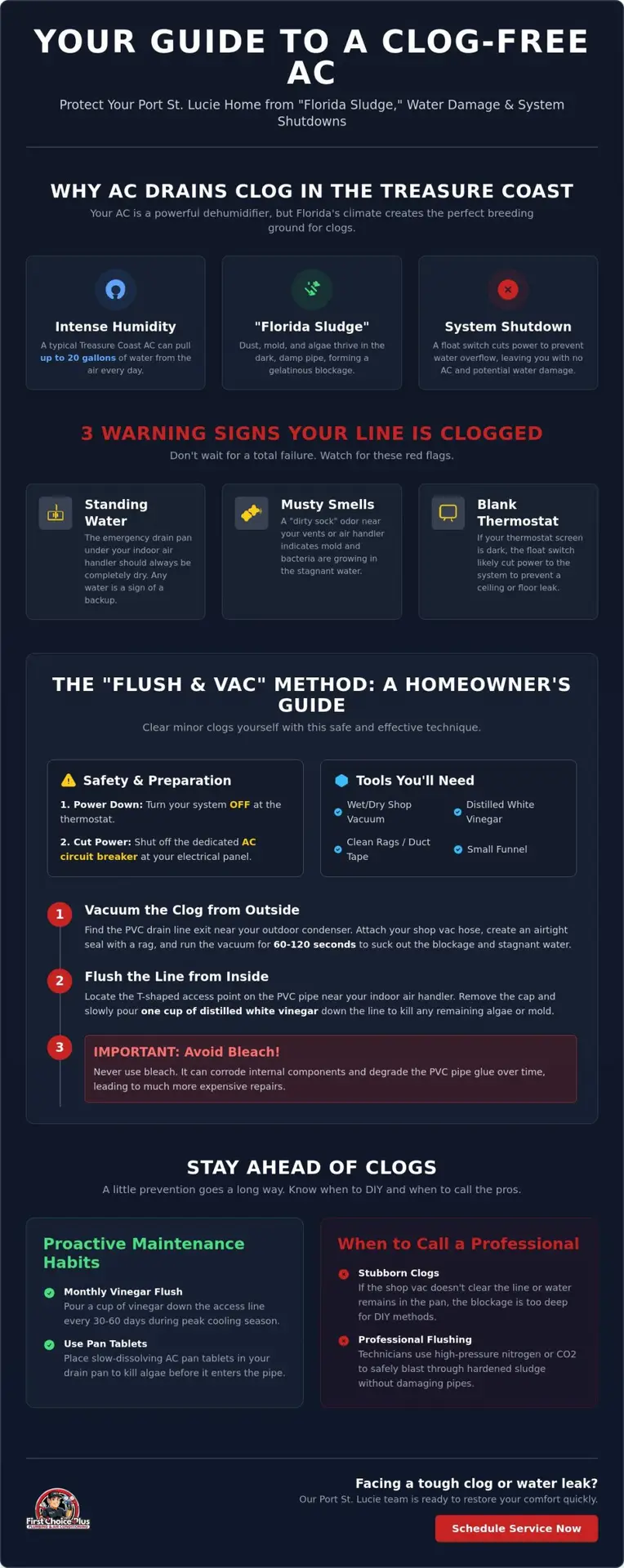
Before you begin any maintenance, safety is the priority. Head to your thermostat and turn the system off, then go to your electrical panel and shut off the dedicated AC circuit breaker. Once the power is killed, locate your indoor air handler. You’ll see a white PVC pipe exiting the unit with a T-shaped access point, usually covered by a removable cap. Keeping this area clear is essential for efficient and effective performance throughout the long Florida summer. Performing a routine AC drain line cleaning Port St. Lucie homeowners can manage themselves helps prevent the system from failing when you need it most.
Tools You Will Need for the Job
- A wet/dry shop vacuum (essential for the “flush and vac” method).
- Clean rags or duct tape to create an airtight seal.
- One cup of distilled white vinegar.
- A small funnel to prevent spills near your air handler.
Many local hardware stores in Tradition or Port St. Lucie also stock specialized “AC pan tabs.” These slow-dissolving tablets sit in your primary drain pan and kill algae growth before it ever reaches the pipe.
Executing the Wet/Dry Vac Technique
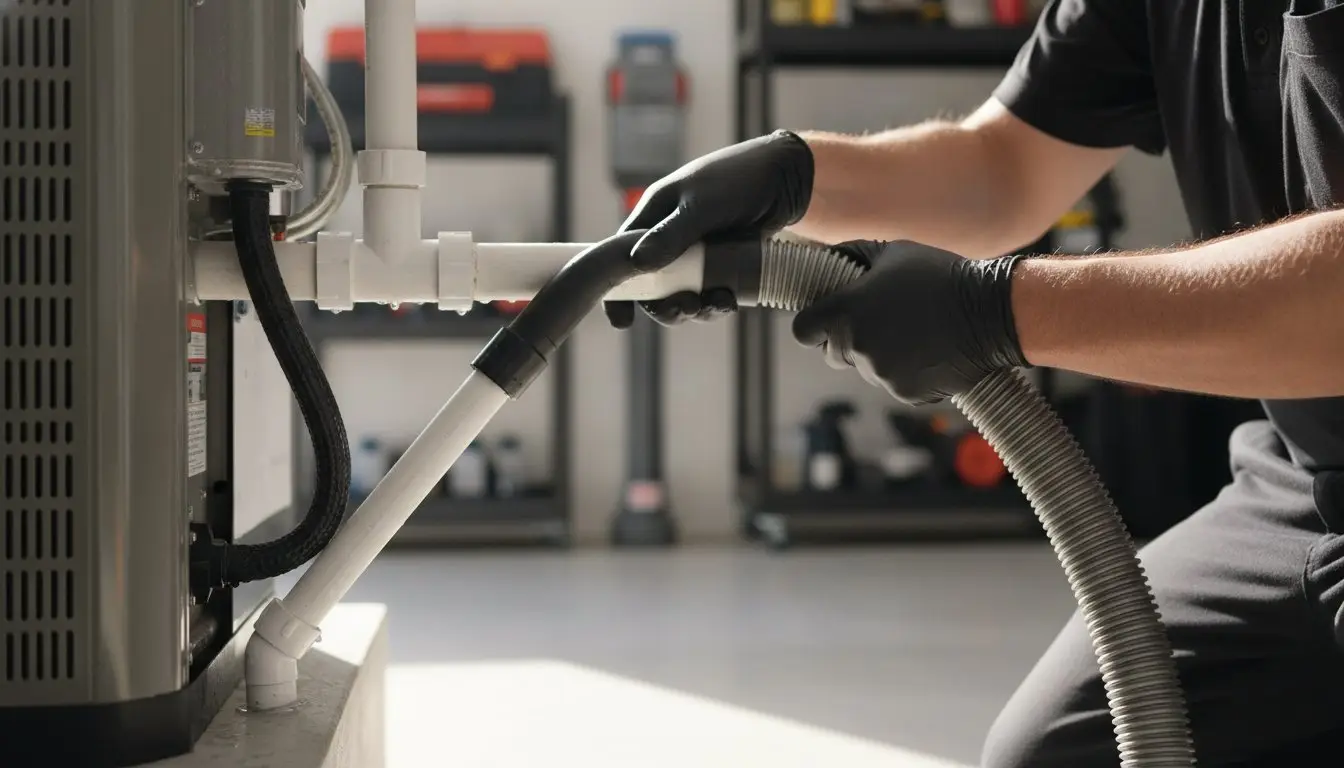
Go outside and find where the PVC drain line exits your home, usually near the outdoor condenser unit. Slide your wet/dry vacuum hose over the end of the pipe. Use a rag or duct tape to ensure the connection is airtight, then turn the vacuum on. Let it run for about 60 to 120 seconds to fully extract the biological sludge and stagnant water. The float switch is the primary safety mechanism for Port St. Lucie HVAC systems, and once the water is vacuumed out, this switch should reset and allow the unit to power back on.
Finish the job by going back inside and pouring a cup of distilled white vinegar into the T-shaped access point. Avoid using harsh bleach; it can eat away at the PVC glue and potentially damage your internal components over time. If the vacuum doesn’t pull any water out but your pan is still full, you may be dealing with a blockage that requires emergency AC repairs to clear the line with professional-grade CO2 pressure.
Professional Clearing vs. Preventative Maintenance Solutions
While the “Flush and Vac” method works for most minor obstructions, some clogs are too stubborn for a household vacuum. If the biological “sludge” has hardened or the blockage is deep within the walls, you need professional AC drain line cleaning Port St. Lucie experts to use CO2 or nitrogen flushing. This high-pressure clearing ensures every bit of debris is forced out of the pipe. Our technicians also evaluate the pitch of your drain line. If the pipe isn’t sloped at the required 1/8 inch per foot, water will sit stagnant, leading to chronic clogs regardless of how often you clean it.
For homeowners in Palm City or Stuart, we often suggest installing secondary safety measures like dual float switches. These provide a redundant layer of protection. If the primary switch fails, the second one will still shut the system down before water overflows and ruins your floors or ceilings. Following U.S. Department of Energy maintenance guidelines is the best way to ensure your system remains efficient and reliable during our intense cooling season.
When to Call a Port St. Lucie AC Expert
You should call for professional help if your thermostat remains blank after you’ve cleared the line. This often indicates a blown fuse or a faulty safety switch that needs expert attention. If you spot mold growth inside the air handler cabinet or on the evaporator coils, it’s time for a professional AC tune-up. We offer 24/7 emergency AC repair in Port St. Lucie to handle these high-stress situations immediately.
Long-Term Prevention Strategies
Maintaining a clear line doesn’t have to be difficult. Pouring a cup of distilled white vinegar down the access point once a month during the summer kills algae before it can clump together. Additionally, regular filter changes are vital because they reduce the organic dust that feeds biological growth in the drain. While whole house repiping focuses on your home’s water supply, ensuring your AC drainage is clear is just as important for protecting your property from water damage.
Protect Your Home from Humidity and Clogs
Maintaining a clear condensate line is one of the simplest ways to protect your property from water damage and unexpected cooling failures. You now have the tools to identify “Florida sludge” and perform a basic vacuum flush to keep your system running. Consistent monthly care, such as vinegar flushes and regular filter changes, remains your best defense against the sudden shutdowns that plague Treasure Coast homes during the peak of summer. For those who also oversee business facilities, you can explore Office Cleaning to find professional maintenance standards from experts with over 40 years of experience in commercial facility care.
If you encounter a stubborn blockage or your safety switch won’t reset, our team is here to help with 24/7 emergency HVAC support. We are locally owned and managed by experts who live in the same humidity you do, so we provide transparent pricing and no-nonsense solutions that actually work. Don’t wait for a ceiling leak to take action. Schedule your professional AC drain line clearing and tune-up today! Staying proactive with AC drain line cleaning Port St. Lucie ensures your family stays cool and your home stays dry all year long.
Frequently Asked Questions
Can I use bleach to clean my AC drain line?
You should avoid using bleach in your condensate system because it’s highly corrosive and can degrade the PVC cement holding your pipes together. Over time, bleach fumes can also damage the sensitive metal fins on your indoor evaporator coil. Distilled white vinegar is a much safer, more effective alternative for killing algae and mold without risking a chemical reaction that could lead to costly leaks inside your walls.
How often should I clean my AC drain line in Port St. Lucie?
You should perform AC drain line cleaning Port St. Lucie maintenance once every 30 days during the peak humidity months from May through October. Our local climate keeps air conditioners running nearly 24/7, which creates a constant stream of moisture that encourages biological growth. During the slightly cooler winter months, a quarterly flush with vinegar is usually enough to prevent the “Florida sludge” from taking hold.
Why is my AC drain pan full of water?
A full drain pan is a clear sign that your primary condensate line is blocked and water is overflowing into the emergency backup pan. This pan is designed to be bone dry under normal operating conditions. If you see standing water here, it means your system is at risk of a shutdown. Homeowners in St. Lucie West and Traditions should check this pan immediately if they notice a spike in indoor humidity.
Will a clogged drain line make my AC stop blowing cold air?
Yes, a clogged line will stop your AC from cooling because it triggers the safety float switch. This switch is designed to cut power to the outdoor compressor or the entire unit to prevent a flood. You might notice the indoor fan still blowing, but the air won’t be cold because the cooling cycle has been interrupted. Clearing the blockage usually allows the switch to reset and restores cold air flow.

Article by
Written by First Choice Plus Plumbing & Air Team
This article was created by the team at First Choice Plumbing Solutions, a licensed and experienced plumbing and HVAC company serving Port St. Lucie, Land O’ Lakes, and surrounding areas.
Our team specializes in plumbing and air conditioning services, including drain cleaning, leak detection, water heater repair and installation, AC repair, maintenance, and system installations. Our content is based on real-world experience and the common issues we solve for homeowners and businesses every day.
We aim to provide accurate, helpful, and easy-to-understand information so you can make informed decisions about your plumbing and HVAC needs.
If you need reliable, professional service, First Choice Plumbing Solutions is here to help.
Disclaimer
Disclaimer: The information provided in this article is for general informational purposes only and does not constitute professional plumbing or HVAC advice. Every situation is different, and readers should consult a licensed professional for proper diagnosis and repair. First Choice Plus Plumbing & Air is not liable for any damages or losses resulting from the use of this information.