
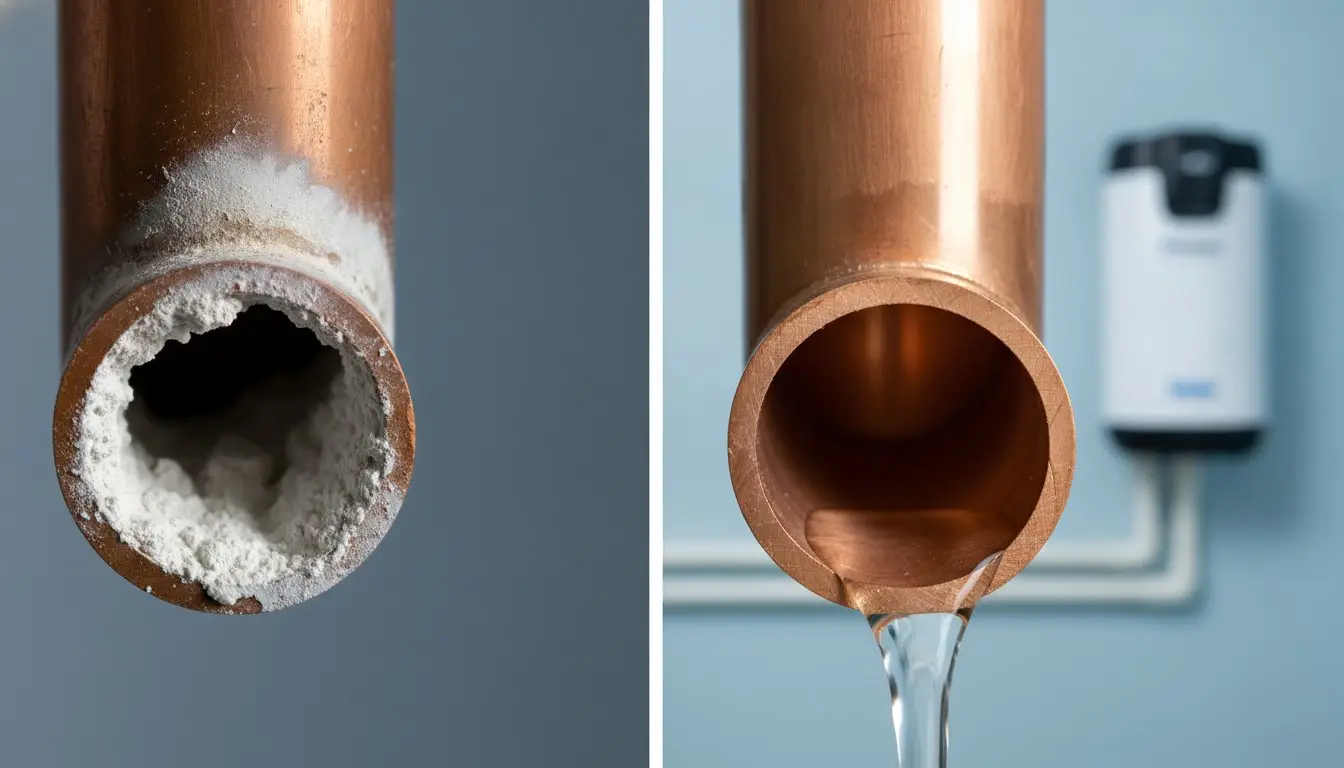
If you’re tired of scrubbing white, crusty buildup off your showerheads, a “salt-free” system might actually be the last thing you want to buy. Choosing between a salt-based vs salt-free water softener for Florida water is a decision that impacts everything from the health of your skin to the lifespan of your home’s plumbing. Most homeowners on the Treasure Coast are exhausted by high appliance repair bills and the constant battle against mineral scale. You deserve a clear, honest explanation of what these systems can and cannot do for your specific needs.
We understand the frustration of seeing a brand new tankless water heater or dishwasher ruined by mineral deposits. In this 2026 guide, you’ll discover the critical differences between traditional ion exchange and modern conditioning technology. We will help you evaluate the latest FDEP regulations and annual maintenance requirements to find a solution that stands up to our local water hardness. By the end of this article, you’ll have a clear path toward protecting your investment and ensuring your family finally enjoys the luxury of soft water.
Key Takeaways
- Learn why Florida’s unique limestone geology makes Treasure Coast water notoriously hard and how it impacts the lifespan of your home’s plumbing.
- Understand the technical differences between a salt-based vs salt-free water softener for Florida water to decide if you need total mineral removal or just scale prevention.
- Discover how the right filtration system protects expensive investments like tankless water heaters from internal mineral buildup and efficiency loss.
- Get the facts on 2026 FDEP water regulations and how they influence the long-term maintenance costs and efficiency requirements for your household.
- Identify the specific warning signs, such as white crusty buildup on faucets, that signal your current system is failing to handle local water conditions.
The Florida Water Challenge: Why Treasure Coast Homes Struggle with Scale
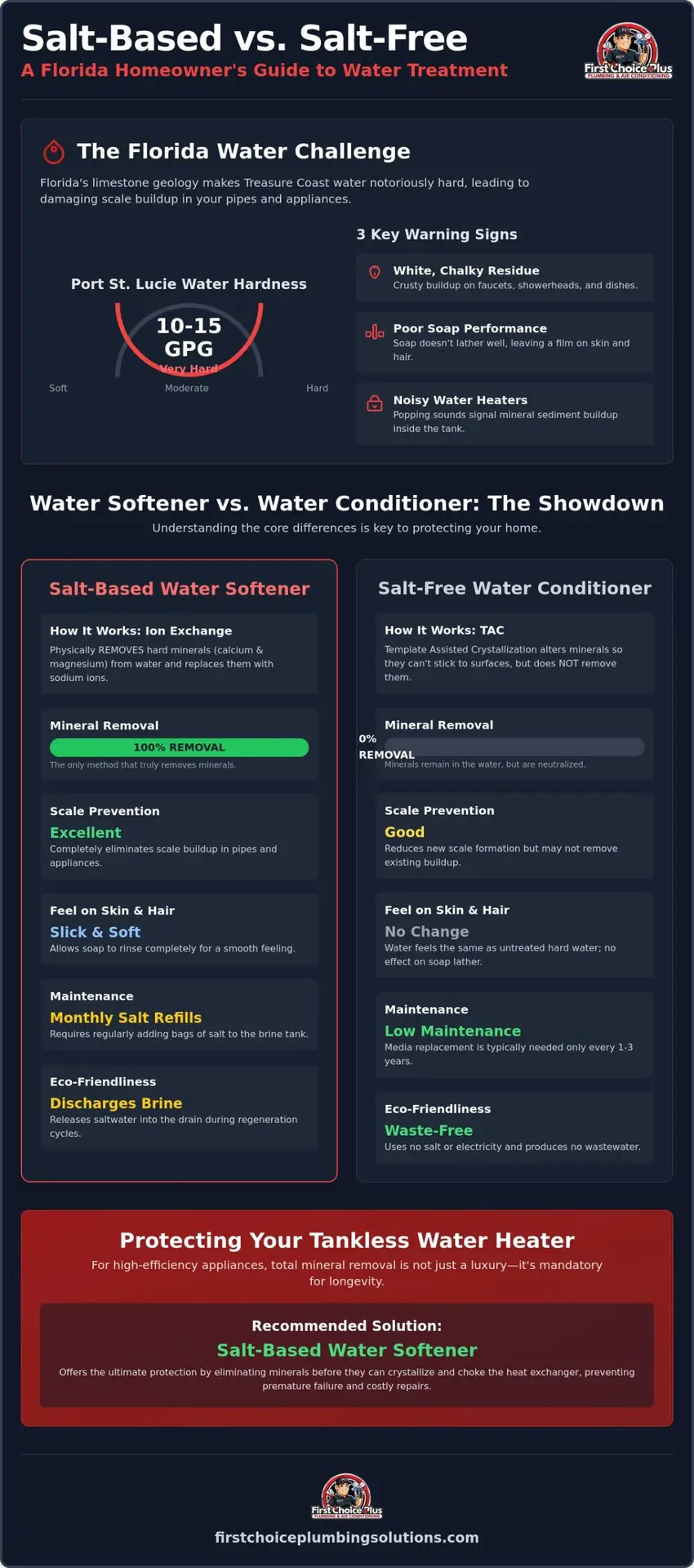
Florida sits on a massive limestone plateau. While this porous rock helps replenish our aquifers, it also dissolves high concentrations of calcium and magnesium into the groundwater. By the time that water reaches your tap, it’s packed with minerals. In Port St. Lucie, city water frequently exceeds 10 to 15 grains per gallon (GPG), which is well into the “very hard” category. This geological reality is the primary reason homeowners spend so much time researching a salt-based vs salt-free water softener for Florida water.
This mineral-heavy water creates a hidden crisis inside your walls. Scale buildup acts like plaque in an artery, narrowing the diameter of your pipes and choking off water pressure. We often see the results of this damage during emergency calls. Over time, internal corrosion can become so severe that it necessitates whole house repiping to restore the integrity of your home’s infrastructure. Understanding different water softening technologies is essential because of how aggressive our local environment is.
In Florida, hard water isn’t just a nuisance; it’s a slow-acting abrasive that degrades your plumbing from the inside out. Without a proper treatment system, your pipes and fixtures are constantly under attack from the very water meant to serve them.
Signs Your Treasure Coast Home Needs a Water Solution
You don’t always need a professional lab test to know your water is hard. If you pay close attention to your fixtures and your skin, the signs are usually obvious. Look for these common red flags in your daily routine:
- White, chalky residue: You’ll see this calcium carbonate buildup on showerheads, faucets, and even inside your dishwasher.
- Poor soap performance: Hard water prevents soap from lathering properly. If your skin feels “squeaky” or unusually dry after a shower, it’s likely due to mineral film.
- Noisy water heaters: Listen for strange popping or rumbling sounds. This indicates that sediment has settled at the bottom of the tank and is being “cooked” by the heating element.
Salt-Based vs. Salt-Free: Comparing the Two Technologies
Traditional salt-based systems use a process called ion exchange. These units contain resin beads that act like a magnet, physically pulling calcium and magnesium out of your water and replacing them with a small amount of sodium. This is the only method that truly removes the minerals. Salt-free systems use Template Assisted Crystallization (TAC). This technology doesn’t remove minerals but instead “freezes” them into a crystalline structure so they can’t stick to your pipes. When choosing a salt-based vs salt-free water softener for Florida water, remember that salt-free units are technically water conditioners, not softeners.
The “slick” feeling often associated with soft water only comes from salt-based systems. Because the minerals are gone, soap rinses away completely, leaving your skin and hair feeling smooth. Salt-free systems won’t change how the water feels or how well your soap lathers. Maintenance also differs greatly. You’ll need to add salt bags to a traditional system regularly, whereas salt-free units typically only need a media replacement every few years. It’s also helpful to consider the health and environmental impacts of water softeners, such as sodium levels and brine discharge, before making your final call.
Performance Comparison Table
| Feature | Salt-Based (Softener) | Salt-Free (Conditioner) |
|---|---|---|
| Mineral Removal | 100% Removal | 0% (Minerals Remain) |
| Scale Prevention | Excellent | Good |
| Skin/Hair Feel | Slick and Soft | No Change |
| Eco-Friendliness | Discharges Brine | Waste-Free |
| Maintenance | Monthly Salt Refills | Media Change (1-3 Years) |
Protecting Your Tankless Water Heater
If you’ve recently invested in a tankless water heater installation, scale protection is mandatory. Florida’s high temperatures cause minerals to crystallize rapidly inside the narrow passages of a heat exchanger. This “liming” effect chokes the unit, forcing it to work harder and eventually leading to a premature breakdown. While conditioners help, a salt-based softener is often the superior choice for tankless units because it eliminates the minerals entirely before they can bake onto your expensive components. If you’re worried about your current water quality, we can help you choose a custom filtration solution tailored to your home’s specific GPG levels.
Making the Right Choice for Your Florida Home
Deciding on a salt-based vs salt-free water softener for Florida water depends entirely on your primary goal. Are you looking for a total lifestyle change or just basic pipe protection? If you want to eliminate “squeaky” skin and use 50% less detergent, a traditional softener is your best bet. If you only care about preventing scale in your plumbing and don’t mind the mineral content, a conditioner might suffice. Many neighbors ask if salt systems are banned here. They aren’t. While 2026 FDEP regulations encourage high-efficiency models to protect our environment, salt-based systems remain legal and highly effective for Treasure Coast homes, though you should always check your specific neighborhood’s septic rules. For homeowners using private waste systems, Best Cistern Septic Solutions provides excellent guidance on how to ensure your water treatment choices don’t compromise your septic field’s integrity.
While residential systems are the focus here, industrial-scale wastewater treatment and pumping requirements are handled by specialized firms such as Water Services, Inc. for sectors like mining and energy.
When to Choose a Traditional Salt-Based Softener
This is the gold standard for homes with extreme hardness levels. Since much of Florida’s hard water exceeds 10 grains per gallon, a salt-based system provides the most comprehensive protection. It is the ideal choice for families who want to notice a physical difference in their hair and skin quality immediately. You will also see a dramatic reduction in the amount of soap and cleaning products needed for daily chores.
When a Salt-Free Conditioner is the Better Fit
A salt-free conditioner is a smart choice for eco-conscious homeowners who want to avoid discharging brine into the local ecosystem. These units are also perfect for residents on low-sodium diets or those living in homes with restricted space and no access to a floor drain for backwashing. While they won’t provide that “slick” soft water feel, they do an admirable job of keeping minerals from bonding to your fixtures.
Before you commit to a purchase, get a professional water test. Every neighborhood has slightly different chemistry, and a “one size fits all” approach often leads to disappointment. We ensure your system is sized correctly for your home’s specific flow rate, preventing the pressure drops often caused by DIY installations. Finding the right water quality solution requires a local expert who knows exactly what is flowing through your pipes.
Secure Your Home’s Plumbing for the Long Term
Protecting your household from the relentless effects of limestone-heavy water is one of the smartest investments you can make. You now understand that while salt-free conditioners manage scale, only a traditional system physically removes minerals. Your decision between a salt-based vs salt-free water softener for Florida water should align with your specific goals, whether that is achieving the luxurious feel of soft water or simply shielding your tankless heater from internal damage.
Since 2007, the team at First Choice Plus Plumbing & Air has helped Treasure Coast residents navigate these choices with honest, transparent pricing and technical expertise. We see the aftermath of hard water every day during emergency calls; we know how to prevent it. Don’t leave your plumbing health to guesswork or generic retail solutions that aren’t built for our local GPG levels. We are here to provide the steady hand and professional guidance you need to keep your home running smoothly.
Ready to see what’s actually in your pipes? Get a Professional Water Analysis and Quote from First Choice Plus Plumbing & Air today. We provide the regional expertise and 24/7 support you can rely on for total peace of mind.
Frequently Asked Questions
Do salt-free water softeners really work for Florida water?
Salt-free systems work well for scale prevention, but they don’t actually soften the water by removing minerals. These units use Template Assisted Crystallization to keep calcium and magnesium from sticking to your pipes and appliances. While this protects your plumbing, it won’t solve issues like soap scum or mineral spots on dishes. For the extreme hardness levels often found in Port St. Lucie, a salt-based system is usually the more effective choice for total mineral removal.
Is it better to have a salt-based or salt-free water softener for my skin?
A salt-based system is much better for your skin and hair because it is the only technology that physically eliminates the minerals that cause dryness. When comparing a salt-based vs salt-free water softener for Florida water, the ion exchange process removes the “hardness” that prevents soap from lathering. This means you won’t have a mineral film left on your skin after a shower. You’ll notice your hair feels softer and your skin stays more hydrated without the need for heavy lotions.
How long do water softeners last in Port St. Lucie?
Most professionally installed water softeners last between 10 and 15 years in our region. However, the lifespan depends heavily on the quality of the unit and the specific mineral content of your local water. Because Treasure Coast groundwater is notoriously hard, the internal components and resin beds work much harder than they would in other states. Regular maintenance and annual checkups are the best ways to ensure your system reaches its full life expectancy.
Can a water softener prevent slab leaks in Florida?
A water softener can help reduce the risk of slab leaks by preventing internal scale buildup and corrosion that weakens pipe walls. Hard water minerals act as a slow abrasive that thins out the copper and PEX piping under your home over time. By installing a salt-based vs salt-free water softener for Florida water, you are essentially cleaning the “arteries” of your home. This reduces the chemical and physical stress on your plumbing, which is a key factor in preventing long-term structural leaks.
Does a salt-free conditioner remove chlorine from the water?
A standard salt-free conditioner does not remove chlorine; its primary function is to neutralize scale-forming minerals. To remove the “pool smell” common in city water, you need a system that includes an activated carbon filter stage. Many modern installations combine conditioning technology with carbon filtration to address both hardness and chemical tastes. If chlorine removal is a priority for your family, we can customize a filtration setup that handles both issues in one compact unit.

Article by
Written by First Choice Plus Plumbing & Air Team
This article was created by the team at First Choice Plumbing Solutions, a licensed and experienced plumbing and HVAC company serving Port St. Lucie, Land O’ Lakes, and surrounding areas.
Our team specializes in plumbing and air conditioning services, including drain cleaning, leak detection, water heater repair and installation, AC repair, maintenance, and system installations. Our content is based on real-world experience and the common issues we solve for homeowners and businesses every day.
We aim to provide accurate, helpful, and easy-to-understand information so you can make informed decisions about your plumbing and HVAC needs.
If you need reliable, professional service, First Choice Plumbing Solutions is here to help.
Disclaimer
Disclaimer: The information provided in this article is for general informational purposes only and does not constitute professional plumbing or HVAC advice. Every situation is different, and readers should consult a licensed professional for proper diagnosis and repair. First Choice Plus Plumbing & Air is not liable for any damages or losses resulting from the use of this information.