
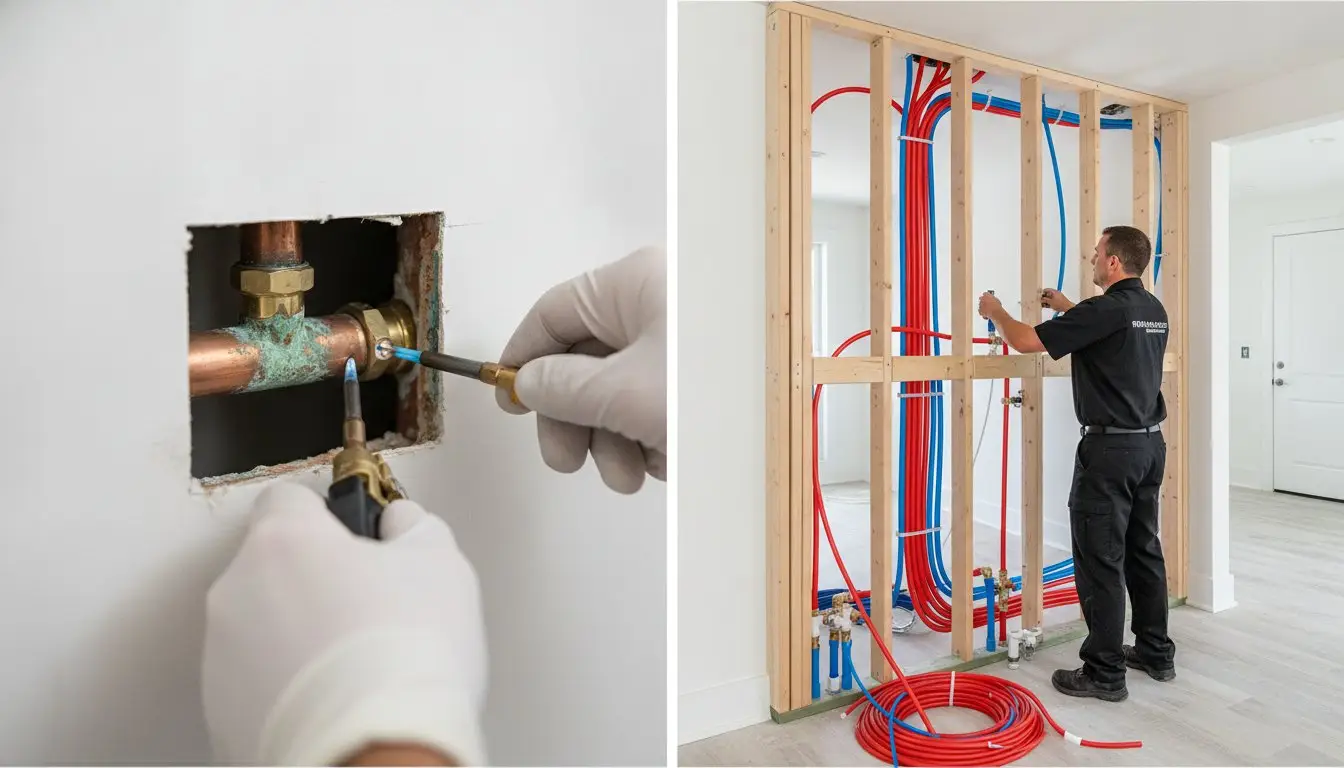
What if that small damp spot on your ceiling isn’t just a simple fix, but a warning that your home insurance carrier is about to drop your coverage? In Florida’s current market, the choice between spot leak repair vs whole house repipe for old homes has become a strategic financial decision rather than a simple maintenance task. It’s frustrating to deal with repeated drywall repairs, and the fear of a catastrophic flood while you’re away from home is enough to keep any homeowner awake at night.
We understand that you want to be a good steward of your home without overspending on unnecessary projects. This guide will help you determine exactly when it’s safe to keep patching and when a full replacement is the only way to secure your insurance and home value. We’ll examine the real-world costs of maintenance, the impact of 2026 insurance trends on older piping materials, and the specific warning signs that mean your pipes are past their prime. By the end, you’ll have a clear roadmap to a reliable plumbing system that doesn’t require constant monitoring.
Key Takeaways
- Learn how to distinguish between a simple localized fix and the need for a complete system overhaul to protect your home’s foundation.
- Discover why the “Two-Leak Rule” is the industry standard for deciding between spot leak repair vs whole house repipe for old homes.
- Understand how aging pipe materials like polybutylene or galvanized steel can lead to insurance non-renewal in the current Florida market.
- Evaluate the financial impact of a repipe on your home’s resale value and how it compares to the mounting costs of repeated water damage repairs.
- Get a clear plan for transitioning from constant plumbing anxiety to a modern, reliable system that includes professional drywall restoration.
Understanding the Choice: Spot Leak Repair vs. Whole House Repipe
A spot leak repair is a localized fix. We target a single puncture or a failing joint and replace it with a coupling or a short section of new pipe. This is a surgical approach to a specific problem. In contrast, a whole house repipe involves the complete removal of your aging supply lines and the installation of a modern, durable system. When considering spot leak repair vs whole house repipe for old homes, it’s vital to look at the big picture. In Florida, homes built before the mid-1990s often face systemic material fatigue rather than isolated accidents. Copper pipes often develop tiny pinhole leaks from the inside out due to local water chemistry. Older polybutylene systems suffer from brittle failure, where the pipe itself becomes fragile enough to shatter under pressure.
The Reality of Slab Leaks in Florida Homes
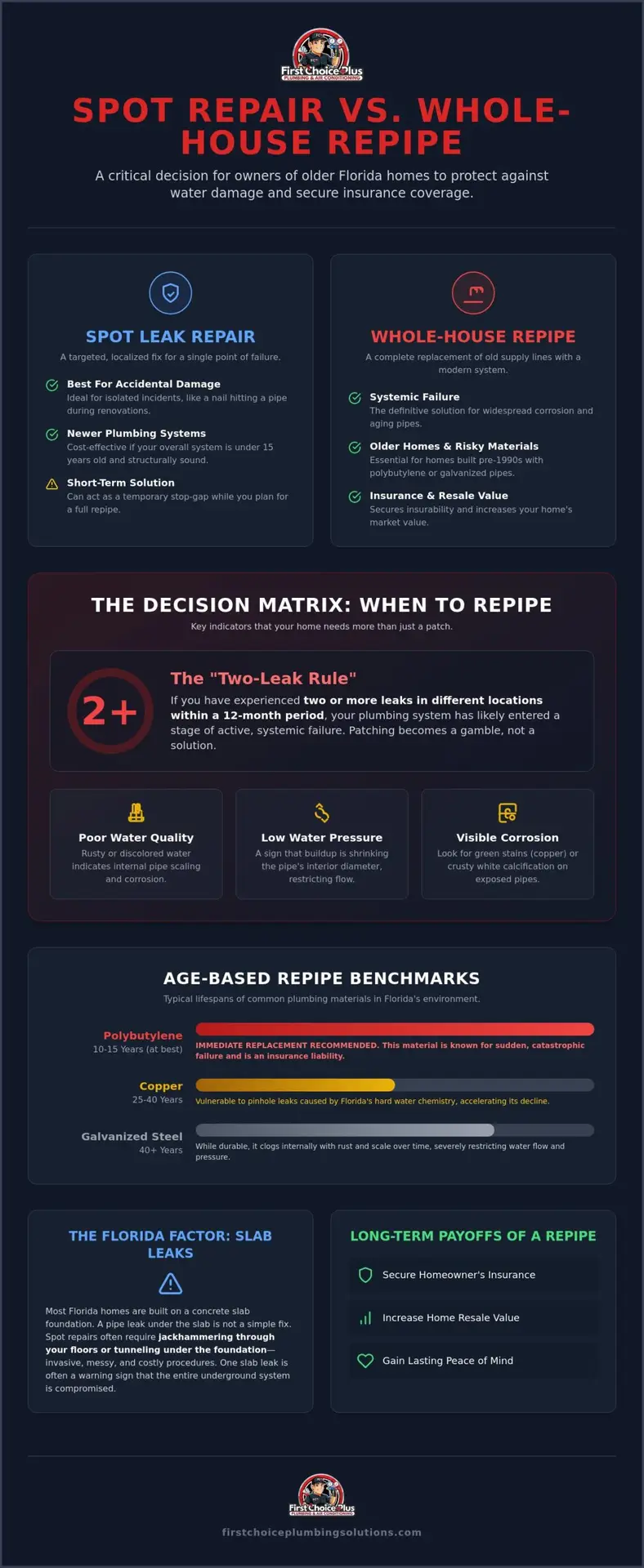
Most Florida homes sit on a concrete slab foundation. This construction style makes a simple leak much more complex. A spot repair on a pipe buried under your home often requires jackhammering through your living room floors or “tunneling” deep under the foundation. It’s invasive, loud, and messy. Professional slab leak detection is the essential first step to see if the issue is truly isolated. However, experience shows that one slab leak often signals that the entire underground run is compromised. While technologies like Cured-in-place pipe (CIPP) are common for rehabilitating sewer lines, pressurized supply lines under a slab usually require a more definitive solution to ensure long-term reliability.
When a Spot Repair is the Right Move
Patching isn’t always a bad idea. It’s the ideal choice for accidental damage, such as a nail driven through a pipe during a kitchen remodel. If your plumbing system is relatively new, typically under 15 years old, the material is likely still structurally sound. In these cases, a quick repair is a cost-effective way to get back to normal. Sometimes, a spot fix serves as a necessary stop-gap. It restores your water service immediately while you take a few weeks to plan a comprehensive whole house repiping project. This approach gives you the breathing room to make a calm, informed decision for your home’s future.
The Decision Matrix: When to Stop Patching and Start Repiping
Deciding between spot leak repair vs whole house repipe for old homes often comes down to the “Two-Leak Rule.” If you’ve experienced two or more leaks in different locations within a 12-month period, your plumbing has likely entered a stage of active corrosion. At this point, patching is no longer a solution; it’s a gamble. You aren’t just paying for the pipe fix. You’re also paying for drywall restoration, potential mold remediation, and the high price of emergency response fees.
The “Math of Failure” is clear. When you add up the cumulative costs of multiple repairs and the inevitable damage to your home’s finishes, a one-time investment in a new system often makes more financial sense. Keep an eye out for these red flags:
- Chronic Water Quality Issues: Rusty or discolored water often indicates internal pipe scaling.
- Pressure Drops: Low pressure that doesn’t improve after cleaning your faucet aerators usually means the pipe’s interior diameter is shrinking due to buildup.
- Visible Corrosion: Look for white, crusty calcification or green oxidation stains on exposed pipes in your attic or garage.
Age-Based Benchmarks for Repiping
Different materials have different lifespans, especially in Florida’s unique environment:
- Copper: Expect 25 to 40 years. Our local hard water can accelerate pinhole leaks significantly.
- Galvanized Steel: These pipes last 40 or more years but almost always require replacement because they clog internally, like a blocked artery.
- Polybutylene: We recommend immediate replacement regardless of their current status. These pipes are notorious for sudden, catastrophic failure.
The Hidden Cost of “Cheap” Repairs
A single repair can trigger a “Swiss Cheese” effect. When we fix one high-pressure point, the standard residential pressure of 60 to 80 PSI often finds the next weakest link in an aging system. Material fatigue is the point where a pipe can no longer hold that pressure safely. Instead of waiting for the next midnight emergency, you can schedule a professional evaluation of your current plumbing system to see if it’s time to make the switch.
Long-Term Benefits: Insurance, Resale, and Peace of Mind
In the 2026 Florida market, the choice between spot leak repair vs whole house repipe for old homes is often decided by your insurance carrier rather than your plumber. Many companies now refuse to bind or renew policies for homes with polybutylene or galvanized pipes over 30 years old. Even if you haven’t had a major flood, the mere presence of these materials makes your property a high-risk asset in the eyes of an underwriter. A full repipe moves your home into the “preferred” category, which often leads to better coverage options and lower premiums; you can discover SI Insurance to see how these improvements can help you secure a better rate.
Beyond insurance, consider your home’s resale value. In the Treasure Coast market, “repiped” is one of the most powerful words in a real estate listing. Buyers are wary of older homes with a history of leaks, so comparing spot leak repair vs whole house repipe for old homes early can save your closing later. By choosing a modern solution like PEX, you benefit from a flexible system with fewer joints and better freeze resistance. The First Choice Plus Plumbing & Air approach specializes in making this transition smooth. Whether you need a targeted plumbing repair or a total system replacement, our team works to minimize disruption to your daily life.
Protecting Your Home Equity
A permitted repipe adds verifiable value to your home inspection report. It virtually eliminates the risk of “secondary damage” like mold growth, which thrives in our humid climate. To make this investment easier, First Choice Plus Plumbing & Air offers financing options that turn a necessary project into a manageable monthly payment, protecting your equity without draining your savings.
Next Steps for Homeowners in Port St. Lucie & Beyond
Don’t wait for a midnight flood to make a decision. Be proactive by scheduling a professional inspection to determine your system’s remaining life. During a repipe, you can expect a clear timeline, brief water-off periods, and professional drywall restoration to leave your home looking as good as it functions. Taking the lead now ensures your home remains protected, insurable, and valuable for years to come.
Securing Your Home’s Future and Insurance Coverage
First Choice Plus has been family owned and operated since 2007. We combine neighborly warmth with specialized slab leak detection technology to give you the most accurate assessment possible. Our 24/7 emergency dispatch is always standing by to provide the steady hand you need during a plumbing crisis. Stop patching and start protecting. Schedule your professional leak assessment with First Choice Plus today!
You’ve worked hard for your home. You deserve a plumbing system that offers total security and long-term comfort for your family.
Frequently Asked Questions
Will my homeowners insurance pay for a whole house repipe?
Most homeowners insurance policies don’t cover the cost of the repipe itself because it’s considered preventative maintenance. However, they usually cover the “ensuing damage” caused by a sudden leak, such as water remediation and drywall repair. In the current 2026 Florida market, many insurers now require you to repipe older systems as a condition for policy renewal or to avoid high premiums.
How long does it take to repipe a house in Florida?
A standard whole house repipe in Florida typically takes between two and five days to complete. The exact timeline depends on the size of your home and the number of bathrooms. Our team focuses on getting your water service restored at the end of each workday so your household routine isn’t completely disrupted while we install the new system.
Can I stay in my home while it is being repiped?
Yes, you can stay in your home during the repiping process. We work in sections to ensure you have functional plumbing in at least one area of the house overnight. While there is some noise and dust during the day, we take great care to protect your furniture and clean up our workspace before leaving each evening.
What is the most common reason for pipe failure in Port St. Lucie homes?
The most common reason for pipe failure in our area is the combination of high mineral content in the local water and internal corrosion. These factors lead to pinhole leaks, especially in copper systems installed during the 1980s and 90s. When homeowners weigh spot leak repair vs whole house repipe for old homes, they often find that local water chemistry has compromised the entire system’s integrity.
Is PEX better than copper for Florida’s hard water?
PEX is generally superior to copper for homes dealing with Florida’s hard water minerals. Unlike copper, PEX is naturally resistant to scale buildup and the pitting corrosion caused by high mineral levels. It’s also more flexible, which allows for fewer joints and a significantly lower risk of future leaks in tight spaces like attics or crawlspaces.
How do I know if my pipes are made of polybutylene?
You can identify polybutylene pipes by their characteristic grey color and flexible, plastic appearance. Look for the stamp “PB2110” on the side of the tubing, which is often visible near your water heater or under kitchen sinks. If you see grey plastic piping with copper or plastic crimp rings, it’s highly likely your system is polybutylene and needs immediate professional evaluation.

Article by
Written by First Choice Plus Plumbing & Air Team
This article was created by the team at First Choice Plumbing Solutions, a licensed and experienced plumbing and HVAC company serving Port St. Lucie, Land O’ Lakes, and surrounding areas.
Our team specializes in plumbing and air conditioning services, including drain cleaning, leak detection, water heater repair and installation, AC repair, maintenance, and system installations. Our content is based on real-world experience and the common issues we solve for homeowners and businesses every day.
We aim to provide accurate, helpful, and easy-to-understand information so you can make informed decisions about your plumbing and HVAC needs.
If you need reliable, professional service, First Choice Plumbing Solutions is here to help.
Disclaimer
Disclaimer: The information provided in this article is for general informational purposes only and does not constitute professional plumbing or HVAC advice. Every situation is different, and readers should consult a licensed professional for proper diagnosis and repair. First Choice Plus Plumbing & Air is not liable for any damages or losses resulting from the use of this information.