
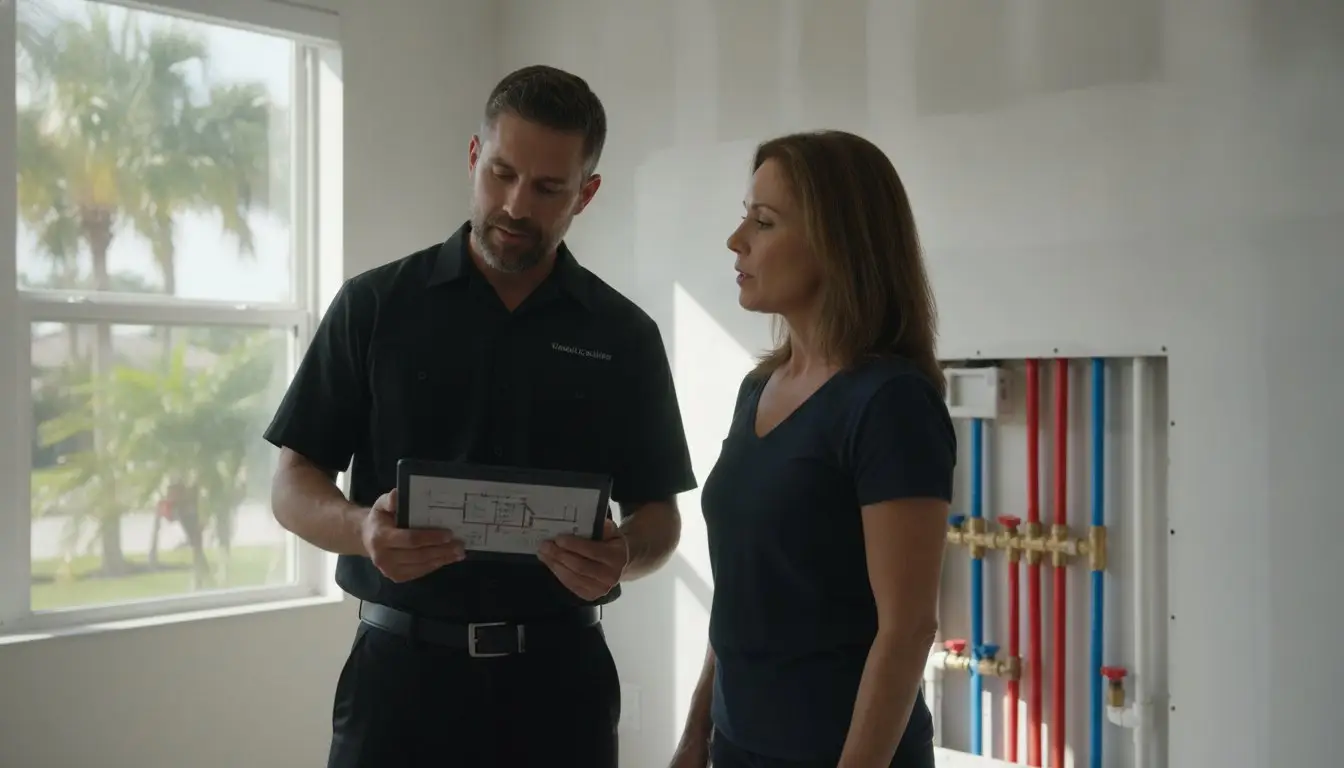
You wake up to a damp patch on the ceiling or a sudden drop in water pressure, and you realize your home’s aging plumbing has finally hit its limit. It’s a stressful moment that often leads to a flurry of calls to local contractors. However, the most important step isn’t just finding someone who can do the work; it’s knowing the specific questions to ask before agreeing to a repipe. Without a clear plan, what should be a permanent solution can quickly turn into a headache of hidden fees and unfinished drywall.
We know that the thought of opening up your walls is enough to cause any homeowner anxiety. You’re likely worried about the mess, the cost difference between PEX and copper, and how long your family will be without water. This guide provides the exact checklist you need to vet your plumber and ensure the job is done right the first time. We’ll walk you through the essential technical details, from 2026 EPA permit requirements to the final restoration of your home, so you can move forward with total confidence and a steady hand guiding the project.
Key Takeaways
- Learn how to select the right piping material, such as PEX or copper, specifically tailored for the unique water conditions found along the Treasure Coast.
- Identify the 10 essential questions to ask before agreeing to a repipe to ensure your contractor provides a transparent, all-inclusive quote without hidden fees.
- Discover the logistical steps professionals take to protect your home’s interior and restore your water service every evening during the project.
- Understand the importance of local permits and insurance requirements in Port St. Lucie and Martin County to safeguard your property and long-term investment.
- Gain a clear framework for vetting plumbers based on their master-craftsman approach and commitment to leaving your home clean and functional.
Qualifying the Solution: Questions About Materials and Scope
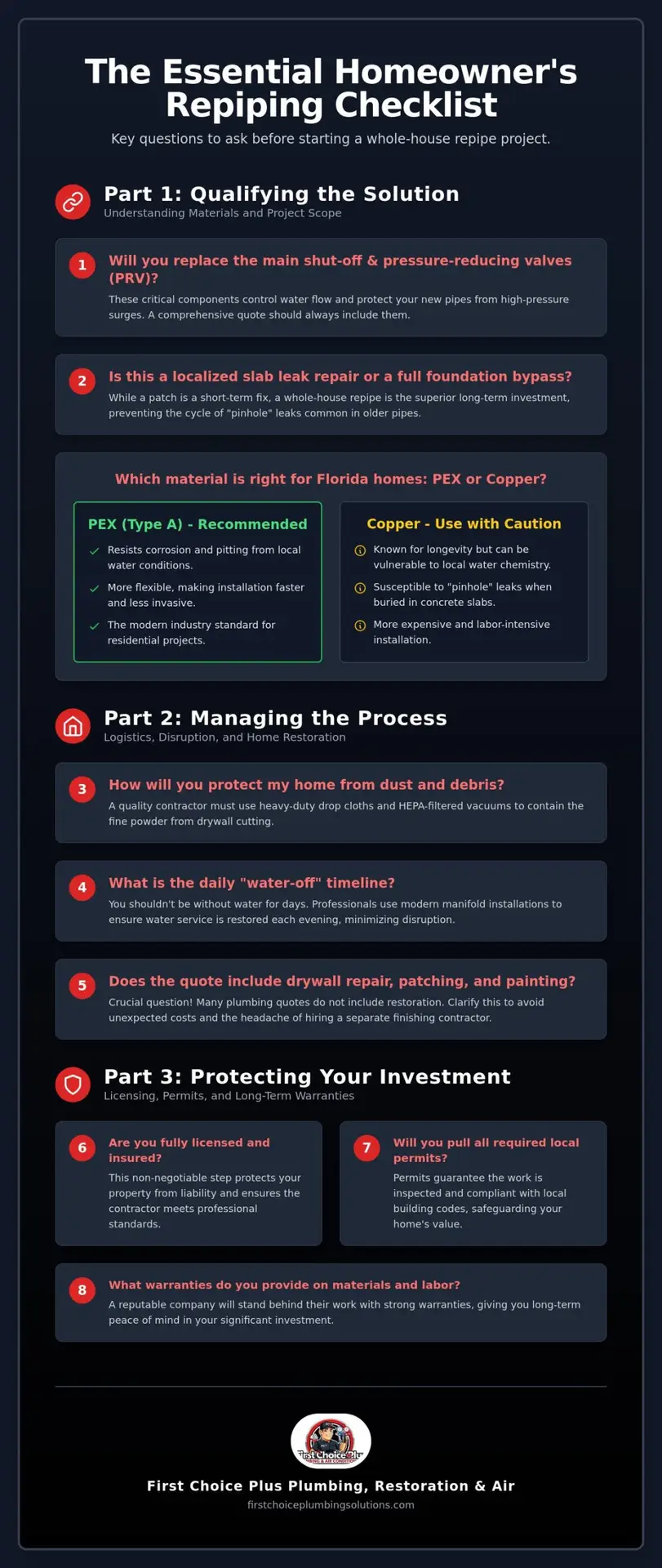
Before you sign any contract, you need to understand exactly what repiping means for your specific property. It’s not just about swapping old tubes for new ones; it’s about the comprehensive health of your home’s plumbing. One of the first questions to ask before agreeing to a repipe is whether the quote includes the replacement of your main water shut-off valve and the pressure-reducing valve (PRV). These components are critical for controlling flow and protecting your new pipes from high-pressure surges common in municipal systems. You should also confirm how the plumber handles transitions to existing underground lines to prevent future leaks at the connection points.
Slab Leak Repair vs. Whole House Repipe
Homeowners on the Treasure Coast often face a tough choice: do you fix a single leak under your foundation or bypass the slab entirely? Ask your plumber, “Is this a localized patch or a full foundation bypass?” While slab leak detection and repair is a valid short-term fix for a single emergency, a whole-house repipe often offers a better long-term return on investment. It stops the cycle of “pinhole” leaks that frequently plague older copper lines buried in Florida concrete. Clarifying the scope now helps you form the right questions to ask before agreeing to a repipe so you aren’t caught off guard by recurring issues later.
PEX vs. Copper: The Material Debate
Florida’s humidity and specific water chemistry play a huge role in material selection. Ask if your contractor uses Type A or Type B PEX. Type A is more flexible and resilient, making it a top choice for residential projects in 2026. While copper is known for its incredible longevity, PEX has become the industry standard because it resists the pitting and corrosion often caused by local water conditions. Ensure the scope covers every fixture in your home, from the master bath to the outdoor hose bibs, to avoid “hidden” exclusions that could leave old, brittle pipes in your walls.
Managing the Logistics: Questions About the Process and Restoration
The technical side of a repipe is only half the battle. The other half is managing the disruption to your daily life. One of the most important questions to ask before agreeing to a repipe is how the team handles dust and debris. Cutting into drywall creates a fine powder that can settle on furniture and inside electronics. A high-quality contractor uses heavy-duty drop cloths and HEPA-filtered vacuums to contain this mess as they work. This level of care is critical when dealing with older systems where you might face the dangers of lead pipes or deteriorating galvanized steel that can release particulates during removal.
The ‘Water-Off’ Timeline
No one wants to be without water for days on end. Ask your plumber for a specific schedule of water availability. In most residential cases, a steady hand can ensure your water is restored by the time you get home from work each evening. Using a manifold installation method allows the team to run new PEX lines alongside the old ones, meaning the actual switch-over time is minimal. This is far more efficient than the old trunk and branch style that required long periods of total shut-off.
The Drywall and Finish Work Clause
Don’t assume that finishing the job includes fixing the walls. Many plumbing companies consider their work done once the pipes are in and the inspector signs off. This makes the restoration phase one of the vital questions to ask before agreeing to a repipe. You need to verify if the quote includes professional wall patching and painting. If it doesn’t, you’ll need to hire a separate contractor to close the holes. If you are still in the decision-making phase, getting smaller plumbing repairs handled first can give you a feel for a company’s attention to detail before you commit to a full-home project.
Taking the time to vet these logistical details prevents your home from feeling like a permanent construction zone. For a clear look at how we manage these projects with minimal disruption, you can explore our local service approach to see how we prioritize your comfort.
Protecting Your Investment: Questions About Licensing, Permits, and Warranties
Repiping represents a significant commitment to your home’s longevity, and you shouldn’t leave the legal details to chance. One of the fundamental questions to ask before agreeing to a repipe involves the legal safety net: will the contractor pull a permit with the City of Port St. Lucie or Martin County? In 2026, local building departments are required to be more diligent than ever due to updated EPA material disclosure rules. You should also request a Certificate of Insurance (COI) that names you as additionally insured. This ensures that if an accident happens on your property, the contractor’s policy covers the damages, not yours.
The Importance of Local Florida Permits
In Florida, skipping the permit process is a gamble with your homeowner’s insurance. Carriers are increasingly strict; if they discover unpermitted major plumbing work, they may cancel your policy or deny future water damage claims. The final inspection serves as an official validation of the project’s quality. It ensures the work complies with the latest plumbing codes, which directly supports your home’s resale value and long-term security.
Workmanship vs. Material Warranties
Always clarify the difference between the pipe manufacturer’s warranty and the plumber’s workmanship guarantee. A common pitfall is assuming that a “lifetime pipe warranty” covers the cost of labor if a leak occurs. Ask specifically: ‘If a fitting fails in three years, is the labor to replace it covered?’ Getting these details in writing protects you from surprise repair bills down the road. These are the final questions to ask before agreeing to a repipe that truly separate a professional master craftsman from a cut-rate contractor. Since a whole-house project is a large expense, we offer various financing options to help you secure your home without draining your savings.
Securing Your Home’s Future with Confidence
Your home’s plumbing is its most vital internal system, and a whole-house repipe is the ultimate way to protect it. You’ve now gained the exact framework needed to vet any contractor who enters your property. You understand that the best results come from a combination of high-grade materials, transparent restoration plans, and the security of local permits. Knowing the right questions to ask before agreeing to a repipe transforms a daunting project into a manageable home upgrade that adds real value to your property.
At First Choice Plus Plumbing & Air, we’ve been serving the Treasure Coast as a family-owned and operated business since 2007. Our team of licensed and insured Florida plumbers brings a master-craftsman approach to every project, ensuring your home is treated with respect. Whether you’re dealing with a sudden slab leak or planning for long-term reliability, we provide the steady hand you need. We’re ready to handle the hard work with honesty and technical expertise.
Schedule your professional repipe consultation with First Choice Plus Plumbing & Air today! We provide 24/7 emergency service to ensure your household stays safe and comfortable.
Common Questions About Whole-House Repiping
Do I need to leave my house during a whole-house repipe?
You usually don’t need to move out of your home during the installation. Professional plumbers work in specific zones to keep the rest of your house livable. We prioritize restoring your water service before we leave each evening so your family can maintain a normal routine. While you’ll hear some drilling and see technicians in various rooms, the disruption is temporary and carefully managed to minimize stress.
Will a repipe improve my home’s water pressure?
Yes, a repipe almost always results in a dramatic increase in water pressure. Over time, older pipes develop internal corrosion or mineral scale that narrows the path for water to flow. Installing new, smooth-walled PEX or copper lines eliminates these obstructions. This is a primary reason many homeowners finalize their list of questions to ask before agreeing to a repipe, as it restores the performance of showers and appliances.
How much does a typical repipe cost in Port St. Lucie?
Repipe costs in the Treasure Coast area vary based on your home’s size, the number of plumbing fixtures, and your choice of piping material. Because Florida homes often have unique slab foundations or attic access challenges, a one-size-fits-all price doesn’t exist. We focus on providing honest, upfront estimates after evaluating your specific plumbing layout. This transparency helps you budget effectively without worrying about unexpected costs during the restoration phase.
What is the most common sign that I need a repipe instead of a simple repair?
The most telling sign is a pattern of recurring leaks in different areas of your home. If you find yourself calling for emergency repairs every few months, the structural integrity of your entire system is likely compromised. You might also notice flakey sediment in your water or visible corrosion on exposed pipe joints. These symptoms suggest that a full replacement is more cost-effective than continuing to patch a failing system.

Article by
Written by First Choice Plus Plumbing & Air Team
This article was created by the team at First Choice Plumbing Solutions, a licensed and experienced plumbing and HVAC company serving Port St. Lucie, Land O’ Lakes, and surrounding areas.
Our team specializes in plumbing and air conditioning services, including drain cleaning, leak detection, water heater repair and installation, AC repair, maintenance, and system installations. Our content is based on real-world experience and the common issues we solve for homeowners and businesses every day.
We aim to provide accurate, helpful, and easy-to-understand information so you can make informed decisions about your plumbing and HVAC needs.
If you need reliable, professional service, First Choice Plumbing Solutions is here to help.
Disclaimer
Disclaimer: The information provided in this article is for general informational purposes only and does not constitute professional plumbing or HVAC advice. Every situation is different, and readers should consult a licensed professional for proper diagnosis and repair. First Choice Plus Plumbing & Air is not liable for any damages or losses resulting from the use of this information.