
What if the reason your electric bill is skyrocketing has nothing to do with your thermostat settings? In Port St. Lucie, we often blame the relentless Florida sun for hot bedrooms and dusty air, but the real culprit is frequently hidden right behind your drywall. You’ve likely noticed those frustrating hot spots in the guest room or wondered why your house stays dusty despite constant filter changes. It’s a common struggle for families across the Treasure Coast, and these issues often point back to the specific signs of poorly installed ductwork.
We agree that it’s incredibly frustrating to invest in a high-efficiency AC system only to feel like it’s failing you during a July heatwave. You deserve a home that stays consistently cool and air that actually feels clean. This guide will teach you how to identify hidden installation errors that might be leaking up to 30% of your cooled air into your attic. We will walk through the technical red flags to watch for and the practical steps you can take to ensure your HVAC system is finally running with the efficiency you were promised.
Key Takeaways
- Spot unexplained utility bill spikes and uncomfortable hot spots that indicate your AC is working harder than it should.
- Identify the physical signs of poorly installed ductwork, including sagging flex pipes and the use of improper sealing tapes.
- Protect your investment by learning how bad ducting can void manufacturer warranties and cause your unit to fail years early.
- Understand why professional-grade sealing is critical for fighting Florida’s humidity and keeping attic dust out of your living spaces.
- Gain peace of mind by knowing exactly what to look for to ensure your home stays cool and your energy costs stay low.
Common Symptoms of Poorly Installed Ductwork in Florida Homes
Living in Port St. Lucie means your AC is the most important appliance in your home. When it starts underperforming, the bill usually tells the story first. One of the most common signs of poorly installed ductwork is a sudden, unexplained spike in your FPL statement. If your cooling habits haven’t changed but your costs are climbing, your system is likely fighting against its own delivery network. You may also notice several physical red flags in your living spaces:
- Significant temperature variances where one bedroom feels like a sauna while the kitchen is freezing.
- Excessive dust accumulation on your furniture just days after a deep clean.
- A heavy, musty “attic smell” that drifts from the vents the moment the blower motor kicks on.
These issues aren’t just minor inconveniences; they suggest that your system is pulling unconditioned air from your crawlspace or pushing expensive, cooled air into your attic. This imbalance forces the entire HVAC unit to run longer cycles, which accelerates wear and tear on sensitive components.
The Static Pressure Problem: Why Some Rooms Stay Hot
High static pressure is essentially like trying to breathe through a coffee straw. In newer developments across Tradition and St. Lucie West, we often find undersized return vents or kinked flex ducts that restrict airflow. These restrictions force your air handler to work twice as hard to move air through the house. Understanding HVAC ductwork basics helps clarify why these bottlenecks lead to mechanical failure. Over time, this constant strain burns out blower motors and leads to premature system replacement.
Excessive Humidity and “Duct Sweating”
Florida attics can easily reach 130 degrees during the summer. If your ducts lack proper insulation or have gaps in the vapor barrier, they will “sweat” just like a cold glass of water on a humid day. This condensation often drips onto your drywall, causing mysterious yellow stains or soft spots on your ceiling. Worse, it creates a damp environment where mold can thrive inside your insulation. If this moisture reaches your electrical connections, you may need emergency AC repair to resolve shorts and keep your home safe.
Technical Red Flags: How to Spot Bad Ductwork in Your Attic
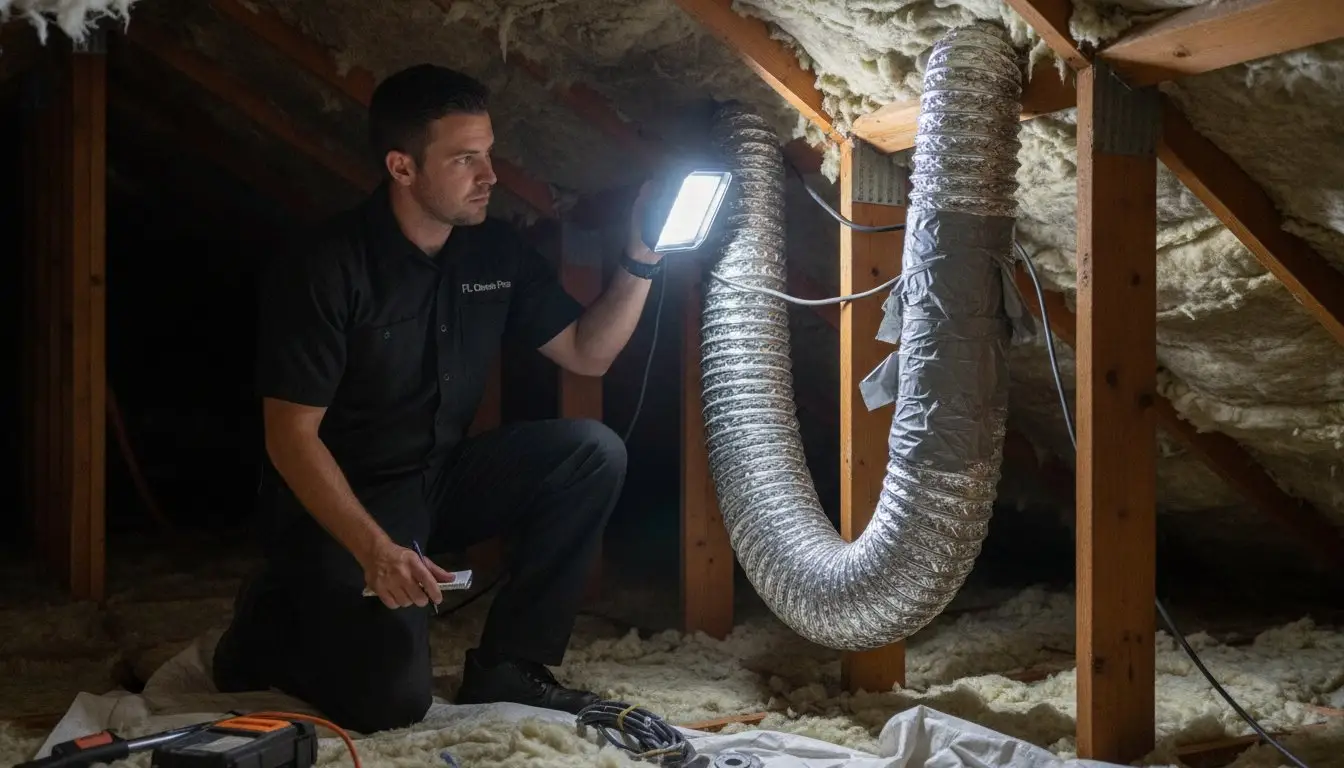
If the symptoms mentioned earlier feel familiar, the next step involves a quick peek into your attic. You don’t need to be an HVAC engineer to spot the most glaring signs of poorly installed ductwork. Look for flex ducts that resemble a tangled mess of snakes. When these tubes aren’t pulled tight and secured, they create “dips” where air slows down and loses velocity. You should also inspect the plenum, which is the large distribution box attached to your air handler. If you see gaps or loose joints held together by nothing but luck, your system is cooling your attic instead of your bedrooms.
Another warning sign is the sight of exposed pink or yellow fiberglass insulation. This indicates a breach in the duct’s outer vapor barrier. In our humid Treasure Coast climate, a torn barrier allows moisture to seep into the insulation, rendering it useless and eventually leading to the ceiling stains we discussed previously.
The 4-Foot Support Rule for Flex Ducts
Flex ducts are convenient, but they require discipline during installation. The industry standard requires these ducts to be supported at least every 4 feet. When supports are spaced too far apart, the duct sags, causing air turbulence that drastically reduces your system’s Cubic Feet per Minute (CFM) output. According to Florida building codes, flexible ductwork must be supported at intervals not exceeding 4 feet to ensure the inner liner remains fully extended and unobstructed.
Mastic vs. Tape: The Sealant Test
It’s a running joke in the industry that “duct tape” is the only thing you should never use on a duct. In the extreme heat of a Port St. Lucie attic, the adhesive on standard silver tape dries out, causing it to peel away within months. Professional installers use mastic sealant, a thick, paint-like substance that creates a permanent, airtight bond. If you see shiny silver tape peeling off your joints, it’s a clear indicator of subpar workmanship. High-quality AC installation services always prioritize mastic and foil-backed tape to ensure a seal that lasts for the life of the system.
If you’re unsure about the condition of your attic’s ventilation, a professional inspection can provide the validation you need to ensure your home stays comfortable and your bills stay low.

The Long-Term Consequences of Improper Ductwork Installation
Ignoring the signs of poorly installed ductwork does more than just inflate your monthly bills. It creates a domino effect of mechanical failures that can ruin a perfectly good HVAC system. A high-quality AC unit should last about 15 years in our Florida climate, but poor ducting often forces those same units to die in as little as 8 years. Because the system has to work harder to overcome leaks and pressure issues, you’ll likely face frequent repairs for blown capacitors and burnt-out blower motors due to constant short-cycling.
There’s also the matter of your manufacturer’s warranty. Most major HVAC brands specify that the unit must be installed and maintained according to strict airflow standards. If a technician discovers that your ductwork was never sized correctly or was sealed with improper materials like standard silver tape, the manufacturer may deny your warranty claim for a failed compressor. Protecting your investment starts with ensuring the air can actually move through your home as designed.
Why Your UV Sanitizer Can’t Save Leaky Ducts
Many homeowners invest in high-end UV air sanitizers to improve indoor air quality and eliminate mold spores. However, even the most advanced purification system can’t clean air that never passes through it. When your return ducts have leaks in the attic, they pull in dust, fiberglass insulation fibers, and allergens directly from the crawlspace. This unconditioned air bypasses your filters and sanitizers entirely, dumping pollutants straight into your bedrooms and living areas.
Professional Duct Repair vs. Replacement
If your home in Fort Pierce or Stuart suffers from persistent hot spots, you need a professional evaluation. We use a “Manual J” calculation to determine exactly how much air each room needs based on its size, window placement, and insulation levels. While minor leaks can often be sealed with mastic sealant, a total duct replacement is sometimes the only way to fix chronic airflow issues caused by poor original design. A professional assessment ensures you aren’t just putting a bandage on a system that requires a structural fix.
Take Control of Your Home’s Comfort and Efficiency
Identifying the signs of poorly installed ductwork is the first step toward a more efficient, comfortable home. We’ve explored how seemingly small errors, like improper strapping or the use of standard silver tape, lead to massive energy loss and poor indoor air quality. By addressing these issues now, you protect your air handler from unnecessary strain and ensure your manufacturer’s warranty remains valid. It’s about more than just a lower FPL bill; it’s about the long-term health of your entire HVAC system.
Since 2007, First Choice Plus has served as a reliable neighbor for families throughout the Treasure Coast. Our expert HVAC technicians understand the unique challenges of the Florida climate and provide comprehensive 24/7 emergency AC support for those urgent cooling crises. We believe in transparent service that prioritizes your comfort over a sales pitch. If you suspect your attic ventilation isn’t up to par, schedule a professional ductwork inspection with First Choice Plus today! We’re ready to help you achieve the consistent, cool air your family deserves.
Frequently Asked Questions
Can I fix poorly installed ductwork myself?
You shouldn’t attempt to repair complex installation errors yourself because proper ductwork requires specialized equipment and a deep understanding of airflow dynamics. While a homeowner might be able to seal a single visible joint, true signs of poorly installed ductwork often involve structural issues like improper sizing or layout. Licensed contractors in Port St. Lucie must follow the 9th Edition of the Florida Building Code to ensure your system remains safe and efficient.
How much airflow is lost through leaky ducts?
Most homes in Florida lose between 15% and 30% of their conditioned air through leaks in attic duct runs according to industry data from May 2026. This means you are essentially paying to cool your attic instead of your bedrooms. Over time, this loss forces your AC unit to run longer cycles. This significantly increases your monthly utility bills and puts unnecessary wear on the compressor.
Will cleaning my ducts fix installation errors?
Duct cleaning won’t fix installation errors because cleaning only removes debris while installation issues are structural in nature. If your ducts are sagging, kinked, or poorly sealed, a professional vacuum won’t restore proper airflow. You need a technician to physically realign the runs or apply professional mastic sealant. This ensures your air handler isn’t struggling against blocked or leaky paths.
How long should residential ductwork last in Florida?
Residential ductwork generally lasts between 10 and 20 years, depending on the quality of the initial installation and the attic’s environment. In the intense heat of the Treasure Coast, materials can degrade faster if they aren’t properly insulated or supported. If your home is over 15 years old, it’s wise to have a professional check for signs of poorly installed ductwork or general wear.
Does homeowners insurance cover bad ductwork installation?
Homeowners insurance typically doesn’t cover the cost of fixing bad ductwork installation because it’s usually classified as faulty workmanship or a maintenance issue. However, if a duct failure causes secondary damage, like a ceiling leak from condensation, your policy might cover the repair of the drywall. You should always check your specific policy details with your local agent in Fort Pierce or Stuart.

Article by
Written by First Choice Plus Plumbing & Air Team
This article was created by the team at First Choice Plumbing Solutions, a licensed and experienced plumbing and HVAC company serving Port St. Lucie, Land O’ Lakes, and surrounding areas.
Our team specializes in plumbing and air conditioning services, including drain cleaning, leak detection, water heater repair and installation, AC repair, maintenance, and system installations. Our content is based on real-world experience and the common issues we solve for homeowners and businesses every day.
We aim to provide accurate, helpful, and easy-to-understand information so you can make informed decisions about your plumbing and HVAC needs.
If you need reliable, professional service, First Choice Plumbing Solutions is here to help.
Disclaimer
Disclaimer: The information provided in this article is for general informational purposes only and does not constitute professional plumbing or HVAC advice. Every situation is different, and readers should consult a licensed professional for proper diagnosis and repair. First Choice Plus Plumbing & Air is not liable for any damages or losses resulting from the use of this information.